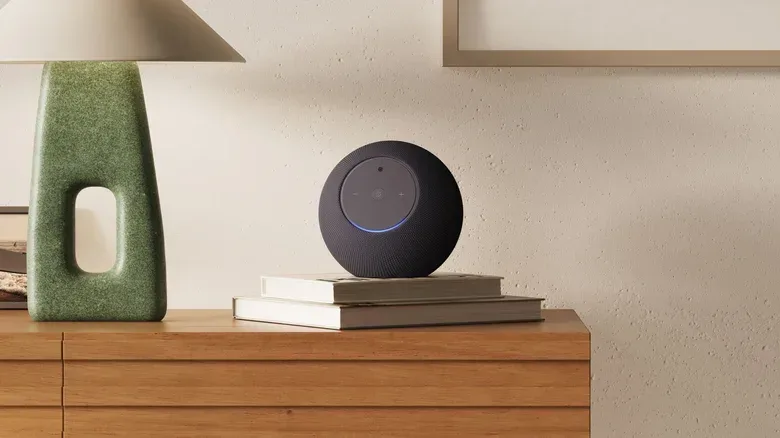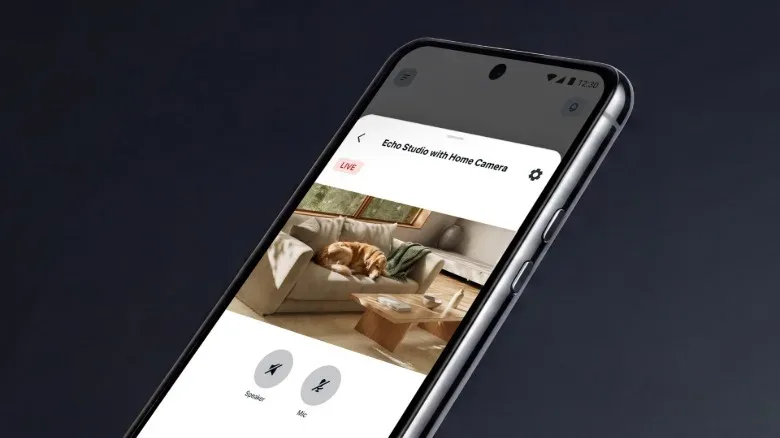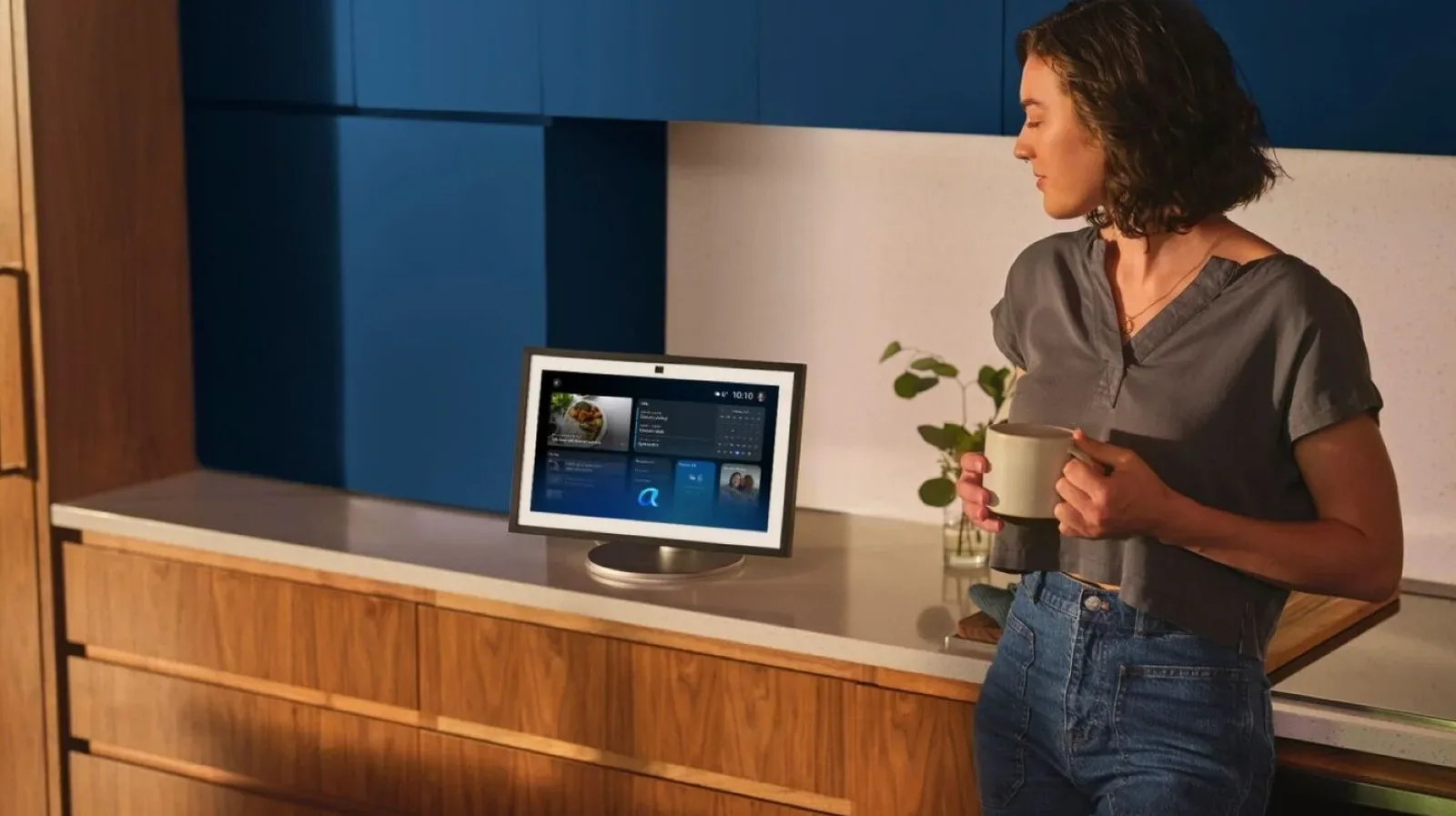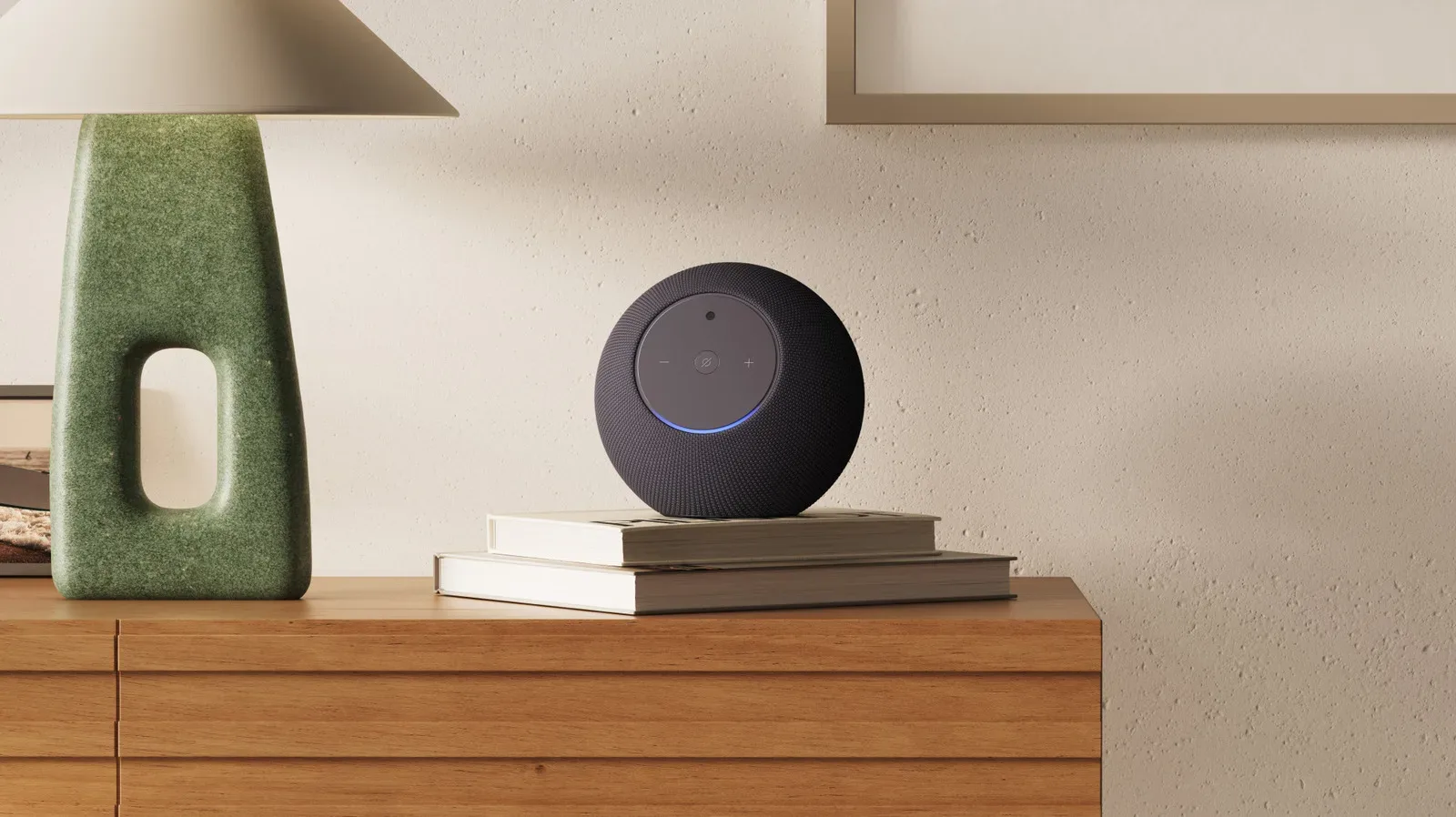
Amazon’s latest Echo Studio turns a premium smart speaker into something a little more watchful. The Echo Studio with Home Camera retains the audio-focused setup of the regular Echo Studio, but adds an integrated camera intended to see the area in front of the device. That changes the product’s role substantially: it can now provide a Live View feed in the Alexa app, act as a webcam for calls, and pair visual awareness with Alexa+ for household questions and tasks.
For players and families, the most immediately relatable pitch may be surprisingly low-stakes: asking for the rules of a board game such as Monopoly. Nobody needs another household dispute over whether a particular rule exists, especially one that turns a friendly game night into a tribunal conducted with increasingly confident guesses. Alexa+ is positioned to help with those everyday questions, while the camera adds the possibility of seeing rather than merely hearing what is happening around the speaker.
The new model costs $250. Amazon continues to sell the 2025 Echo Studio without the camera for $220, making the camera-equipped edition a $30 step up. That narrow price difference puts the decision in unusually clear terms: buyers who already wanted Studio-class sound are being asked whether Live View and webcam functionality are worth paying a little more for, and whether they want a camera in the room where the speaker will live.
A speaker first, but no longer only a speaker
Amazon’s central argument is that the Echo Studio with Home Camera remains built around sound quality rather than being a conventional camera display with better-than-usual speakers attached. It keeps the Studio’s audio architecture: a high-excursion woofer for bass, three full-range drivers handling midrange and higher frequencies, and Dolby Atmos support for spatial audio.
A woofer is the driver designed for lower-frequency sound, including the weight and thump in music. “High excursion” refers to a driver’s ability to move over a larger distance; in practical terms, that is part of the design intended to produce fuller low-end output. Full-range drivers cover a broad portion of the audible spectrum, here handling the middle and upper portions of a track or soundtrack. The supplied hardware description does not quantify output or establish how this model compares with other speakers, but it does show that Amazon has not traded the Studio’s basic speaker arrangement for the camera.
Dolby Atmos, meanwhile, is a spatial-audio format designed to create a sense of sound existing around a listener rather than simply arriving from fixed left and right channels. The feature matters most to people who already use Atmos-capable music or video content. Its presence is not a guarantee that every podcast, game soundtrack or streaming track will become more enveloping, but it keeps the new Home Camera version aligned with the audio ambitions of the regular Echo Studio.
That distinction is important because Amazon already has less expensive Home Camera products, including the Echo Show 5. The Echo Studio with Home Camera is not presented as the cheapest route to getting an Alexa-linked camera. It is the version for someone whose starting point is a higher-end Echo speaker and whose secondary interest is gaining a visual component without adding a separate device.
What the built-in camera can do
The camera can send its feed to Live View in the Alexa app. In plain language, this is a remote video view of what the camera sees in front of the speaker. Amazon frames the feature around ordinary home checks: looking in on a cat or confirming whether lights were left on. Those examples neatly establish the device’s limits as well as its purpose. It can only show the part of a room within its view; it is not a complete picture of an entire home.
Placement therefore becomes part of the purchase decision. A Studio used primarily for music may previously have been chosen solely around acoustics and convenience. With a camera in the chassis, its location also determines what Live View can observe. A shelf facing a living room may make sense for an occasional pet check. A bedside, desk or other personal area may prompt a very different calculation. The product’s added function is useful precisely because it sees the room, so it is sensible for buyers to consider that added function before treating it as a routine speaker upgrade.
The other major camera feature is its ability to work as a webcam for personal or business video calls. In a demonstration, Amazon device chief Panos Panay used the Echo Studio with Home Camera for a call with his father. The Studio captured the event-side video, while a connected Fire TV displayed the people on the other end of the call. That setup illustrates a potentially appealing division of labor: the speaker-camera handles capture while a larger television screen handles viewing.
It also clarifies what has been demonstrated versus what has not. The available details establish webcam use in conjunction with Fire TV, but do not provide a broader list of supported calling services, video specifications, camera controls, or compatibility beyond that described setup. Shoppers looking for those particular answers should avoid assuming more than has been stated.
Alexa+ makes the gaming angle more practical than glamorous
“Tell me how to play Monopoly” may not sound like a feature that needs a premium speaker, but it speaks to a real use for voice assistance in game rooms and living rooms: resolving a question without interrupting the activity to hunt down a booklet or search through a phone. Alexa+ is also described as helping with daily tasks such as reordering cereal. The common thread is convenience through conversational requests.
For tabletop games, the most sensible role is as a quick reference point rather than an invisible game master. Rules questions can be very specific, and editions or house rules can complicate matters. The device may be handy when a group wants help recalling a basic rule, but it does not change the value of having the relevant game’s actual rules nearby when a ruling matters. In other words, Alexa+ could reduce friction; it does not erase the possibility of a passionate disagreement over what the table considers official.
The camera has a different, more indirect game-night application. A user could check the room remotely through the Alexa app, while the webcam capability offers a way to bring a person into a video call through a connected Fire TV arrangement. Neither point is presented as a specialized tabletop or gaming feature, and there is no evidence here of game-streaming tools or console integration. Still, a speaker positioned at the center of a shared entertainment space can now serve more than one social purpose: music, spoken assistance, visual checks and calls.
Two new audio adaptations aim to make placement less fussy
Amazon has added two sound-processing features to the new Studio. Advanced Room Adaptation is described as continuously tuning audio to the acoustics of the room. Rooms affect sound: hard surfaces, furniture, open space and the speaker’s placement can all change how bass, voices and high notes are perceived. The stated objective is to adjust playback around those conditions rather than relying on one fixed tuning.
The second feature, Adaptive Volume, is meant to preserve a similar relative listening level as a person moves around the room. In everyday terms, it is designed to stop music or podcasts from seeming to fall away when someone leaves the immediate area around the speaker. This is a particularly sensible idea for an all-purpose living-room device, where listeners are often cooking, organizing a game, talking, or moving between seats rather than remaining in a single ideal position.
Both features should be understood as adaptation tools, not magic repairs for every difficult room. The supplied information says the speaker continuously adjusts to room acoustics and listener location, but provides no measurement of the effect or an account of how its behavior changes in particular spaces. Their appeal is straightforward nonetheless: the Studio is trying to maintain a more consistent experience in the messy, real environments where smart speakers are used.
That emphasis also reinforces Amazon’s positioning. A conventional webcam does not need to care how a room sounds. A smart display may offer calls and visuals, but the Echo Studio’s case rests on joining those abilities to an audio system designed for bass, full-range playback and Atmos. The company is asking buyers to see the camera as an expansion of an already audio-centric product, not as its replacement identity.
The $30 question: camera or no camera?
The regular Echo Studio remains the simpler choice for anyone who wants the speaker’s high-quality audio design and Alexa+ capability without a built-in camera. At $220, it costs $30 less than the Home Camera model. That is a small enough gap that people who expect to use Live View or webcam calls may regard the upgrade as sensible. Conversely, those who would never use those features have a clear lower-cost option that does not ask them to bring a camera into their listening space.
The choice can be reduced to a few practical questions:
- Is remote visual checking actually useful? Live View may appeal to people who want to look in on a pet or confirm a visible household detail through the Alexa app.
- Would a webcam in the speaker’s location improve calls? The demonstrated Fire TV setup makes the Home Camera model more relevant to living-room video conversations.
- Is the speaker being placed in an area a camera should face? The camera is a meaningful change to where and how the product may feel appropriate.
- Are the audio features the real priority? Both models preserve the Echo Studio’s emphasis on robust sound, while the camera version adds Room Adaptation and Adaptive Volume features described for this refresh.
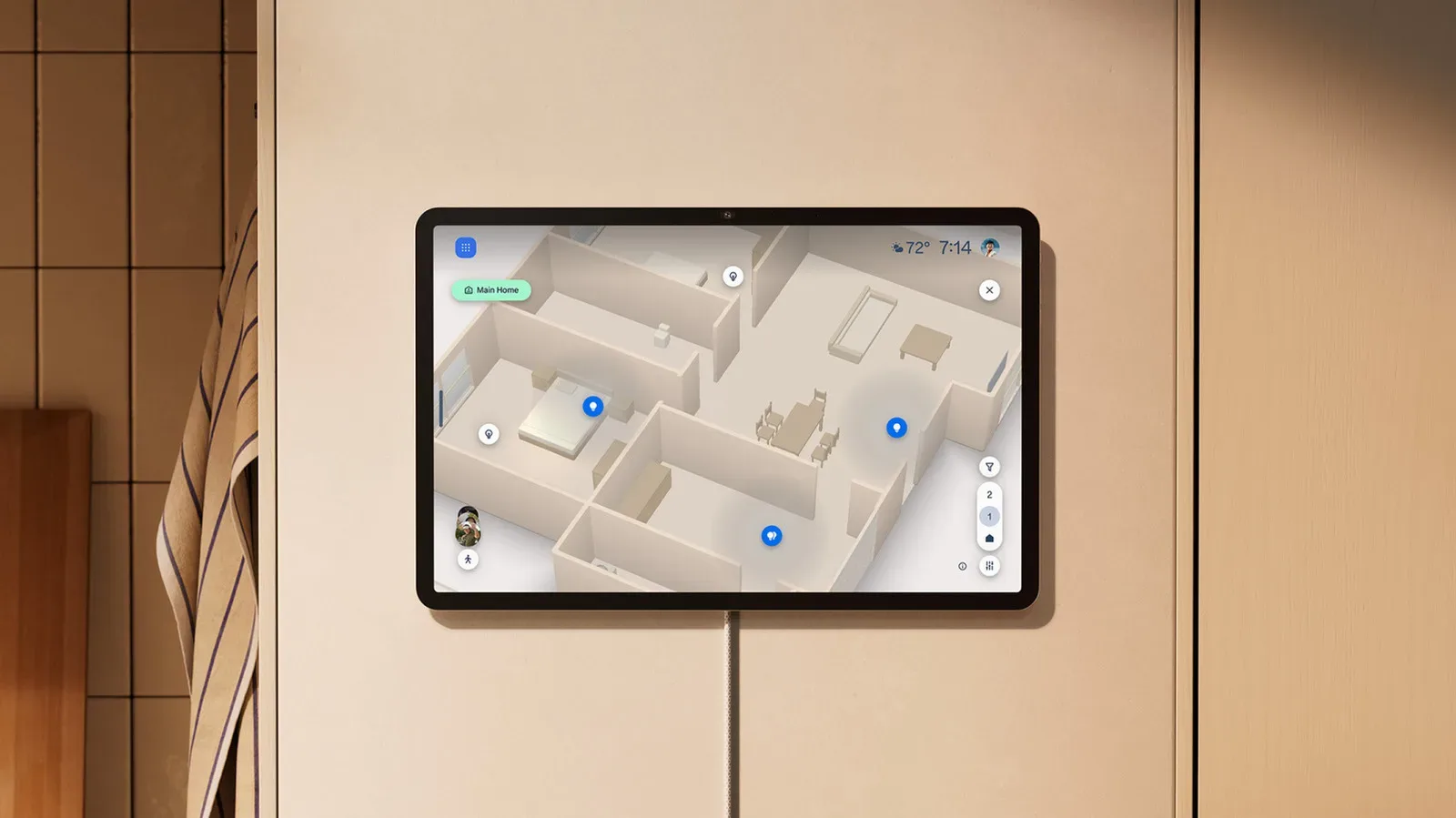
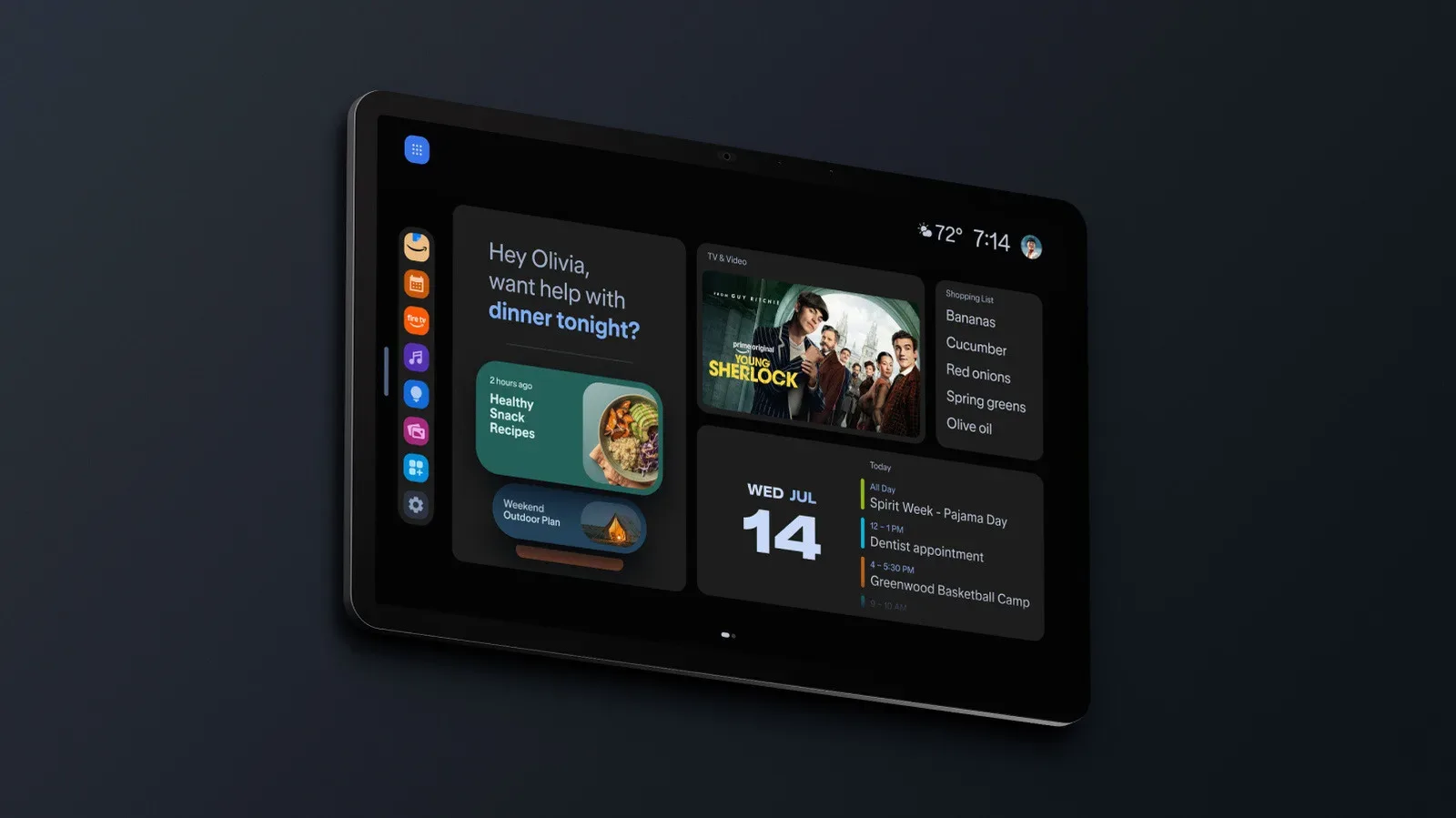
For households already deep in Alexa, it may also be useful to view the speaker alongside Amazon’s other smart-home work. The company has been pushing toward interfaces that make connected devices easier to understand, including a Home Map approach intended to make smart-home controls feel less like a spreadsheet. The Echo Studio with Home Camera fits that direction: it gives Alexa a view of a room in addition to voice commands and audio playback.
A premium Echo with an explicit trade-off
The Echo Studio with Home Camera is not trying to be a gaming accessory, a security system or a standard webcam in isolation. It is a premium smart speaker that layers a visible-room camera and call capability onto an existing audio foundation. Its most distinctive value is the overlap: the same device can play Atmos-capable audio, adapt its sound to the room, answer a question about board-game rules, show a Live View feed in the Alexa app and support a video call through a connected Fire TV.
At $250, the new model makes sense only if that overlap matches the household. Buyers focused exclusively on audio have the $220 regular Echo Studio. Buyers who want a more capable shared-room Alexa device, and who are comfortable with the implications of a camera placed there, get considerably more flexibility for the additional $30. The upgrade is less about turning a speaker into a surveillance gadget than about making a speaker part of the home’s visual and conversational toolkit—while still expecting it to carry the soundtrack.
Shop the products
Check current price, model and availability at the retailer.