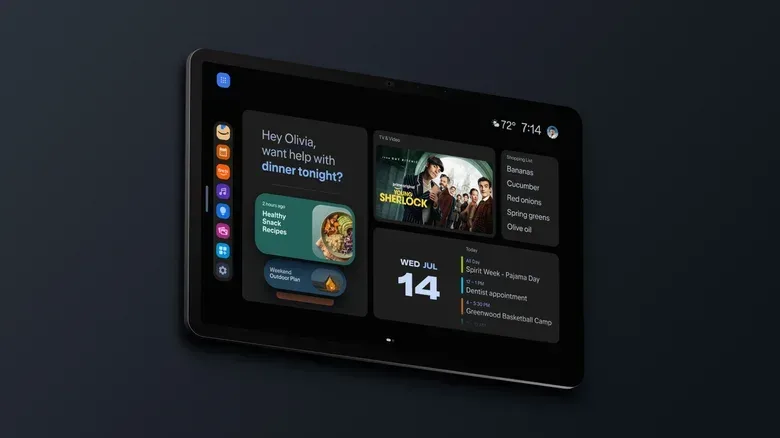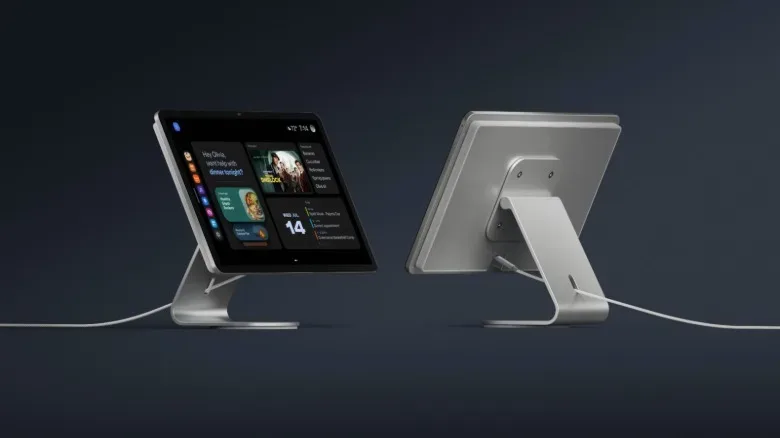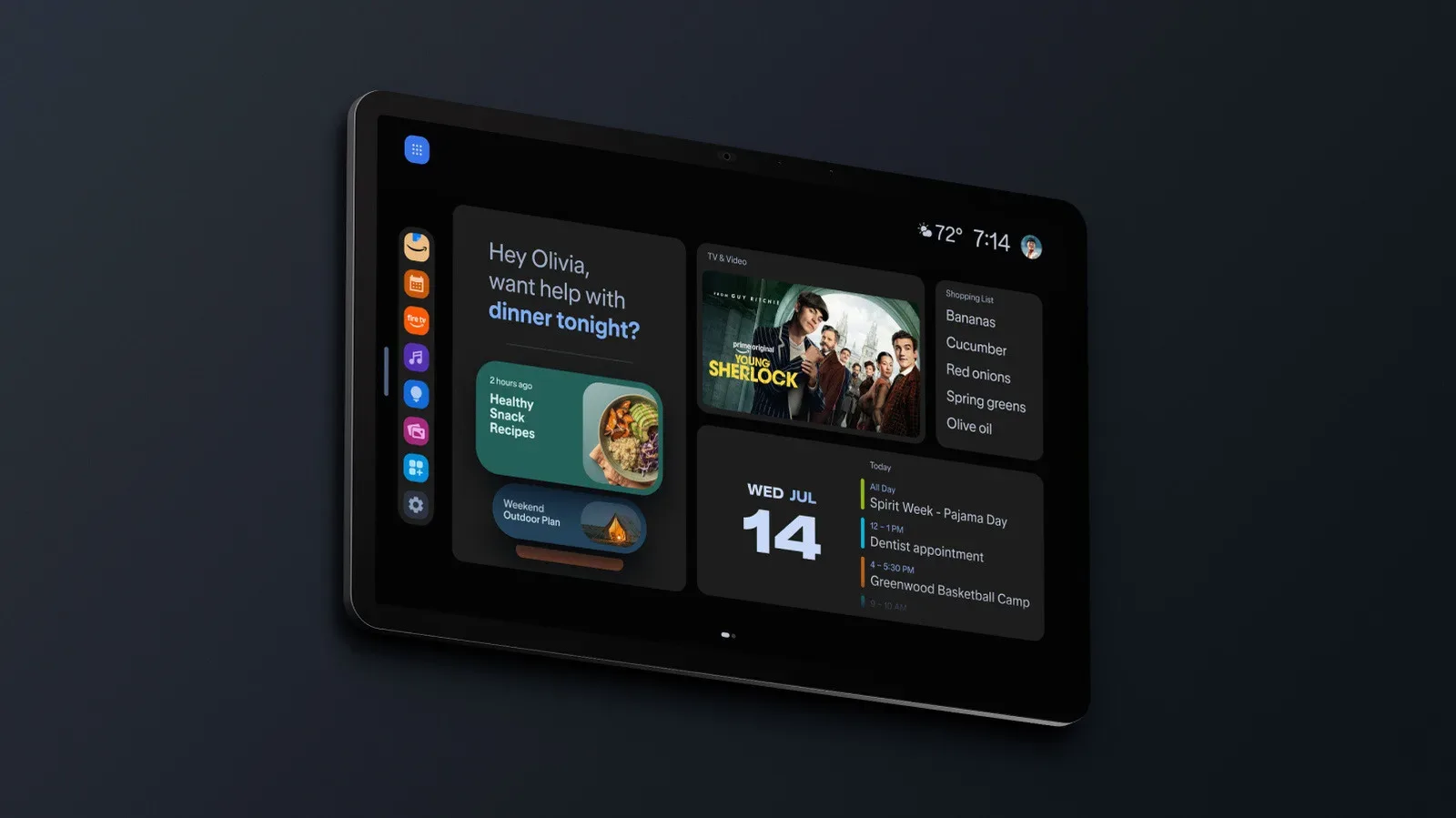
Amazon’s Echo Show line is getting a larger, slimmer entry with the Echo Show 16, a 16-inch Full HD smart display offered with either a conventional screen finish or an optional nanomatte panel designed to reduce reflections. The device expands the screen area by 10 percent compared with the Echo Show 15, while its body is nearly 40 percent thinner than that earlier model.
That makes this less of a routine size bump than a rethink of what an Echo Show is meant to do in a room. The Echo Show 16 is positioned as a shared display for streaming, video calls, smart-home controls, schedules and photos—not simply a voice assistant with a screen attached. Its updated design, Fire TV integration, wide-angle camera and Alexa+ interface all point toward a device intended to be visible and useful from farther away.
The standard Echo Show 16 costs $500, while the nanomatte model costs $570. Preorders receive a $100 discount, and shipping is expected later in 2026. Amazon is also offering a $70 stand and a $125 swivel-and-tilt stand.
What nanomatte means for a smart display
The most notable option is the nanomatte finish. Amazon developed the anti-reflective treatment with Corning, using an etching process intended to cut glare without the image-quality compromises commonly associated with ordinary matte displays.
In plain terms, a glossy screen can act like a dim mirror when it faces windows, lamps or other bright lights. A matte surface scatters reflected light so the reflection is less distinct, but it can also make an image look softer or reduce apparent color punch. Amazon’s stated aim with nanomatte is to control glare while retaining detail and color accuracy.
That distinction matters more on a device built to sit out in the open. A phone or tablet can be tilted away from a reflection; a kitchen, living-room or hallway display is more likely to stay put. For someone using an Echo Show primarily as a photo frame, a Fire TV screen or a household dashboard, glare reduction could affect day-to-day readability more than a modest internal specification increase.
Amazon previously used the nanomatte technology on the Alexa Tablet 12 Pro. Its arrival on the Echo Show 16 suggests the company sees anti-reflective treatment as a premium feature for larger, always-visible screens rather than a niche tablet add-on.
The $70 difference between the two Echo Show 16 versions is therefore a practical purchase decision rather than a performance tier. Both models have the same stated 16-inch Full HD resolution and core features. The nanomatte version is most relevant for rooms where daylight, overhead lamps or a screen-facing light source are persistent problems. In a controlled, dimmer setup, the standard display may make more financial sense.
A larger screen in a substantially slimmer frame
The Echo Show 16’s panel is 16 inches diagonally and provides 10 percent more viewing area than the Echo Show 15. Amazon has paired it with a new anodized aluminum frame, a finish created through an electrochemical process that changes the outer aluminum surface. The practical point is durability and appearance: anodizing is commonly used to produce a more resilient exterior finish than untreated metal.
The more consequential design claim is the nearly 40 percent thinner body. Large smart displays have to balance visibility with the fact that they are furniture-adjacent technology: they live on counters, shelves and walls, where bulk can be more noticeable than it is on a portable device. A thinner profile could make the Echo Show 16 easier to place as a persistent room display, especially with one of the optional stands.
Amazon says it redesigned the audio architecture to make that slimmer form possible. The system includes eight custom micro woofers and two tweeters. Woofers handle lower-frequency sound, while tweeters are designed for higher frequencies; using both is meant to give voices, effects and music a clearer separation. Amazon says the arrangement is intended to keep calls and television audio clear even in noisy rooms.
There is also 20 percent more computing power than in the Echo Show 15. The company has not provided further processor details here, so that figure is best read as a generational claim rather than a direct guide to performance in a particular app. Still, the extra headroom is relevant because the Echo Show 16 is expected to render interactive Alexa+ results, run Fire TV and serve as a connected-home control surface.
Fire TV makes the screen more television-like
As with its predecessor, the Echo Show 16 has Fire TV built in. It supports video viewing through YouTube, Netflix, HBO Max, Disney+ and other streaming services. A remote is included for people who prefer a conventional TV-style control method, while Alexa+ can also be used to navigate, add titles to a watchlist or offer recommendations.
This dual-control approach is sensible for a shared screen. Voice is quick for broad requests, such as asking for a show or a recommendation. A remote remains useful when several people are nearby, when a user does not want to speak aloud, or when precise navigation through a streaming interface is easier with buttons.
The 16-inch format is not a replacement for a living-room television, but it may be more viable than a smaller smart display for casual viewing in a kitchen, bedroom or office. The screen’s anti-glare option and upgraded audio are particularly tied to that use case: both address the realities of watching video where light and background household noise cannot always be controlled.
A new camera and longer-range Visual ID
Amazon has equipped the Echo Show 16 with a wide-angle 13-megapixel camera, described as the widest field of view the company has offered on an Echo Show. A wider field of view captures more of a room, which can be useful for video calls or for recognizing someone as they approach the display.
The latter is connected to Visual ID, Amazon’s facial-recognition feature for displaying personalized content on its smart displays. On the Echo Show 16, Amazon says Visual ID can recognize a person from as far as 17 feet away, more than double the previous eight-foot distance.
The practical benefit is immediacy. If a display can identify an enrolled user before they are standing directly in front of it, personalized information can appear as they move through the room. At the same time, facial recognition is a feature households should consider deliberately. Its value is tied to personalization, but it also means that face-based identification is part of the device’s use. Potential buyers who do not want that interaction model should evaluate whether the remaining display, streaming and smart-home functions justify the purchase on their own.
Alexa+ moves from transcripts to visual workspaces
Amazon is also changing how Alexa+ responds on the Echo Show 16. Rather than merely placing a transcript of a voice conversation on screen, the assistant is designed to generate interactive visual content as the exchange happens.
For example, a shopping request can result in a comparison chart, a list of purchasing considerations and links to products. That is a meaningful shift in interface design. A transcript preserves what was said; a chart or structured list tries to turn the conversation into something a person can scan, compare and act on.
Alexa+ will also organize conversations into Cards for later reference. A vacation-planning Card, for instance, can gather reservations, travel details and links related to trips and tours. The key idea is persistence: the display is meant to retain useful results from a conversation rather than treating every spoken request as a disposable interaction.
These Alexa+ features require either a Prime membership or a standalone Alexa+ subscription. That requirement is important when weighing the Echo Show 16’s cost. The hardware price does not, by itself, establish access to every assistant feature discussed here. Buyers interested chiefly in the visual shopping comparisons, trip planning or saved Cards should account for the needed membership or subscription.
There is also a broader trade-off in these interfaces. Organizing a planning conversation into a persistent card can be convenient because it keeps information from being lost in a stream of voice requests. But the usefulness depends on whether the generated material is accurate, relevant and easy to review. For purchases and travel plans in particular, a structured comparison is a starting point for decision-making, not a substitute for checking the underlying product or reservation details.
Smart-home control remains central
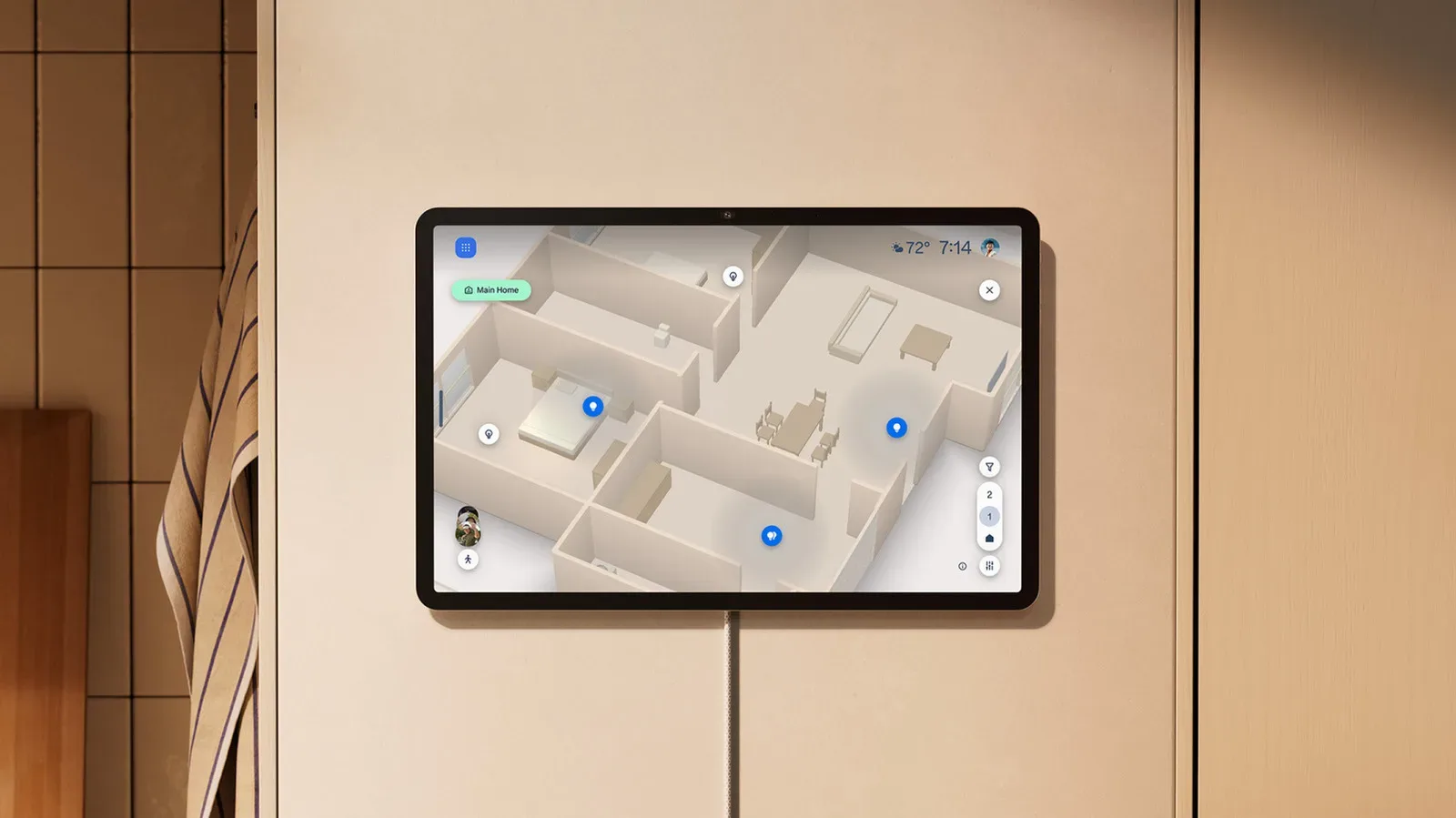
Outside video and Alexa+ conversations, the Echo Show 16 can be used as a customized dashboard for connected lights, thermostats and speakers. It also provides access to Alexa Home Map, a visual control view for a smart-home setup. For more on that interface’s goal of making device control easier to interpret at a glance, see our look at Alexa Home Map.
The Family Organizer screen style adds another communal role, placing schedules, tasks, meal plans and to-do lists in one view. Alongside the digital photo-frame option, it reinforces the product’s purpose as a household display that needs to earn its counter or wall space even when nobody is actively streaming video.
That is where the Echo Show 16’s hardware changes and software changes meet. A larger, thinner screen improves its plausibility as an always-on shared surface. A glare-reducing panel could make that surface more legible in difficult lighting. Fire TV gives the hardware an entertainment role, while Visual ID, Alexa+ Cards, Home Map and Family Organizer supply reasons for it to remain active between shows.
Who the Echo Show 16 is for
The Echo Show 16 is best understood as a premium smart display for people who want several room-based functions in one device: streaming screen, video-call endpoint, photo display, smart-home dashboard and family planning board. The $500 starting price makes it a more considered purchase than a basic smart speaker, and the $570 nanomatte configuration asks buyers to put a clear value on improved reflection handling.
- Choose the standard display if the device will live in a room with manageable lighting and the lower upfront price matters more than glare reduction.
- Consider nanomatte if the Echo Show will regularly face windows or bright lamps, or if it will frequently serve as a photo frame or video screen in daylight.
- Consider a stand when viewing angle or placement flexibility is important; the swivel-and-tilt option provides the most adjustability, but costs $125.
- Check Alexa+ access before treating interactive comparisons and saved Cards as included hardware features, since they require Prime or a standalone Alexa+ subscription.
- Think through Visual ID if personalized content at longer range is appealing, and weigh that convenience against the household’s comfort with facial recognition.
Amazon’s redesign is not just about increasing the number on the box from 15 to 16. The Echo Show 16 puts its upgrades behind a clearer proposition: a larger shared screen that should fit more cleanly into a room, resist more of the light that makes shared screens frustrating, and do more with the information Alexa presents on it.
Shop the products
Check current price, model and availability at the retailer.