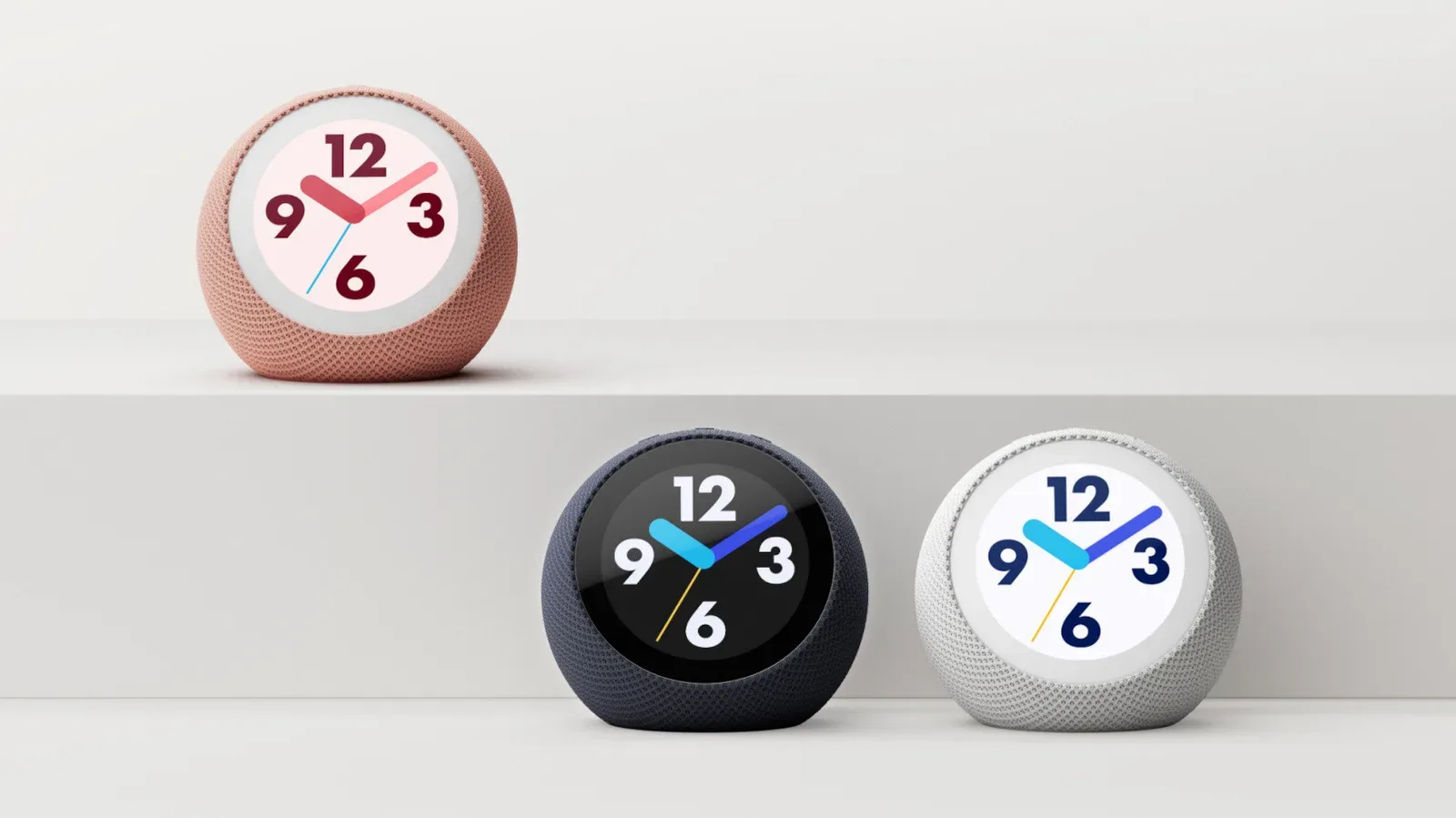
Amazon has introduced the Echo Time, a smart alarm clock built specifically for the bedside table rather than the middle of a living-room smart-home setup. The $200 device pairs Alexa with a spherical body, a customizable 3.2-inch circular touchscreen and a set of wake-up features meant to make mornings feel less like an emergency boss fight.
Its standout promise is an optional smart alarm that attempts to wake a person during lighter sleep, using sensors in the device instead of requiring a wearable. That convenience comes with an important practical trade-off: when enabled, the alarm may sound anywhere from 10 to 60 minutes before the time a user set. The Echo Time is therefore aimed at people with some flexibility in their morning schedule—not anyone who has exactly one train to catch and no appetite for algorithmic improvisation.
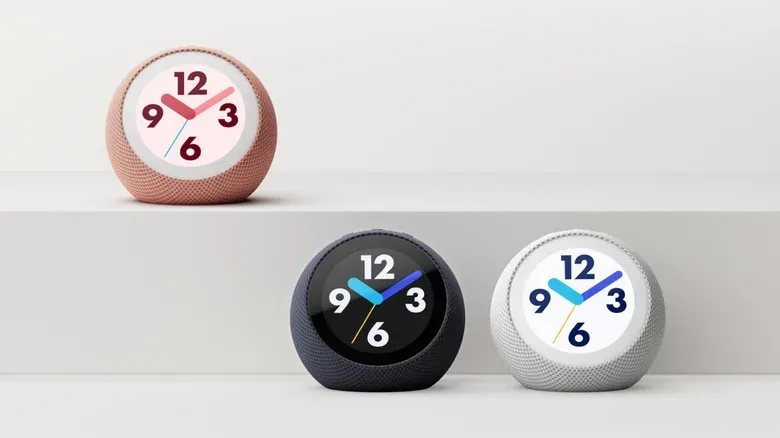
Amazon is selling Echo Time now in Graphite, Glacier White and Coral Pink. A matching adjustable stand costs $40. There is also a $210 Amazon Kids Echo Time in Galactic Grape and Cosmic Lime; it includes one year of Amazon Kids+.
A bedroom device designed around a smaller screen
The Echo Time has a 3.2-inch circular touchscreen, making it a considerably more focused sort of display than a general-purpose screen intended for recipes, video calls or smart-home dashboards. Its core job is visible at a glance: display the time, present an alarm and avoid turning the bedside table into a miniature command center.
Customization is nevertheless a major part of the pitch. Amazon says users can select from hundreds of clock faces, spanning analog looks, seasonal designs and themes featuring characters from franchises including the DC Universe. Clock-face changes can be requested by voice, such as asking Alexa to switch to a seasonal theme.
That may sound cosmetic, but it suits the object’s role. A bedside clock is among the few screens people can see both immediately before sleep and immediately upon waking. Giving the display a more personal look could make it feel less like a glowing appliance. Conversely, anyone trying to limit visual stimulation at night may care far more about the device’s dimming behavior than superhero-themed faces.
Echo Time’s display is designed to brighten in a sunrise-like fashion as an alarm approaches. At night, it shifts into a dimmed night mode that is intended to leave the time readable without flooding the room with light. This is a lighting behavior, not a substitute for a dedicated wake light or a promise that it will produce the same results for every sleeper—but it is a notably bedroom-specific use for the screen.
What the smart alarm is claiming to do
The more ambitious feature is the smart alarm. Amazon says Echo Time can identify periods of lighter sleep and use that information to choose when to wake someone, without asking them to wear a watch, ring or other sleep tracker.
The device reportedly uses room-temperature sensing, presence detection and ultrasound-based breathing detection to establish a sleep routine. In plain terms, presence detection is intended to help the device determine whether someone is in the relevant area, while ultrasound refers to sound at frequencies beyond normal human hearing. Here, the ultrasound component is described as a way to detect breathing.
Those inputs are meant to inform the alarm’s timing, but they also explain why the setting should be considered optional rather than universally desirable. If smart alarm mode is on, Echo Time can wake a person between 10 and 60 minutes before the scheduled alarm time based on what its sensors detect. The feature is not simply “set 7:00, hear alarm at 7:00.” It is “set a latest wake-up point, then permit the device to choose an earlier moment within a defined window.”
For a weekend, a holiday or a morning with a generous buffer, that may be a reasonable experiment. For a school run, shift change, medical appointment or a meeting that begins at a fixed time, a conventional alarm delivers a simpler kind of confidence. Amazon says the smart features can be switched off completely, allowing Echo Time to work as an ordinary fixed-time alarm when punctuality outweighs sleep-routine experimentation.
The practical question to ask before using it
Potential buyers should decide whether their alarm time is truly flexible. The most useful framing is not whether waking during a lighter-sleep period sounds appealing; it is whether being awake up to an hour earlier than expected is acceptable on a given day.
- Potentially suitable: days off, adjustable remote-work starts, or mornings with a deliberately wide preparation window.
- Worth disabling: fixed departures, time-sensitive responsibilities, and any morning when lost sleep would be more disruptive than an abrupt alarm.
- Best expectation: treat the feature as an optional scheduling behavior informed by sensors, not as a guaranteed reading of sleep quality.
That last point matters. The supplied details describe sensor-based breathing and routine detection, but do not establish clinical-grade sleep analysis or a medical function. The device’s usefulness will depend on how well its wake-window approach aligns with an individual household’s routine.
Privacy controls are central to the pitch
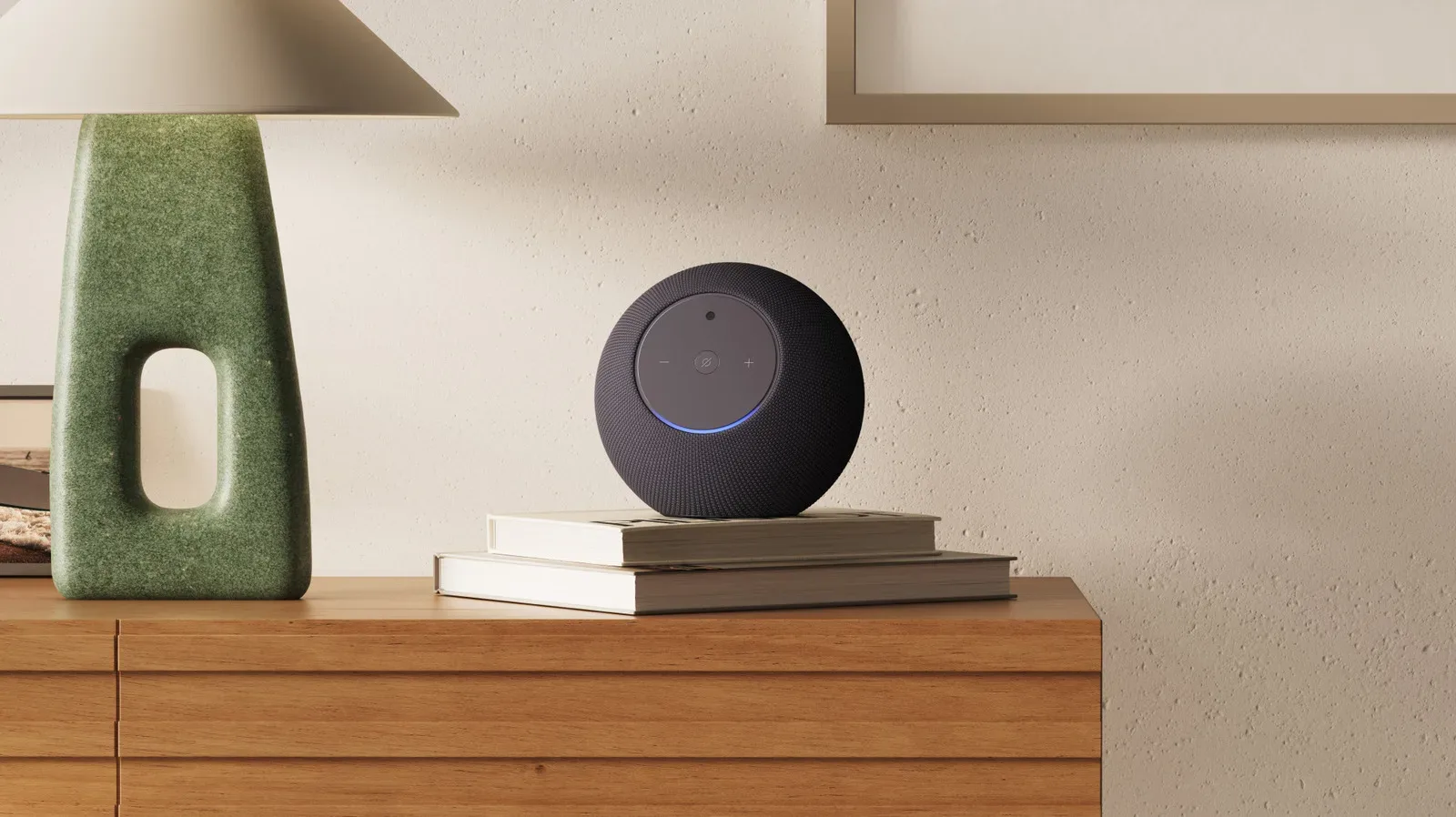
A smart speaker positioned beside a bed carries a different set of concerns than one placed in a kitchen. Echo Time has no camera, an intentional distinction in a room where many people will not want an always-available lens. It also includes visual indicators for when Alexa is listening and a dedicated button that shuts off the microphones entirely.
The physical microphone-off control is especially straightforward: rather than relying on a setting buried in an app or a voice instruction that itself requires a microphone, it gives users a direct hardware control for disabling microphone use. The visual listening indicators, meanwhile, are meant to make microphone activity more apparent.
These choices differentiate Echo Time from the company’s larger screen-equipped smart-home devices. Amazon’s broader Echo lineup includes products built around cameras, live views and video calling, including the Echo Studio with Home Camera. Echo Time is taking a narrower approach: a display for clocks and alarms, voice assistance, and sensor-led bedside features, but no camera.
That does not mean it is a non-sensing object. The smart alarm’s operation depends on presence, temperature and ultrasound-based breathing detection. The meaningful distinction is that buyers are being offered a bedroom device without a camera and with an explicit microphone kill switch, while still retaining the sensors necessary for its optional wake-up system.
The kids model adds parental controls
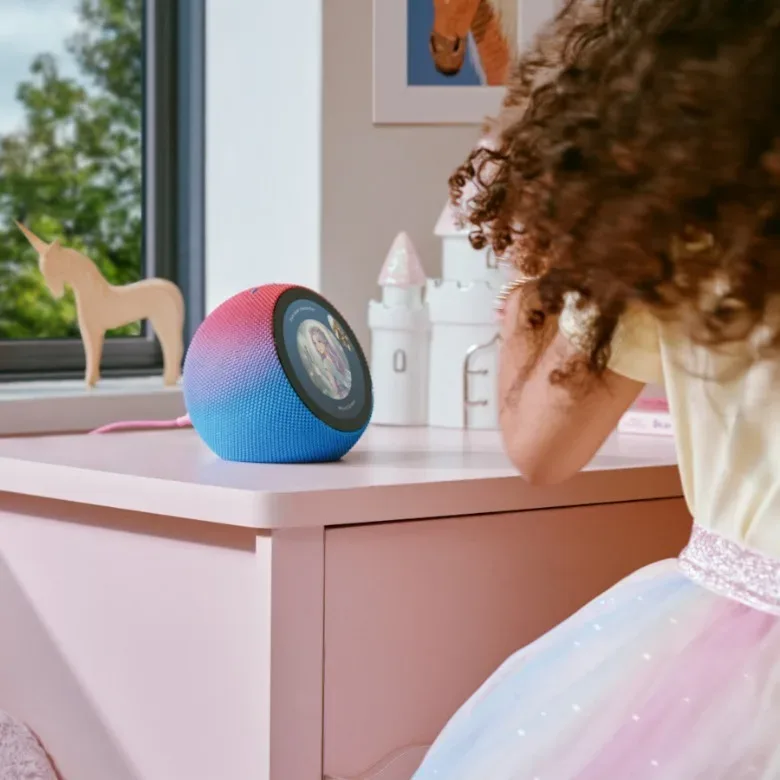
Amazon is also offering a Kids version. The $210 Amazon Kids Echo Time lets children set alarms, change clock faces and ask Alexa questions. Parents retain controls over the experience and their children’s sleep schedules, while the included one-year Amazon Kids+ subscription provides the kid-focused service layer.
The different colors—Galactic Grape and Cosmic Lime—make the family edition visually distinct from the adult model’s Graphite, Glacier White and Coral Pink options. More importantly, its stated purpose is different. The kids device is framed as a tool that allows children some independence over simple bedtime and morning tasks without leaving the overall setup entirely unmanaged.
As with the standard model, the value proposition depends on whether a household wants voice assistance by the bed in the first place. The kid-focused controls may appeal to families trying to give children responsibility for alarms and basic questions, but parents will still want to consider how voice access and a screen fit their own nighttime rules.
Where Echo Time fits—and where it does not
At $200 before the optional $40 stand, Echo Time is not positioned as a cheap replacement for a basic alarm clock. Its price reflects the combination of Alexa, a customizable touchscreen, a camera-free bedside design and sensor-based wake features. The question is whether those elements are worth substantially more than a traditional clock and an existing phone alarm.
For someone who already uses Alexa, wants a dedicated clock rather than a phone on the nightstand, and has mornings flexible enough to try a 10-to-60-minute wake window, the design is coherent. The circular screen, night dimming, sunrise-style brightening and optional smart alarm all serve the same narrow job.
For someone who needs an exact alarm time every weekday, dislikes microphones in the bedroom even with a hardware-off button, or simply wants the least complicated path from asleep to awake, the optional features may be less compelling. Fortunately, the supplied feature set does not require everyone to use the sensor-led alarm: it can be disabled, leaving the Echo Time to handle the more conventional clock, display and Alexa duties.
In other words, Echo Time’s pitch is not that every morning should be optimized by a tiny sphere that has opinions about breathing patterns. It is that a bedroom smart device should be more restrained than a kitchen or living-room one—less camera-oriented, more clock-focused, and capable of becoming smarter only when the owner wants it to.