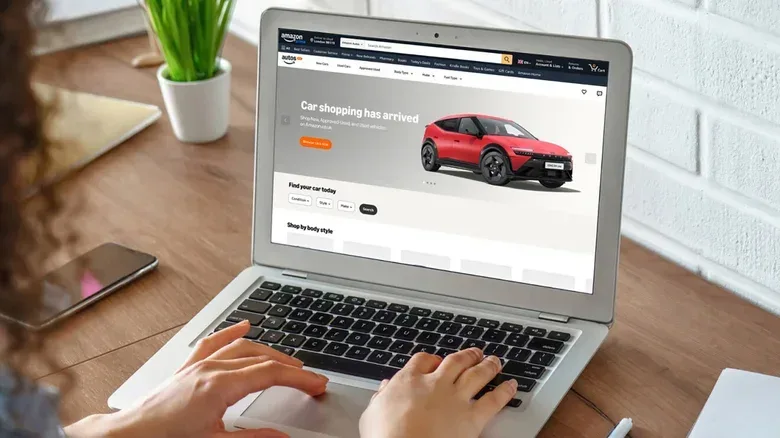
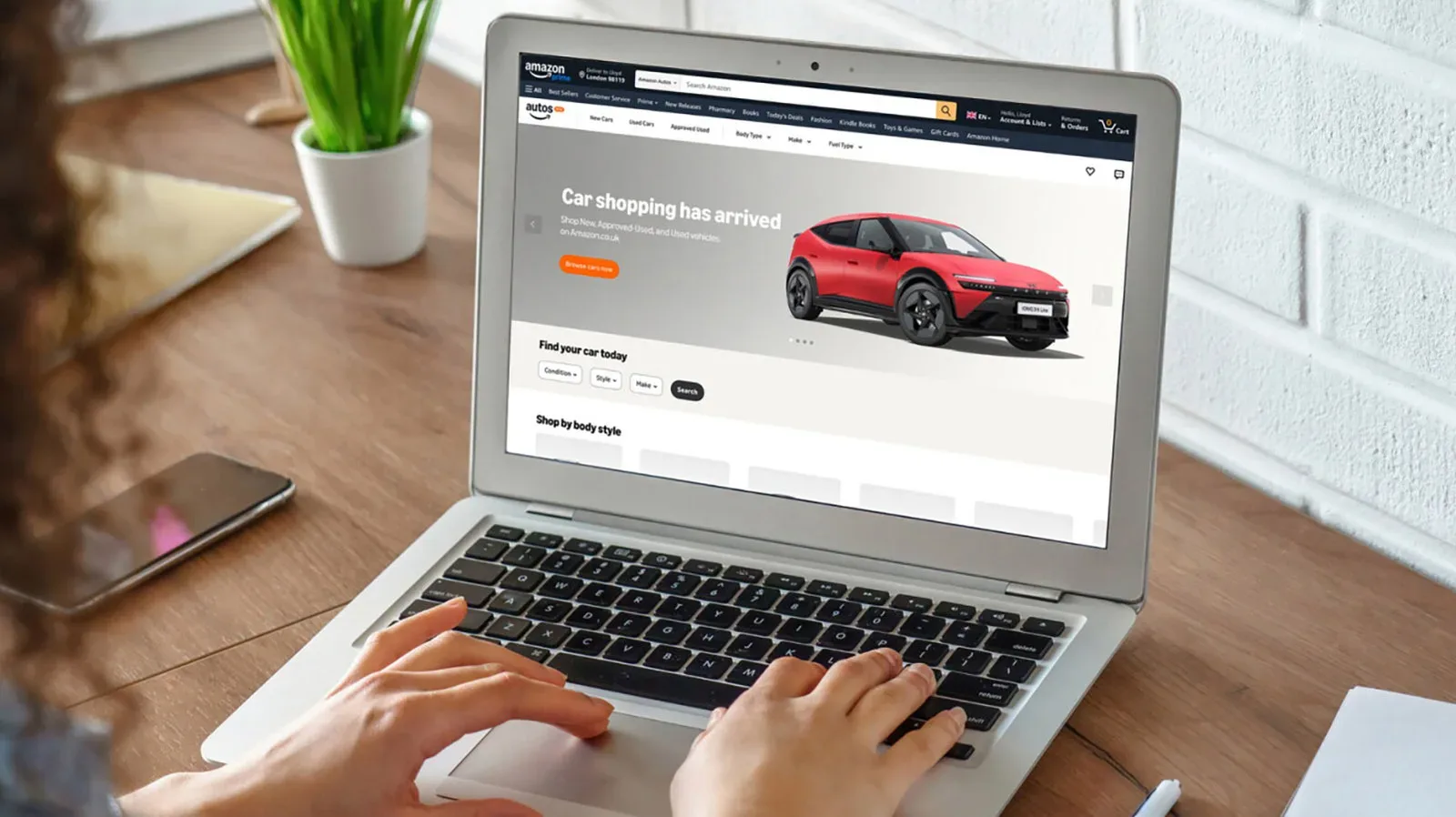
Amazon Autos is heading to the UK in early 2027, bringing the company’s online vehicle-shopping service outside the US for the first time. Hyundai is the first carmaker confirmed for the UK launch, while Vertu Motors is the first named dealer partner.
The essential detail is that this is not a direct-to-consumer car-sales operation in which Amazon becomes the dealer of record. It is a digital storefront intended to help people discover vehicles, compare their payment options and reserve a car. The actual transaction, including finance, will still be completed through a participating dealership.
That distinction may sound administrative, but it defines what UK buyers should expect. Amazon Autos could make the research and shortlisting stages more familiar to people used to shopping online, while the dealer remains the party handling the last mile of a major purchase: final paperwork, finance completion and the eventual handover.
What Amazon Autos will let UK shoppers do
The UK version is expected to offer both new and used vehicles. Shoppers will be able to browse by make, model, colour and price, then compare cash purchases with two common finance formats: personal contract purchase and hire purchase. The service will also show financing rates, provide nearby dealer locations and allow a vehicle reservation.
Amazon says the experience will include upfront pricing and instant part-exchange estimates. In practical terms, an upfront price is meant to give a shopper a clearer starting figure before they reach a dealer. A part exchange is the value offered for a buyer’s existing vehicle when it is traded in against the next one. An instant estimate is useful for budgeting, but it is still an estimate rather than proof of the eventual valuation or the full terms of a completed deal.
The finance comparison is especially important because the headline price of a car and the monthly cost presented to a buyer can represent very different decisions.
- Cash: the buyer pays the full vehicle price without using finance.
- Hire purchase: a finance arrangement where the buyer makes payments over an agreed period, with ownership generally transferring after the final payment.
- Personal contract purchase: a finance option built around agreed payments and a final optional payment. Its precise outcome depends on the agreement chosen.
Amazon Autos can bring these routes together during the comparison process, but shoppers will still need to read the dealer-provided finance terms carefully before committing. The service’s value proposition is visibility and convenience, not a replacement for checking the details of a significant financial agreement.
A marketplace for dealers, not a dealer replacement
Amazon’s stated role is to connect dealers with customers who are already far along in the buying process. It does not take a commission on vehicle sales. Instead, its reported model relies on advertising and ad-based subscription fees paid by dealers.
That approach gives Amazon an incentive to make the platform a useful destination for dealerships looking for qualified interest, rather than simply a broad audience browsing without intent. “Pre-qualified” in this context means a customer has shown indications that they are ready to purchase, rather than merely clicking through general listings.
For participating dealers, a marketplace can potentially provide another route to prospective buyers. It may also give customers a less fragmented place to compare selected models and payment methods before deciding which dealer to contact. But dealership participation matters enormously. The range shown to an individual shopper will be determined by the manufacturers and local dealers taking part, not by every vehicle on sale in the country.
That caveat is already visible in the US operation. The service there carries 14 brands for both new and used vehicles, plus 21 additional makes for used vehicles only, making 35 brands in all. Which brands and models appear can vary by region and by participating dealer. UK shoppers should therefore treat Amazon Autos as a new shopping channel, rather than assume it will be a comprehensive directory of every local vehicle or every possible configuration.
Why the dealer visit still matters
Even with browsing, reserve functions and finance-rate comparisons online, the final stage remains in person at a dealership. That means Amazon Autos does not eliminate the conventional car-buying process; it shifts more of its early work onto a single digital interface.
The dealership will complete the sale and financing. Buyers should consequently understand that a reservation is not the same thing as a completed purchase, and that a displayed part-exchange figure or finance route is not the full end of the process. The local dealer is still central to the transaction.
This hybrid model is a notable contrast with the expectation that online retail always removes intermediaries. Here, Amazon supplies discovery, filtering, comparison and a route to reservation, while the dealer retains the commercial relationship that converts interest into a sale. It is a division of labour designed around a purchase that is much more complex than a typical online order.
What the US rollout suggests—and what it does not
The United States provides the only established reference point for the service so far. Amazon Autos expanded there from 48 cities at launch to more than 150 cities and now works with thousands of dealers. That scale indicates that the company has continued to broaden its dealer network and geographic footprint after launch.
It does not, however, guarantee an identical outcome in Britain. The UK launch starts with a specifically named automaker and dealer partner, Hyundai and Vertu Motors, with additional carmakers and dealers expected to be named later. The availability, local coverage and variety of stock will depend on how that network develops.
There is also a meaningful difference between platform reach and measurable dealership value. Some US dealers have reportedly said the service was slow to produce tangible results, with one or two sales a month. That feedback does not establish the performance of every participating dealer, nor does it predict the UK result. It does underline the central question for any marketplace: whether the audience turns into completed purchases at a level that justifies the cost of participating.
For shoppers, low conversion at a dealer level would not necessarily mean the site is unhelpful. A person could still use it to compare stock and narrow choices. For dealers, though, the test is more demanding: advertising and subscription spending needs to result in sufficient serious customers and sales.
What to watch when the UK service arrives
The early 2027 launch will be defined less by the Amazon name than by the practical scope of its catalogue. Hyundai’s involvement makes it the first confirmed manufacturer to watch, but prospective buyers will want to know which models, locations and dealer inventories are visible in their area. Used-car selection will be equally dependent on participating dealerships.
Price presentation will be another key point. A transparent layout can make comparison easier, particularly when cash, hire purchase and personal contract purchase are displayed alongside each other. But buyers should avoid treating a monthly figure as the sole comparison tool. It is important to understand the payment arrangement being offered and the role the dealer will play in finalising it.
The part-exchange feature could be a helpful planning tool, too, especially for someone attempting to estimate the changeover cost of replacing a current vehicle. Yet an estimate is best understood as a first number to investigate, not the final word on an existing car’s value.
Amazon Autos therefore arrives as a digital layer on top of dealership retail, rather than an attempt to turn cars into ordinary click-to-buy stock. Its promise is a more streamlined route through the research and reservation stages. Its limitations are equally clear: selection is partner-led, local availability will vary, and the dealership remains where the purchase is ultimately completed.
For readers interested in how major technology companies are probing new business models around established industries, the broader conversation around AI, hardware and changing platform economics is also relevant in this look at pressures reshaping the games business. Amazon Autos is a different market, but it follows a similar broad pattern: digital platforms seeking a larger role in how people discover, compare and ultimately buy expensive products.