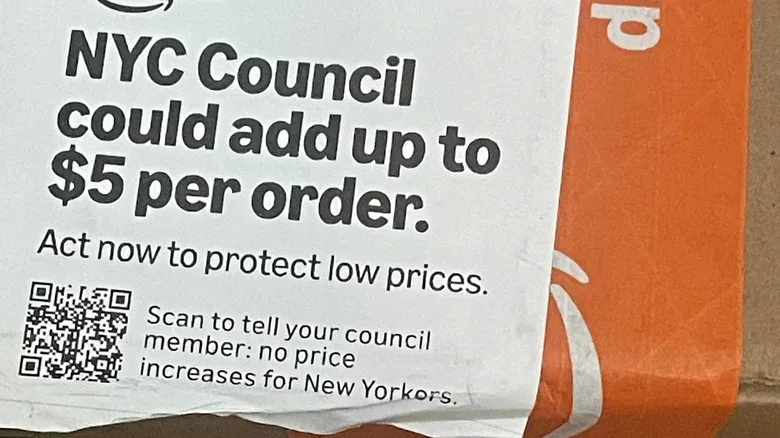
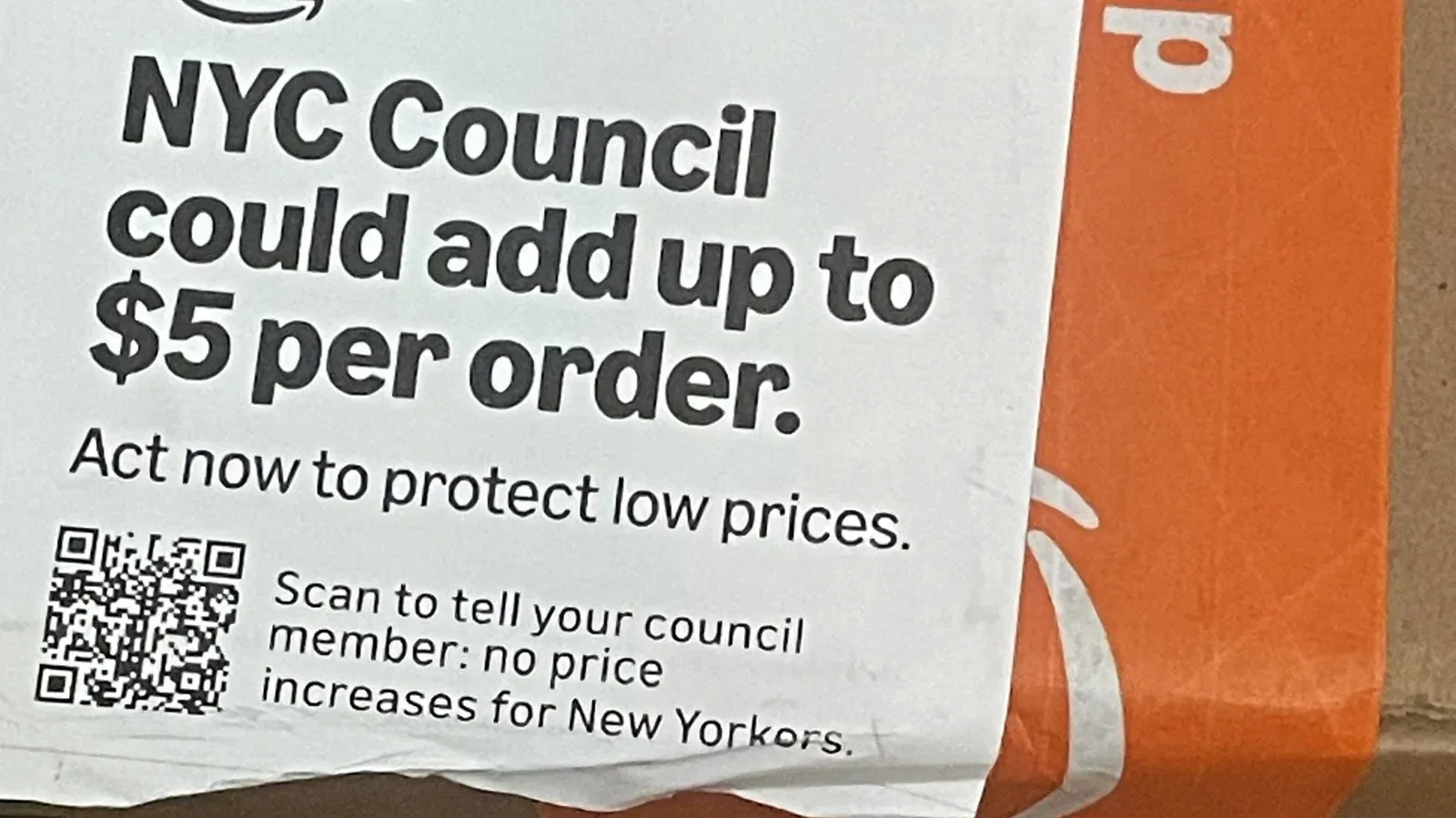
Amazon is taking its argument over New York City’s proposed Delivery Protection Act all the way to the cardboard box. The company has begun placing stickers on packages delivered in the city that warn customers the proposal could add “up to $5 per order”.
The package messaging follows similar notices Amazon had already shown in its mobile app. Both versions urge recipients to oppose the proposal, known as Intro 518, and the stickers include a QR code intended to help customers contact their local representative.
It is an unusually direct use of a delivery itself as a lobbying channel: the parcel arrives carrying not only the customer’s order, but also a warning about the rules governing the worker who brought it to the door. In effect, Amazon has turned the last mile into the final mile of its political campaign.
What the Delivery Protection Act would change
The Delivery Protection Act concerns last-mile delivery, the industry term for the final segment of a package’s journey from a distribution operation to an individual customer. It is typically the most visible part of delivery logistics, because it is the moment when a courier arrives at a home, apartment building, office or pickup point.
High-volume delivery companies, including Amazon, commonly rely on contractors for this part of the process rather than treating delivery personnel as direct employees. Intro 518 would establish new licensing requirements for those last-mile operations and would require delivery workers to be employees of the company instead of contractors.
That distinction is central to the dispute. A contractor arrangement means a worker is not necessarily employed directly by the company whose package is being delivered. The proposed legislation would change that relationship for covered high-volume delivery activity, making the company directly responsible for employing the workers making those deliveries.
New York City Mayor Zohran Mamdani backed the bill in August. The proposal had been introduced months earlier.
Amazon’s case: higher costs and slower deliveries
Amazon’s sticker message frames the measure as a potential cost to customers, with the company claiming the changes could add as much as $5 to an order. Its app notices and package stickers make the consumer-price argument especially prominent, rather than leaving the debate to policy hearings, corporate statements or industry filings.
The company has also said the legislation could make deliveries slower. It has further warned that it could move distribution centers out of New York City in order to avoid the regulation.
Those statements outline the company’s broader position: changing how the last-mile workforce is organized would alter the economics and speed of its local delivery network. Amazon is presenting the potential impact in terms New Yorkers encounter immediately: order totals, delivery timing and the continued local presence of distribution infrastructure.
There is an important limit to the sticker’s headline claim. “Up to $5” is Amazon’s stated estimate of a possible increase, not an established new fee in force. The Delivery Protection Act is proposed legislation, and the available information does not establish that every order would receive an added charge, that any charge would be precisely $5, or how the company calculated its maximum figure.
Supporters focus on accountability and worker conditions
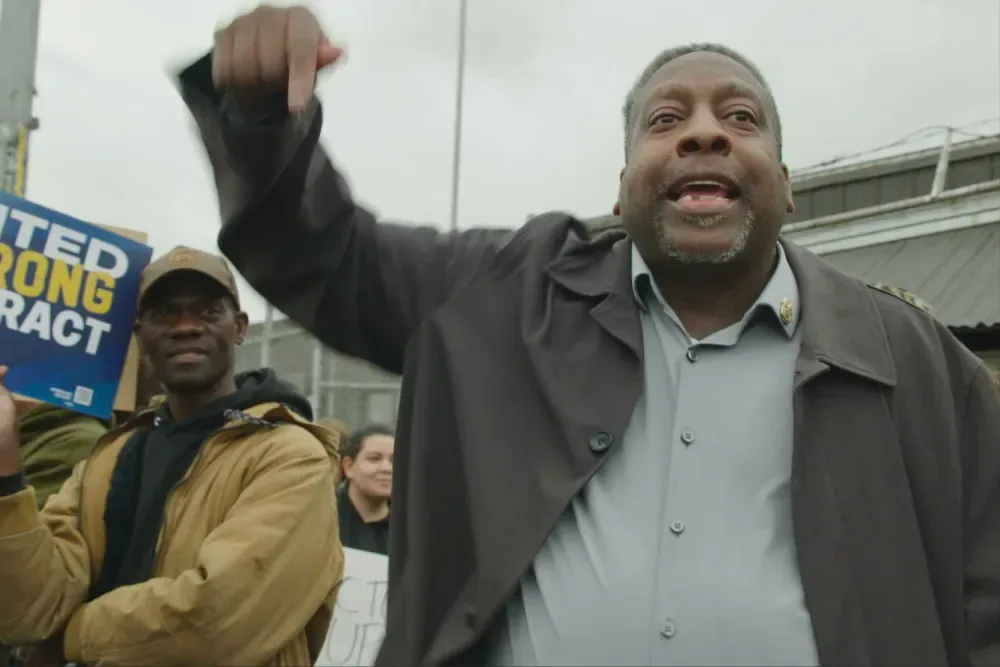
Supporters, including the Teamsters union, argue that the proposed rules would make corporations such as Amazon accountable for deliveries carried out under their business model. They also contend that direct employment would provide delivery professionals with better pay and benefits.
That makes the conflict larger than a fight over a checkout total. It is a disagreement over who bears responsibility for the labor behind rapid local deliveries. Amazon emphasizes what it says customers could pay and how long they might wait. Backers emphasize the employment status, compensation and protections of the people doing the work.
Neither argument is merely about the box on a doorstep. The box is just the most convenient physical object in a system involving warehouse operations, routing, contractors, couriers, customers and city rules. The sticker makes that system impossible to ignore, even if only for the few seconds before the package is opened.
Amazon’s package message warns that the proposed changes could add “up to $5 per order.”
Why the QR code matters
A QR code on a shipping label is more than a piece of packaging design. Its intended purpose is to convert customer attention into political outreach. A recipient can scan the code and, presumably, move from seeing a warning to contacting an elected representative. That is a much more active request than simply informing a customer that a policy debate exists.
The tactic also reaches people outside Amazon’s app. A household member, building staffer or anyone receiving a parcel may see the message even if they were not the person who placed the order. In that sense, the sticker expands the company’s campaign from a digital notice visible during shopping to a physical notice attached to a completed delivery.
For residents, the practical takeaway is to separate the claims from the proposal itself. The sticker describes Amazon’s forecast of what the policy could do. The bill itself, as described here, addresses licensing for high-volume last-mile delivery operations and the employment status of delivery workers. Those are related issues, but they are not the same statement.
- Amazon’s claim: the changes could raise costs by up to $5 per order and slow deliveries.
- The proposal’s described requirements: licensing changes for last-mile operations and employee status for delivery workers.
- Supporters’ argument: stronger corporate accountability, along with better pay and benefits for delivery professionals.
A delivery debate delivered at the doorstep
Amazon’s approach is notable because it uses a routine commercial interaction to make a case about public policy. People expect packaging to identify contents, provide handling information or carry branding. A prompt to call a representative about city labor regulation is a different kind of label entirely.
That may draw more attention precisely because it appears in an unexpected place. But visibility does not guarantee persuasion. The stickers will likely be read differently depending on whether a recipient is primarily concerned about prices and delivery speed or about the conditions and employment protections of delivery workers.
The company is also asking customers to consider a hypothetical cost while the legislation remains under debate. That can be an effective framing device because it gives an abstract policy a simple number. Yet the policy dispute remains more complicated than the number printed on a parcel: it turns on how a major delivery network employs people, meets licensing obligations and operates within New York City.
For shoppers already watching retail promotions and order costs, the claim will be immediately legible. That consumer-price sensitivity is particularly visible around major sales activity, including deals such as discounted Xbox accessories and gaming gear. But a possible added fee is only one side of the city’s pending policy choice.
What remains unresolved
The available details do not say whether the proposal will pass, when it might take effect if approved, how its licensing structure would operate in practice, or how Amazon derived its “up to $5” estimate. They also do not establish whether Amazon would follow through on its stated possibility of shifting distribution centers outside the city.
What is clear is that the company has escalated its public response. It first used app notifications, then carried substantially the same warning onto packages. Its message asks New Yorkers to treat the Delivery Protection Act as an issue with direct consequences for their wallets and deliveries.
Supporters see the same legislation through a labor and accountability lens. The eventual argument will therefore not be settled by a QR code, a slogan or a single cost estimate. It will rest on the city’s judgment about how the convenience of high-volume delivery should be balanced against responsibility for the workers who make that convenience possible.