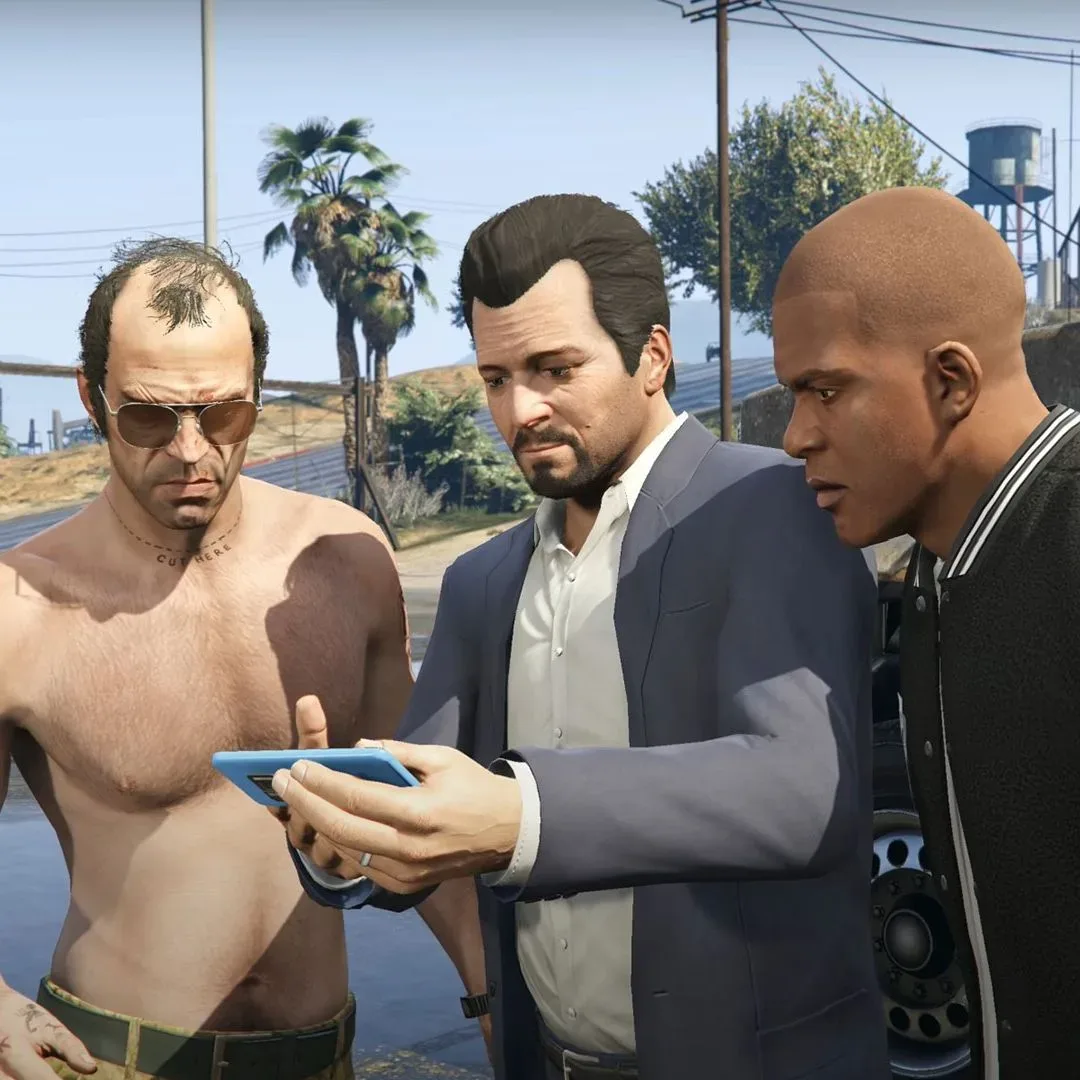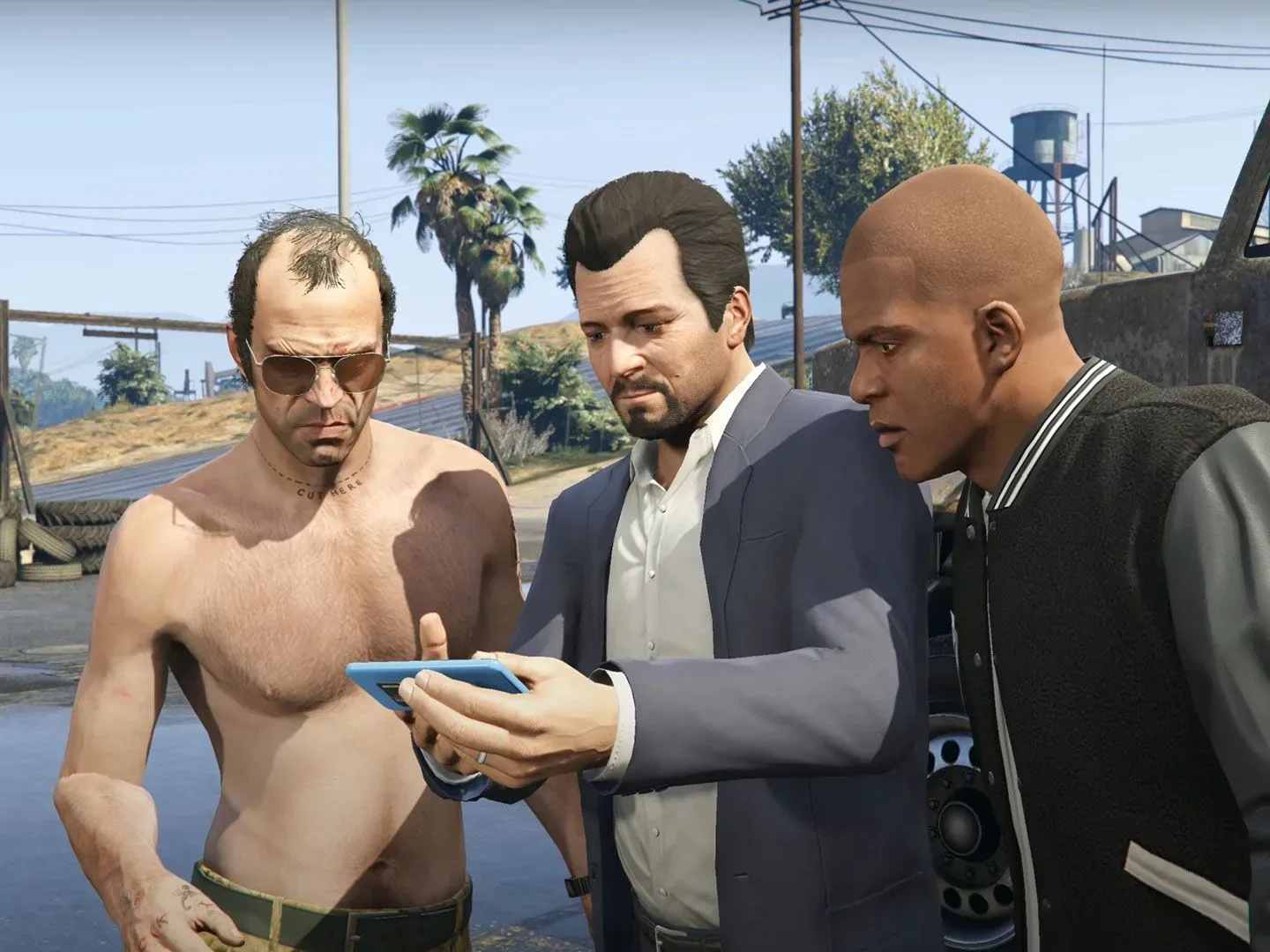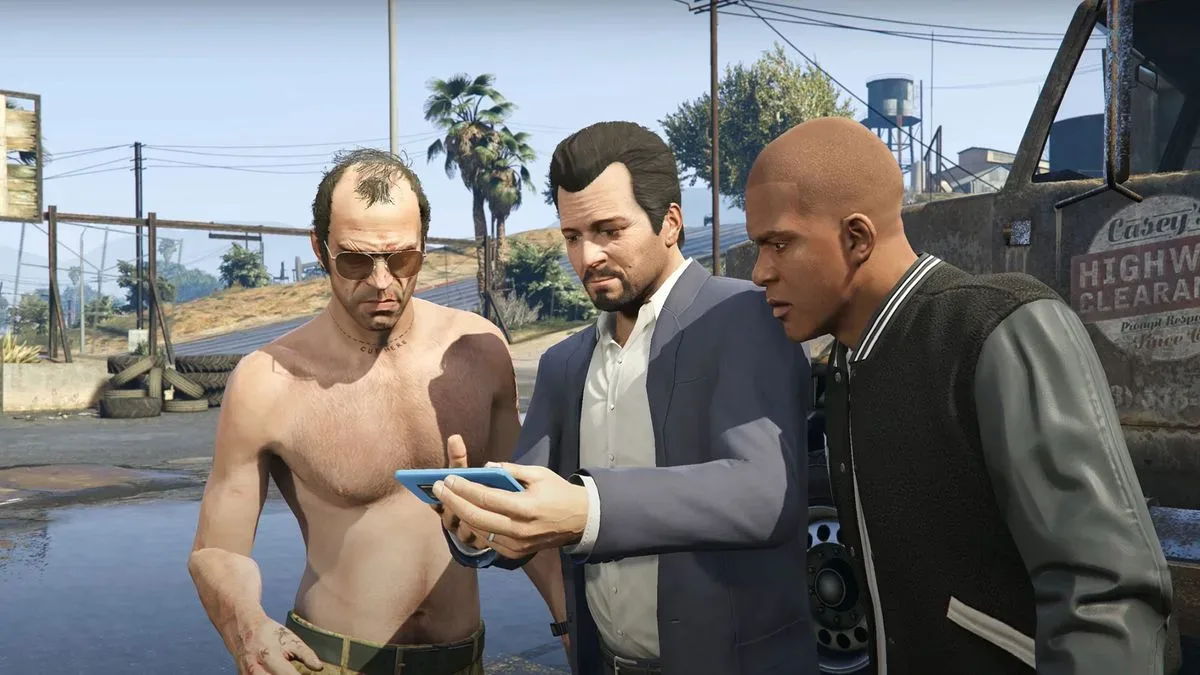
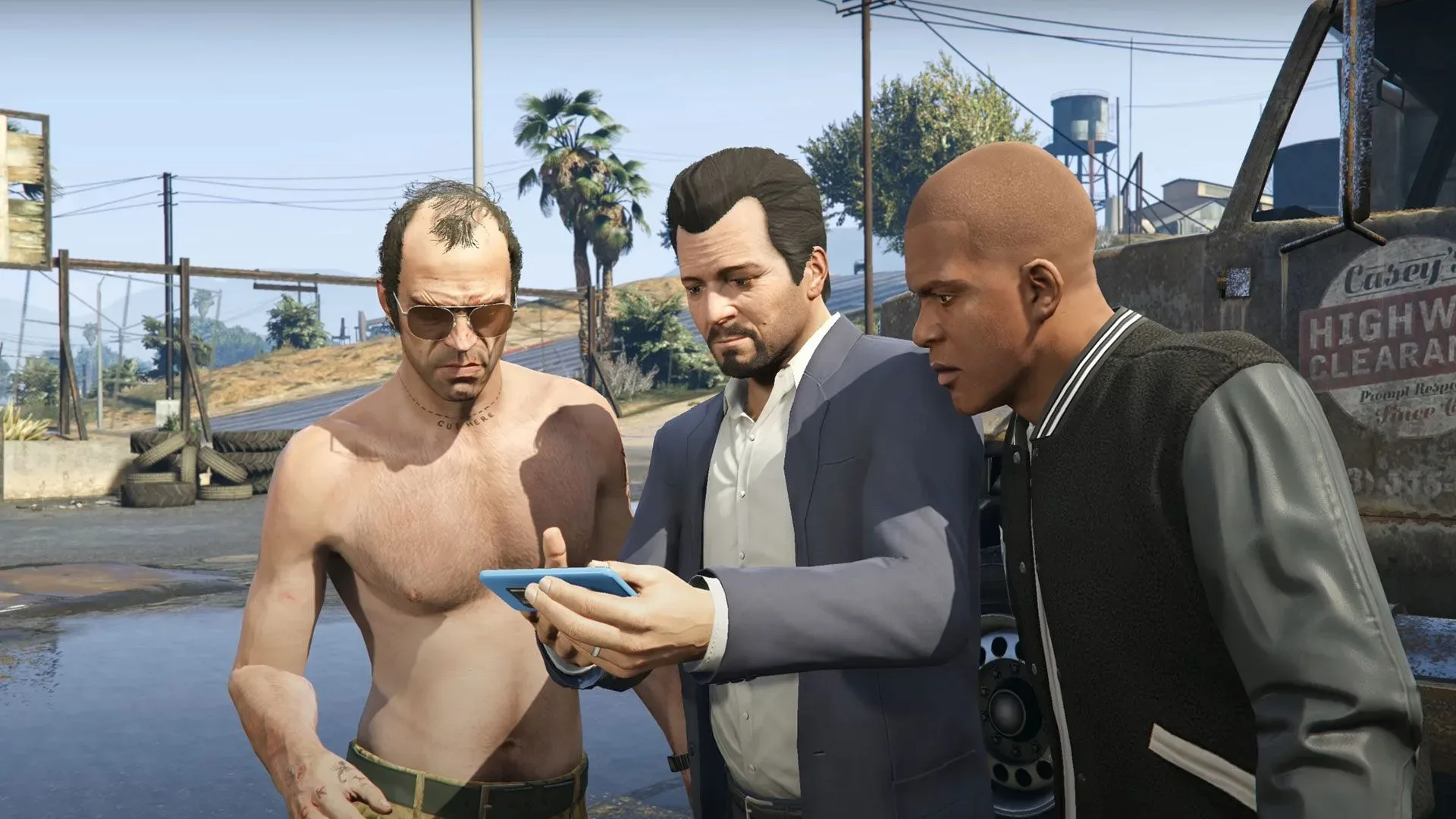
Aaron Garbutt’s most useful lesson from the development of Grand Theft Auto V is not a flashy production secret. It is a discipline: do not become so attached to a process, objective, asset or favorite idea that the game cannot improve without it.
Garbutt, who was art director on GTA 5 and is identified as the head of the GTA 6 studio, discussed the principle in a 2013 interview. His central test was straightforward: the project’s needs should determine the next step. In his words, developers should let what is best for the game guide the way forward.
That sounds self-evident until it is applied to a huge open world. A game of that scale is not a collection of isolated departments delivering separate work. The map, missions, story, structure and moment-to-moment play all place demands on one another. An appealing location can create problems for mission design. A mission concept can clash with the shape of the world. A system that is exciting in isolation can take so long to implement that it compromises other work. The difficult job is recognizing those collisions early enough to adapt.
“Kill your darlings” is a production skill, not a slogan
The phrase “kill your darlings” is commonly used across creative fields. It means removing or changing an idea one loves when it no longer helps the larger work. In game development, it does not necessarily mean treating every old plan as worthless, nor does it mean changing direction constantly. Garbutt explicitly distinguished his approach from altering things simply for the sake of alteration.
Instead, the principle calls for evidence-led flexibility. A team makes a plan, builds work around it, plays the result and revises the plan if the pieces are not working together. The “darling” may be a visual asset, a mechanic, a process or even a goal. Its value is not decided by how much effort has already gone into it, but by whether it improves the finished game.
That distinction matters. Uncontrolled change can be as damaging as stubbornness: teams can lose clarity, repeat work and fail to complete a coherent project. Garbutt’s version of openness is more demanding than merely being willing to brainstorm. It asks teams to keep assessing the relationship between their choices and the whole game, then make a difficult call when that relationship stops working.
Technical term: iteration
Iteration is the cycle of making something, evaluating it and refining it. In the context Garbutt described, iteration is not confined to correcting minor flaws. It is a continuous effort to make interdependent elements fit together better. Play reveals issues that a planning document or individual asset may not: pacing may feel wrong, navigation may be unclear, an encounter may not suit its surroundings, or a narrative beat may not land within the structure supporting it.
For players, iteration is usually invisible when it succeeds. They experience a world that feels navigable and missions that appear to belong in it. The discarded alternatives, reworked plans and internal compromises rarely appear on screen. Yet the willingness to revise is part of what makes the final experience feel intentional rather than assembled from disconnected good ideas.
Related coverage includes GTA 5 Art Director's Design Rule Still Explains the Challenge of Building Open Worlds.
Why an open world makes the rule more consequential
Garbutt described a layered approach to building an open-world game. The world comes first, with missions, story and game structure added on top. That ordering should not be read as a rigid one-way handoff. His point was that every layer influences the others “massively,” requiring each to adjust in response.
A layer, in this sense, is a major portion of the game built around the same space. The world provides the terrain and places in which activity occurs. Missions direct the player through specific scenarios. Story gives those scenarios meaning. Structure organizes progression and how the experience is encountered. The layers cannot be evaluated entirely separately because changing one can alter the usefulness of another.
Consider the practical implication without assuming any particular cut feature from GTA 5. If a location is compelling visually but does not support the activities built around it, the team may revise its use, adjust the nearby activities or alter the location itself. If the structure of progression makes a mission arrive at an ineffective time, the mission, the progression or both may need reconsideration. The question is not which department had the earliest plan; it is which revision best serves the game as a connected experience.
Garbutt said the team was always playing, refining and adjusting elements so that they worked better alongside one another. This also helps explain why large games resist simple descriptions of development as a straight line from concept to release. Progress can involve building forward, then revisiting work because later layers reveal new needs.
Technical term: interdependence
Interdependence means that components affect each other rather than operating independently. Open-world design is especially interdependent because it must account for player movement through a shared space while combining authored missions, systems and narrative. A decision in one area can introduce a constraint in another.
Garbutt’s advice is therefore less about abandoning creative ambition than managing interdependence honestly. A feature that looks excellent by itself may create enough friction elsewhere that reworking it is the better option. Conversely, a promising element may be retained but adapted to a different role. This is why “killing” a darling need not mean deleting all related work.
Adaptation does not always mean throwing work away
One of the most revealing parts of Garbutt’s explanation is his point that the team rarely threw away content. Its approach was to adapt plans and look ahead with what he called a clean slate rather than defend earlier decisions stubbornly.
That is an important corrective to a simplistic reading of creative revision. “Cut it” is not the only answer. Sometimes the right response is repurposing, restructuring or revising an existing element so it serves a new need. The relevant standard remains the same: what strengthens the game now?
This approach also acknowledges the reality of development work. A complex game is built through accumulated decisions. Reassessing a choice does not erase the labor behind it, and retaining useful work where possible can be different from clinging to its original purpose. Garbutt’s framing leaves room for adaptation while still insisting that no plan is beyond question.
His account also emphasizes experience without presenting experience as immunity from surprises. He credited an art team highly experienced in making open worlds, while noting that new problems still arise and that the development approach has to be ready to respond. Expertise helps a team navigate known challenges; it does not eliminate the need to observe, test and change course.
What this means for players waiting on ambitious games
Players often encounter game development in fragments: early trailers, broad promises, familiar genres and expectations built from previous releases. But Garbutt’s comments offer a useful reminder that a game’s final form is shaped by trade-offs between connected systems. Not every early-looking possibility can—or should—survive unchanged if it undermines the project’s coherence.
That does not make every reduction in scope automatically good, and it should not be used as a blanket excuse for vague communication or unfinished work. It does explain why a responsible production process may involve substantial revision. Choosing not to preserve a feature exactly as first imagined can be a sign that developers are responding to the game that is actually taking shape rather than the one they first pictured.
It is also a useful lens for reading broader industry pressures. Getting a project finished requires decisions about time and competing priorities. When an idea conflicts with other systems or demands an outsized amount of implementation effort, a team may need to rework or abandon it to protect the project as a whole. The alternative is not always “more features”; it can be an increasingly unstable design that never resolves its conflicts.
The underlying principle applies beyond Rockstar’s games. The recent discussion around ongoing work on Tomb Raider: Catalyst amid reported layoffs at Crystal Dynamics is a reminder that development happens under changing conditions, though Garbutt’s 2013 comments do not address that project or its circumstances. What they do offer is a clear creative rule: teams must be able to reassess decisions as circumstances and the work itself evolve.
A durable rule for a complicated medium
Garbutt’s account does not reveal a specific feature list for Grand Theft Auto VI, nor does an old design philosophy predict exactly how any future game will be made. Its value is more fundamental. It describes the mindset needed when a game is too interconnected to be governed by a fixed document or a single department’s priorities.
Build with a plan, but do not worship it. Respect the labor behind an asset or concept, but do not confuse that labor with a reason to preserve it unchanged. Keep playing the work, examine how its layers affect one another and adjust when the game points to a better route. For an open-world production, that may be less glamorous than a blockbuster reveal—but it is the kind of discipline that helps turn a giant set of moving parts into a game that holds together.