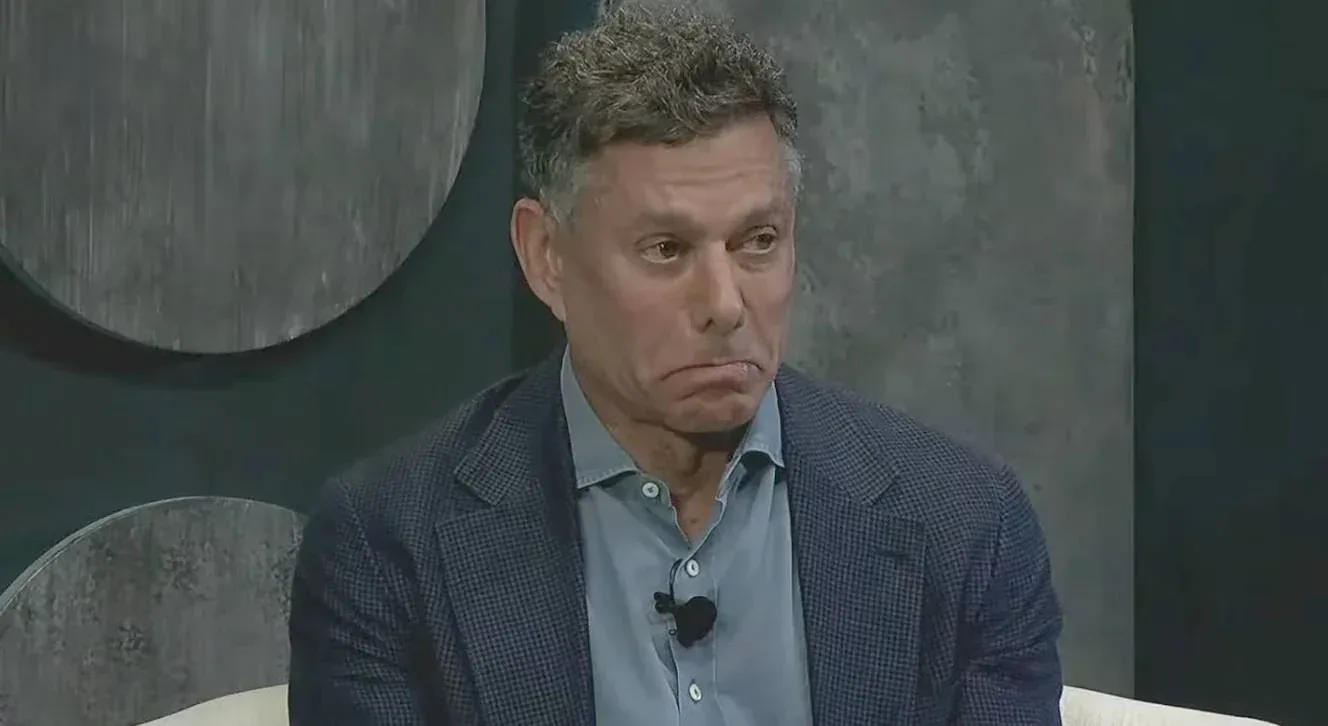

Artificial intelligence may make parts of game development easier, but it will not make the hardest outcome in entertainment any more automatic: creating a hit. That was the core of Take-Two CEO Strauss Zelnick’s comments on technology during the company’s latest earnings call, where he described a familiar but important distinction between making assets and making something audiences truly embrace.
“Look, technology benefits us,” Zelnick said, framing AI and other emerging tools as part of a much longer pattern. Games have always been made with computers, he argued, and advances in the tools used to build them have generally helped creators. But the company executive’s larger point was that better tools do not independently supply taste, judgment, direction or the ability to turn an ambitious project into a lasting success.
“Making a big hit was hard then, it’s hard now, and it’s going to be hard in the future. And hit creation remains the purview of human beings.”
What Zelnick did—and did not—say about AI
The most precise reading of the comments matters. Zelnick did not identify a particular AI product, workflow, studio deployment or feature. He also did not say that AI itself had already transformed a named Take-Two project. Instead, he spoke broadly about “recent technological advances” making it easier to create assets than it was earlier in his career.
That is an intentionally wide category. In game development, an asset is a production element used in the game: it can include a visual object, environment component, animation, sound, interface element or another piece of content that teams assemble into a playable experience. Easier asset production can be significant, particularly on games with large quantities of content. Yet an asset is not the same thing as a game’s identity, its creative coherence, or the audience response to the finished work.
His argument therefore has two linked parts. First, development tools can reduce difficulty in some areas of production. Second, a reduction in production friction does not solve the creative and commercial challenge of making a major release matter to players. The latter, Zelnick said, remains grounded in human creativity and in people using technology well.
It is a restrained position, but it sidesteps the common oversimplification that AI presents only two possible outcomes: total replacement of creative workers or no meaningful use whatsoever. Zelnick instead presents technology as an aid within a human-led creative process. That does not answer every practical question surrounding AI in games, but it clearly establishes the company’s stated priority: technology should be harnessed in service of entertainment rather than treated as a substitute for the people responsible for it.
Efficiency and creative success are different problems
Zelnick’s distinction is especially relevant because “game development” can refer to many radically different kinds of work. A tool that speeds up one task does not necessarily improve every other task that makes a game successful.
Related coverage includes Take-Two CEO Says AI Can Streamline Game Development, but Hits Still Depend on Human Creativity.
- Production efficiency concerns how quickly or easily teams can make and revise material.
- Creative direction concerns deciding what belongs in the game, what does not, and how every element supports the intended experience.
- Hit creation concerns whether the final work connects with a large audience in a meaningful way—an outcome that cannot be guaranteed simply because content can be made faster.
Those categories overlap, but they are not interchangeable. More easily created assets can give a team more options. They can potentially free time for revision, enable iteration, or reduce the burden of particular tasks. At the same time, additional options create another human challenge: somebody still has to select, refine, reject and organize them. A larger pile of possible material is not, by itself, a clearer creative vision.
This is why Zelnick’s formulation puts emphasis on “harnessing technology.” The phrase implies that the tool is useful only within a process governed by people. A game needs decisions about tone, pacing, character, world design and the relationship between player actions and the experience being built. Even when a tool assists with creation, those decisions remain central to whether the final project feels intentional rather than merely extensive.
There is also a difference between technical completion and cultural impact. A game may be polished, large in scope and backed by sophisticated production tools while still failing to become the kind of hit Zelnick described. Major entertainment success depends on a combination of execution and audience interest that cannot be reduced to asset throughput. His comments do not claim that human teams are guaranteed to get it right; rather, they say the responsibility for trying to get it right remains human.
The GTA 6 context gives the remarks extra weight
Statements from Take-Two naturally draw particular attention because the company owns Rockstar Games and is preparing for Grand Theft Auto VI. Zelnick has said that the company expects the numbers to speak for themselves soon enough, while also acknowledging that the scale of the game’s expected reception has surpassed even the company’s earlier expectations.
That backdrop makes a broad technology answer more consequential than it might be from a smaller publisher. GTA 6 carries enormous public attention, and any comment that touches the future of game-making will inevitably prompt questions about how a project of that scale is made. Still, the available remarks offer no basis for asserting that AI was used in GTA 6, in what capacity it may have been used, or whether it affected the game’s production. Zelnick’s answer was a general statement about technological progress and the company’s creative philosophy, not a disclosure of a specific development pipeline.
That uncertainty is worth preserving. “AI” is often used as a catch-all label, but it can refer to different tools and different stages of work. A discussion of technology helping with assets is not proof of a particular system being used to generate finished art, dialogue, code or any other game component. It is also not a claim that automation decides the direction of an entertainment product. Zelnick’s answer explicitly resists that second idea by placing hit creation with human beings.
Why the wording is cautious
An earnings call is a setting where executives must discuss a company’s outlook, strategy and potential advantages while avoiding unsupported promises. Zelnick’s answer reflects that balance. He expressed optimism about technological advancement and hoped its benefits would accelerate, but he did not offer a timetable, a measurable savings target, or a claim that new tools would make blockbuster success predictable.
That caution makes sense on its own terms. If technology lowers the effort needed for portions of production, it could change how teams allocate time and resources. But it cannot remove the uncertainty inherent in entertainment. Players do not respond to a release as a spreadsheet of efficiently created assets. They respond to the work as a whole: the experience, the ideas, the details, and whether the game earns their attention.
For developers and players, the practical takeaway is less dramatic than claims of a fully automated future, but arguably more useful. Watch for how tools are incorporated into real creative processes, not just for headlines about what a tool can theoretically produce. The relevant question is not simply whether a system can generate material. It is whether a team can use that system to make a more distinctive, cohesive and compelling game without losing the human judgment that determines why the material is there in the first place.
That focus also applies beyond development itself. Games must reach audiences, and the paths by which people discover them are increasingly shaped by digital systems. The relationship between algorithms and player attention has its own stakes, as shown by ongoing questions around platform recommendation signals and gaming discovery. Building a game and helping players find it are separate challenges, but both sit inside a technology-heavy entertainment landscape.
A useful boundary in an overheated debate
Zelnick’s comments do not settle the broader debate over AI’s role in games. They do, however, draw a useful boundary between assistance and authorship. Technology can make elements of the work easier to create; the challenge of deciding what a game should be, and of delivering something audiences consider a hit, is not solved by that fact.
For a company whose work includes one of the industry’s most anticipated releases, that is a notable message. The goal is not technology for its own sake. The goal, as Zelnick described it, is better entertainment—created through human creativity while taking advantage of tools that may evolve quickly around it.