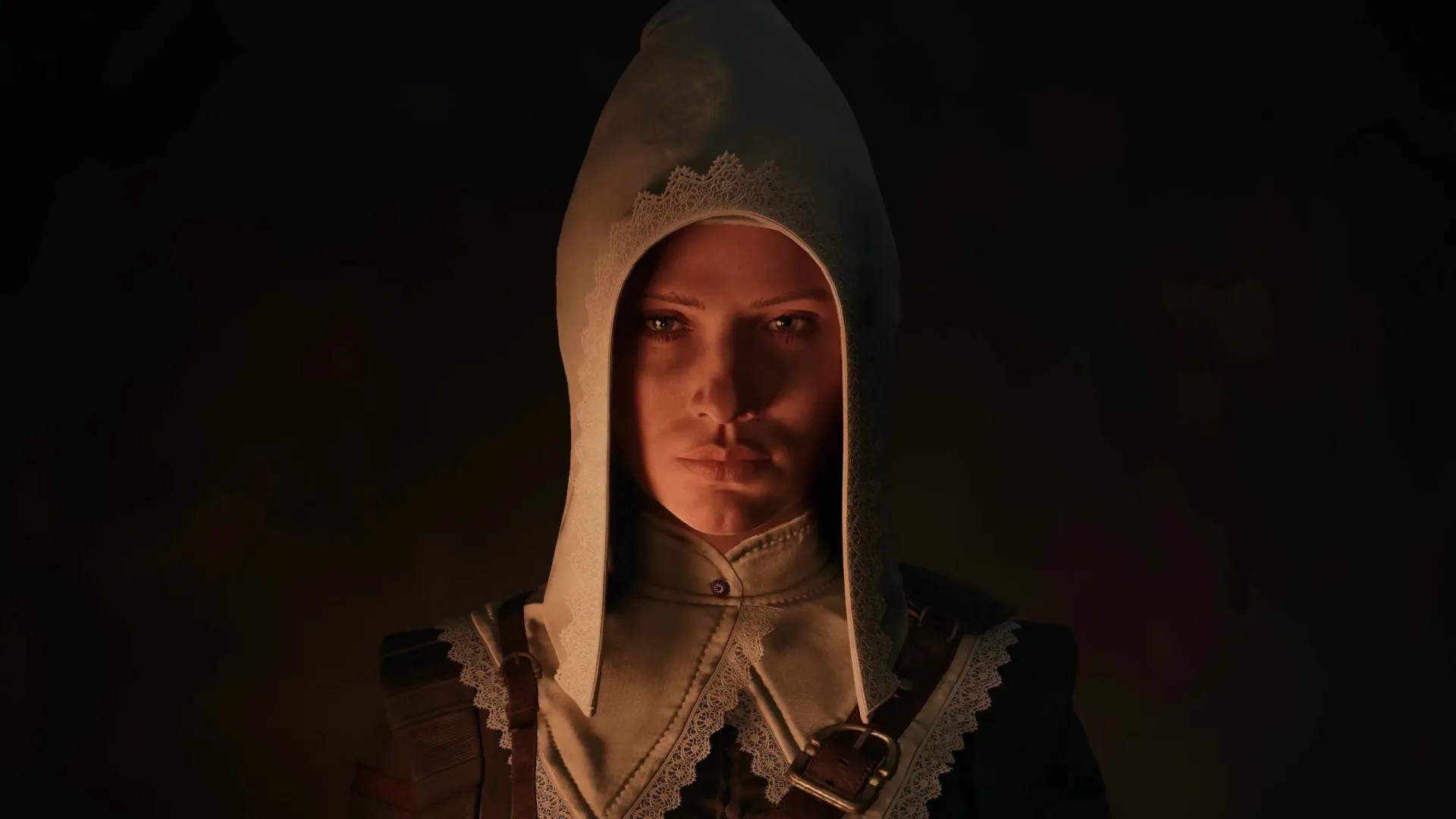
1666 Amsterdam has finally reached Early Access after a development journey that Patrice Désilets says has lasted roughly 16 years and changed direction more than once. But the important part of that milestone, for Panache Digital Games, is not a declaration that the work is done. It is an invitation to keep changing the game.
Désilets, whose earlier work helped establish Assassin’s Creed, describes the current phase as an iterative development process: the studio has its own plan and backlog, but can now compare those intentions with feedback and player behavior. That has already produced a meaningful revision to one of the game’s central roguelike systems.
The original approach would have removed all of protagonist Noa’s collected abilities after a failed run, requiring players to locate them again in the open world. Playtests made clear that the cost of that reset was too severe. The Early Access build instead preserves the player’s discovery of ability types, while changing the particular selection available after failure. In plain terms, players no longer need to repeat the hunt for every power they had already uncovered, but they may need to solve the next mission with a different magical toolkit.
That distinction is a big one. It shifts failure away from repeating discovery work and toward adapting strategy. It also offers a clearer view of what 1666 Amsterdam is trying to become: an open-world witch game where uncertainty remains important, but player progress is not casually erased.
From a devil concept to Noa’s witch story
1666 Amsterdam entered Early Access in August 2026, following a long-running intellectual-property dispute between Désilets and his former employer Ubisoft after his final departure in 2013. The project was initially conceived immediately after Assassin’s Creed, and Désilets has acknowledged that its early shape was influenced by the rules and assumptions developed around characters such as Altaïr and Ezio.
Its original premise was markedly different. The early version centered on playing as the devil. When Désilets returned to the project in 2020, he decided he no longer wanted to pursue that idea and reset the concept. The new question was what character could embody the more devilish side of the setting. His answer was a witch.
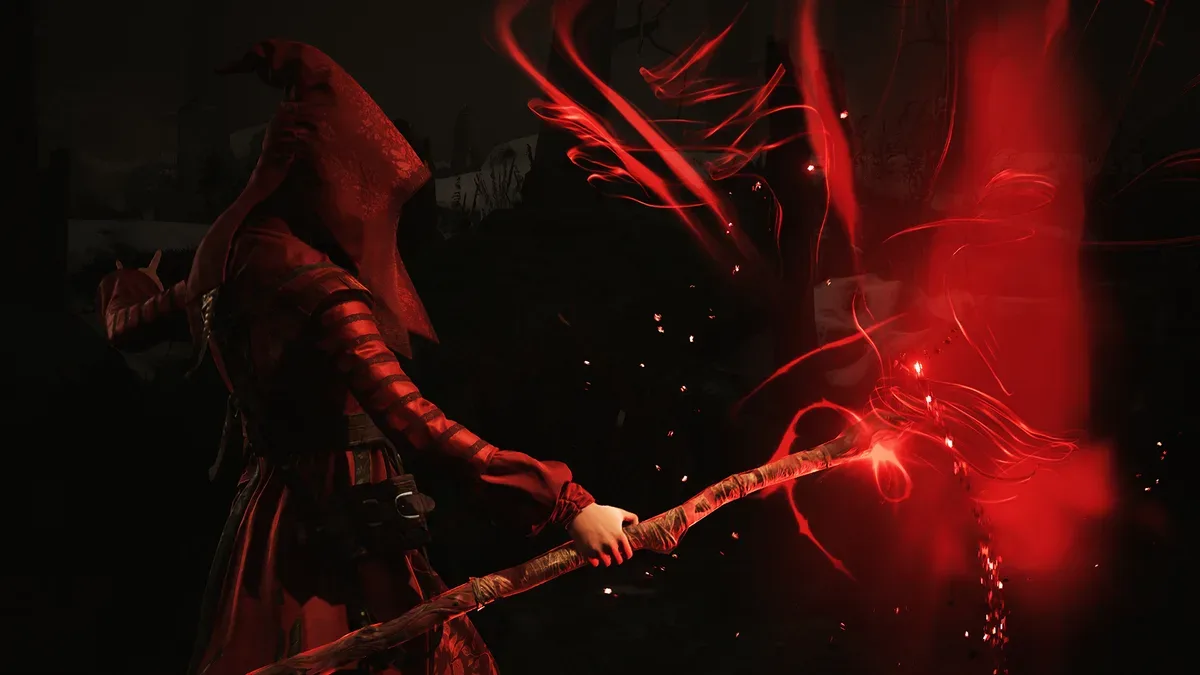
The resulting ambition, as he frames it, is to apply some of the creative energy behind an open-world assassin fantasy to a witch who is active, powerful and mobile rather than defined by a deliberately small-scale folklore stereotype. The broom is part of that reimagining, not merely a familiar icon placed in the background.
That shift matters because it explains why the game’s systems are being discussed in terms of combat, investigation, exploration and repeatable mission approaches rather than just supernatural atmosphere. The project is not positioned as a fixed historical tale with a coat of magic applied at the end. Its witch identity is tied directly to how players move through its world and make choices with its powers.
Related coverage includes 1666 Amsterdam Early Access Embraces Player Feedback.
Failure now reshuffles a build instead of deleting discovery
The revised ability system is the most concrete example yet of Early Access doing exactly what it is supposed to do. Early Access means a game is released before its final version so a development team can continue building and refining it while players are able to play it. That does not mean every suggestion becomes a feature, nor does it mean the narrative is up for a vote. It does mean developers can test assumptions against actual player responses rather than rely only on internal expectations.
In 1666 Amsterdam, coffers and curiosity cabinets grant access to new categories of abilities. Once a player has found a category, that discovery remains available. A failure triggers what Désilets describes as a large lottery, assigning a new set of abilities that can include some familiar options but may also leave out powers used in the preceding attempt.
That setup retains a central roguelike idea. A roguelike system, in this context, is a structure in which failure changes the next attempt and asks the player to adapt rather than simply continue with an identical loadout. The genre label can cover a wide range of designs, but 1666 Amsterdam’s version appears to focus on rebuilding a run around a different combination of magical tools.
For example, Désilets contrasts having Warp, which he associates with stronger combat performance, with a new run that offers more strength in Compulsion but less physical power. The names indicate separate magical approaches, although the full details of each ability are not established here. What is clear is the intended effect: the player’s route through a mission, and the tactics used within it, should change when a previously relied-on option is absent.
There is also a longer-term progression layer. Completing an Esbat, described as a full-moon cycle, lets players permanently lock one or two abilities. That creates a compromise between the volatility of each run and the satisfaction of durable advancement. The studio is not removing uncertainty; it is placing boundaries around it.
Why the change is more than an ease-of-play tweak
There is a crucial difference between losing a temporary build and being asked to repeat the work required to unlock the building blocks of that build. The first can make a new attempt feel fresh. The second can make failure feel like administrative cleanup.
The earlier design apparently paired death with a total loss of Noa’s abilities and another open-world search for them. Players in testing objected to spending extended time locating powers only to have all of that collection work removed. Panache’s replacement preserves the discovery record while retaining variability in the active kit.
Practically, that should make experimentation easier. A player who has discovered multiple ability categories has more future possibilities, even if a particular run does not supply the preferred combination. Meanwhile, locking one or two abilities after an Esbat gives players a way to establish a limited foundation for later attempts.
It is also a useful example for anyone considering buying an Early Access game. The game’s present systems are real, but they are not promises that nothing will move. In 1666 Amsterdam’s case, the studio has specifically demonstrated that a major rule governing progression and failure can be revised during development. Players who prefer a finished, settled design may reasonably want to wait for version 1.0; players comfortable participating in a changing project should understand that feedback is part of the proposition.
Aaron the cat became the link between two eras
Another major development change concerns Aaron, a character connected to 1999. For a long period, Aaron was a spectral humanoid figure capable of possessing people. The team eventually reconsidered that role and asked whether he should instead be inhabiting a cat in 1666.
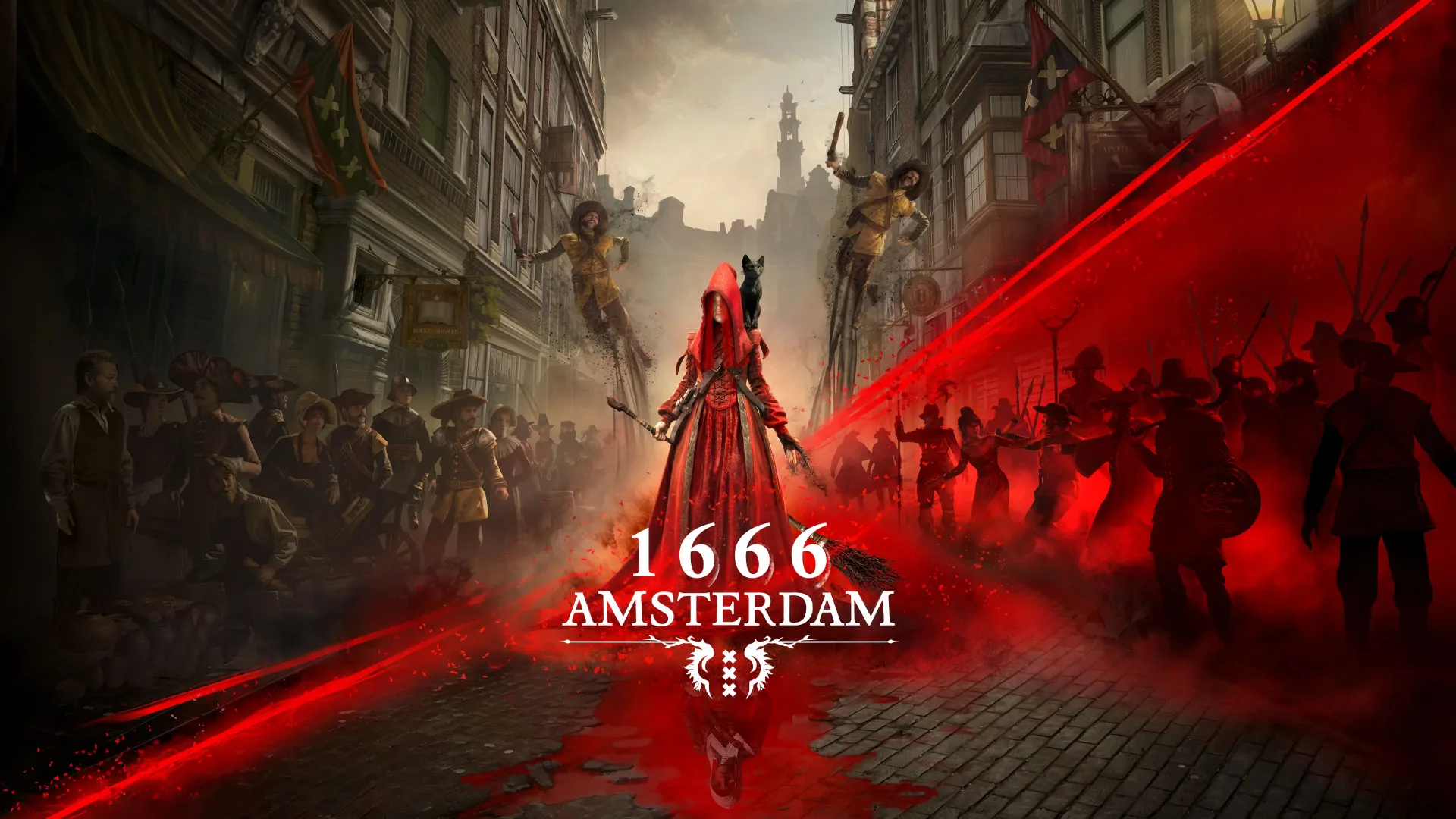
Désilets had initially hesitated to pair a witch with a cat because of how familiar the pairing might seem. The team ultimately embraced the obviousness of it: a witch and a cat are, after all, a natural combination. More importantly, the cat concept gave the relationship a stronger structural purpose. Aaron links the 1999 and 1666 sides of the game, with both periods meant to remain woven together through the two characters.
This is a reminder that iteration is not confined to balance numbers, damage values or menu layout. A change to a companion’s form can alter the relationship players perceive, the way different time periods connect, and the visual language of the game. The cat is not being treated as a vote between interchangeable pets; it is part of the story’s intended identity.
Community input has boundaries
Désilets is enthusiastic about using player feedback, but he also draws a firm line between feedback on systems and authorship of the narrative. Players may identify a mechanical possibility the team had not considered, or validate an item already sitting in the studio’s plans. When player ideas align with the existing backlog, he says those points can become a top priority.
But the story remains Panache’s responsibility. The studio intends for players to encounter it as a surprise, not shape it through a running public negotiation. The same principle applies to the cat: that decision is not an open referendum.
That division is sensible for a game whose mechanics depend on adaptation but whose story aims to connect two specific characters across two periods. Feedback can help reveal whether power loss is frustrating, whether an ability mix creates interesting choices, or whether a mission offers enough usable approaches. It cannot automatically determine every authored detail without risking a less coherent whole.
Panache’s stated goal is therefore not to surrender direction, but to make decisions with better information. The studio can now observe real reactions, prioritize shared concerns and refine accessibility or ease of play where it fits the project. The current ability revision is the tangible proof of that philosophy.
For more on the broader conversations around studios, creators and the future of games, see our look at Jennifer Hale’s thoughts on a fan-funded future for Mass Effect.
What to watch as 1666 Amsterdam develops
- How much a changing loadout affects mission routes: The game’s revised loop depends on missing powers creating meaningful alternatives rather than simply making a run less enjoyable.
- The balance of permanent progression: The ability to lock one or two powers after an Esbat may prove essential to making repeated failures feel constructive.
- How clearly powers are communicated: Players will need to understand what each new combination enables if the reshuffle is to inspire strategy rather than confusion.
- The relationship between 1666 and 1999: Aaron’s cat form is presented as an important connective thread, making the two-period structure a key narrative element to follow.
- Which feedback reaches the roadmap: Panache has a plan of its own, but has said player suggestions that match its priorities can move quickly up the queue.
After years of revisions, the notable news is not merely that 1666 Amsterdam is playable in Early Access. It is that its developers are willing to rework a foundational rule when playtesting shows the original version places too much punishment on the wrong part of the experience. Noa may still lose access to a favored magical approach after failure. She just will not be sent back to square one to prove she found it in the first place.