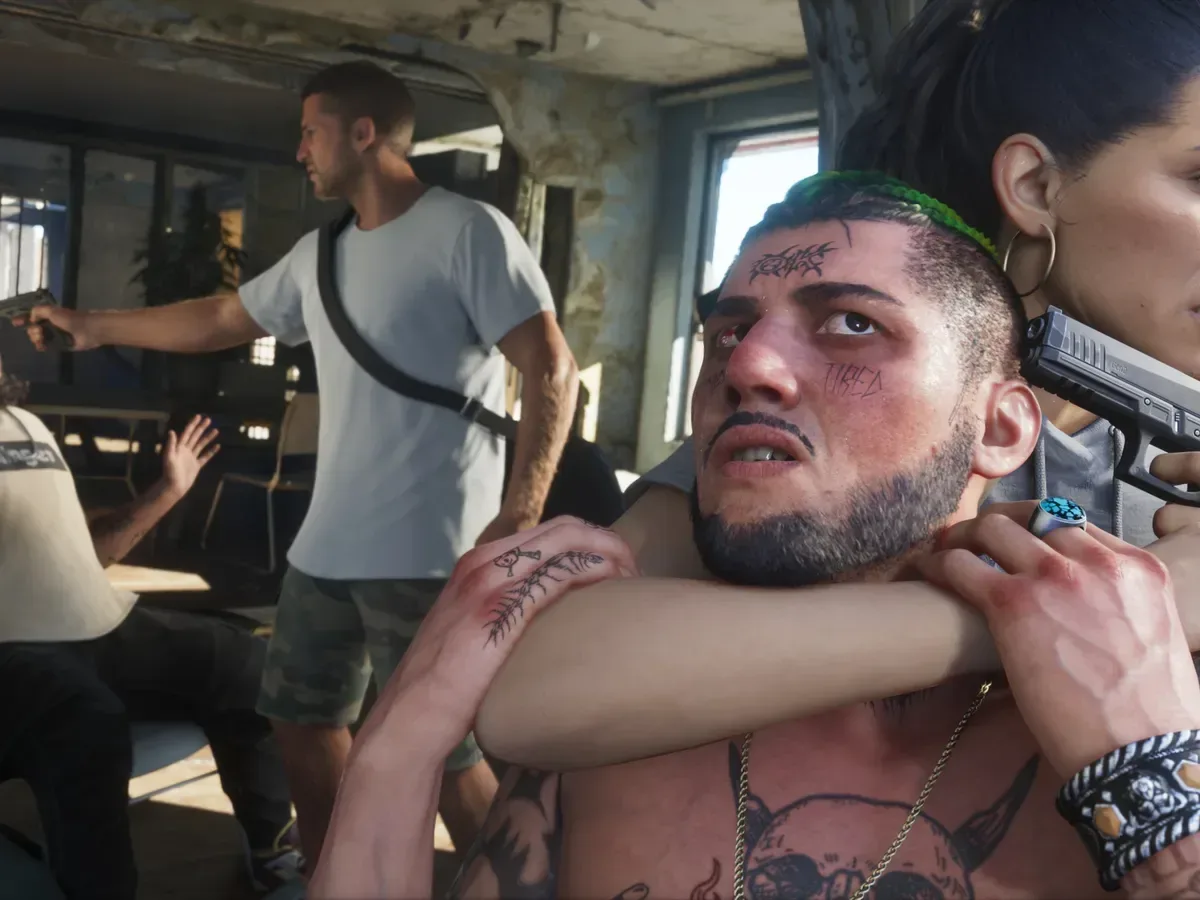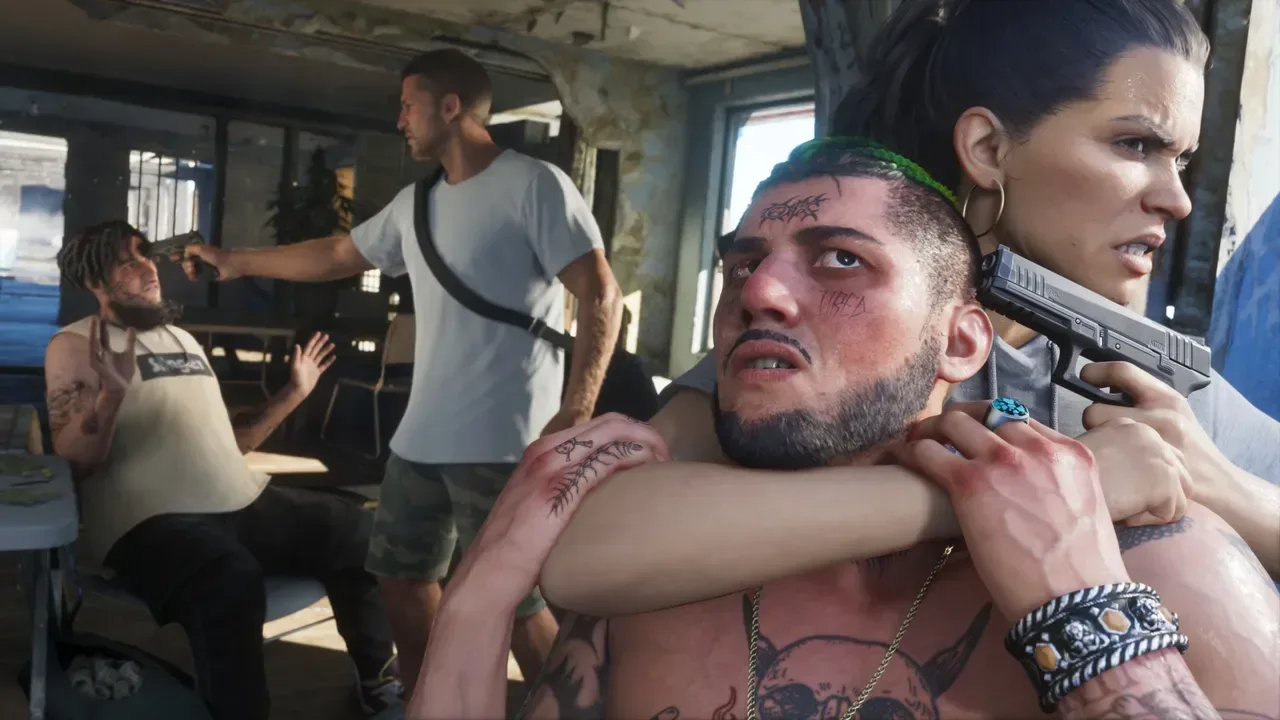
Take-Two appears to be escalating its response to unofficial efforts to run an alleged, unfinished Grand Theft Auto 6 Xbox build on PC. A reported DMCA takedown removed Project Leonida, a GitHub repository associated with an attempted PC port, along with more than 2,900 related forks. The reported total across the removed network was 3,007 repositories.
The activity follows claims that a person using the name Cyberleek released an executable from an unauthorized Xbox version of GTA 6. Those claims, the reported build’s provenance, and its state of completeness should be treated cautiously. But the takedown itself highlights a more immediate reality: publishers can act against code repositories and projects they believe are facilitating infringement, even where a project’s operators say users must supply their own game files.
A repository network, not an official PC release
The removed work centered on a repository called Project Leonida, attributed to a developer using the name ItsNotRexed or NotRexed. It was reportedly one of multiple efforts attempting to recompile, emulate, or otherwise make the alleged Xbox Series version functional on PC.
Those three terms are related but do not mean exactly the same thing:
- Recompiling generally means converting code into a form that can run in a different environment.
- Emulation is the attempt to reproduce one platform’s behavior through software on another platform.
- Porting usually means adapting software so it runs natively or more directly on a different target platform.
In ordinary conversation, “PC port” can cover all of those outcomes. Technically and legally, however, the path taken matters less than the central issue here: the reported projects were tied to files allegedly obtained from an unauthorized pre-release console build, rather than to a public, licensed PC edition from Rockstar Games.
That distinction is crucial for players watching clips or social-media claims of an unofficial version running. A project making some part of a build boot, render a scene, or reach a menu is not evidence of a finished, stable, safe, or authorized GTA 6 release on PC. It also should not be confused with confirmation that an official PC version exists, has been announced, or is imminent.
Why the “bring your own files” argument did not settle the matter
A common position in homebrew and preservation circles is that a tool does not distribute protected game assets itself. Instead, it asks the user to provide files they already own. That approach is often called “bring your own files,” abbreviated informally as BYOF.
Take-Two’s reported complaint directly addressed that argument. Its position was that the necessary files in this case came from an unauthorized GTA 6 Xbox build. In other words, requiring users to supply files does not necessarily insulate a project when the files being used are alleged to be unauthorized copies in the first place.
Related coverage includes Take-Two Moves Against Unofficial GTA 6 PC Port Projects After Alleged Xbox Build Leak.
Rockstar’s terms state that its limited license does not permit users to copy, distribute, disassemble, decompile, decrypt, derive source code from, reverse engineer, modify, or create derivative works from its services and content absent separate written permission.
The reported notice said Project Leonida exceeded the license Rockstar grants to users and therefore constituted copyright infringement. That is a substantially different scenario from a tool built around legitimately released software, and it explains why the file-source question is at the center of the dispute.
A fork, meanwhile, is a copy of a code repository that lets other developers work from the same starting point. Forks are useful for legitimate collaborative development, but their scale can make a removal action look much larger than one project disappearing. In this case, the reported action extended beyond the original repository to thousands of connected copies.
Reports of a shutdown, while other attempts remain online
Deleted social posts reportedly indicated that NotRexed shut Project Leonida down. Screenshots said to be from the project’s Discord also showed users attempting to distance themselves from it. Because those posts are no longer available, they offer an incomplete picture of what happened internally; the reported repository removal is the clearer public consequence.
Other attempts to work with the alleged build reportedly remain active. Some participants have streamed development sessions and used the term vibecoding to describe an AI-assisted workflow driven by plain-language prompts. The label generally refers to directing an AI coding agent conversationally rather than writing every line manually, although it does not guarantee working, secure, or legally sound software.
That last point is easy to lose amid a race for a “world first.” An AI agent can accelerate experimentation, organize code, suggest changes, or automate repetitive troubleshooting. It cannot transform unauthorized source material into an authorized release, and it does not remove the risks associated with downloading unknown executables, patches, or tools from fast-moving unofficial projects.
Players should avoid treating streams, short clips, or repository names as a safety check. An alleged leaked build and unofficial tools built around it may expose users to legal complaints, broken software, compromised files, or malicious downloads. The same skepticism used for suspicious account messages is useful here; readers can review broader warning signs in this guide to Steam “accidental report” scams.
The PC-performance demand behind the scramble
Interest in an unofficial PC version is plainly tied to performance expectations. The console version targets 30 frames per second across its platforms, while reports say it can sometimes struggle to maintain that target on base PlayStation 5, Xbox Series X, and Xbox Series S hardware. That has fueled enthusiasm for the prospect of a PC release that could potentially offer 60fps gameplay on suitable hardware.
Frames per second, or fps, is the number of individual images a game displays each second. A 60fps presentation can look smoother and feel more responsive than 30fps, provided the hardware and software can consistently sustain it. But it is not merely a switch a user can flip. A proper PC release must account for a broad range of CPUs, graphics cards, drivers, display configurations, input setups, and operating-system environments.
That is one reason an unofficial project that appears “somewhat playable” is not equivalent to a commercial PC port. Stability, controls, audiovisual behavior, saving, compatibility, security, online systems, and support all matter. Take-Two chief executive Strauss Zelnick has framed the company’s concern as a creative issue as much as a financial one, arguing that the intended Rockstar experience is what consumers ultimately want.
AI has made the issue more urgent, not simpler
The GTA 6 repository removals arrive amid wider anxiety about AI-assisted game cloning, reverse engineering, and console security. AI tools have been used in public efforts to create game-like experiences or mash together ideas from different titles, while a browser-playable version of Grand Theft Auto 5 was reportedly removed after appearing online.
Reverse engineering is the process of analyzing software to understand how it works. Decompilation is a related process that attempts to turn a compiled program back into code that is easier for humans to study. These are demanding technical tasks, and AI can potentially help users move through parts of the process faster. It does not erase the underlying copyright, license, platform-security, or distribution issues.
Anthropic reportedly updated Claude to make use of its model for generating game clones more difficult. Zelnick has argued that AI companies should protect intellectual property rather than benefit from work based on other companies’ IP. In separate investor-focused comments, he acknowledged that piracy challenges could become more significant while saying Take-Two was focused on technical defenses and legal action.
There is also a console-security dimension. If a jailbreak were available for the PlayStation 5 firmware required to run GTA 6, it could create another route for piracy and potential extraction of game material. A jailbreak is a bypass of a platform’s security restrictions that enables unauthorized code or software modifications. No such outcome should be presumed from the current repository dispute, but it explains why platform holders and publishers are attentive to exploits as well as code-hosting sites.
What this means for players waiting on PC
For now, the most practical takeaway is straightforward: do not mistake a leak-driven technical experiment for a supported product. There is no official PC release information in the reported removal action, and there is no reliable basis for players to assume that an unofficial build will be safe, complete, or representative of Rockstar’s eventual plans.
The takedown also shows that public code-hosting infrastructure can be a pressure point. A project may spread quickly through forks, mirrors, streams, and social posts, but that visibility also makes it easier for a rights holder to identify and challenge. The removal of thousands of connected repositories does not prove every related experiment has ended. It does demonstrate that Take-Two is willing to pursue large-scale action when it believes a project depends on unauthorized GTA 6 material.
For people simply hoping for higher frame rates and PC flexibility, patience remains the safest option. The demand is understandable, especially given the reported 30fps console target. Yet the reported fallout around Project Leonida is a reminder that the fastest route to a purported PC version can also be the least reliable—and the most likely to disappear.