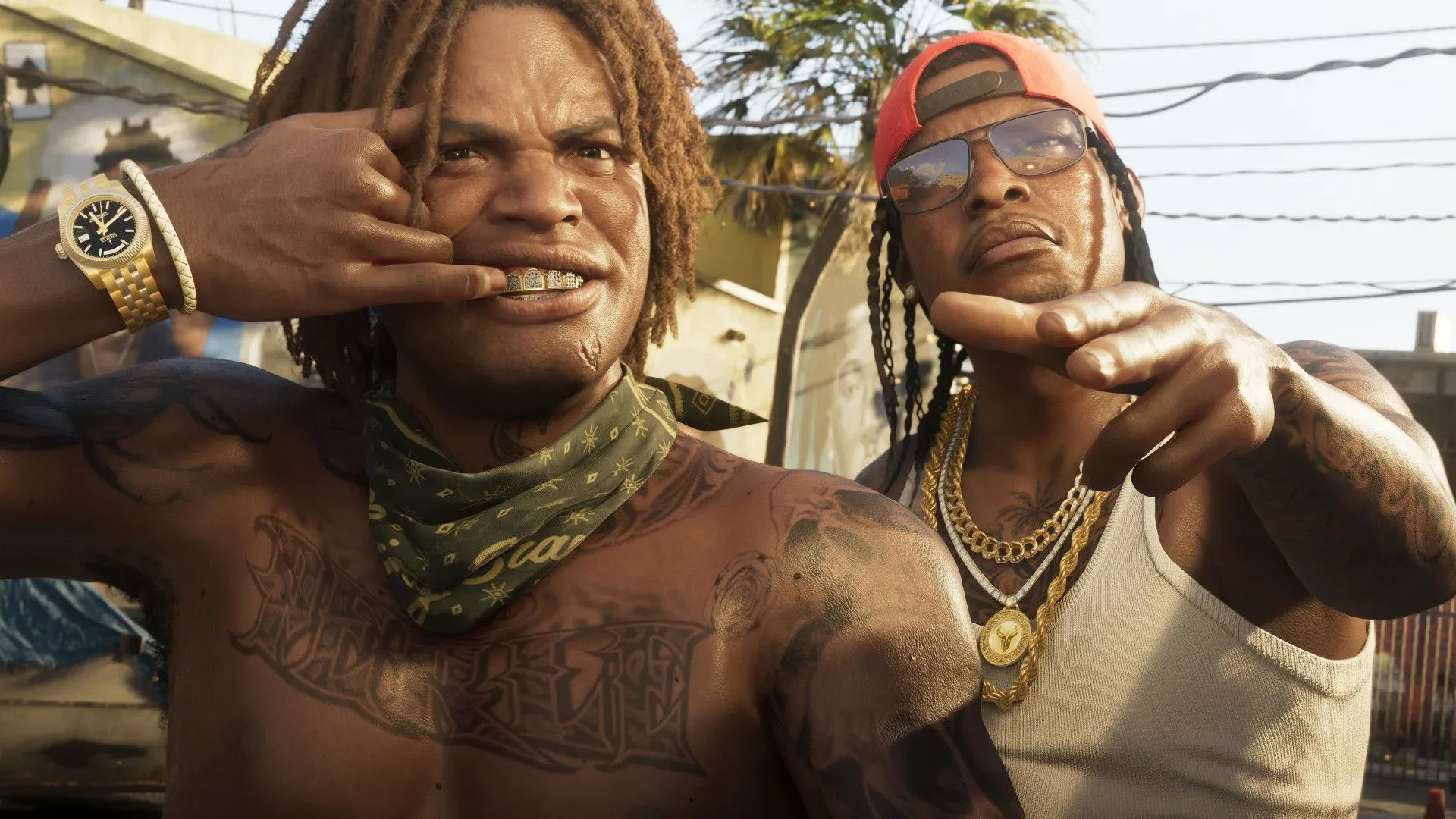
Grand Theft Auto VI may eventually inspire the same kind of role-playing community that made GTA V’s custom-server scene a major part of the series’ wider culture. But Rockstar Games has set an important boundary before that possibility becomes reality: modded experiences cannot be turned into unauthorized real-money businesses.
The company’s published modding rules expressly prohibit unauthorized commercialization. They also forbid exchanging real money through modded content, whether the payment uses conventional currency or cryptocurrency; gambling with real money in mods; and promotion of third-party sponsored content by mod owners. That combination puts clear limits on a model some online personalities have publicly imagined for GTA 6: a persistent role-playing server where participants could earn real-world income.
For players, creators and prospective server operators, the practical reading is straightforward. A role-playing server is not automatically ruled out by these provisions. A server built around real-money payouts, money-changing systems, paid gambling, or sponsor-driven mod content is another matter entirely unless Rockstar authorizes it. The policy reserves substantial control for Rockstar at precisely the point where community creativity could become a commercial platform.
What the policy says—and why the commercial clauses stand out
Modding is the practice of altering or extending a game with community-made software, content or systems. In a role-playing, or RP, server, players generally take on characters and follow a shared social framework rather than simply playing the game’s standard modes. GTA V RP became especially prominent because creators and communities could build ongoing worlds, rules and stories around the game.
Rockstar’s rules address several familiar content and intellectual-property boundaries. Mods may not use other parties’ intellectual property, and the policy lists pornography, bullying and endorsements of violent extremism among prohibited material. It also says modders cannot bring Rockstar games to platforms on which Rockstar has not released them. Likewise, assets, maps or characters from one game cannot simply be added to another title.
Those provisions matter on their own, but the commercialization section has the most direct bearing on the public plans floated by influencers for GTA 6 RP. Adin Ross, for example, has talked about creating a GTA 6 server in which players could live within the virtual world and make real money, going as far as suggesting people might leave real jobs because of those earnings.
Rockstar’s rules make that vision incompatible with an unauthorized mod. The wording does not merely address one payment method or one particular kind of server. It covers exchanges involving crypto as well as traditional currencies, while separately ruling out real-money gambling and third-party sponsored content promoted by mod owners.
- Unauthorized commercialization means a creator cannot treat a mod as a commercial venture without Rockstar’s approval.
- Real-money exchange refers to converting or transferring actual currency through a modded experience; the policy identifies both cryptocurrency and traditional money.
- Real-money gambling means wagering actual money inside modded content, which the rules prohibit.
- Third-party sponsored content is promotional material backed by an outside sponsor. The policy says mod owners cannot promote it.
The distinction is important because these are rules for mods, not a broad promise that every imaginable GTA 6 online activity will be available. The available language establishes prohibitions and leaves room for Rockstar to authorize something separately. It does not announce any approved paid server, creator economy, or real-money RP program.
Role-play can be creative without becoming a real-money workplace
It is easy to collapse all RP servers into one idea, but the policy encourages a more careful distinction. A community-led role-playing space can be about collaborative storytelling, custom rules, social play and modifications to a familiar open-world setting. A system promising that players can earn their livelihood through participation introduces a different set of stakes: payments, financial incentives, external promotion and potentially gambling-like mechanics.
Rockstar appears to be drawing its line at that second category. The rules do not mean the company is rejecting the concept of a GTA role-playing community outright. Its recent relationship with the GTA V scene points the other way. Rockstar acquired the developer behind the FiveM modding platform and partnered with NoPixel, a major RP server, on a new iteration.
That context makes the policy less like a blanket dismissal of modding and more like an attempt to define which kinds of activity need permission and oversight. There is a meaningful difference between enabling a creative community and allowing individual server operators to establish unapproved systems that move real money among players.
For audiences, that means lofty claims about an influencer-run GTA 6 world should be separated from confirmed plans. A personality can describe an ambition; it does not establish that Rockstar has granted the needed authorization. Under the published policy, real-money functionality is specifically an area where an operator cannot simply proceed on their own.
Why Rockstar’s control matters
Rockstar’s restrictions can be read as a guardrail against several foreseeable problems. Once a modded server is tied to real money, decisions about access, rewards, virtual assets and promotions may have consequences beyond ordinary gameplay. Players can be exposed to incentives that resemble financial schemes or gambling, while the game’s brand can become associated with outside sponsors or content that Rockstar did not approve.
The policy does not spell out every reason behind each clause, so it would be speculation to assign a single motive. Still, the practical effect is clear: Rockstar is retaining a close supervisory role over uses of its games that could monetize player participation or reshape the game into a platform for external advertising.
That could frustrate entrepreneurs who see GTA 6’s audience as the foundation for a virtual economy. It also gives potential participants a useful reality check. A large audience, a recognizable influencer and an ambitious pitch do not override the rights holder’s mod rules. In this case, the policy explicitly addresses the transactions and sponsorship arrangements central to the most expansive proposed server concepts.
There is also an IP dimension. The policy’s restriction on using assets, characters and maps across different games, alongside its prohibition on using others’ intellectual property, signals that a mod’s creative freedom comes with boundaries around ownership. Community developers can build, but they cannot assume every familiar game-world element or outside brand is theirs to import and monetize.
GTA 6 modding is not imminent
There is another practical limit on all of this discussion: GTA 6 is not releasing on PC on November 19. That means the usual PC-centered modding path is not about to begin alongside that release. Take-Two Interactive, Rockstar’s parent company, has indicated that GTA 6 will eventually come to PC, but no timing is established in the information available here.
As a result, players should not treat the policy as evidence that mods, RP servers or a particular platform are launching at a given moment. It is a statement of rules ahead of a future modding landscape, not a timetable. The distinction matters in a cycle where GTA 6 speculation can turn possible future activity into something that sounds imminent.
The PC question remains consequential because modding communities have historically centered on PC environments. Until there is a PC release and a workable modding ecosystem, claims about specific GTA 6 server businesses remain hypothetical in more than one sense. They depend not only on technical access and community interest, but also on compliance with Rockstar’s conditions and, where relevant, explicit authorization.
That broader caution also applies to claims around influencers and games generally. Sponsorship, promotion and creator-led initiatives can become contentious when commercial interests intersect with audiences and platforms, as seen in a recent debate over a Twitch sponsorship. GTA 6’s policy is more concrete than a debate over taste, however: it directly states that third-party sponsored content cannot be promoted by mod owners.
What creators and players should take from the rules
The safest takeaway is not that every GTA 6 RP idea has been shut down. It is that the game should not be presented as an open, anything-goes route to real-world income. Rockstar’s policy preserves a path for authorized arrangements while prohibiting the unauthorized commercial structures that would turn mods into payment, gambling or sponsorship systems.
For mod creators, the document creates a set of boundaries worth considering before a project is designed around monetization. For server owners, it means claims of an independently operated real-money economy deserve skepticism unless there is clear Rockstar approval. For players, it means that joining a future RP community should not be confused with receiving a legitimate employment opportunity or a sanctioned financial platform.
GTA V demonstrated that role-playing can become a durable and highly visible form of community play. Rockstar’s acquisition of FiveM’s developer and its NoPixel partnership show that the company recognizes that significance. GTA 6 may still have a robust RP future when the technical and platform conditions exist. The policy simply makes clear that the future Rockstar is willing to entertain is not one where unapproved servers freely build real-money economies around its games.