Ryan “Northernlion” Letourneau has publicly criticized longtime friend and collaborator Dan Gheesling over Gheesling’s U.S. Army-sponsored Twitch programming, describing the promotion as unacceptable and arguing that military marketing through a gaming livestream is both absurd and consequential.
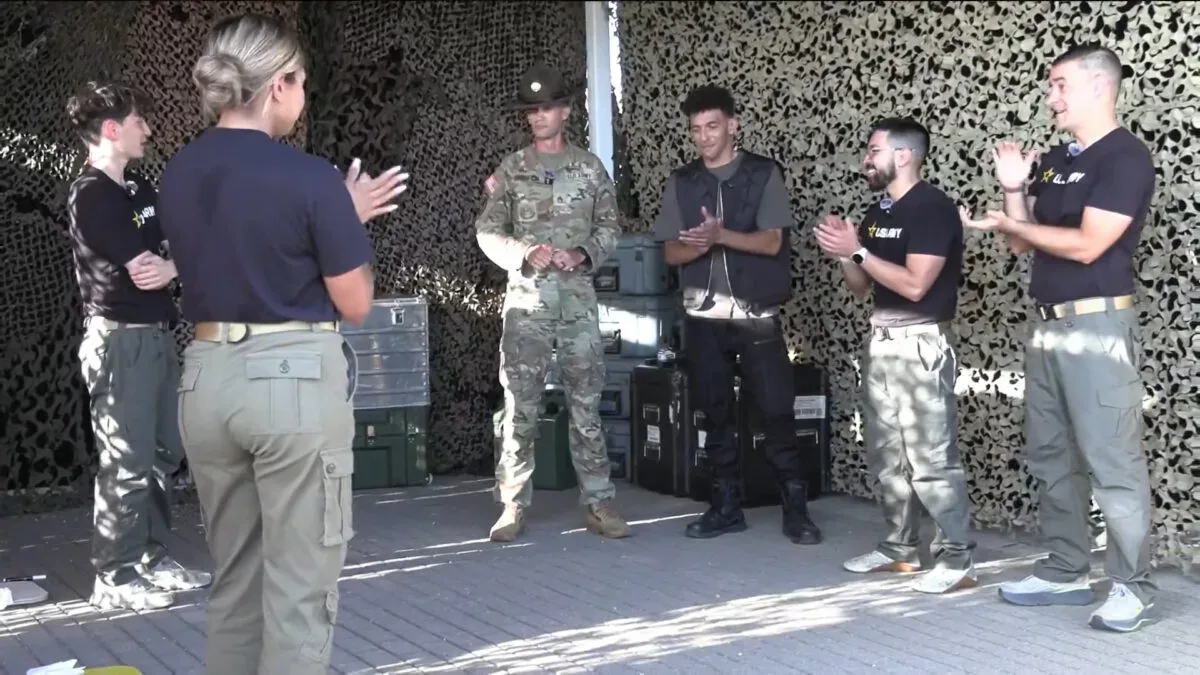
Gheesling’s three-day live-streamed Army stint began September 16 and included a boot-camp-style game-show presentation. The controversy is not merely about whether a streamer can take a sponsor. Letourneau’s response focused on what the sponsorship represented: a military institution being presented in an entertaining, immersive format to a broad Twitch audience, rather than simply appearing as a brief commercial disclosure.
In addressing the situation on stream, Letourneau said he had delayed speaking partly because of his 14-year friendship with Gheesling and because he wanted Gheesling to address the matter first. That context matters. This was not detached commentary between creators who happen to share a platform; it was a public disagreement involving people with a longstanding personal and professional connection.
“The stream that he did with the U.S. Army is just unacceptable,” Letourneau said. “It would be unacceptable if it was just sponsored by the Army, but steeped, head to toe, in the imagery, and making it look so awesome—it’s so far beyond the bounds of what is acceptable to me.”
Why the format, not just the sponsor, is central to the dispute
A sponsorship is a commercial arrangement in which a brand or organization pays, supports, or otherwise partners with a creator in exchange for exposure. On Twitch, that exposure can range from a labeled segment to a deeply integrated broadcast in which the sponsor shapes the activity, visual identity, or premise of the stream.
Letourneau’s criticism draws a sharp distinction between those possibilities. His objection was not framed as a dispute over routine advertising language or a single logo on screen. He objected to a production that, in his view, was saturated in Army imagery and designed to make the institution appear exciting. That distinction helps explain why the reaction has been so intense: viewers are responding to a campaign built around the identity and activities of the sponsor, not a typical gaming peripheral, food product, or game promotion.
In practical terms, creator-led advertising is powerful because the message arrives inside a relationship. Viewers choose a streamer for their humor, skill, personality, or the sense of community around a channel. A conventional ad interrupts that experience. An integrated sponsorship uses the creator’s normal environment and credibility as part of the message. When the sponsor is an armed service, critics see a particularly high-stakes version of that arrangement.
That does not mean every viewer interprets the same broadcast the same way, or that a creator’s audience is a single demographic. But Letourneau’s concern is clearly tied to the fact that Twitch audiences can include younger people and that a stream’s informal, playful structure can soften or obscure the seriousness of what is being marketed.
Related coverage includes Northernlion Criticizes Dan Gheesling's U.S. Army Twitch Sponsorship.
Gheesling’s response and the contract question
Gheesling later addressed the backlash. He said it was never his intention to upset anyone, while also saying that he had a job to do and could not breach the contract. That explanation acknowledges an obligation to a sponsor, but it did not settle the broader criticism for viewers who believe the agreement should not have been accepted or carried out in the first place.
The contract point is important, but it answers a narrower question than the one raised by Letourneau. A signed agreement may constrain what a creator can do after committing to a campaign. It does not erase the judgment involved in choosing the sponsorship, nor does it determine whether an audience accepts the decision. In this case, the central disagreement is ethical and reputational: what kinds of promotional work should a gaming creator decline before contractual duties ever begin?
Creators regularly balance financial opportunities against audience trust. The hard cases are rarely about whether advertising exists at all. They are about whether the sponsor, the method of promotion, or the likely audience makes a deal incompatible with the values a creator has cultivated. Letourneau’s comments make his own threshold unusually plain: he said he does not want to take sponsorships that go even “a few percent over the line.”
A personal rebuke in an industry built on collaboration
Letourneau did not hide the emotional cost of speaking about Gheesling. He said viewers could tell he was upset, and he explained that the history between them contributed to his initial silence. That hesitation is understandable in an online entertainment business where partnerships often blend friendship, recurring collaborations, and audiences that follow multiple creators at once.
His remarks also demonstrate that a creator can draw a public boundary without presenting the other person as incapable of agency. Letourneau said Gheesling is an adult who can make his own decisions, while maintaining that there is still room for Gheesling to do the right thing. It is a meaningful distinction: personal autonomy does not prevent criticism, and criticism does not require pretending a relationship never existed.
Letourneau connected his response to a separate experience: the cancelled Northernlion Supercruise in April, which he organized with Gheesling. He said the criticism around that event had affected his mental health and changed how he thinks about the community around his work. His takeaway was that online communities consist of real people, not just engagement metrics, subscriber counts, or anonymous chat messages.
“The community is made of real people,” Letourneau said, explaining that he does not want to pursue sponsorships that push beyond his own limits. He said audiences can feel that a supposedly safe space is instead taking advantage of them.
That framing is significant because it identifies the issue as more than a single creator controversy. It is about the social contract between an entertainer and the people who regularly spend time in their chat, watch their videos, and treat a channel as a familiar space. A sponsorship may be disclosed and still feel jarring, deceptive, or out of step with that relationship. Disclosure tells viewers that a deal exists; it does not automatically create comfort with the deal itself.
Why military promotion on Twitch produces a different reaction
Letourneau described the oddness of arriving at this subject through the ordinary routine of playing games. He invoked The Binding of Isaac as an example of the kind of broadcast viewers might expect, only to find himself discussing and denouncing U.S. Army marketing instead. The contrast is part of his point: gaming streams can look casual and low-stakes, yet they have become meaningful spaces for institutional promotion.
His critique of the Army was explicit and political. Letourneau said he opposes the U.S. Army, referring to its actions overseas, toward its own citizens, and what he characterized as threats to his country. Those are Letourneau’s stated views, rather than claims that can be resolved simply by examining the sponsorship itself. The directly observable issue at hand is that the Army appeared as a prominent sponsor within gaming-adjacent livestream entertainment, and that a major creator in the same ecosystem believes this is an inappropriate use of the medium.
There is a broader technical point about audience targeting. Marketing works by placing a message where a desired audience already spends attention. Twitch is built around live interaction, recurring personalities, and chat participation, which can make viewers feel more involved than they would with a recorded advertisement. Letourneau’s comment that “this is where they’re doing the marketing” recognizes that the platform itself is part of the story. The controversy is not a strange accidental collision between games and recruitment messaging; it concerns deliberate outreach in a space where creators have built substantial cultural influence.
That influence is also why sponsorship choices carry consequences beyond one broadcast’s view count. Fans may treat a paid promotion as a creator’s endorsement even when the creator distinguishes sponsorship from personal belief. Conversely, a creator who objects to a partner’s campaign may face pressure to comment, especially when their history with that partner is public. The result is an uncomfortable but increasingly routine part of the creator economy: audiences scrutinize not only what people play, but also who pays to be included in the show.
What this means for viewers and creators
For viewers, this episode is a reminder to pay attention to how a sponsor is integrated. A clear label is useful, but viewers can also ask whether the brand has shaped the entire premise of a broadcast, whether the creator is presenting an institution as entertainment, and whether the audience being addressed may include people who are especially susceptible to that messaging.
- Look for the nature of the integration: a short sponsored read and an event structured around the sponsor are different forms of promotion.
- Separate disclosure from endorsement: a disclosure explains that money or support changed hands; it does not settle whether the audience agrees with the partnership.
- Consider the community context: recurring viewers may reasonably expect creators to consider how commercial decisions affect the atmosphere and trust of a channel.
- Allow room for accountability: a creator can explain contractual limitations while still addressing why audiences felt harmed or alienated.
For creators, the situation underscores the importance of deciding boundaries before an offer arrives. A contract can set legal and commercial obligations, but it cannot protect a channel from criticism when a campaign conflicts with the audience’s expectations or the creator’s own stated values. Vetting a sponsor means considering more than payment and production logistics; it includes considering the institution, the message, the intended presentation, and who is likely to see it.
Community response has already demonstrated its importance elsewhere in gaming, including debates where players’ feedback shapes public conversations around companies and long-running games. Fans making their voices heard around Destiny is a separate example of how audience reaction can become part of an industry story, even though the issues there are very different from a sponsorship controversy.
Letourneau’s comments leave no ambiguity about his own position. He sees the Army-backed stream as far outside his acceptable range, regards the use of Twitch for this type of marketing as serious despite its surreal appearance, and believes Gheesling can still respond more meaningfully. The dispute is therefore unlikely to be remembered as ordinary creator drama. It is a pointed argument about commercialization, military messaging, responsibility to a mixed-age audience, and what a livestream community is entitled to expect from the people it supports.