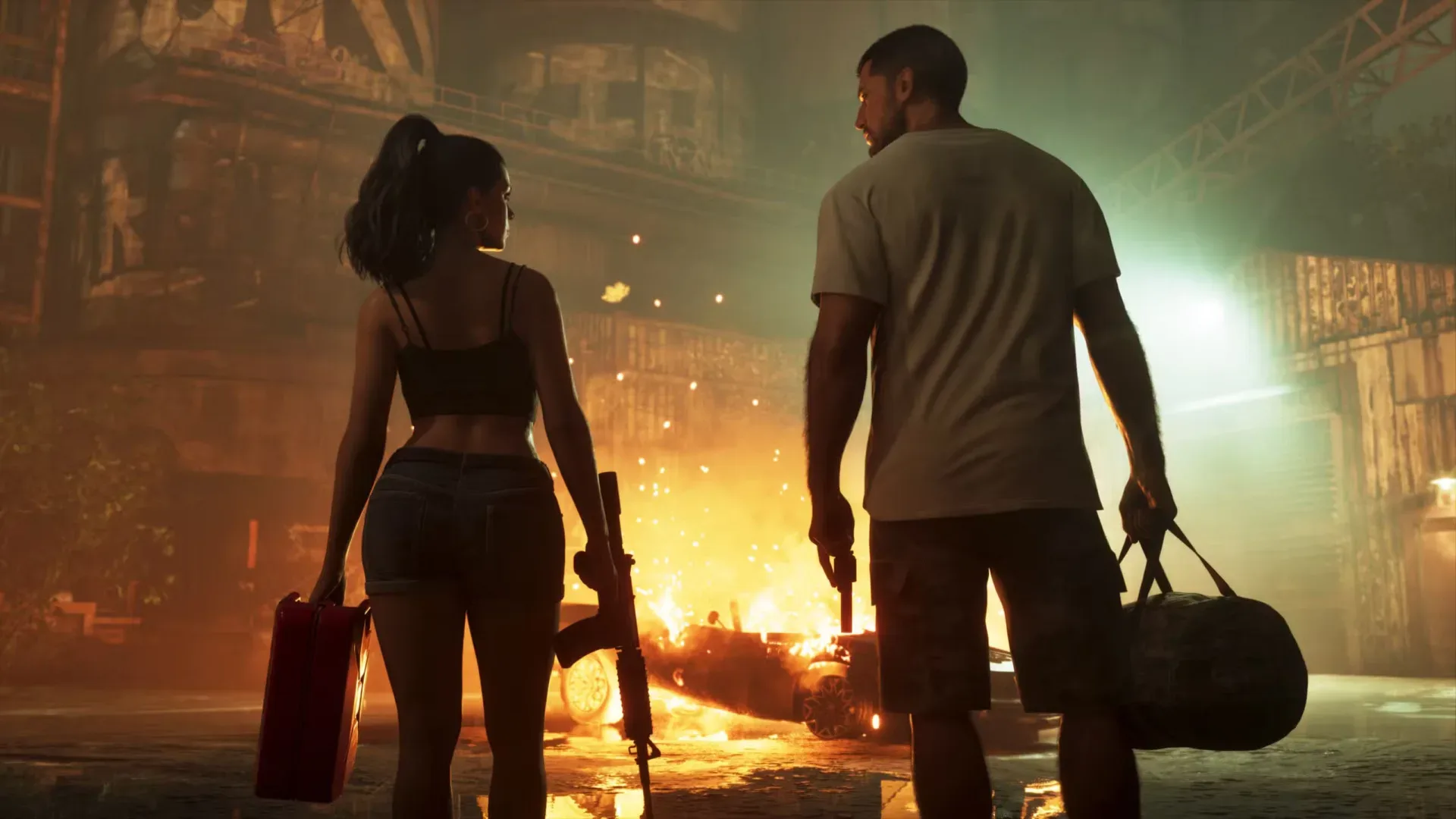
Grand Theft Auto VI may not have crossed the internet’s favorite eye-watering budget threshold, but that does not make it a modest production. Rockstar has pushed back on the claim that the game cost more than $1.5 billion to develop, while declining to put an official total on the record. The important distinction is simple: the $1.5 billion-plus figure has been rejected, but the actual budget remains undisclosed.
That leaves plenty of room for speculation, although the available indicators still point toward an exceptionally expensive game. Estimates previously placed GTA 6 somewhere in the $1 billion to $1.5 billion range, and Take-Two chief executive Strauss Zelnick has only characterized the project as expensive rather than offering a precise figure. On the evidence available, it is reasonable to describe GTA 6 as a likely contender for the most expensive video game production to date—not to declare a specific total as settled fact.
What Rockstar actually disputed
The disputed rumor put GTA 6 above the reported $1.5 billion cost of Dubai’s Burj Khalifa and suggested a $2 billion game budget. Rockstar publishing head Jennifer Kolbe has said that comparison was wrong. Crucially, that is a correction of an upper-end claim, not confirmation that the game came in cheaply or even comfortably below a billion dollars.
Budget talk around blockbuster games often blurs several different categories of spending. Development cost generally means the money spent building the game: staff, technology, art, writing, performance work, quality assurance, offices and related production operations. Marketing is normally a separate expense, covering advertising and promotion. A third complication is that a figure may cover a game’s entire lifecycle rather than only the period before launch. Comparing totals without knowing which of these costs are included can create misleading rankings fast.
That caution matters when comparing GTA 6 with other huge productions. Star Citizen has raised more than $1 billion through its continuing spaceship sales, but that is an ongoing, publicly funded development model rather than a directly comparable conventional budget. Court documents have put Call of Duty: Black Ops Cold War at $700 million across its lifecycle. Documents revealed during the Xbox Federal Trade Commission case showed that The Last of Us Part II and Horizon Forbidden West each exceeded $200 million in development cost. Other reported figures include more than $250 million for a recently released Bungie extraction shooter and an initial development deal of roughly $200 million for Concord.
Those figures all come with different scopes and levels of disclosure. Still, Rockstar’s denial of the $1.5 billion-plus rumor does not seriously reduce the sense of scale around GTA 6. A final total below that line could remain far ahead of the budgets publicly associated with most modern games.
Why the production footprint matters
The clearest context is Rockstar’s growth. The company now has 4,711 staff across 12 offices, compared with 2,441 people when Red Dead Redemption 2 launched in 2018. That is close to a doubling of headcount over eight years.
Not every employee’s time can be assigned solely to GTA 6, and headcount is not a budget receipt. Rockstar has other work, operational needs and company-wide costs. But a much larger organization does make an expensive production easier to understand. Large open-world games need extensive teams across disciplines that players may never notice individually: environment art, animation, audio, engineering, mission design, localization, testing, accessibility work and the systems that support a game after it reaches players.
Related coverage includes Rockstar Denies GTA 6 Budget Exceeded $1.5 Billion as Its Scale Still Points to a Record-Breaking Production.
There is also a basic distinction between a game looking expensive and a game being expensive. A high-detail city, elaborate character animation and a large-scale world are visible signs, but cost also accumulates through less visible work: iterations that are cut or remade, compatibility testing, internal tools and coordination across offices. GTA 6’s reported scale should therefore be read as evidence of a very large operation, not as proof that any single rumor about its exact ledger is correct.
Rockstar has also said its next game should not require another eight-year development cycle, though it has not identified that project. Readers looking at the company’s broader production plans can find related context in Rockstar’s comments on GTA 6 tools and a potentially shorter wait for its next game. Better tools can reduce future development friction, but they do not automatically make a project inexpensive; teams can use time saved in one area to pursue greater scope elsewhere.
The commercial case is enormous—but projections are not results
A massive production budget only makes sense if a publisher believes the eventual audience can support it. GTA 6 has an unusually strong case on that front, based on the franchise’s established history and early projections. The game’s standard edition is priced at $80, a $10 increase over the usual $70 triple-A standard price cited in the available information, while an Ultimate Edition is listed at $100.
One July analysis estimated roughly $180 million in digital preorders across the United States and five major European markets during the final week of June, after preorders began at midnight on June 25. Using Grand Theft Auto V’s player distribution as a basis—about 69% of its lifetime console players were in those six markets—the analysis estimated approximately $260 million in worldwide first-week preorder spending.
Its larger projection was striking: GTA 6 was tracking toward $3.25 billion to $5.2 billion in cumulative sales value by the end of its launch week. That range is an estimate based on comparable preorder patterns, not a confirmed sales forecast, and it should be treated accordingly. It cannot tell us exactly how many copies will sell, how spending will break down among editions, or how much of the revenue will remain after platform fees, taxes, distribution costs and other expenses.
That last point is key. Revenue is the money generated from sales before those deductions. It is not the same as profit, and it cannot be compared dollar-for-dollar with a development budget to determine whether a project has “paid for itself.” Even so, huge early revenue would demonstrate demand and help explain why the publisher is willing to carry such a large upfront investment.
Some predictions put GTA 6 at 40 million sales and $3 billion in revenue in its first four months after its planned November release. The planned online multiplayer launch next year could extend the commercial tail further, and reports have pointed to a possible PC version in the first quarter of 2027. Neither point should be confused with a guarantee of future spending, but both outline why the game may be assessed as a long-lived platform rather than a one-week retail event.
GTA 5 sets a daunting baseline
Grand Theft Auto V is the obvious measure of what the sequel could become. It generated $1 billion in three days following its 2013 release, a record that made it the fastest-selling entertainment product at the time. Marvel Studios’ Avengers: Endgame later reached $1 billion at the worldwide box office in five days, underscoring the scale of GTA 5’s opening.
GTA 5 has since reached nearly 230 million units sold-in, making it the second best-selling video game of all time behind Minecraft’s 400 million. Sold-in refers to units supplied into the retail channel or otherwise recorded in a publisher’s sales reporting, and it should not automatically be read as an identical count of individual players or current active owners.
Could GTA 6 eventually pass Minecraft? There is no factual basis to make that call now. GTA 5’s result establishes extraordinary brand strength, but Minecraft’s lead is vast. The more immediate takeaway is less dramatic and more useful: GTA 6 enters the market with a predecessor that has already demonstrated unprecedented longevity and sales power.
What players should take from the budget debate
The budget story does not reveal the finished game’s quality, nor does it guarantee that a record investment will yield a record experience. Bigger budgets can provide more capacity, but they can also raise expectations, extend timelines and make every delay more expensive. Rockstar’s correction is valuable precisely because it restores a bit of discipline to a conversation prone to turning estimates into facts.
The responsible position is therefore a narrow one. Rockstar says GTA 6 did not cost more than $1.5 billion to develop. Rockstar has not revealed the actual amount. Estimates, headcount, the price structure and the remarkable performance of GTA 5 all suggest a historically large financial undertaking. But until a verified total is disclosed, the precise number remains unknown—and any claims of a $2 billion price tag should remain in the rumor bin.