
Grand Theft Auto VI: The Album has set a first-day physical-sales record for a soundtrack released by Atlantic Records, the label says. The 34-track collection arrived alongside the enormous launch window for Rockstar’s game and was offered in several formats, including a CD, splatter vinyl and a limited liquid-filled vinyl edition.
The label’s claim concerns physical copies sold in the album’s first 24 hours, rather than the game’s own sales performance. That distinction matters: Take-Two reported $3.79 billion in first-day retail sales for Grand Theft Auto VI, while the soundtrack result is a record within Atlantic’s history of soundtrack releases. Even so, the parallel is clear. The game’s audience has created an unusually large platform for a standalone music release—and for tangible editions that live outside a console library.
For players, music fans and physical-media buyers, the release is notable not simply because it is attached to one of gaming’s biggest launches. It is also built as a multi-format product with retailer-specific variations, artist-driven appeal and music designed for more than radio stations or in-game playlists. Some tracks are tied directly to playable sequences, where Rockstar can work with individual pieces of a recording rather than only playing a completed song from beginning to end.
A physical release built around choices
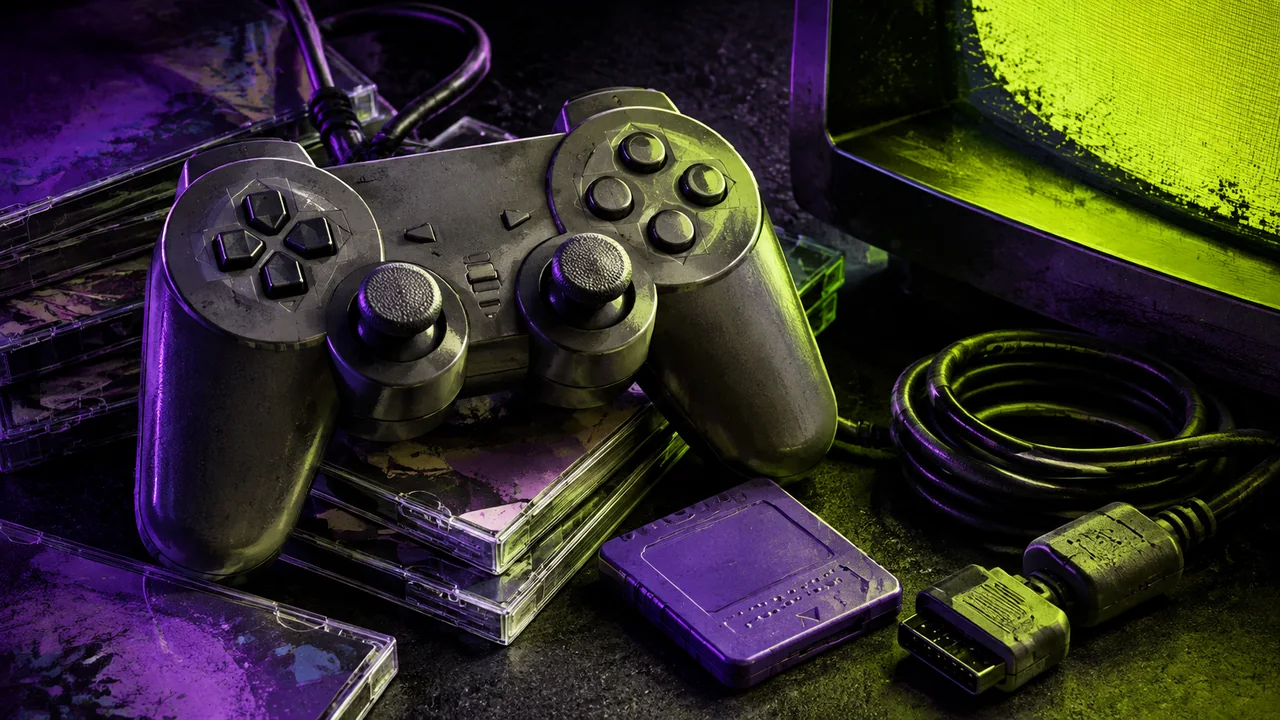
Atlantic and Rockstar gave buyers more than one route into the album. Their online store listed a CD, splatter vinyl and a limited liquid-filled pressing. Other retailers and independent record shops received their own vinyl variants with different colours and artwork. Blood Records, Target and independent stores were among the places able to carry distinct editions of the same soundtrack.
That is an important part of what “physical sales” means in this case. The record is not one standard black-vinyl release sitting in one shop. It is a coordinated set of editions across direct retail, larger chains and independent outlets. A variant is a version of the same album differentiated by a physical feature—here, vinyl colour or sleeve artwork—rather than a fundamentally different 34-track album. A pressing is the manufactured vinyl edition itself.
The liquid-filled version is especially conspicuous as a limited pressing. Its construction makes the record itself part of the presentation, not merely the carrier for the music. The supplied information does not establish quantities for any edition, whether particular variants sold out, or which format accounted for the largest share of sales. Those are separate questions from the label’s record claim and should not be assumed from the number of choices available.
Still, the distribution strategy has a straightforward practical effect: it puts GTA VI into record stores and physical-media retail spaces as well as digital game storefronts. A player can encounter the soundtrack as an object to display, play or compare across editions. A music buyer can come to it through Playboi Carti, Cardi B, SZA, Travis Scott, Justice or another contributor without necessarily beginning with the game itself.
The album and the score are separate releases
Grand Theft Auto VI: The Album contains 34 tracks and includes new music from Playboi Carti, Cardi B and SZA, among others. It reached streaming services on November 20, one day after the game’s launch. That week, Spotify placed Dua Lipa’s “Go Easy” at the top of its New Music Friday playlist, alongside new music from Carti and Lana Del Rey.
The soundtrack album should not be confused with the game’s separate score from electronic duo Justice, which is due December 11. In basic terms, a soundtrack album is the song-focused release associated with a screen or game project, while a score is music composed to support its scenes, atmosphere or action. Both can be central to a game’s identity, but they serve different functions and are being released on different schedules here.
That separation is useful for anyone following the music side of the launch. The 34-track album is already available on streaming and in physical configurations; the Justice score has a later stated date. Buyers should therefore avoid treating a vinyl edition of The Album as confirmation that it includes the upcoming score. The available details identify them as separate projects.
The timing also shows how the release was positioned. The album followed the game by a day on streaming, allowing the game’s launch to lead the conversation while quickly offering listeners a way to revisit the music independently. Physical formats add a second, longer-tail component: they turn the soundtrack into a retail item with editions that can be found through different sellers rather than only clicked from an in-game menu.
Why the music was developed over years
The work behind the album began well before release. Atlantic Records president Kevin Weaver started collaborating with Rockstar’s music team in 2023. The task involved lining up artists and identifying songs that could function in several contexts: clubs, radio and particular story moments.
That description points to a broader design brief than simply assembling a celebrity playlist. Music intended for a club scene may need a different energy from a song used to frame a scripted story beat. A song that works on radio must also stand alone outside the game. The album’s artists are therefore part of a project asking music to operate as gameplay accompaniment, narrative material and a conventional listening release.
Rockstar music executive Ivan Pavlovich said the label was not trying to pack the project with artists solely from its own roster. The stated priority was choosing the songs that fit the game. That does not tell us every factor behind each selection, but it does clarify the intended standard: game suitability came before a label-only lineup.
For the audience, that approach helps explain why the album reaches across rap, pop and electronic music. The variety is not presented merely as a list of high-profile names. It supports different settings and uses within the game, while also giving the soundtrack a chance to function away from it.
Tracks are part of missions, not just background radio
The most technically interesting detail is that Rockstar created some playable missions around individual songs. Rather than simply inserting a finished track onto an in-game radio station, developers could use separate components of a recording—such as vocals or instruments—within a sequence.
Those separate components are often called stems. A stem is an isolated group of audio elements from a recording, such as a vocal part, drums or instruments. Working with stems can let a game team shape music around on-screen action with more precision than a single fixed stereo track allows. It can emphasize a vocal, draw attention to an instrumental passage, or otherwise integrate the recording into the rhythm of a mission.
The supplied details do not specify exactly how every mission changes its music or what player actions control those changes. What is clear is the creative intent: selected songs are meant to be experienced while playing particular sequences, not solely heard passively while driving around the game world. Pavlovich described these as standout moments, and music from Travis Scott and Justice appears in sequences using this approach.
That is a meaningful difference for a licensed or specially commissioned song in a game. A playlist placement can establish setting, but mission-built music can become part of the memory of a specific event. The listener may later return to the album because of the track itself, the artist, or an association with the playable scene. In this case, the physical soundtrack gives that association a material form after the mission ends.
What the sales claim does—and does not—tell us
Atlantic’s record claim is significant on its own terms: it says no previous soundtrack from the label sold more physical copies in its first 24 hours. It also underlines the continuing role of vinyl, CDs and special-edition packaging in a release that is otherwise closely linked to streaming and a blockbuster digital game.
But it is worth keeping the measurement precise. The information provided does not give a unit total, a breakdown between CD and vinyl, worldwide territory details, chart placement or sell-through figures for individual retailer editions. Nor does it establish the long-term sales picture. “First-day physical sales” is a tightly defined milestone, and it should be read as such.
What can be said is that the album’s rollout connected several audiences at once: players encountering songs in missions, streamers finding a 34-track release after launch, and buyers selecting among physical formats and retailer-specific designs. The game’s vast first-day retail figure gives the soundtrack a powerful commercial backdrop, but the label’s soundtrack record is a separate achievement with its own measure.
For more on the scale of expectations surrounding Rockstar’s new release, see our coverage of the GTA 5-to-GTA 6 comparison raised by CD Projekt Red.
What to watch next
- The December 11 score release: Justice’s separate score is the next confirmed music milestone.
- Mission-focused discussion: The songs associated with Travis Scott and Justice sequences may draw particular attention as players identify how music is incorporated into gameplay.
- Format clarity for buyers: With a CD, splatter vinyl, limited liquid-filled vinyl and retailer-specific editions in circulation, buyers will need to check artwork and variant descriptions closely to identify the version they want.
- The album’s life beyond launch week: The first-day record reflects an immediate surge. Longer-term interest will be defined by how listeners engage with the music on streaming and how physical editions remain available through their respective retailers.
Grand Theft Auto VI: The Album is therefore more than a playlist accompanying a major game release. Its early physical-sales mark rests on a release plan that treats music as mission material, streaming content and a set of distinct retail objects—all while keeping the upcoming Justice score as a separate chapter in the game’s musical rollout.