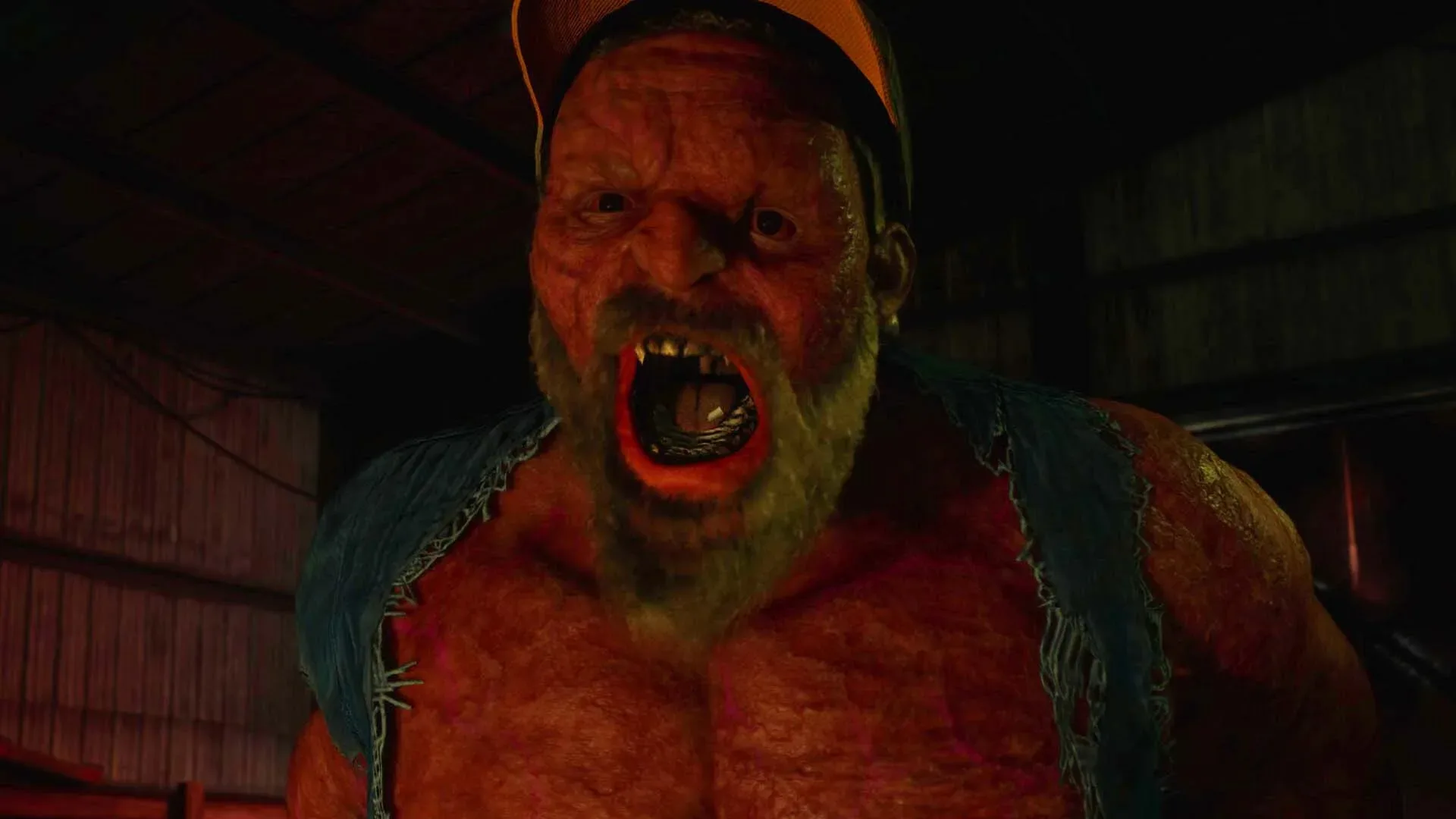
Grand Theft Auto VI has apparently made room for a towering red monster, and the explanation is every bit as grounded in open-world satire as it is gloriously ridiculous: the creature comes from a quest involving a farmer, unusually enormous strawberries, and chemicals that should almost certainly have stayed out of the food chain.
Players have been sharing footage of the hulking figure, commonly calling it a “Red Hulk.” That nickname is understandable shorthand for its size, color, and generally alarming appearance, but it should not be mistaken for an officially confirmed character name or a crossover. The available details instead frame it as one of GTA VI’s deliberately strange encounters—a grotesque payoff to an agricultural side story rather than a sudden visit from another franchise.
The player character Jason is not encountering an unknown monster in the moment that has circulated online. He has already met the transformed figure through the farmer’s questline. The important detail is that this is not random chaos with no setup: GTA VI reportedly establishes a small, absurd premise—helping grow giant strawberries—then drives it past the point of sensible consequences through the farmer’s use of questionable chemicals.
A side quest built around escalation
That structure matters. GTA has long been associated with satire and exaggerated situations, but a quest about oversized produce turning into a monster encounter shows how a mundane activity can become an excuse for a dramatic tonal left turn. A farmer wanting gigantic strawberries is a comprehensible, even harmless-sounding ambition. The chemicals provide the warning sign. The transformation supplies the punchline.
It is also a useful example of a familiar open-world storytelling technique: escalation. In game design terms, escalation is the process of increasing stakes, spectacle, or absurdity as a mission develops. A task that begins as an errand can shift into a chase, a combat scenario, an unexpected reveal, or—in this case—a red, hulking aftermath. The original goal remains recognizable, which makes the final result funnier than if the game had simply placed an unexplained monster in the world.
There is a practical storytelling advantage, too. Context lets a bizarre event feel authored instead of arbitrary. Players can still be surprised by the creature, but the quest’s chemical experiment gives the encounter a cause within the game’s fiction. It is silly cause-and-effect, certainly, but it is cause-and-effect.
That distinction helps explain why the circulating scene has attracted attention. Out of context, a huge red monster looks like GTA VI has abandoned its criminal-world premise for full fantasy. In context, it looks more like the series using satire to take a recognizable real-world concern—reckless experimentation, commercialized excess, or simply the urge to make something bigger than necessary—and turning it into an intentionally cartoonish disaster.
“Are we going too crazy?” is part of the process
Rob Nelson described the inclusion of odd creatures as a matter of feel. When particularly wild concepts arose, he said he would sometimes ask,
Related coverage includes GTA 6's Red Hulk Shows Rockstar Is Embracing Its Weirdest Side.
“Are we going too crazy?”
The answer, at least when a pitch proves entertaining enough, appears to be that GTA VI is comfortable crossing that line. Nelson said the team receives many pitches from its members and encourages experimentation. If an idea lands as fun or funny, it can survive the process.
“We love that stuff,”he said.
That does not mean every unusual idea necessarily makes the final game, nor does it establish a specific rule for how these encounters work. But it does clarify an important creative principle: the stranger corners of GTA VI are not necessarily accidents, glitches, or disconnected curiosities. They can be the result of a team testing a deliberately offbeat premise and deciding that its humor is worth preserving.
For players, that approach has an immediate implication. The game’s tone may be less predictable at the edges than a straightforward crime-story summary suggests. A mission can begin with a recognizable local concern and slide into body-horror comedy. A sighting that seems supernatural may have a mundane explanation. Or it may not.
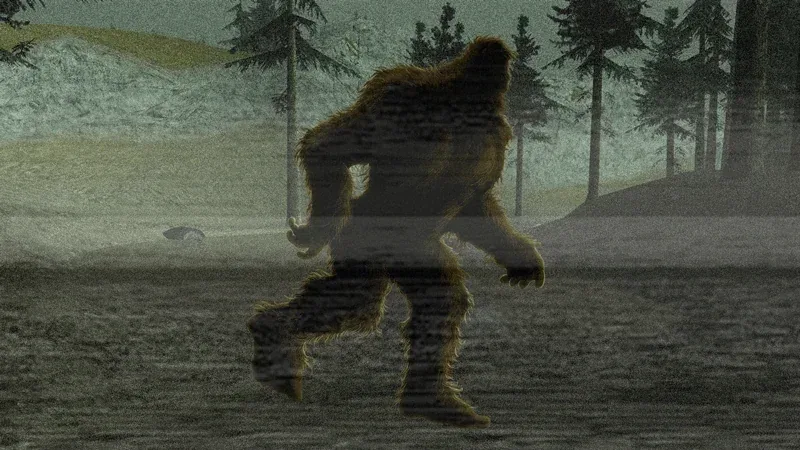
That ambiguity is intentional. Nelson said the team enjoys playing with players and raised the question of whether apparent paranormal activity is genuine or faked. His example was Bigfoot: is it actually Bigfoot, or a person in a Bigfoot costume? The uncertainty is not just a missing answer for players to solve; it is part of the joke.
Bigfoot, UFOs, and a giant crab with unanswered questions
The strawberry transformation is not the only indication that GTA VI is planting weird material around its world. Players have already reported finding Bigfoot and seeing UFOs. There is also a giant crab monster, although its context has not been established by the information currently available.
These sightings should be treated separately rather than folded into one confirmed supernatural storyline. Bigfoot, UFOs, the strawberry-derived monster, and the crab may share a broad taste for the uncanny, but the available details do not confirm that they are connected, nor that they all have the same explanation. The point of Nelson’s comments is almost the opposite: players may not always be able to tell whether the game is presenting the paranormal as real, fraudulent, staged, chemically induced, or simply a setup for comedy.
This is where the Red Hulk-like figure is especially revealing. Its explanation does not reduce its weirdness; it refocuses it. The creature is not less memorable because it has a quest behind it. The reveal instead transforms the encounter from an isolated visual gag into the end state of somebody’s terrible decision-making.
That is a strong fit for GTA’s brand of humor. The joke is not only that something monstrous exists. The joke is that a person pursued a baffling ambition, used suspect methods, and generated consequences that are wildly disproportionate to the initial problem.
What players should and should not infer
The current information supports a few firm takeaways:
- The red creature is linked to a quest in which a farmer attempts to grow extremely large strawberries.
- Questionable chemicals are involved in the transformation.
- Jason knows the person after the transformation; the encounter is not merely a random hug with a stranger.
- Rockstar’s stated creative approach allows strange concepts to remain when they feel fun or funny.
- Bigfoot, UFOs, and a giant crab monster have also been observed, but their shared meaning, if any, is unconfirmed.
What should not be assumed is equally important. There is no basis here to call the red creature an official “Red Hulk,” to declare every unusual sighting a genuine supernatural event within GTA VI, or to map out a complete hidden-monster quest chain. The giant crab, especially, remains an open question.
In a game built to support discovery and discussion, leaving some of those questions unresolved has value. Players can compare sightings, debate explanations, and revisit unusual locations without knowing whether they are chasing a real secret, an in-world hoax, or an elaborate gag. That uncertainty turns odd encounters into conversation starters rather than simple checklist items.
GTA VI’s other systems are already attracting attention for how they shape player interactions; its relationship prompts, for example, point toward consideration as a meaningful player skill. The monster material suggests a complementary design instinct: give players situations that look implausible, then resist immediately explaining every last detail.
The giant-strawberry quest does provide an explanation, just not a normal one. And that may be the clearest signal of the intended balance. GTA VI can justify its most bizarre images inside the world while still making the justification ridiculous enough to keep players asking whether the game has gone too far. In this case, “too far” appears to be exactly far enough to produce a monster—and a very large crop of player speculation.