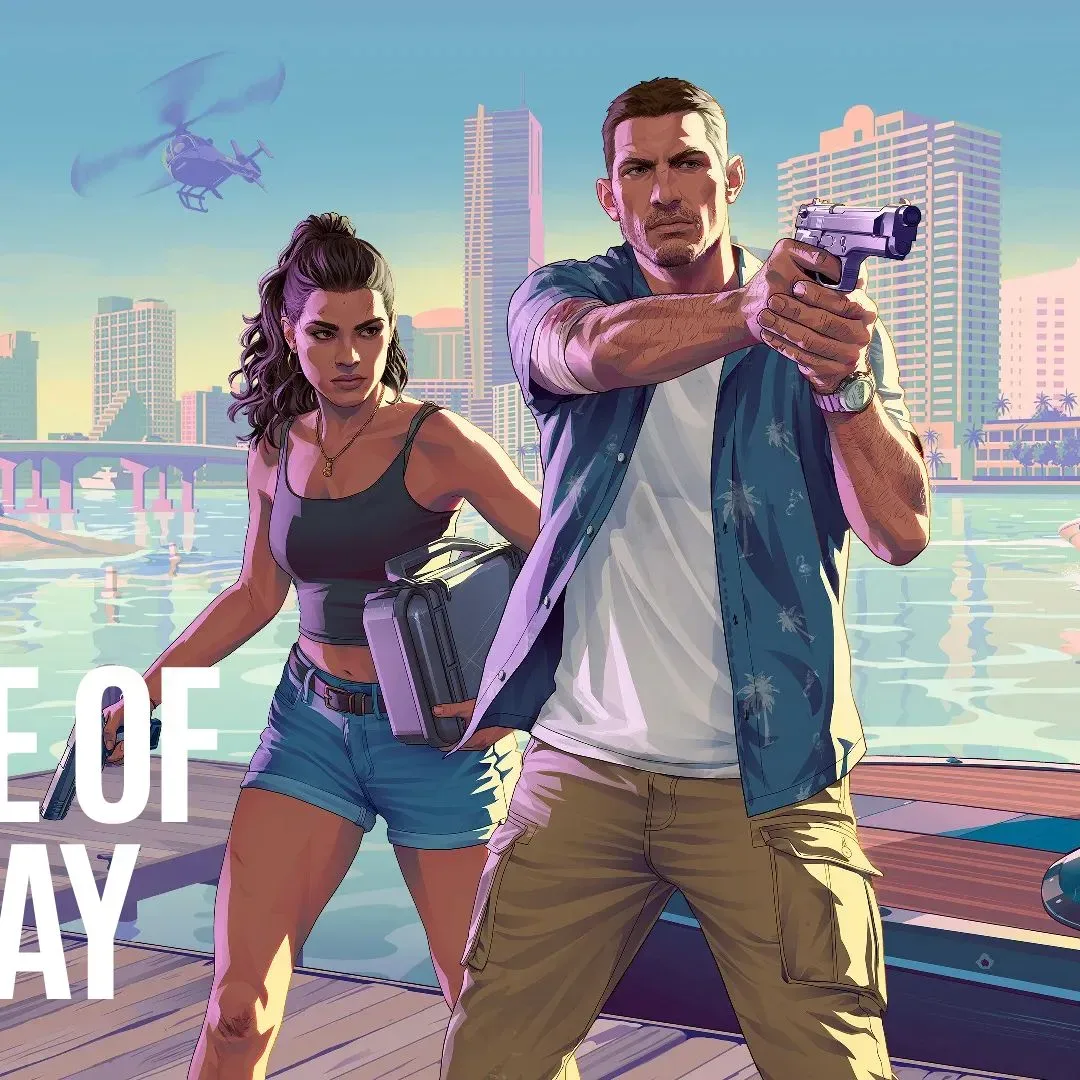

GTA 6’s slower early missions are not an accidental detour before the action starts. Writer Michael Wiafe has described the pacing as a deliberate attempt to place players in emotional step with protagonists Jason and Lucia: feeling their highs, lows, anxiety, restlessness and hopes rather than merely racing from one spectacular criminal set piece to the next.
That explanation arrives as some players have expressed dissatisfaction with the limited stakes and more domestic tone of the game’s opening stretch, particularly before Lucia leaves prison. For players who came expecting immediate access to a fast, chaotic criminal sandbox, the contrast is easy to understand. Jason’s early concerns about building a life for his family and Lucia’s desire to find meaningful work can sound small beside the franchise’s longstanding reputation for cars, crime and explosive freedom.
But Wiafe’s comments frame those quieter beats as a structural choice. The stated goal is not simply to make Jason and Lucia sympathetic. It is to build a story whose tempo can coexist with player-led exploration, optional diversions and the open world without making the main plot feel as if it has been abandoned every time a player wanders off.
“We want players to be emotionally in-step with Jason and Lucia, going through the highs and lows they do.”
A slower opening is meant to establish stakes, not delay them
“Pacing” is often used as shorthand for how quickly a game delivers action, missions or plot developments. In narrative design, though, pacing is also about the order in which a game gives the player information and emotional context. A quieter beginning can establish what characters want, what they fear and what everyday pressures are shaping their decisions. That groundwork can change the meaning of later events, even if the early objectives themselves seem modest.
Wiafe’s description points to that kind of approach. The game is meant to convey the rush associated with trying to escape economic desperation, while also allowing Jason’s family worries and Lucia’s frustration to register. Those threads suggest that the opening is trying to make its protagonists’ circumstances feel lived-in before asking players to view them primarily as vehicles for increasingly large-scale crime.
That does not automatically make the opening a good fit for every player. An intentional design decision can still produce a real mismatch between a game’s priorities and an audience member’s expectations. Players wanting immediate mayhem may see household tasks or relationship-focused errands as a brake on the experience they came for. Players invested in Jason and Lucia’s situation may read the same moments as necessary context.
The important distinction is that “low stakes” can mean two different things. It can describe a mission with little immediate danger or spectacle. It can also describe a story that has not yet convinced a player that its characters’ problems matter. Wiafe’s comments indicate that GTA 6 is attempting to solve the second issue through the first: by spending time around smaller personal concerns, it asks players to understand what is at stake for Jason and Lucia before the pressure escalates.
Related coverage includes GTA 6’s Slow Opening Is Meant to Keep Players Close to Jason and Lucia.
What Rockstar means by keeping the story in rhythm with play
Wiafe said the team wanted the game to progress at a rhythm that does not feel out of step with a player’s own playstyle and decisions. In practical terms, that means the central story is intended to accommodate a basic reality of open-world games: people do not all move through them in the same way.
One player may follow missions in sequence. Another may spend long periods driving, exploring, pursuing minor activities or simply taking in the environment. A third may alternate constantly between story objectives and diversions. The challenge for an open-world narrative is maintaining continuity across all three approaches.
Wiafe’s explanation is that major and minor distractions are welcome, and that returning to the story should not require a “mental reset.” A mental reset is the friction players can feel when they leave a serious plot moment for optional activities, then return to find that the story’s emotional urgency no longer matches their behavior. The game may tell the player a situation is dire, while its structure has encouraged them to spend hours elsewhere. That gap can make a narrative feel less convincing.
GTA 6’s stated solution is not to eliminate diversions. Instead, its story is meant to advance at a pace that can survive them. The early domestic material may therefore function as more than character detail: it can establish a baseline in which ordinary life, side activities and major plot developments are not treated as entirely separate modes.
This perspective also gives added meaning to the claim that the experience should feel seamless from beginning to end. “Seamless” does not necessarily mean there are no tonal shifts, no optional activities or no escalation. Here, it appears to mean that moving between free exploration and the main story should feel natural rather than like switching between two incompatible games.
Agency is the key point—and the point of tension
Wiafe’s most significant claim is that the story happens to Jason and Lucia, while players should still feel that they have agency. Agency is the player’s sense that their choices, priorities and actions matter within a game’s boundaries. It does not require every decision to radically rewrite the plot. It can also come from choosing when to engage with missions, how long to explore, which distractions to pursue and how personally invested to become in a world.
Yet that is also where the early reaction described around GTA 6 becomes most revealing. Some players appear not to feel that freedom in the way the game intends. If an optional activity is framed through a relationship obligation, a household concern or another intimate character responsibility, it may feel less like a freely chosen diversion and more like a demand that the player perform a role they did not want.
There is a meaningful difference between having an option and feeling invited to take it. A game can technically allow players to ignore an activity while presenting it in a way that makes skipping it feel narratively wrong, incomplete or out of character. Conversely, an activity can be central to character-building but feel tedious if the player does not share the game’s interest in that character-building.
That tension is especially sharp for a series associated in the public imagination with anarchic, player-created chaos. Some players may measure agency primarily through the ability to cause disruption: driving recklessly, provoking a response from the world or treating the city as a playground. Others may measure it through the ability to inhabit a character’s life, choose their pace and step in and out of the narrative without punishment. Wiafe’s comments suggest GTA 6 is trying to support the latter without fully abandoning the former.
Why familiarity with GTA can shape the reaction
Expectations do not arise in a vacuum. A long-running series accumulates an identity in the minds of its audience, including people who have not played every entry. For GTA, that identity has often centered on the criminal sandbox: a large city, vehicles, missions, satire and room for uncontrolled experimentation.
That reputation can make a more grounded introduction feel like a challenge to the series’ perceived contract with players. If someone approaches GTA 6 principally to create their own chaos, a task involving a home or a partner may seem opposed to the fantasy they expected. If someone approaches it as the story of Jason and Lucia navigating difficult circumstances, the same activity may provide texture that makes later risks more tangible.
Neither reaction needs to be dismissed as a misunderstanding. The friction itself is useful evidence of a design trade-off. The more a game asks players to emotionally inhabit specific characters, the more it may limit the feeling that those characters are blank slates for unrestrained player behavior. The more it foregrounds unrestricted sandbox play, the more difficult it can be to maintain a tightly calibrated emotional arc.
Wiafe’s framing makes clear that GTA 6 is trying to balance those aims rather than choose only one. Players are encouraged to explore and take distractions, with no intended overwhelming requirement to grind for story progress. At the same time, the game wants the plot’s personal pressures to retain meaning. Whether that balance lands will depend on how each player experiences the connection between optional play, mission design and the evolving stories of Jason and Lucia.
Grinding is not supposed to be the price of seeing the story
Another part of Wiafe’s explanation concerns grinding. In games, grinding generally means repeatedly performing activities—often routine combat, jobs or resource-gathering—to gain enough money, experience or another requirement to unlock progress. It can be satisfying when players enjoy the loop or want to master a system. It can feel like a barrier when it exists primarily between the player and the next story beat.
Wiafe acknowledged that players have the option to grind, but said the intent is not to create an overwhelming sense that it is necessary for story progression. That matters because an open world can offer abundance without forcing completionism. A rich world is most welcoming when its activities can be enjoyed because a player wants to engage with them, rather than because the next narrative mission feels inaccessible otherwise.
The position also aligns with the broader pacing goal. If progression does not demand excessive repetition, players can spend their time in a way that fits their own interest—pursuing the main story, exploring, taking side activities or simply existing in the world—without the plot becoming a reward locked behind chores.
For readers interested in another layer of Vice City’s atmosphere, the reported station selections in the GTA VI WorldWide FM tracklist show how music is also positioned as part of that larger world texture.
The early-game debate is really a debate about what players want GTA 6 to be
The discussion around the opening is not just about whether an individual mission is exciting enough. It is a debate over the desired relationship between freedom and authorship in GTA 6. Wiafe’s comments articulate an authored vision: Jason and Lucia have a particular emotional journey, and the game wants players to move alongside it. The objections from some players articulate another desire: a GTA game should foreground the player’s capacity to make the city their own playground as quickly and as completely as possible.
Those ideas can overlap, but they will not always produce the same ideal opening hours. A deliberately paced start may give the later story greater emotional weight for players receptive to it. For players seeking instant access to the series’ most unrestrained fantasy, it may feel like the game is asking them to wait—or to care about a kind of agency they value less.
For now, Wiafe’s account establishes the intent behind the design. GTA 6’s early quiet is meant to connect free exploration with character-driven stakes, avoid making optional activity feel like mandatory labor, and let the player stay close to Jason and Lucia even when the city pulls their attention elsewhere. The question players are now answering for themselves is whether that rhythm feels like freedom with emotional weight, or a constraint on the kind of freedom they expected.