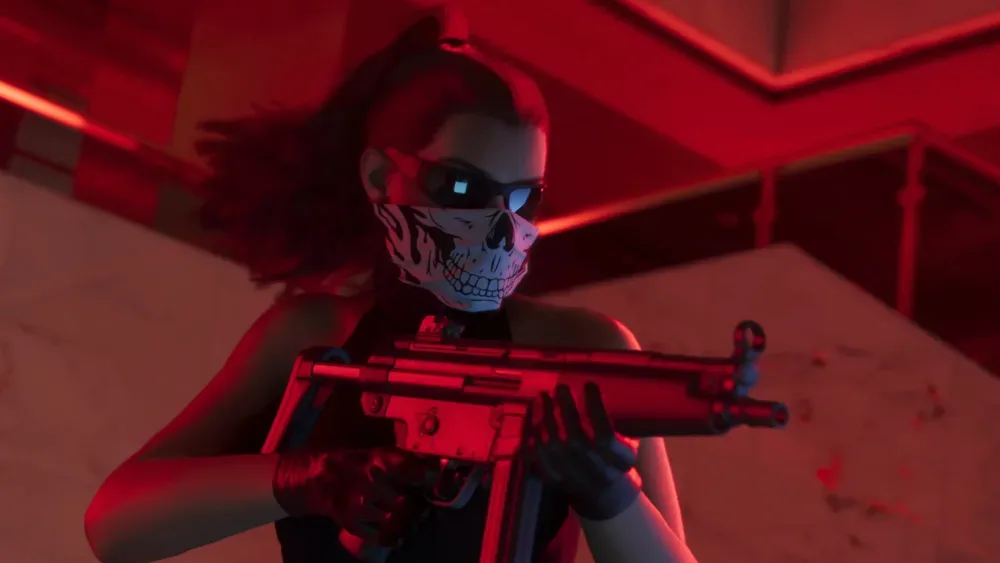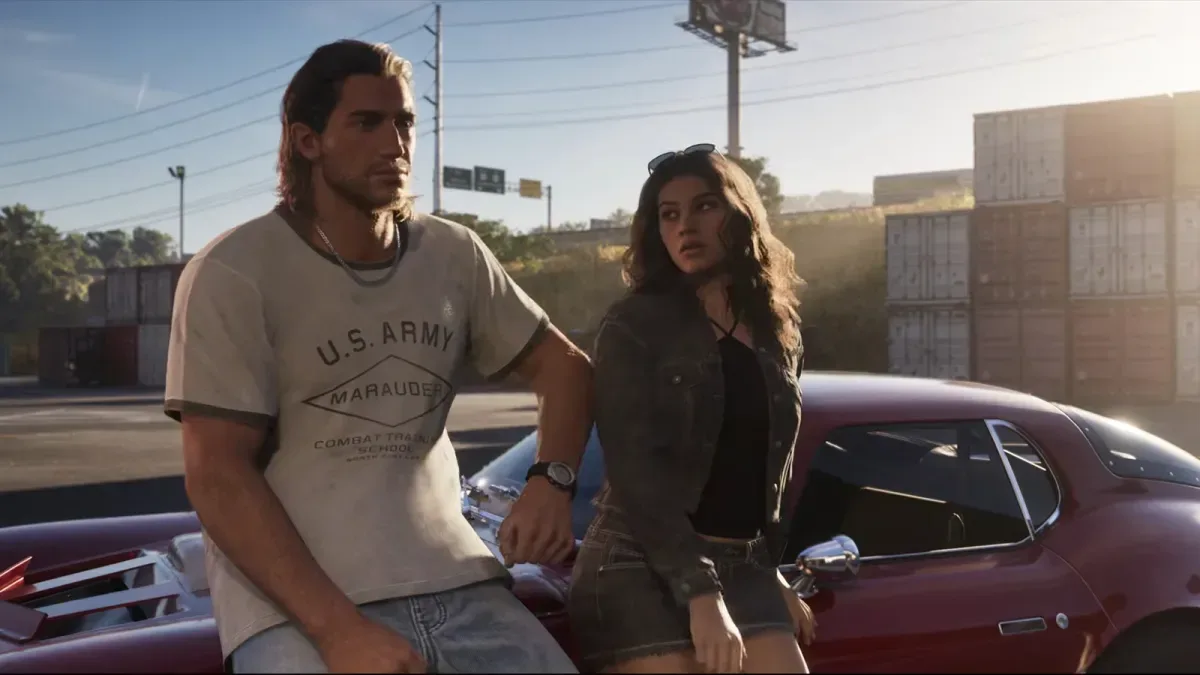
Grand Theft Auto VI makes its biggest statement through contrast. Its world is loud, impulsive and ridiculous: a fictional Florida-sized playground where carjackings, strange wildlife, gaitated compounds and elaborate robberies all belong in the same day. But beneath that chaos is a more deliberate idea. Rockstar’s new crime story follows Jason and Lucia as their relationship draws them deeper into Leonida’s criminal ecosystem, and the game’s vast freedom is framed not simply as a mechanism for causing trouble, but as a way of deciding what kind of trouble these two people become.
Leonida is a lightly fictionalized Florida, spanning humid backwoods and hard neon cityscapes. It is designed for spectacle, certainly, but the supplied details point to a game more interested in texture than sheer square mileage. Streets are crowded with non-playable characters, or NPCs: simulated residents controlled by the game rather than by a human player. These characters are described as having individual body types and distinct snippets of dialogue, helping the setting feel populated rather than merely filled. The radio further layers in retro songs, original tracks with a Miami Vice-like edge, and comedy voices including Janelle James, Sarah Sherman, Jason Sudeikis and “Weird Al” Yankovic.
That density matters because open-world games ask players to believe in the space between missions. An open world is a navigable game environment that permits detours, exploration and optional encounters rather than moving solely from one prescribed level to the next. GTA VI’s version appears to make those gaps part of its appeal. A player can pursue the central crime narrative, then spend time exercising, shooting pool, playing basketball, putting at mini golf, drone racing, parachuting, hunting, shopping or practicing at a shooting range. The point is not that every activity must be revolutionary. It is that Leonida seems built to accommodate a change of mood without breaking the fantasy of inhabiting a place.
Jason and Lucia keep the spectacle grounded
The central relationship is the game’s narrative anchor. Jason and Lucia’s romance unfolds alongside their descent into local crime, giving the story a two-person focus amid a map intended to support nearly limitless distraction. That focus is important for a series so often identified with satire and anarchic escalation. A sprawling sandbox can easily turn protagonists into simple avatars for mayhem; a story tree shaped in part by the player’s needless violence gives their actions a stated connection to the pair’s future.
A story tree is a branching narrative structure in which choices or performance can lead to different developments and consequences. The available information does not spell out every branch, outcome or threshold in GTA VI. It does establish, however, that excessive violence can affect the story and may produce serious consequences for Jason and Lucia. That distinction is significant. Chaos may remain an option, but it is not necessarily treated as consequence-free decoration.
This does not make GTA VI a morality lecture. The game remains full of criminal missions and outrageous action. Instead, it suggests a tension at the heart of the fantasy: players are given enormous control, while the protagonists may have to live with the results. The best crime fiction is often less interested in whether its characters cross a line than in what crossing it costs them. Jason and Lucia’s relationship gives that question a personal dimension.
“Gone Fishing” establishes the mission philosophy early
The early mission “Gone Fishing” serves as a compact example of the game’s approach. It begins with a boat trip to retrieve dropped packages, then shifts into a rescue at a remote compound occupied by hostile hillbillies. The location is explicitly presented as a patchy-foliage environment where the player can take a quieter path, moving through cover and knocking enemies out, or charge in with firearms, stolen vehicles and direct violence. Escape arrives by seaplane.
That structure is more meaningful than a simple action sequence. It combines traversal, recovery, infiltration, combat and escape in a chain of escalating tasks, while allowing players to determine the tone of the confrontation. In game-design terms, this is player agency: the capacity to make choices that meaningfully shape how an objective is approached. Agency is not merely being offered two buttons marked “stealth” and “loud.” It is having enough room in a scenario for the plan, the mistake and the improvised recovery to feel like part of the player’s own story.
Related coverage includes Grand Theft Auto VI Turns Leonida Into a Vast Crime Story Playground.
The supplied information identifies more than 90 main missions, with examples including ambulance hijackings, shark attacks, excavator-based destruction and armed robberies operating against a time limit. Those ideas suggest a campaign that uses varied action fantasies rather than relying on a single heist template. “Gone Fishing” is especially useful as a showcase because it reportedly arrives before players are fully comfortable with the controller’s functions. The design implication is clear: GTA VI wants to create pressure early, not wait until every system has been formally mastered.
Music supports that pressure. French electronic duo Justice is credited with the score during stressful stretches of “Gone Fishing.” In an action game, a score is not background ornament alone; rhythm, intensity and timing can shape the player’s perception of risk. A rapid or forceful musical cue can make an escape feel urgent even when the player technically has time to assess the route. Here, the score appears positioned as part of the mission’s momentum, carrying players from uncertainty to the moment of airborne relief.
Small friction changes the flavor of crime
GTA VI does not appear to reinvent every foundational system from Grand Theft Auto V. Its changes sound measured, but measured friction can have a large effect on how an open-world game feels. Vehicle theft is one example. Some cars can take time to hot-wire, while newer vehicles may require a fob and cannot simply be started by manipulating wires. That turns an assumed shortcut into a situational decision.
The practical implication is that vehicles are no longer interchangeable solutions in every emergency. If an escape plan depends on grabbing the closest car, players may need to consider whether it can actually be used quickly. It is a modest obstacle, but it encourages observation and contingency planning without eliminating the pleasures of opportunistic theft that define the series.
The shooting system is also described as slightly more demanding, rewarding patience and skill rather than indiscriminate fire. This matters because combat difficulty can influence the entire tempo of a game. If shooting asks players to choose cover, aim carefully or avoid rushing every encounter, then stealth in a mission such as “Gone Fishing” becomes more than a novelty route. It becomes a viable response to risk.
Neither detail promises a full simulation of cars or gunfights. Nor should it. GTA’s identity has always included broad, accessible action. The interesting prospect is a game that keeps its expressive excess while making the player pause just often enough to make success feel earned. Leonida may invite impulse, but its systems appear to push back in small and credible ways.
Leonida is built for authored missions and unscripted days
GTA VI’s strongest feature may be the coexistence of tightly staged missions and unstructured leisure. Main-story set pieces can deliver a deliberately paced sequence with custom dialogue, music, objectives and cinematic exits. Outside them, the map can generate the loose, player-directed anecdotes people remember long after a campaign’s specifics blur: an afternoon at home turns into an accidental chase; a hunting trip becomes an emergency; a trip across town becomes a distraction-filled tour of the state.
This is where the game’s Florida-inspired identity does real work. Leonida’s swamps, backwoods and neon urban spaces provide contrasting stages for both crime drama and absurdity. The setting is not presented as a literal recreation of a real state, but as an exaggerated fictional world informed by the unpredictable “Florida Man” folklore surrounding it. The advantage of that framing is tonal flexibility. A grounded relationship scene can sit near a ludicrous encounter without the world feeling like it has switched genres; the environment is already designed to contain both.
The enormous crab attack mentioned among the available activities and encounters is a good example of GTA’s capacity for deliberate unreality. A game can pursue environmental detail—crowded neighborhoods, car-security distinctions, radio programming—while also allowing a giant-crab scenario. Realism in this context is not a rule that forbids the strange. It is the consistency of enough everyday details that the strange has somewhere to land.
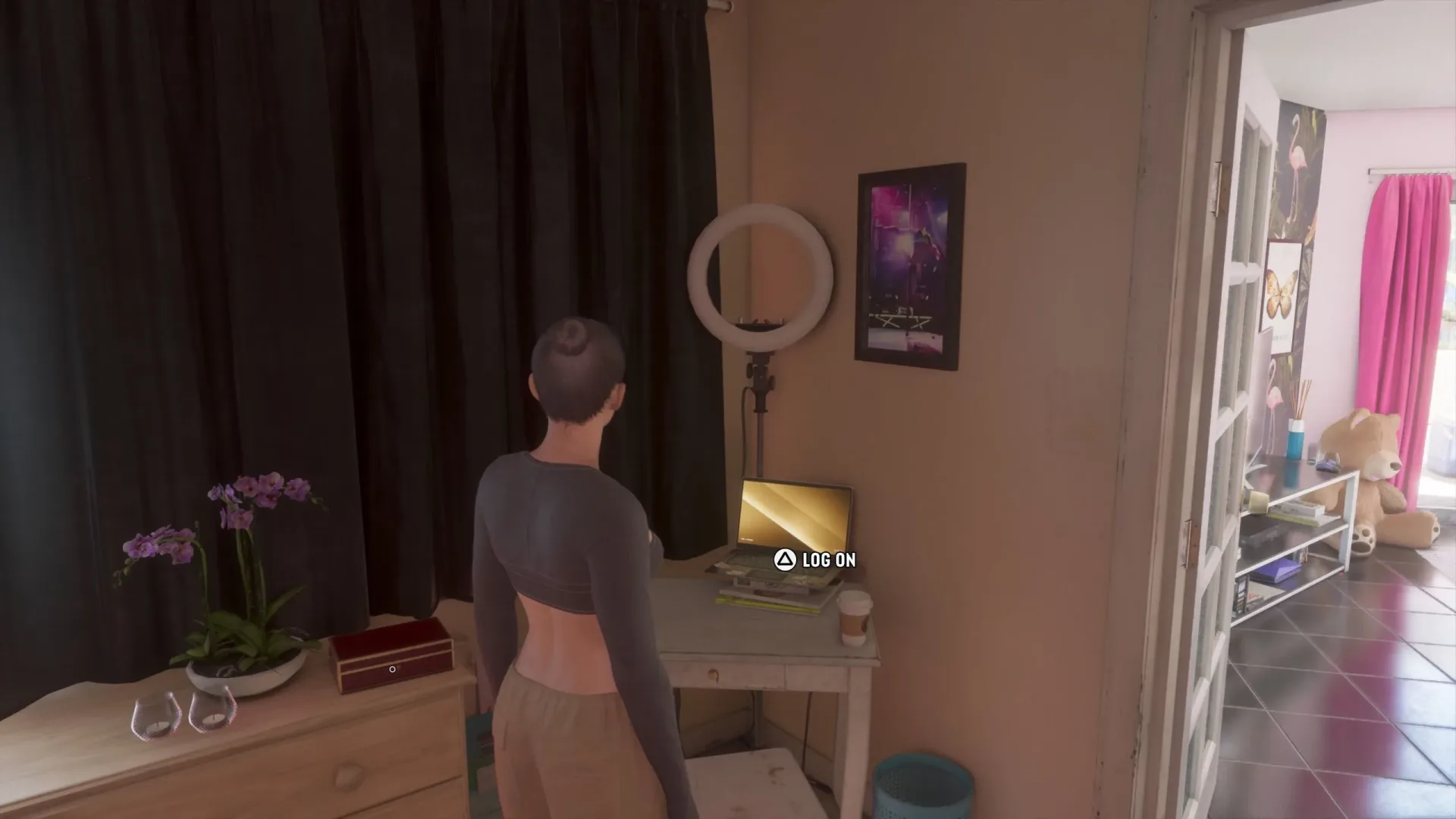
For players looking to solve a specific early-game obstacle rather than wander Leonida, see this GTA 6 Boogie laptop password guide. That kind of targeted help reflects the other side of a huge game: even in a world designed for freedom, a single puzzle or mission gate can briefly become the whole adventure.
A fantasy of control, with a sharper edge
Grand Theft Auto has long been a series about power fantasies, but GTA VI’s version is presented against a more uneasy social backdrop. The game’s appeal is linked to a feeling of control: in Leonida, a player can choose a destination, seize a vehicle, pursue an activity, start a job or make a mess of a plan and try again. That is a potent contrast to a culture frequently marked by economic anxiety, workplace strain and uncertainty over technology’s effect on employment.
The game does not solve those conditions, and it would be a mistake to confuse virtual control with real-world power. But entertainment often makes its cultural impact by providing a space to rehearse emotions that are harder to resolve elsewhere. GTA VI’s criminal fantasy offers command over pace, place and identity, even as its branching consequences caution that total freedom is not the same as an uncomplicated life.
That is also why arguments around violence will inevitably follow it. Concerns have been raised about young audiences and about the game glamorizing violent conduct. The information available here does not establish a simple answer to those concerns. What it does show is a game that places violence alongside stealth, recreation, relationships, travel and consequences. Its intended experience appears broader than a destruction simulator, even if destruction remains one of the tools it offers.
With launch-day sales said to have approached $4 billion, GTA VI has arrived as a major pop-cultural event as well as a game. Its more lasting achievement may depend on whether its systems sustain the promise in its premise: an enormous criminal playground where the next mission can be a carefully orchestrated action spectacle, and the time between missions can feel equally authored by the player. Jason and Lucia’s story gives Leonida stakes; Leonida gives that story room to become unpredictable.