The first public weekend of Grand Theft Auto 6 has produced exactly the kind of video archive a giant open-world game invites: players testing limits, non-player characters wandering into the wrong place at the wrong time, vehicles operating under conditions no sensible mechanic would endorse, and wildlife making every trip near water feel like an avoidable administrative error.
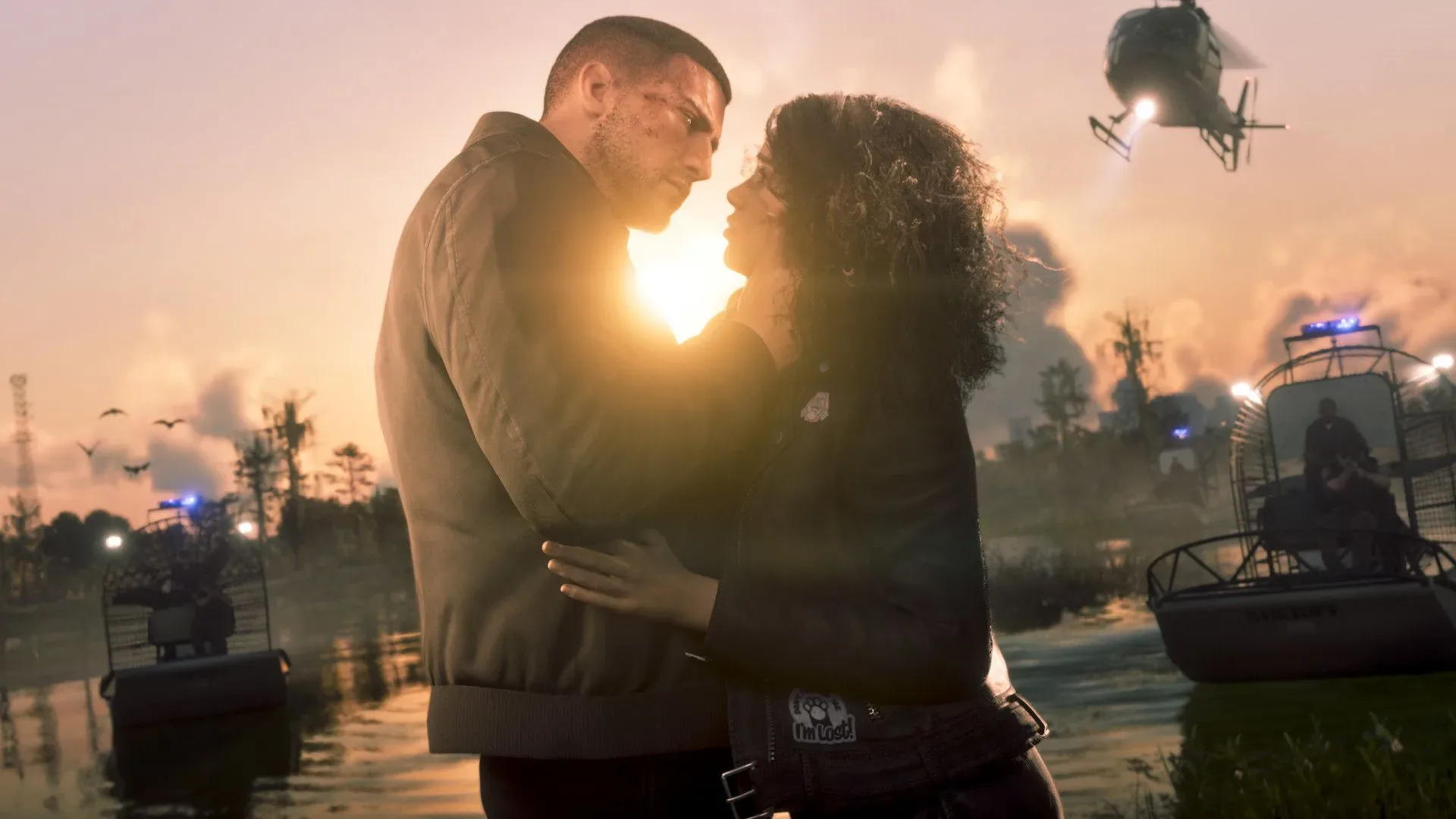
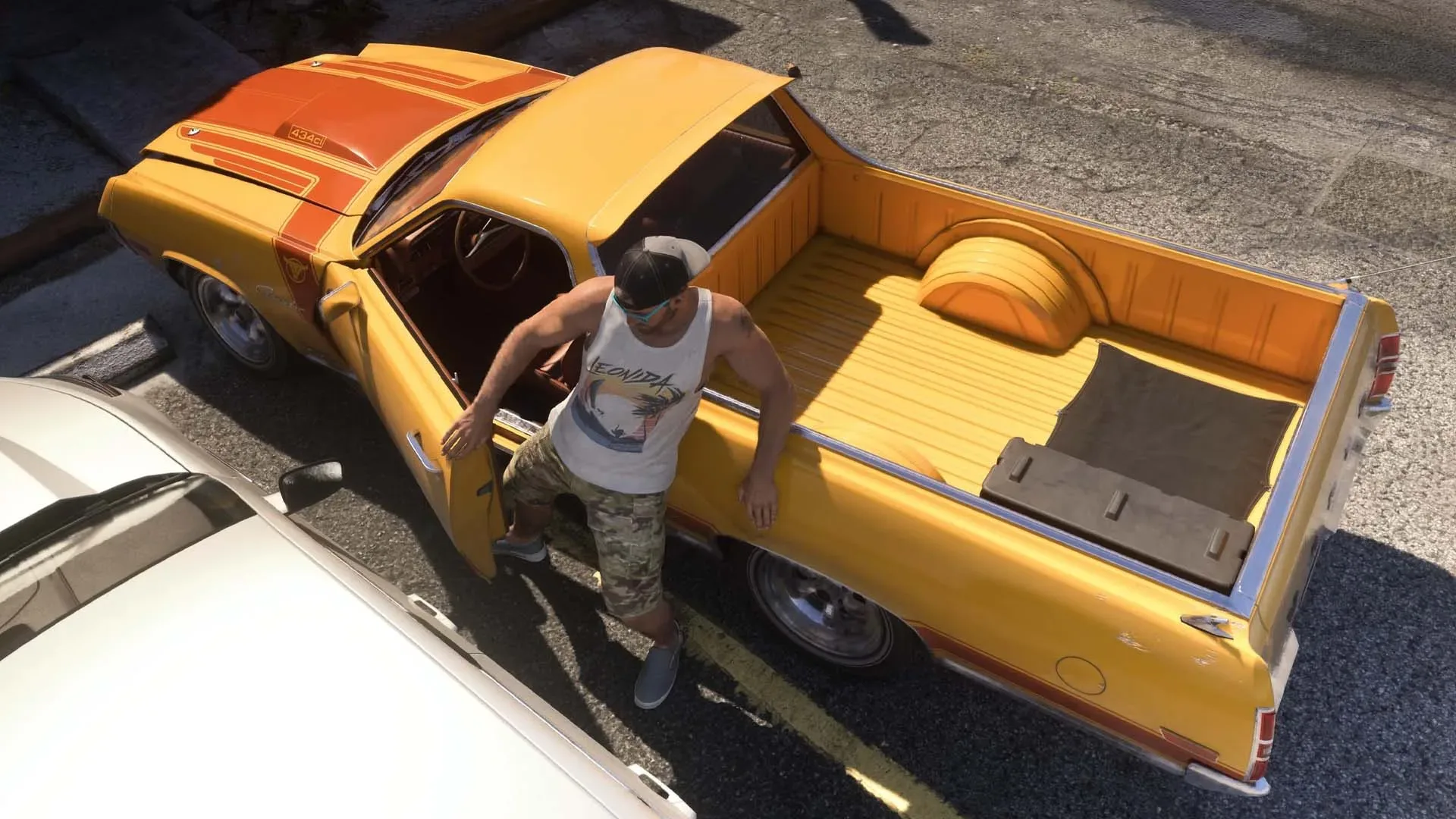
The emerging clips are deliberately light on story spoilers. Instead, they are about the shared systems of Leonida: traffic, water, pedestrians, animals, physics interactions and the objects players can pick up, steal, drive, ignite or otherwise turn into an anecdote. Jason and Lucia may be the game’s central characters, but many of the most replayed moments so far apparently belong to a passing driver, an unfortunate bystander, a shark, an alligator, a cow, or a vehicle that has become only theoretically roadworthy.
That distinction matters. A scripted action sequence is designed to land a particular punchline. An open-world clip is funny because several independent systems seem to collide at once: a player’s plan, a vehicle’s momentum, an NPC’s pathfinding, a hazard and the camera angle. The result can look rehearsed even when it plainly was not.
Leonida has become a testing ground, not just a backdrop
Much of the early footage has the spirit of experimentation rather than conventional mission play. Players are trying odd uses for commonplace things: taking a neighbor’s propane tank as part of a daily routine, using gasoline in a conspicuous way, or finding out whether a kayak has to remain in the water. The answer to that last question, judging by one widely circulated example, appears to be less restrictive than common sense would prefer.
That is the real appeal of a sandbox. In game-design terms, a sandbox is an environment that supports player-led activity rather than asking everyone to follow one narrow route. It does not mean that everything is possible, nor does it guarantee that every strange action is intended. It means objects, vehicles, spaces and characters can interact in enough combinations that a player can set a goal as simple as “what happens if I try this?”
Early GTA 6 clips suggest that Leonida gives that curiosity plenty to work with. A late-night drive can become a traffic disaster. An ordinary shoreline can become a wildlife problem. A craft intended for water travel can become part of a decidedly overland experiment. The lasting joke is frequently not the stunt itself, but the speed at which the world supplies an unexpected response.
There is a useful caution in that, too. A short social clip rarely tells viewers whether they are seeing a repeatable mechanic, a rare chain of events, a temporary visual issue, or a one-off piece of luck. The first weekend is ideal for discovering surprising moments, but it is a poor time to declare every viral video a definitive explanation of how a system works. The cleanest reading is simply that players are locating the edges of the simulation in public.
Traffic, pedestrians and the comedy of interrupted plans
Road chaos appears to be one of the strongest early sources of GTA 6 comedy. Cars do not need to be the intended subject of a clip to take over its ending. A player can begin with a mundane errand, a fight, a friendly encounter or a bit of sightseeing, only for the broader movement of the city to reframe the scene in seconds.
Related coverage includes GTA 6's First Weekend Has Already Produced a Flood of Wild Leonida Clips.
This is where the phrase emergent gameplay is useful. It describes moments arising from systems interacting rather than from a prewritten scene. A sudden collision, a pedestrian response or an especially bad turn by a driver may be built from rules the game already uses everywhere. Yet the timing turns it into something that looks unique.
The early reels also put NPCs in an unusually prominent role. An NPC, or non-player character, is controlled by the game rather than another person. In an open world, NPCs make streets feel inhabited, but they also create uncertainty. Their routines, reactions and proximity to moving vehicles are all ingredients in the sort of clip where the player begins the scene and someone else unexpectedly becomes its star.
That uncertainty is not just a source of slapstick. It is why small player choices can feel consequential. Stopping on a road, entering an argument, pulling a vehicle into a crowded area or approaching an animal can change the number of active variables quickly. For players who want the amusing accidents without making them the entire session, there is a simple practical lesson: leave room, keep the camera ready, and do not assume the surrounding world will pause politely while a plan unfolds.
Wildlife is not background decoration
Leonida’s animals are already central to the clip conversation. Alligators are especially visible around the game’s Florida-inspired setting, while sharks and cows have each found their way into memorable mishaps. The underlying message is not that every animal encounter must become hostile or destructive. It is that wildlife has enough presence to affect a player’s choices and to complicate the scenery.
That is a subtle but valuable difference. In many open worlds, animals are visual texture: they make an area look alive without changing much about how it is played. When an animal can alter a route, interrupt an activity or trigger a bizarre accident, it becomes part of the playable environment. A shoreline is no longer merely a scenic boundary, and a rural stretch is no longer simply empty space between destinations.
Players should still resist turning a viral moment into a blanket rule. An alligator appearing non-threatening in one clip does not settle how every encounter will work; a shark-related mishap does not define all water travel. These videos show possibilities, not a complete field guide. But they do indicate that wandering off the main road—or toward the water—may offer more than a change of view.
Not every notable clip is a gag
Amid the cartoons-on-four-wheels material, early footage has also highlighted unusual ways people are interacting with GTA 6. One player was shown stealing a fighter plane using thought-controlled input, while a Neuralink participant was shown beginning the game’s story with the technology. Those moments belong to a different category from the kayak experiments and explosive visual jokes.
The relevant term here is accessibility: the design of systems and tools that let more people use and enjoy a game. The clips do not establish a broad account of every supported control option or how any particular setup works. They do, however, illustrate why alternative inputs matter. For some people, the way a game is controlled is not a novelty layered atop the experience; it is central to whether the experience is possible at all.
That makes these clips worth treating with a little more care than a stunt compilation. A player accomplishing a difficult or routine in-game action through a nontraditional interface is not merely demonstrating a trick. They are showing an interaction pathway whose importance goes beyond its shareability.
What the “kinks” clips can—and cannot—tell us
A few early videos have focused on odd-looking behavior and apparent glitches. That is normal for a game with dense urban areas, busy roads, varied vehicles, water, animals and many player-driven interactions. The phrase physics glitch is often used loosely online for anything visually strange, but it can cover several different situations: collision detection behaving unexpectedly, an animation failing to align with an object, a vehicle reacting unusually to an obstacle, or a system combination producing a result developers did not anticipate.
The key word is “can.” A funny recording by itself does not diagnose the cause, prove widespread technical trouble or reveal the frequency of an issue. It only proves that a particular outcome occurred in that particular capture. Viral clips naturally reward the exceptional, whether that exception is a genuine bug, a bizarre coincidence or careful player setup.
That does not make them worthless. On the contrary, players are excellent at generating unusual scenarios at a scale no ordinary playthrough could cover. Over time, repeated examples can identify patterns worth investigating. In the first rush of sharing, though, the most responsible response is to enjoy the spectacle while leaving room for uncertainty.
The clip economy has arrived quickly
GTA 6 seems positioned to become a major source of short-form game video because its ingredients are naturally legible. You do not need a long tutorial to understand a bad driver, a dangerous animal, a vehicle missing a portion of itself, a door-shaped illusion or a character’s unfortunate collision with the environment. The setup is immediate, the reversal is visible, and the ending is usually short enough to replay.
That does not reduce the game to meme material. Rather, it shows why sophisticated open-world systems can generate stories outside the formal campaign. The player may be pursuing nothing more profound than transportation, a detour, a small experiment or a photo opportunity. The world’s reaction supplies the narrative beat.
There is also value in separating that playful side from the main story discussion around Jason and Lucia. For a look at how players have been reading Lucia’s narrative setup and the pressure surrounding crime, see this discussion of Lucia’s reentry story. The early clips and the story conversation can coexist: one is about systems producing surprises, while the other concerns the themes players are taking from the game’s characters and premise.
For now, the standout impression from GTA 6’s opening weekend is not any single stunt. It is the range of situations that have already become shareable: improvised fights, stolen household equipment, unstable road journeys, planes, fires, animals, accidental visual comedy and a kayak that refuses to stay in its lane—or perhaps its natural habitat. Leonida has barely had time to settle in, and players are already treating it as a stage, a crash test and a joke machine all at once.