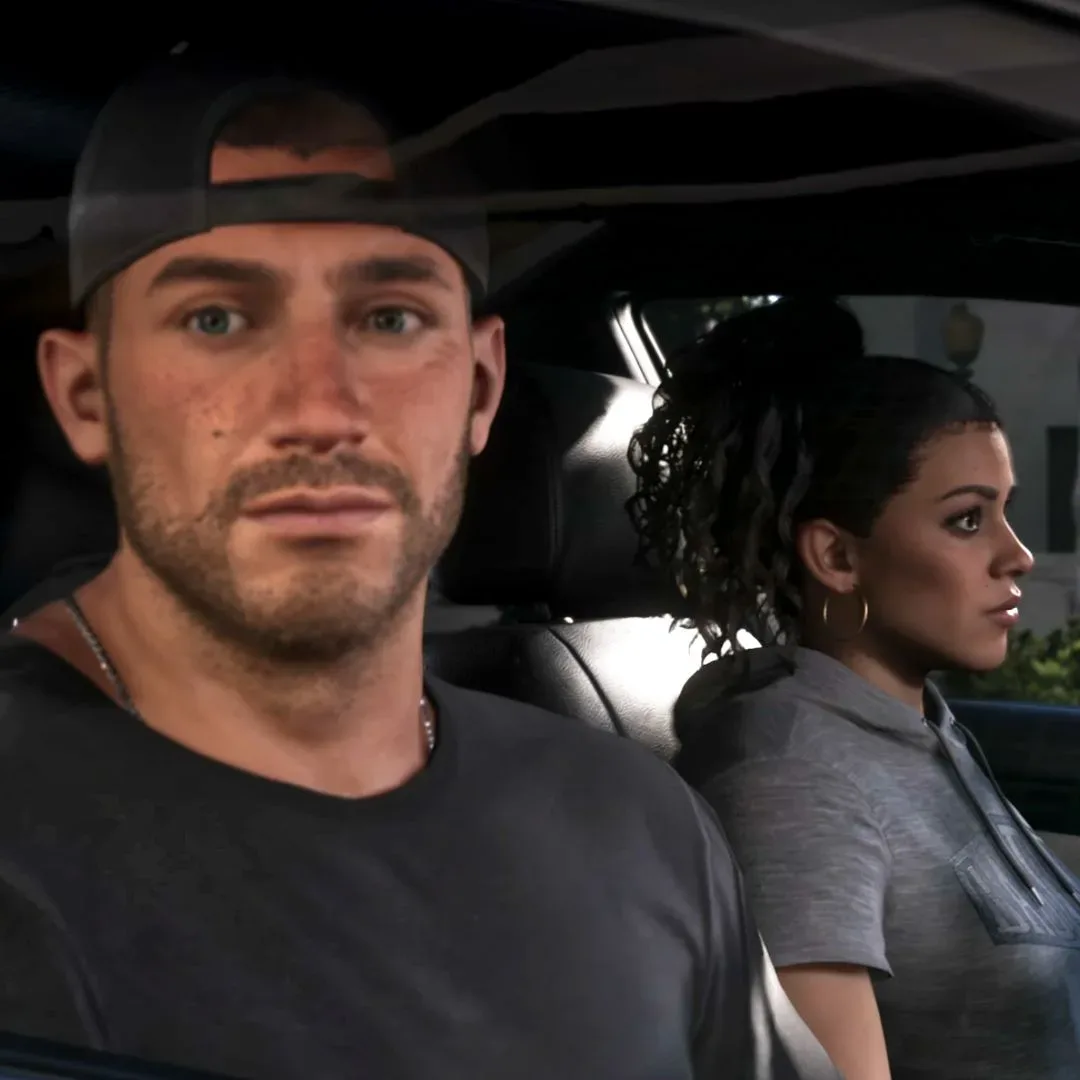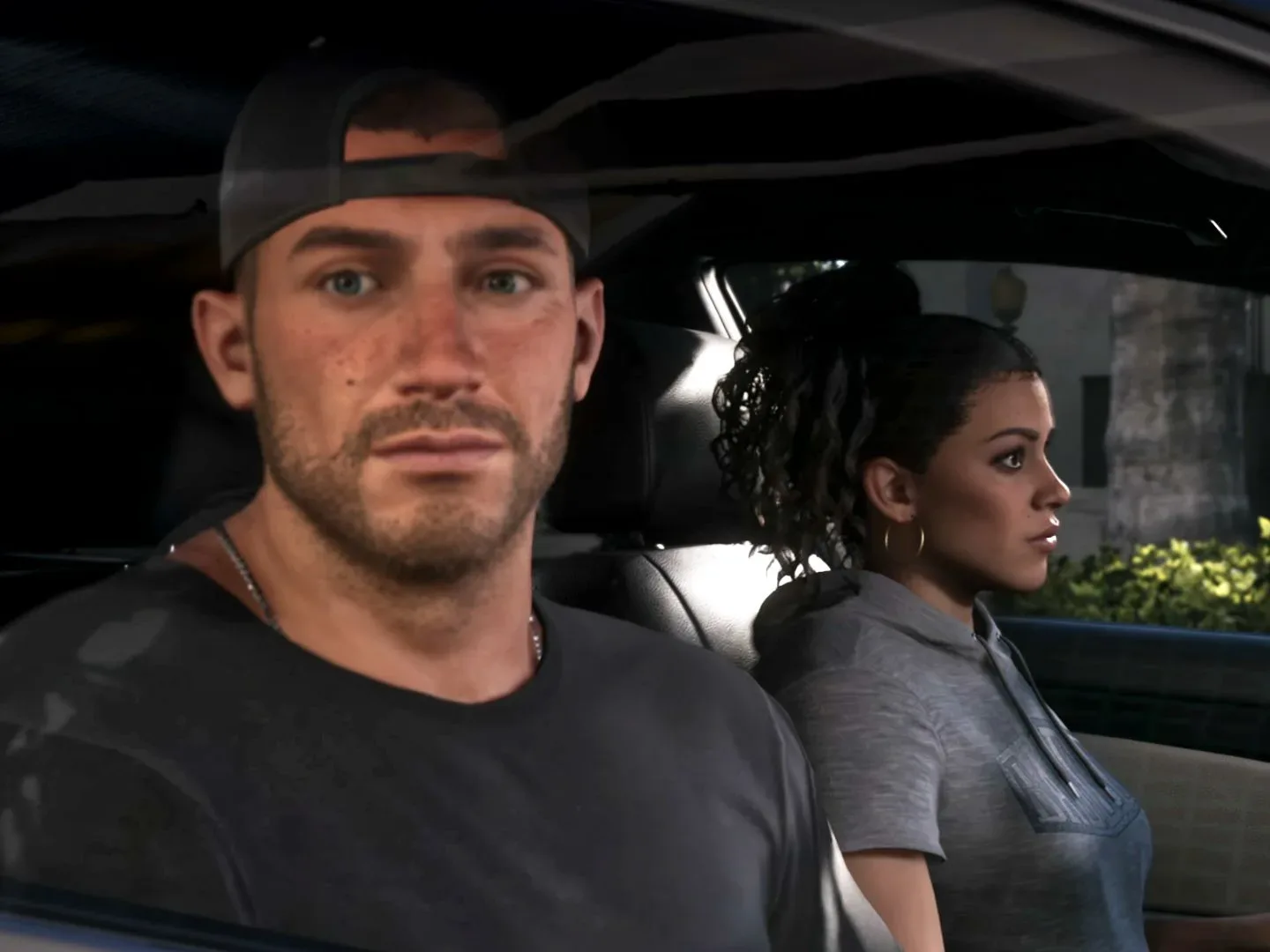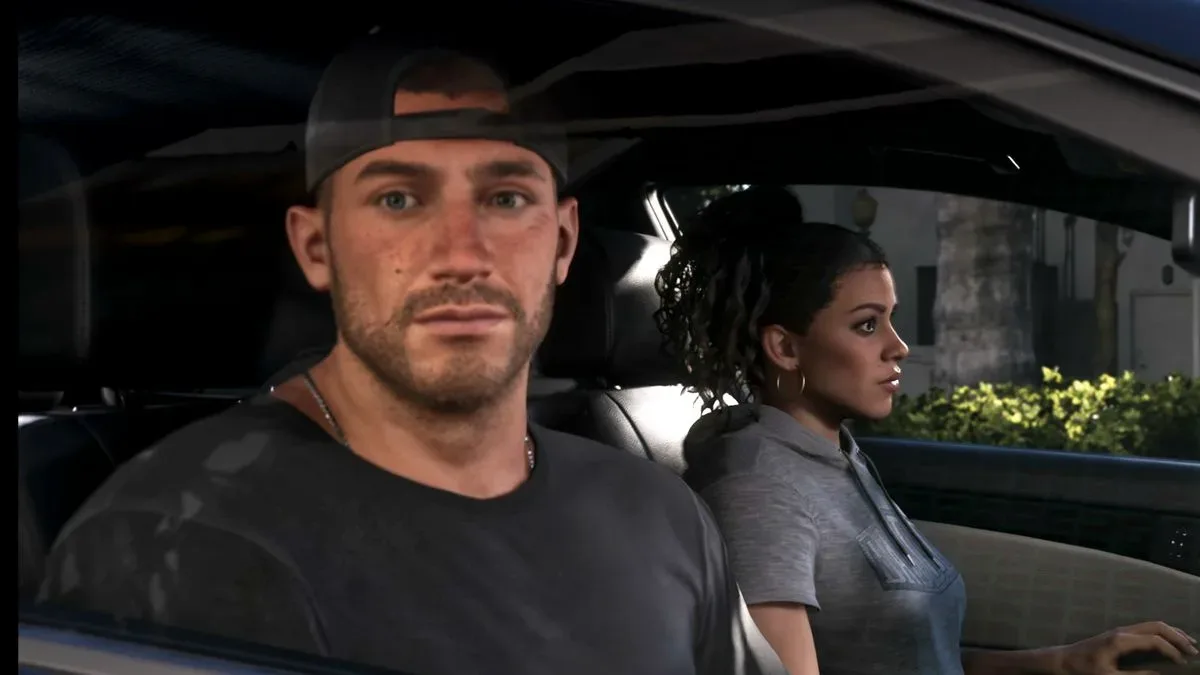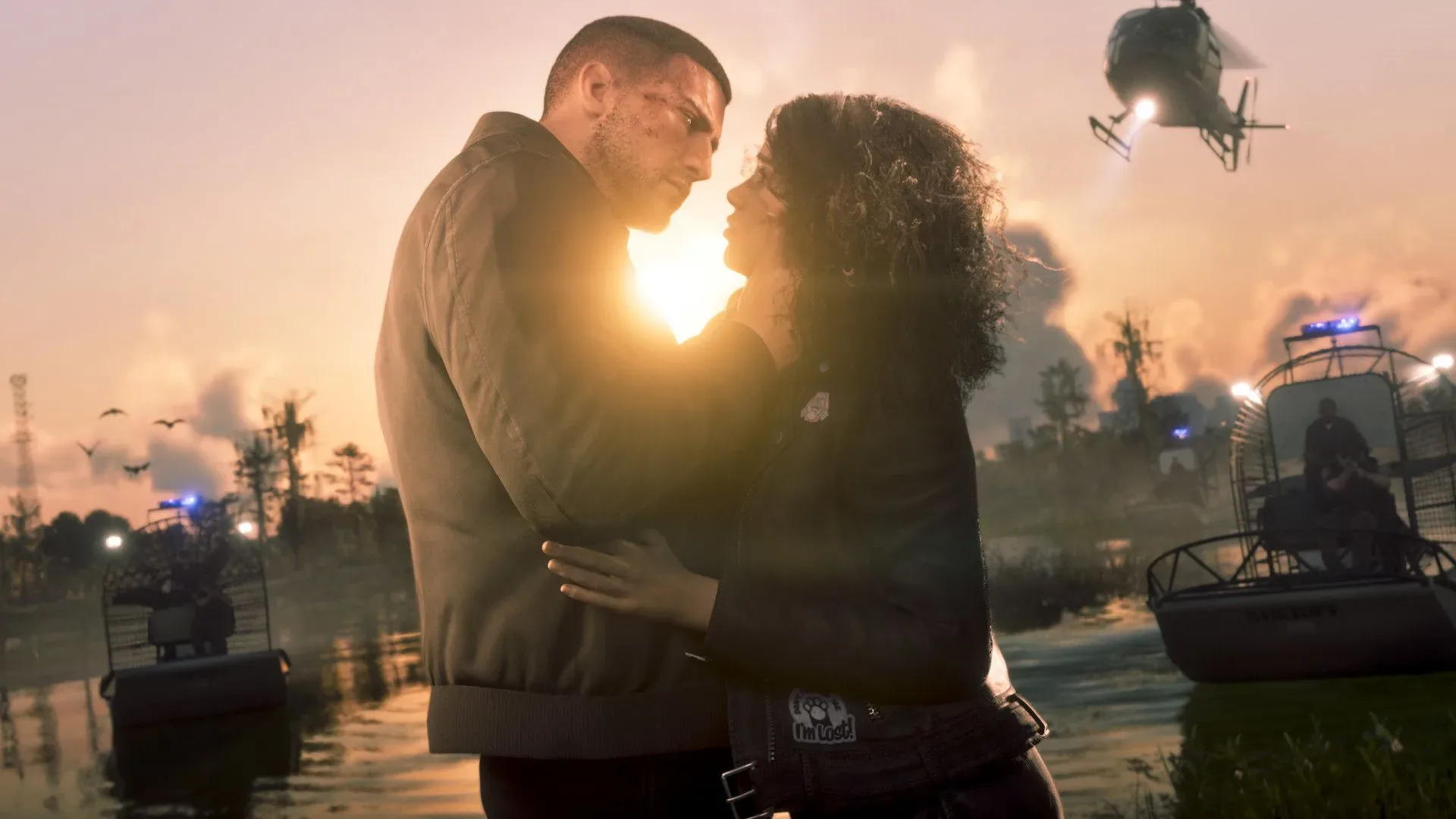
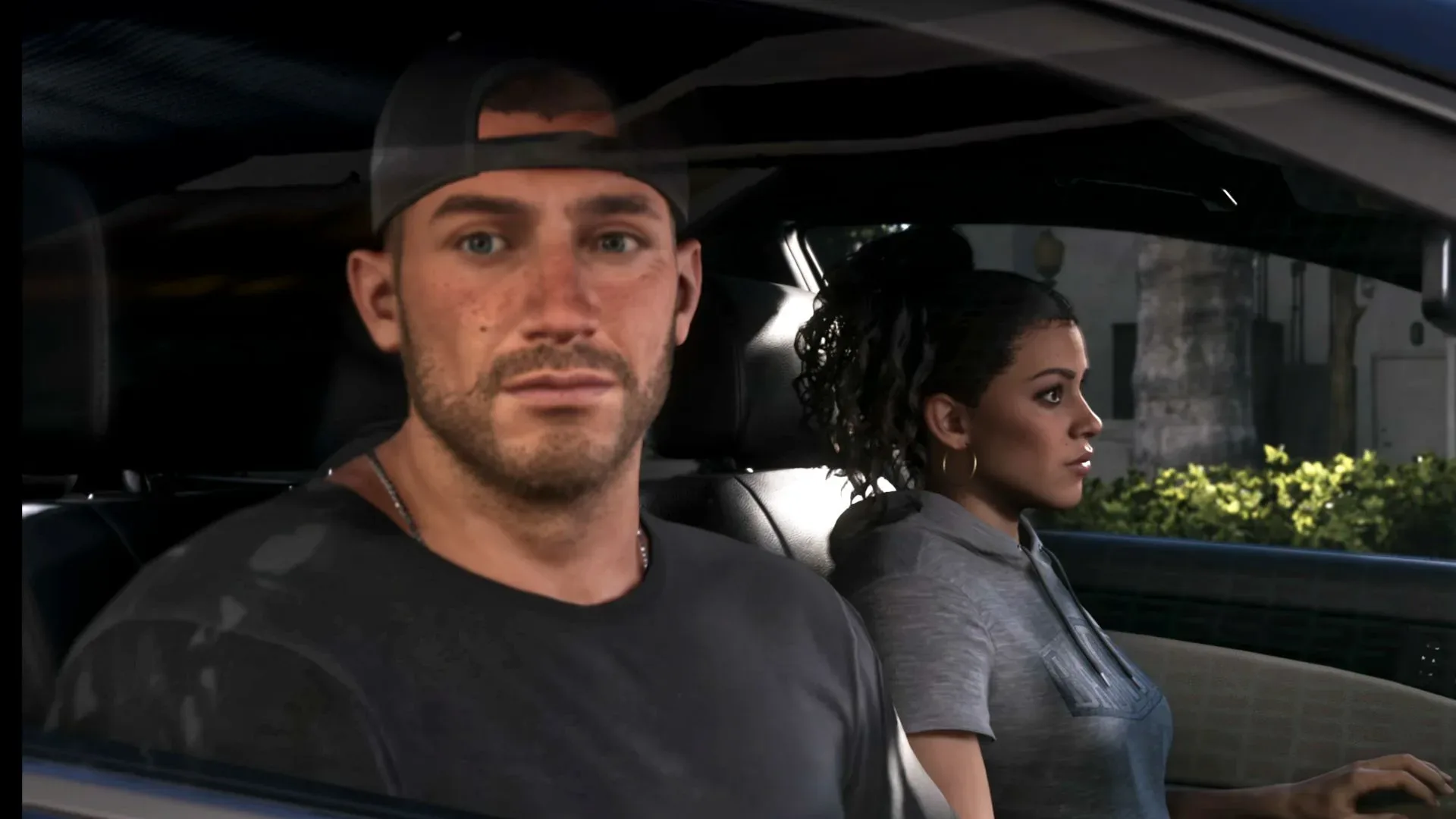
Grand Theft Auto has rarely been short on protagonists who announce themselves. Its crime stories have often put players beside characters who are impulsive, theatrical, confrontational, or simply incapable of keeping a thought to themselves. Jason Duval, one half of Grand Theft Auto VI’s central couple, is intended to work differently.
Rockstar’s senior vice president of narrative, Rupert Humphries, has explained that Jason’s quieter, more controlled manner came from two connected lines of thinking: the 1972 crime film The Getaway, directed by Sam Peckinpah and starring Steve McQueen, and research around veterans, especially former Army Rangers. In GTA 6’s fictional terminology, those Rangers are called Marauders.
The key point is not merely that Jason talks less. The creative goal described here is a character who can project resolve without constantly verbalizing it. That is a meaningful shift for a series whose protagonists are frequently designed to fill every scene with conspicuous personality. Jason’s restraint makes room for a different kind of crime-story tension—one where a pause, a decision, or a selective response can carry as much weight as a speech.
The Getaway and the value of withholding
Humphries said Rockstar looked at films about couples on the run while developing GTA 6’s story, with The Getaway standing out as a major reference point. McQueen’s performance mattered in particular because of his ability to communicate through presence rather than dialogue. Humphries described an approach in which the actor could remove lines and still make a scene work.
That is a useful lens for understanding the kind of characterization Rockstar is aiming for with Jason. In screenwriting and game narrative, subtext is the meaning that sits beneath the literal words characters say. A character may be worried, committed, suspicious, or angry without directly stating any of it. A more reserved performance can depend heavily on subtext because the audience is invited to read posture, timing, omissions, and reactions instead of receiving every emotion as explicit dialogue.
For an interactive crime drama, that approach can have practical value. Players spend long stretches with protagonists, including moments when they are driving, planning, evading danger, or dealing with the consequences of criminal work. A character does not need to narrate every situation for a scene to establish mood. Jason’s silence may instead help create anticipation: when he does speak or react forcefully, the moment can feel more significant because it is not his default setting.
Humphries also acknowledged that many previous leads in the series have operated at the other extreme. That contrast makes Jason’s characterization more than a simple reference to an older film. It is a purposeful adjustment to the franchise’s established tonal range. The design appears to ask whether a Grand Theft Auto protagonist can remain assertive and dangerous without being loud, unpredictable, or continually expressive.
Veteran research informed the character, but not a blanket stereotype
The second element behind Jason’s demeanor is Rockstar’s research into veterans and, specifically, former Army Rangers. Humphries said the team’s impression was that these men would generally avoid talking or reacting unless necessary, while still projecting strength and asserting themselves when a situation demanded it.
Related coverage includes GTA 6 Narrative Lead Explains Jason's Quiet, Controlled Approach.
That comment describes a creative influence, not a claim that all veterans behave the same way. Military experience is not a single personality type, and the available detail does not establish Jason as a comprehensive representation of veterans or former Rangers. What it does establish is narrower: Rockstar used research around that background to shape one fictional character’s economy of expression and sense of control.
That distinction matters. A character can draw from research without becoming a direct portrait of any real individual or group. Jason’s Marauder background appears to be part of the fictional framework GTA 6 uses to inform his behavior, while the game’s broader story remains a work of crime fiction set in Leonida.
In narrative terms, this kind of background can function as character motivation: the history and learned behaviors that help explain why a person responds as they do. Motivation is not the same as justification. It can make actions understandable without making them acceptable. That difference seems especially relevant to the way Rockstar’s writers describe the game’s wider cast.
Jason and Lucia are designed as a contrast, not a mismatch
Jason’s controlled presence is paired with Lucia, the other lead in GTA 6’s couple-on-the-run story. The supplied description characterizes Lucia as the more chaotic half of the partnership, giving the duo an intentional imbalance. Rather than making both characters interchangeable versions of the same criminal archetype, the setup gives each a distinct rhythm.
That contrast can do several jobs at once. Lucia’s more volatile energy can move scenes forward, while Jason’s restraint can complicate them. One character may say what the other avoids saying. One may escalate while the other calculates. Neither dynamic automatically makes one person morally better or more competent; it simply gives the relationship friction and range.
It also means Jason’s quietness should not be mistaken for passivity. Humphries’ explanation emphasizes that the character is meant to remain strong and capable of asserting himself. Reserved and inactive are different things. A reserved character limits unnecessary response; a passive character is defined by a lack of agency. The description of Jason points toward the former.
For players, the potential payoff is a relationship whose drama comes from more than external pursuits, robberies, or police pressure. The emotional charge can also emerge in what the two leads cannot—or will not—say to each other. GTA 6’s premise puts a couple at the story’s center, so the difference between Jason’s contained communication and Lucia’s chaos is likely to be fundamental to how the narrative establishes intimacy, conflict, and trust.
There is already a useful companion piece on that broader ambition in our look at GTA 6’s effort to make Jason and Lucia’s crime story feel human rather than merely chaotic.
A Florida-inspired setting without simple moral labels
Game writer Michael Wiafe said research into longstanding, highly publicized criminal activity in Florida provided an obvious starting point for GTA 6’s sweeping story. Leonida is fictional, but the writers’ stated process was to begin from recognizable real-world criminal history and then build characters who feel authentic without being strictly tied to reality.
That balance is central to fictionalized settings. A game world can borrow a region’s atmosphere, public stories, and social associations while still needing its own people, places, and plot. Being “inspired by” reality is not the same as documenting reality. The creative challenge is to create believable behavior and stakes while preserving the freedom to tell a constructed story.
Wiafe’s comments also frame GTA 6’s principal characters as morally complicated. He described them as criminals—people who are reprehensible on paper—but also as decent human beings in certain respects. Crucially, he said the writing does not try to excuse them.
This is the territory of the antihero: a central character whose actions and values do not meet the standard expectations of a conventional hero, yet who remains compelling enough for an audience to follow. An antihero story does not require viewers or players to approve of every decision. Its task is to make the people involved legible—to show the pressures, loyalties, flaws, contradictions, and choices that give their actions emotional force.
That is particularly important for GTA 6’s duo. A crime story about a couple can easily flatten its leads into either glamorous outlaws or irredeemable villains. The writers’ stated aim suggests a more difficult middle space. Jason and Lucia can be responsible for serious wrongdoing while still having enough recognizable humanity for players to understand why their bond matters to them.
Why Jason’s restraint matters for GTA 6’s tone
Jason’s character concept signals a tonal choice as much as an individual personality trait. If GTA 6 wants its criminal leads to resonate beyond easy moral categories, a less performative protagonist can be useful. He can embody uncertainty, private conflict, and discipline without requiring the script to stop and explain every beat.
That does not mean silence is inherently deeper than speech, nor does it make Jason automatically more realistic than the series’ more outspoken protagonists. It means Rockstar has selected a particular dramatic tool. By making Jason sparing with words, the story can attach more importance to the words he does choose—and to the consequences of the moments when his composure breaks.
The pairing with Lucia ensures that restraint is not the whole tone of GTA 6. Their opposing energies are positioned as a balance. Jason brings control; Lucia brings instability and momentum. The result, if the game consistently builds on the creative intentions outlined by its writers, could be a crime narrative where personality clashes are as important as spectacle.
For now, the clearest takeaway is simple: Jason Duval was not conceived as another volume-up version of a familiar GTA lead. The McQueen influence from The Getaway, combined with research around veterans and former Army Rangers, points to a protagonist built around deliberate action, selective speech, and presence. In a series known for characters who make noise, Jason’s defining move may be knowing when not to.