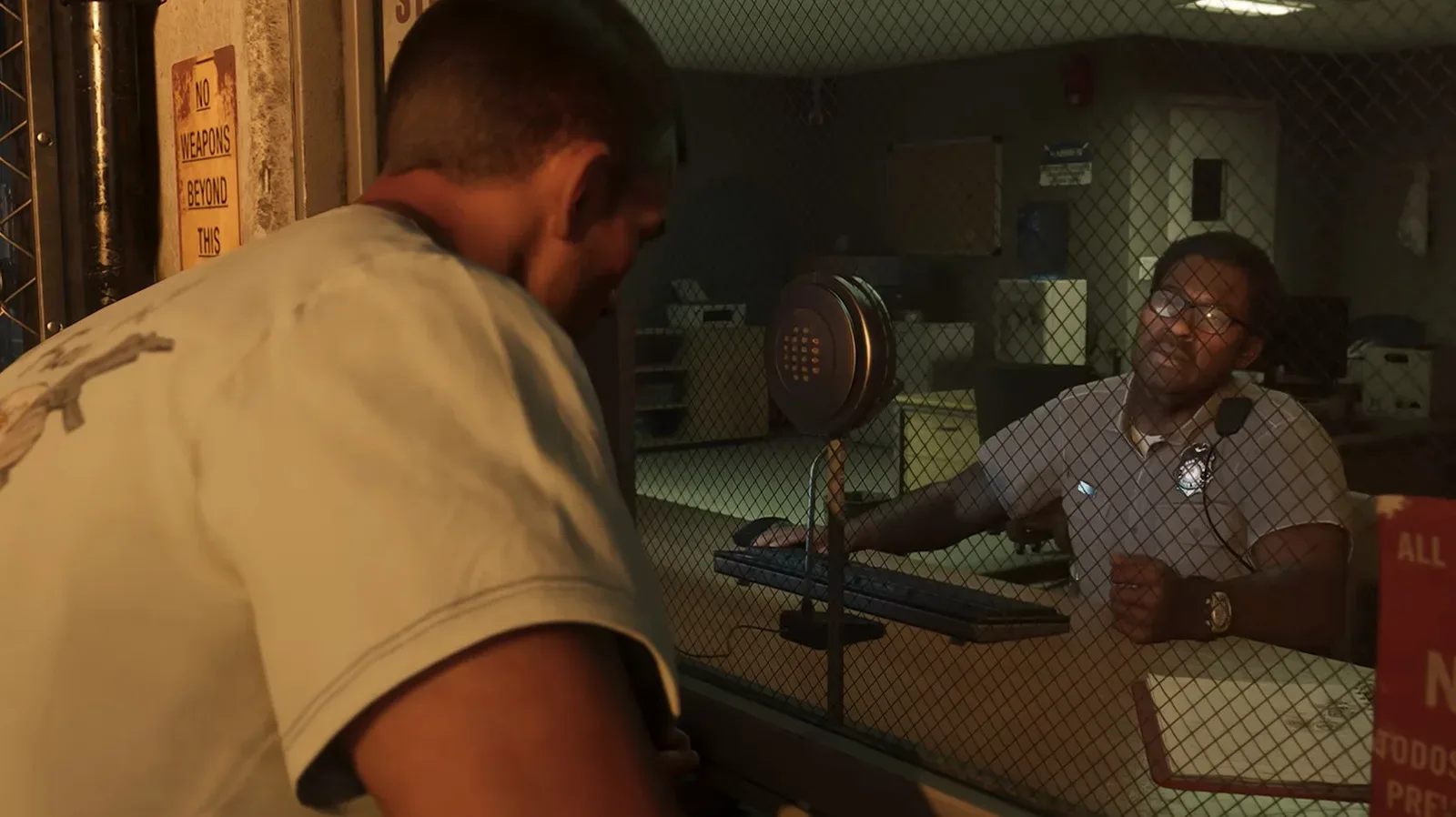

Grand Theft Auto 6 includes Cygnus, a museum curator portrayed by actor and writer Jesse James Rose, whom Rose describes as the series’ first nonbinary character. The detail emerged in a social-media post from Rose, who also said Cygnus cannot be harmed by players. Rose characterized that restriction as a measure intended to mitigate anti-trans violence.
That makes Cygnus a small but consequential part of GTA 6’s enormous open world. In a series famous for giving players broad freedom to cause mayhem, the decision to make one particular character unavailable as a target is a boundary with a clear purpose. It is not simply a technical quirk or an incidental “essential NPC” rule; Rose says it was a choice designed around a foreseeable form of player behavior.
Rose, who is trans, said the production was notably considerate during their work on the game. They said the team correctly used their pronouns while filming and described the set as inclusive and caring. Rose also indicated that trans people contributed to GTA 6 in additional acting, design and writing roles.
Who is Cygnus?
Cygnus is a museum curator, a fittingly distinctive job for a character in a game world often defined by heists, criminal enterprises and hectic street-level encounters. The name itself carries a suitably celestial note: Cygnus is the Latin name for the swan and is also used for a constellation. There is no supplied evidence detailing the museum, the character’s quest role, or whether Cygnus is tied to a particular mission chain, so players should be wary of treating online speculation as confirmed game information.
Rose’s account suggests Cygnus may be easy to miss. Players can spend substantial time in GTA 6 without finding the character or even identifying the museum location. That does not necessarily mean Cygnus is a secret, an unlock, or part of a hidden collectible hunt. It simply illustrates one familiar open-world reality: authored characters can remain unseen when a game offers a huge number of activities and routes through its setting.
For players trying to avoid spoilers, that is useful context. Cygnus appears to be an encounter worth letting the game reveal organically rather than something to chase through unverified map pins and supposed walkthroughs. At present, the supplied information does not establish a location, trigger, reward or required progression point.
A deliberate limit in a sandbox built on freedom
Open-world games commonly distinguish between characters who can be attacked and characters protected by the game’s rules. The latter are sometimes called essential NPCs: non-player characters the game does not permit players to permanently kill, usually because a story, mission system or world state depends on them. Cygnus’ reported protection has a more specific rationale. Rose says it was established to reduce the prospect of anti-trans violence being performed in-game against the character.
That distinction matters. Grand Theft Auto has long traded in satire, transgression and player agency, but player agency is never unlimited. Games decide what buildings can be entered, which vehicles can be driven, which sequences must occur, and what harm their systems will simulate. Protecting Cygnus is therefore not an absence of design; it is design expressing a boundary.
Related coverage includes GTA 6 Adds Cygnus, a Nonbinary Museum Curator Protected From Player Violence.
In practical terms, the choice acknowledges that the same openness that can make a sandbox compelling can also invite players to stage targeted harassment against recognizable groups. Making Cygnus non-harmable does not settle every question about representation, nor does it stop players from behaving badly elsewhere in a fictional city. It does mean GTA 6 does not turn this individual nonbinary character into an available prop for that behavior.
Rose said the protection was put in place “to mitigate anti-trans violence.”
That is a notably direct framing for a character-interaction rule. Rather than pretending that all forms of fictional violence are context-free, it connects a systems-level choice to the real-world hostility that trans and nonbinary people can face. It also leaves room for Cygnus to exist as a person in the world rather than as a target defined by a player’s capacity to harm them.
Representation on screen and behind it
Rose’s comments offer two connected points: Cygnus is a nonbinary character, and trans contributors were present in multiple areas of the production. Those are not interchangeable claims. A character’s identity concerns what players encounter in the game; participation by trans actors, designers and writers concerns who helped make it. Both can matter, but they describe different dimensions of inclusion.
The account of Rose’s experience also puts an important production detail on record: correct gendering on set. In ordinary language, that means using the pronouns and forms of address a person asks for. It sounds basic because it is basic, yet it is meaningful in an industry whose large productions involve extensive crews, changing schedules and confidential performance-capture work. Consistent respect in that environment is not glamorous, but it shapes whether people can work safely and comfortably.
It is equally worth keeping the limits of the available information in view. Rose spoke positively about their own experience and noted other trans participation, but no complete list of contributors or characters has been provided here. The sensible takeaway is not to inflate a single disclosure into a sweeping account of every aspect of the production. It is that a performer directly involved with Cygnus has described a respectful set and a deliberate effort to include trans people in GTA 6’s development and cast.
Secrecy extended to the performer
Rose also described unusually stringent confidentiality around the project. They said they signed 17 non-disclosure agreements, often shortened to NDAs. An NDA is a contract that restricts what someone can publicly share about confidential work. In games, NDAs are especially common around unannounced projects, casting, narrative details, performance-capture sessions and material that could reveal a product before its planned marketing rollout.
The particularly striking part of Rose’s account is that they said they were not told what project they were shooting and did not receive confirmation that it was GTA 6 until after the game released. That level of compartmentalization means a performer may receive only the material needed for a specific session. It can help preserve surprises, but it also creates an odd situation in which a contributor cannot fully explain their own work while it is underway.
For audiences, that secrecy helps explain why character information can surface late and why seemingly modest roles may carry carefully guarded details. It also counsels patience around rumors. A strict NDA culture does not validate every leak or fan theory; it means that confirmed information may arrive piecemeal, through people who are finally able to discuss a small piece of the finished game.
Why Cygnus stands out in GTA 6’s wider conversation
Cygnus arrives amid broader discussion of how GTA 6 handles gender and relationships. The game has been noted for including the franchise’s first playable female protagonist, and it has also drawn attention for moving away from a long-running approach to sex workers. Another early detail—players being able to buy flowers for a woman—has prompted discussion of the game’s engagement with toxic masculinity.
Those points should not be treated as proof that one character or one mechanic can define an entire work. GTA has always been a sprawling mixture of missions, systems, satire and conflicting tones. But they do show that individual choices in GTA 6 are being read closely, especially when they depart from familiar series habits. Cygnus is part of that conversation because the character is not only present; their reported invulnerability turns representation into a gameplay-rule question.
That will undoubtedly provoke arguments from people who equate any guardrail in an open-world game with a betrayal of freedom. Yet every game has guardrails. The real question is which limits creators select and why. Here, the stated reason is protection from a specific pattern of dehumanizing behavior—not a claim that violence is absent from GTA 6, nor an attempt to erase the franchise’s abrasive identity.
For more GTA 6 coverage, including the need to separate established details from social-media claims, see our look at why GTA 6 breakup posts need more evidence than viral momentum.
What players can responsibly take from the reveal
- Cygnus is portrayed by Jesse James Rose: Rose identifies the character as a museum curator and as GTA’s first nonbinary character.
- The character is reportedly protected from player attacks: Rose says this was done to mitigate anti-trans violence.
- The role may not be immediately visible: Players have reportedly spent long stretches in the game without encountering Cygnus or finding the museum.
- There is no confirmed location or reward in the available information: Treat supposed encounter instructions, unlock claims and map locations cautiously until they are substantiated.
- Rose describes a respectful production experience: They said the team used correct pronouns and that trans people also participated in acting, design and writing work.
Cygnus may be only one resident of a massive game world, but the character’s presence and protections carry an unusually clear design message. GTA 6 can still be GTA—messy, confrontational and full of player choice—while declining to make a nonbinary character available for targeted abuse. In a series where boundaries are often tested for spectacle, choosing one with that intention is meaningful.