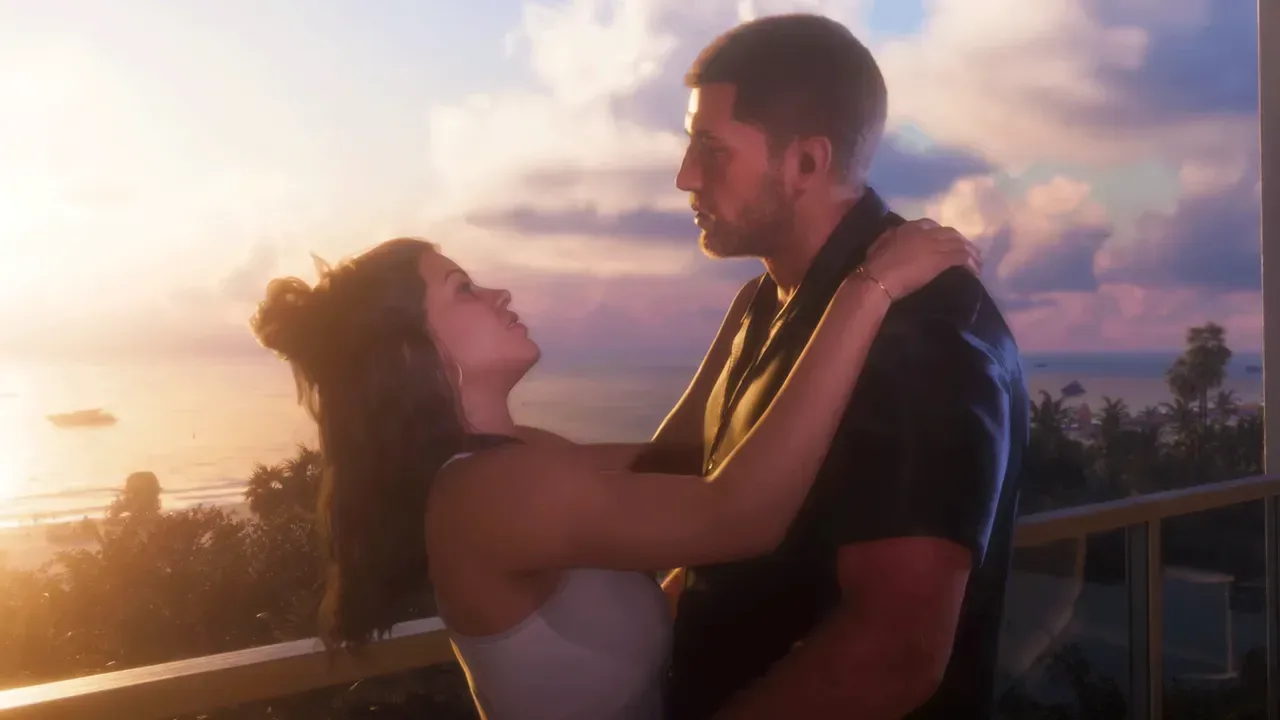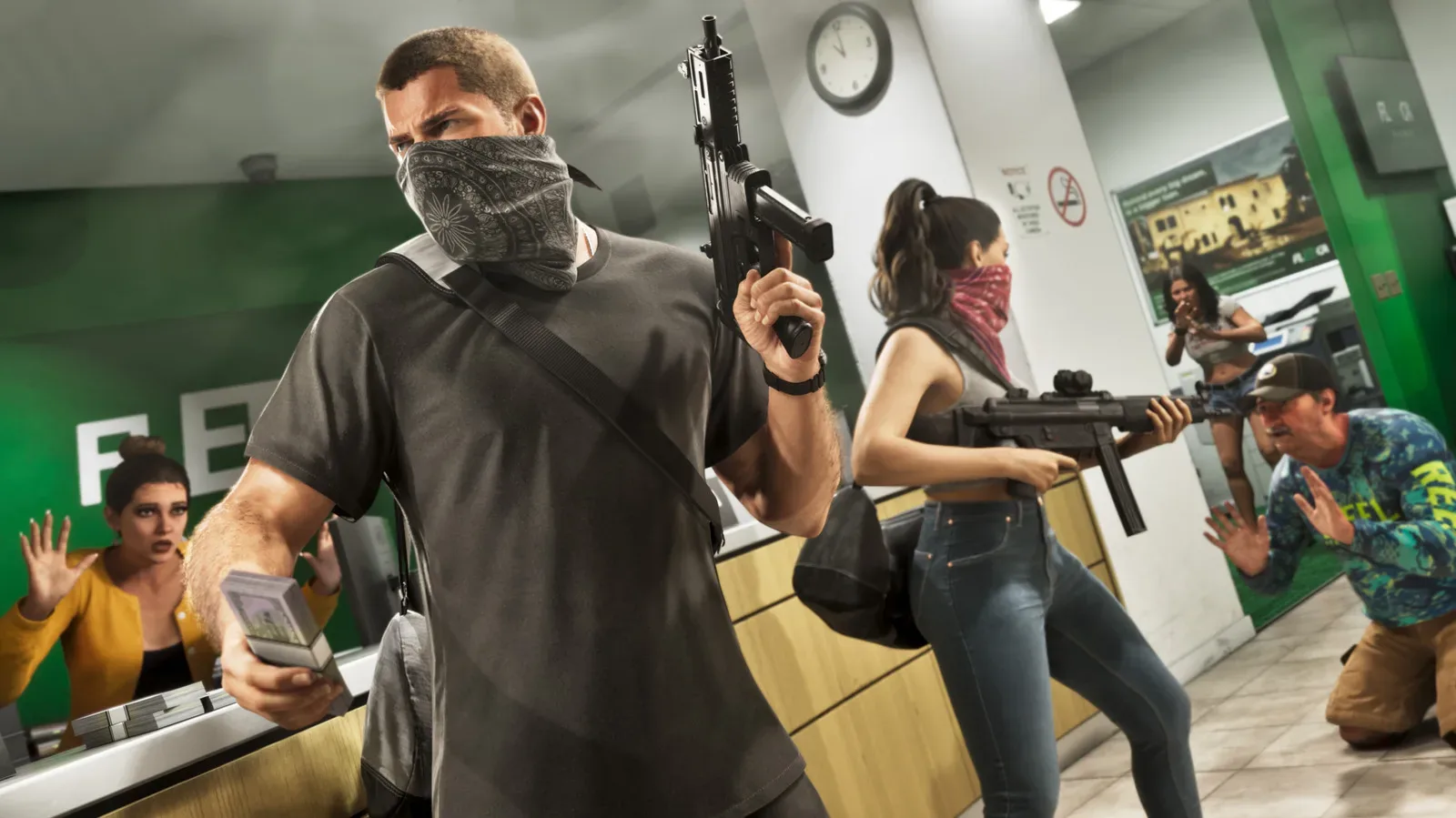
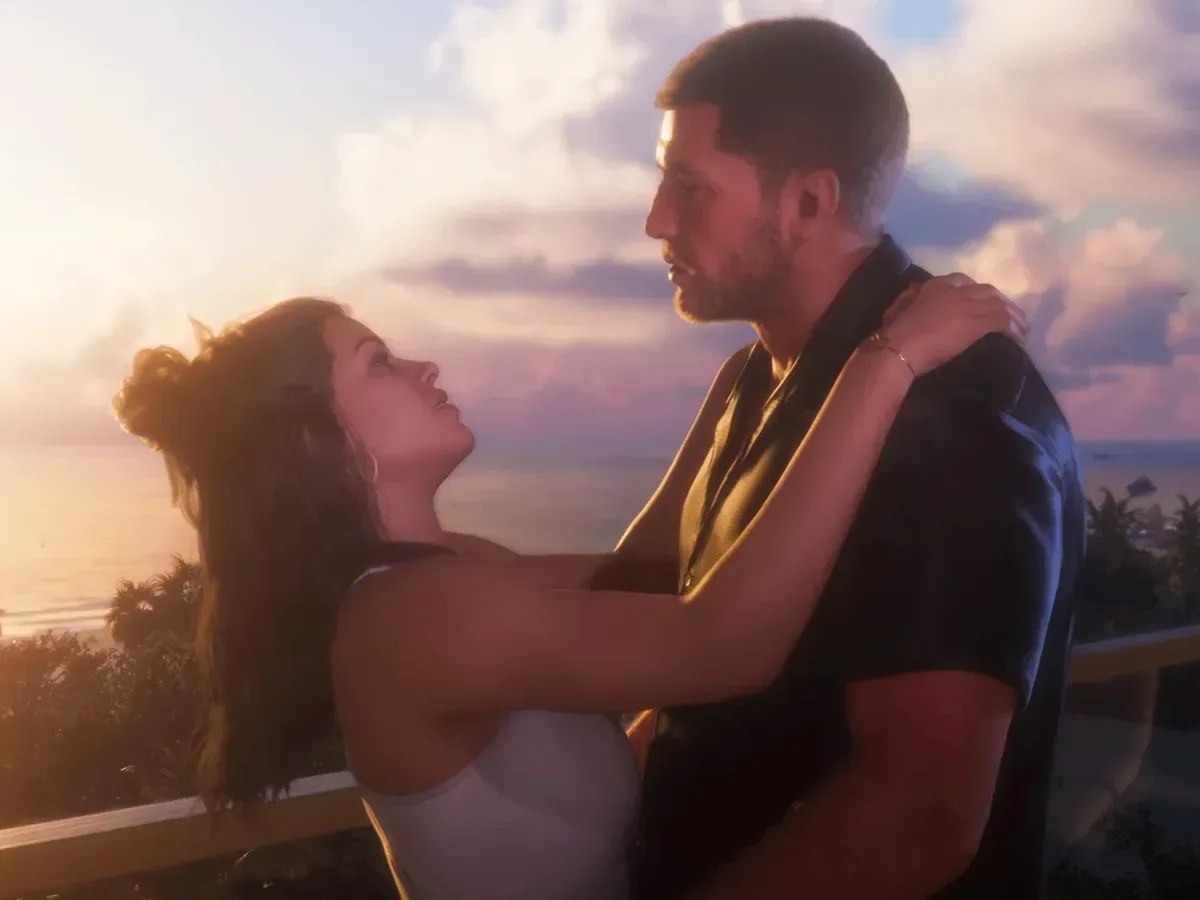
Grand Theft Auto 6 is being blamed for a new kind of collateral damage: allegedly wrecked real-life relationships. Viral posts claim players are being dumped because they are spending too long in Leonida, while other arguments reportedly revolve around the game’s central pairing, Jason and Lucia, and the attention players give their fictional relationship.
It is an irresistibly combustible social-media premise. GTA 6 is a huge cultural event; gaming time can certainly become a source of household tension; and a post saying “I left my partner because of this game” invites instant argument from gamers, non-gamers, relationship commentators and rubberneckers alike. That does not make every post false. It does mean the available examples should not automatically be treated as evidence of a widespread wave of GTA 6-driven breakups.
Several details surrounding the most prominent claims call for skepticism. One widely circulated divorce-themed video is labelled as satire elsewhere by its creator and carries an entertainment-only disclaimer. Another story from the same influencer hinges on GTA 6 online play with another person’s boyfriend. GTA 6 does not currently have an online or co-op mode. That contradiction is not a minor factual quibble: it undercuts the story’s central scenario.
Viral relationship stories are not relationship data
A viral post is a piece of content designed to travel, not a representative sample of ordinary life. The strongest social posts are often the ones that give readers an immediate villain, a provocative accusation and an easy position to take. “My partner played too much” is relatable but mundane. “A game destroyed my marriage” is a much more efficient invitation to comment, repost and argue.
That distinction matters here. Individual couples may genuinely have argued about GTA 6, and some may even have separated around the time it arrived. But a dramatic anecdote cannot establish that the game itself was the sole cause. Long sessions, missed obligations and a partner feeling sidelined can be the immediate trigger for a fight without explaining the deeper issues that made the conflict so severe.
In practical terms, a game can be the subject of an argument while not being the underlying problem. If one person regularly cancels plans, stops contributing to shared responsibilities or becomes unavailable without discussing it, the conflict is about time, trust and expectations. Replacing GTA 6 with almost any other absorbing hobby, work project or social activity could leave the same issue exposed.
The online-mode claim offers a useful fact-checking shortcut for readers assessing similar posts. Before treating a dramatic account as literal, check whether its basic premise matches what the game can actually do. In this case, there is no current GTA 6 online or co-op mode, so a story built around playing online with someone else cannot be evidence of an actual in-game encounter.
Why Jason and Lucia became part of the argument
The discourse is not exclusively about screen time. Jason and Lucia, GTA 6’s central couple, have become a topic of their own because players can take part in optional romantic gestures. Jason can buy flowers, open car doors and perform other attentive gestures. These are optional interactions: choices a player may make rather than requirements that establish a real relationship or a real-world obligation.
Related coverage includes Are GTA 6 Breakup Posts Real, or Just Another Viral Social Media Trend?.
Optional content is a useful term here. It means an activity included in a game that a player can engage with or ignore, often to add character detail, role-playing or flavor to the world. It should not be confused with a simulation of a player’s own relationship. Choosing a romantic gesture for a fictional character is an interaction with a scripted game system, not an exchange with another person.
Still, the reaction has moved beyond jokes for at least some respondents. A YouGov poll published in October 2026 found that 19% of respondents said they would not be okay with a partner spending time on fictional relationships in a video game. The result does not show that those respondents would end a relationship over GTA 6, nor does it turn fictional romance into cheating. It does show that some people hold boundaries around this kind of play, even if others find those boundaries hard to understand.
That is the important distinction: a personal boundary is not proof of wrongdoing by everyone else. Couples can disagree about what feels comfortable, including how much time a game gets and what kinds of fiction they engage with. The meaningful question is whether expectations have been discussed and respected—not whether a clip of Jason buying flowers can stand in for a full relationship conversation.
The real friction point is likely time
GTA 6 has been the sort of release people planned around, clearing calendars and taking time away from work to play. Enthusiasm at that scale can be harmless, particularly when it is short-term, communicated clearly and balanced with existing commitments. It becomes a relationship issue when one partner assumes their plans can simply disappear while the other partner is expected to absorb the consequences.
“Gaming balance” does not mean assigning every hobby identical minutes. It means making room for agreed responsibilities, time together and individual downtime in a way both people consider fair. A player may reasonably want an uninterrupted evening in Vice City. Their partner may reasonably want notice, a plan that will still happen, or help with tasks that cannot be paused. None of that requires anyone to portray games as inherently immature or relationships as enemies of leisure.
- Say what the plan is: If a long play session is coming, make the timing explicit rather than quietly vanishing into the game.
- Protect non-negotiables: Shared chores, childcare, work commitments and pre-arranged plans should not become automatic casualties of launch-week excitement.
- Discuss the actual concern: “You always game” is broad; “I felt ignored when our plans were cancelled without asking” identifies a solvable problem.
- Do not use viral posts as a rulebook: A stranger’s exaggerated clip cannot define another couple’s boundaries or establish what counts as acceptable play.
These points apply whether the game is GTA 6 or something much smaller. The game’s scale may make the headlines louder, but it does not magically create communication failures. Nor does it excuse dismissing a partner’s concerns just because a complaint happens to involve a game.
What can actually be said about the breakup claims
The evidence supports a measured answer. There are social-media posts claiming GTA 6 caused breakups or divorce-related conflict. Some may reflect real frustration. Others plainly contain satire signals or factual inconsistencies. The volume and visibility of those posts cannot establish how common genuine breakups are, because engagement rewards the most outrageous version of the story.
It is also worth resisting the opposite overreaction: assuming every relationship concern connected to gaming is fake because some posts are performative. A person who feels consistently ignored, who sees shared duties neglected, or who has repeatedly been pushed below a hobby on the priority list has a real issue to raise. The sensible response is to examine the behavior and the agreement between the people involved—not to argue that a particular game is either wholly innocent or uniquely destructive.
For players, GTA 6’s launch-week pull is obvious. For partners who do not share that excitement, a little clarity goes further than a defensive speech about why the game matters. And for everyone watching the drama unfold online, the safest read is that the posts are entertainment first and evidence only when their details hold up.
GTA 6 will keep generating spectacle both inside and outside the game. For more coverage of the release, including a reported Vice City mystery, see the Vice City Portal Puzzle report. Just do not mistake a high-engagement breakup anecdote for proof that Rockstar has suddenly become a couples therapist’s greatest adversary.