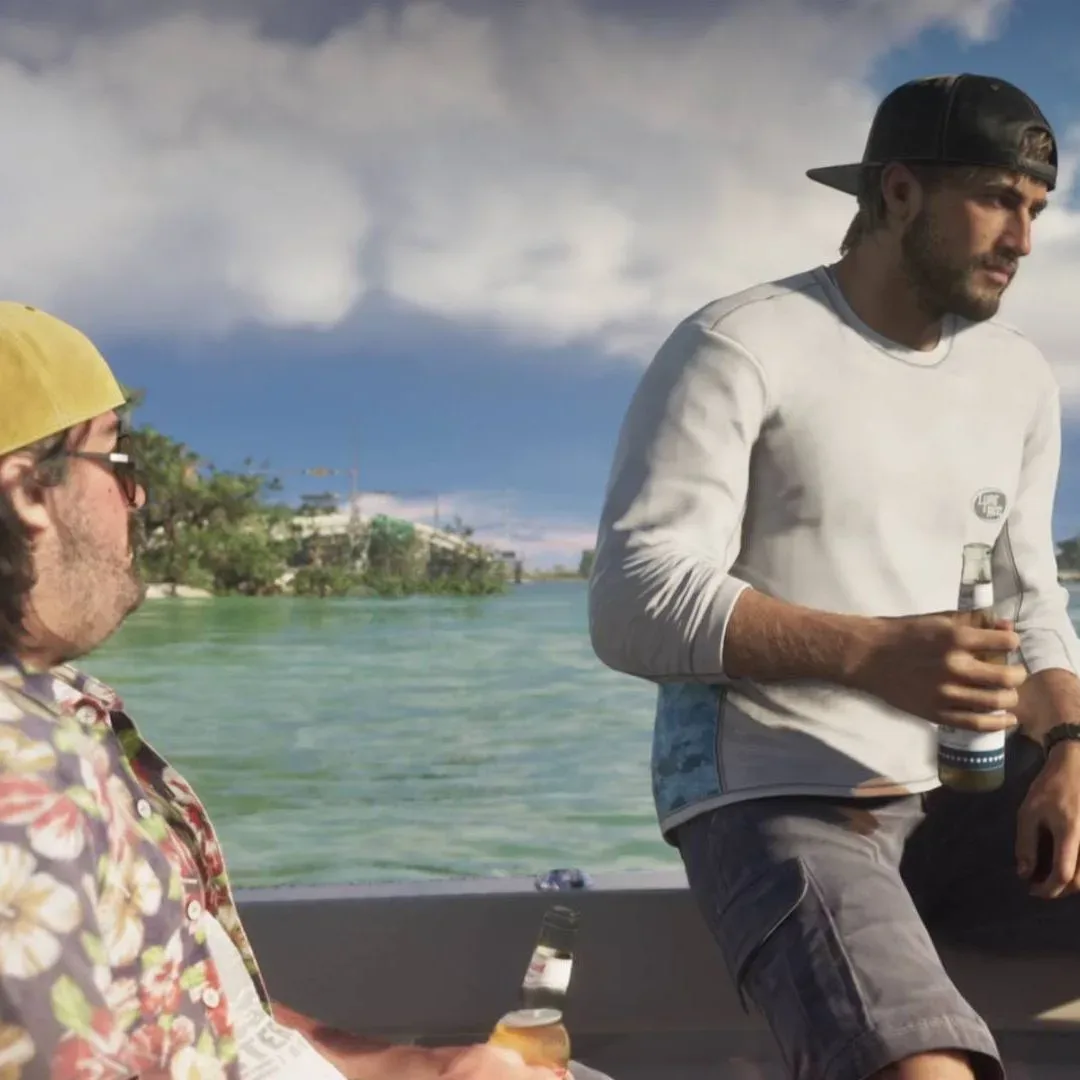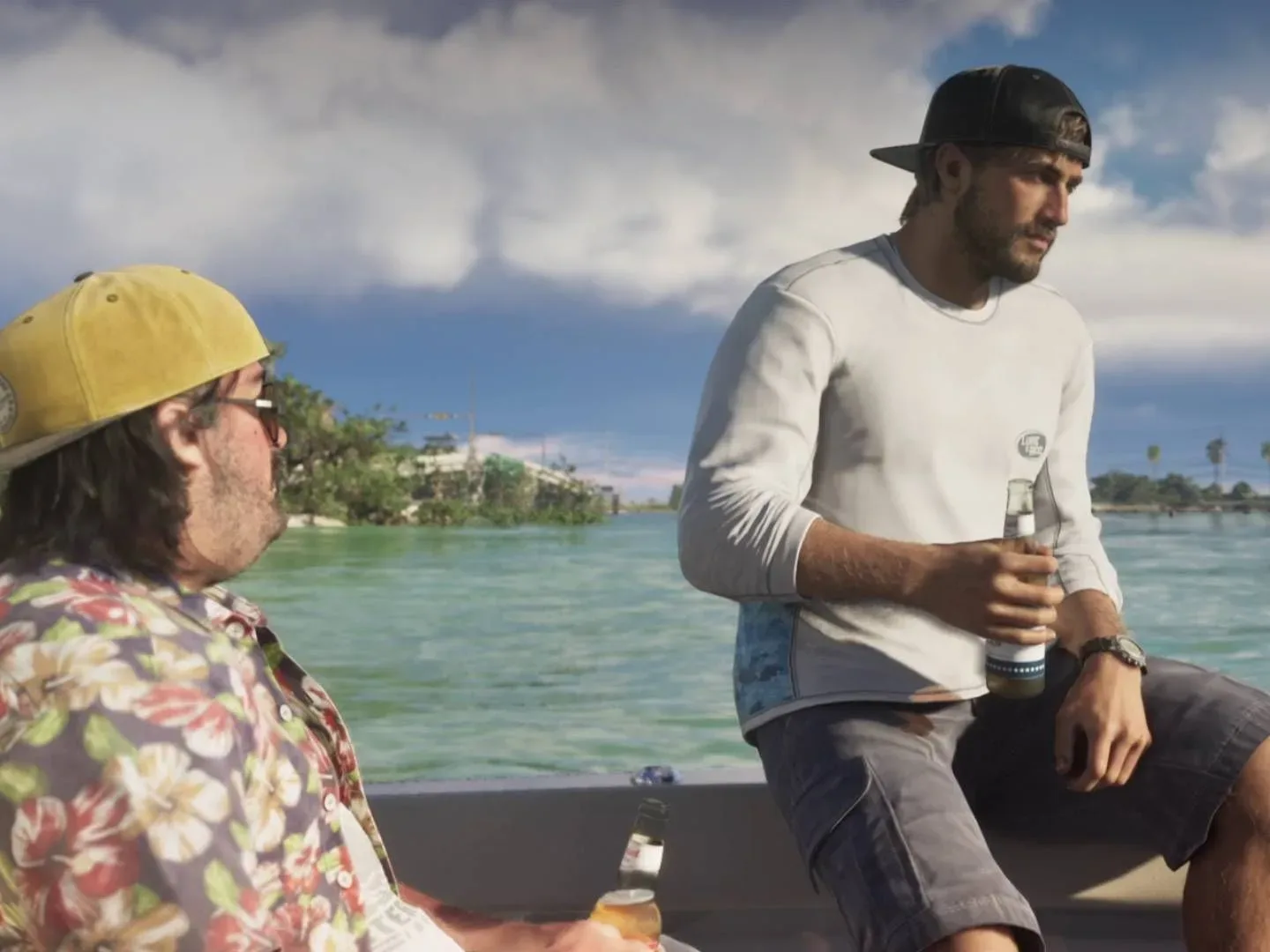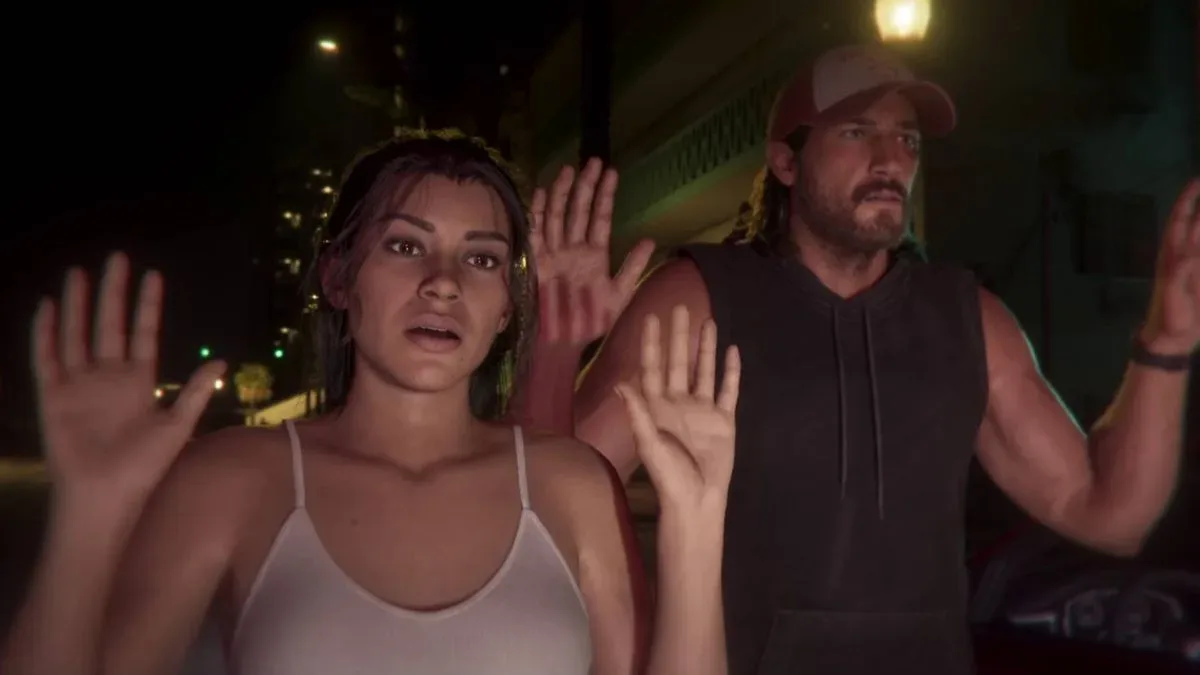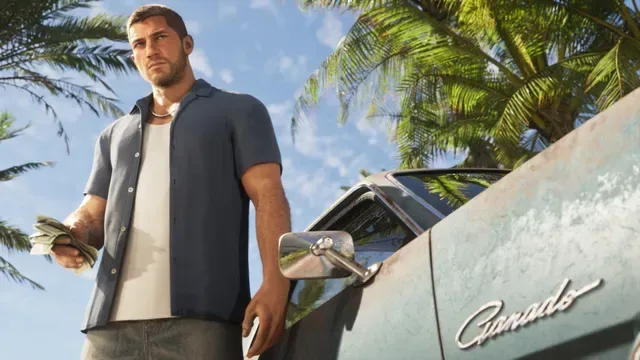
Grand Theft Auto VI looks set to be a very different time commitment depending on what “finished” means to you. A player concentrating almost entirely on the main path may be able to reach the credits in roughly 40 to 50 hours. For a more typical playthrough that mixes story missions with time spent in the open world, the working estimate expands to 60 to 100 hours. Going for 100% completion could require 150 hours or more.
Those figures are estimates rather than a promise that every save file will land at the same total. They do, however, draw a useful line between three fundamentally different ways to approach GTA 6: racing through the narrative, treating the story and the sandbox as equally important, or attempting to clear every available objective.
The estimated GTA 6 completion-time ranges
- Quick, story-focused run: approximately 40–50 hours
- Story plus exploration: approximately 60–100 hours
- 100% completion: 150 hours or more
The main story is described as spanning five chapters. A 60-to-80-hour estimate for completing that story assumes players will still do at least some exploring along the way, which is an important distinction. The lowest 40-to-50-hour range is not simply the default story length; it is the result of actively prioritising missions and limiting detours.
That makes the gap between estimates easier to understand. Open-world games are not measured only by the time required to trigger the next major mission. Travel, unplanned activities, side-mission chains, collectibles and encounters can become a substantial part of a playthrough even when a player has no intention of pursuing every item on the map.
What “story only” really means in an open-world game
A story-only run generally means keeping momentum: advancing major missions whenever possible and declining most optional distractions. At 40 to 50 hours, GTA 6 would still be a sizeable narrative game. But that approach is also likely to leave a significant amount of Leonida unexplored.
In practical terms, players hoping to stay close to the lower estimate should expect to make deliberate choices about their session time. If the goal is credits rather than total completion, it makes sense to distinguish between an activity that is necessary to continue the plot and one that is merely available nearby. That sounds obvious, but the structure of an open world makes it easy for a quick drive to turn into an extended diversion.
There is no suggestion that the 40-to-50-hour route represents the complete intended experience. It is better understood as a focused way to see the central narrative. Players who enjoy the rhythm of main missions and want to avoid spoilers may prefer that route initially, then return to unresolved activities afterward if the game permits free-roam after completion. Questions around mission replay and post-story free-roam are relevant to planning, but the supplied information does not establish how either system works.
Why a normal playthrough could stretch to 100 hours
The 60-to-100-hour range is broad because it accounts for the unpredictable part of open-world play: exploration. Leonida is presented as a place where simply driving around, participating in activities and encountering unusual situations can consume considerable time outside the main mission list.
Related coverage includes GTA 6 Could Take 150 Hours or More to Fully Complete.
That is why two players can both say they “played the story” and report totals that are dozens of hours apart. One player may move from chapter to chapter with only occasional stops. Another may take on side content whenever it appears, investigate points of interest, spend time looking for collectibles and follow optional chains to their end. Both approaches can include the same central storyline, but they are not the same journey through the game.
Open-world exploration is not a single feature with a fixed duration. It covers the player-led time spent travelling, looking around, following leads and opting into activities that are not strictly required for the next story mission. Its value is also personal: some people see it as the heart of a Grand Theft Auto game, while others regard it as material to save for later.
For players who want a balanced first run, the middle of the 60-to-100-hour estimate is a more sensible expectation than the 40-to-50-hour floor. It leaves room for the fact that optional content is not always cleanly separated from the route a player naturally wants to take. A mission marker can be the plan, but the surrounding world can be the reason the plan takes longer.
100% completion is a separate commitment
The 150-hours-or-more estimate applies to players pursuing 100% completion, not merely those who want to see the end credits. That category is expected to include extensive side-mission chains, distinct activities and collectibles distributed across the map.
100% completion usually means satisfying the game’s full set of tracked completion requirements, rather than just completing the campaign. The exact checklist, percentage rules and whether every collectible contributes to the total are not detailed here. What is clear is that the overall task is expected to involve much more than sweeping through the five narrative chapters.
Collectibles are especially time-consuming because the work is not only about picking them up. A player must first locate them across a large environment, then travel to each position and verify that nothing has been missed. Side chains create a different kind of time demand: they require repeated missions or stages rather than a one-off activity. Combined with the general act of exploring, those systems explain why completionist estimates move well past 100 hours.
Players going for the full total should treat 150 hours as a threshold, not a finish line guaranteed for every person. Efficiency, familiarity with the map and use of guides can all affect the process, while a deliberately discovery-first approach may lengthen it. The key expectation is simple: completing everything is likely to be a long-term project, not an add-on to a single story weekend.
How to choose the right pace
The best way to use a completion-time estimate is to match it to the reason you are playing. A player who mainly wants the narrative can aim for the 40-to-50-hour bracket and avoid treating unexplored icons as obligations. Someone who wants the broader GTA experience should budget closer to the 60-to-100-hour range. Anyone who enjoys structured checklists, optional objectives and map-wide searching should plan around the 150-hour-plus possibility.
- Decide whether credits or completion is the goal. These are not interchangeable targets.
- Set a detour budget. If you want a quicker story run, reserve exploration for selected sessions rather than every trip between missions.
- Leave room for organic discovery. If the appeal is roaming Leonida, a strict hourly target may work against the experience you actually want.
- Separate completionist work from first-run progress when useful. This can reduce the pressure to clear every available activity before advancing the narrative.
There is also a middle path. Players do not have to choose between a pure mission rush and exhaustive completion. It is entirely reasonable to play the story at a natural pace, follow the optional content that genuinely interests them, and ignore the rest. That is effectively what the 60-to-100-hour estimate captures: a campaign playthrough with room for the world to matter.
What these estimates do and do not tell us
Completion-time figures are useful planning tools, but they should not be read as an assessment of value or quality. A 45-hour run is not inherently incomplete in a personal sense, and a 150-hour run is not automatically the “correct” way to play. The figures describe the likely effect of different priorities on the clock.
They also do not establish the exact number of missions, activities or collectibles, nor do they confirm the requirements for every achievement or trophy. Those specifics matter enormously for a precise 100% roadmap, but they are separate from the broader point: GTA 6’s five-chapter campaign can be approached as a long story, while its open-world content can turn it into a much longer undertaking.
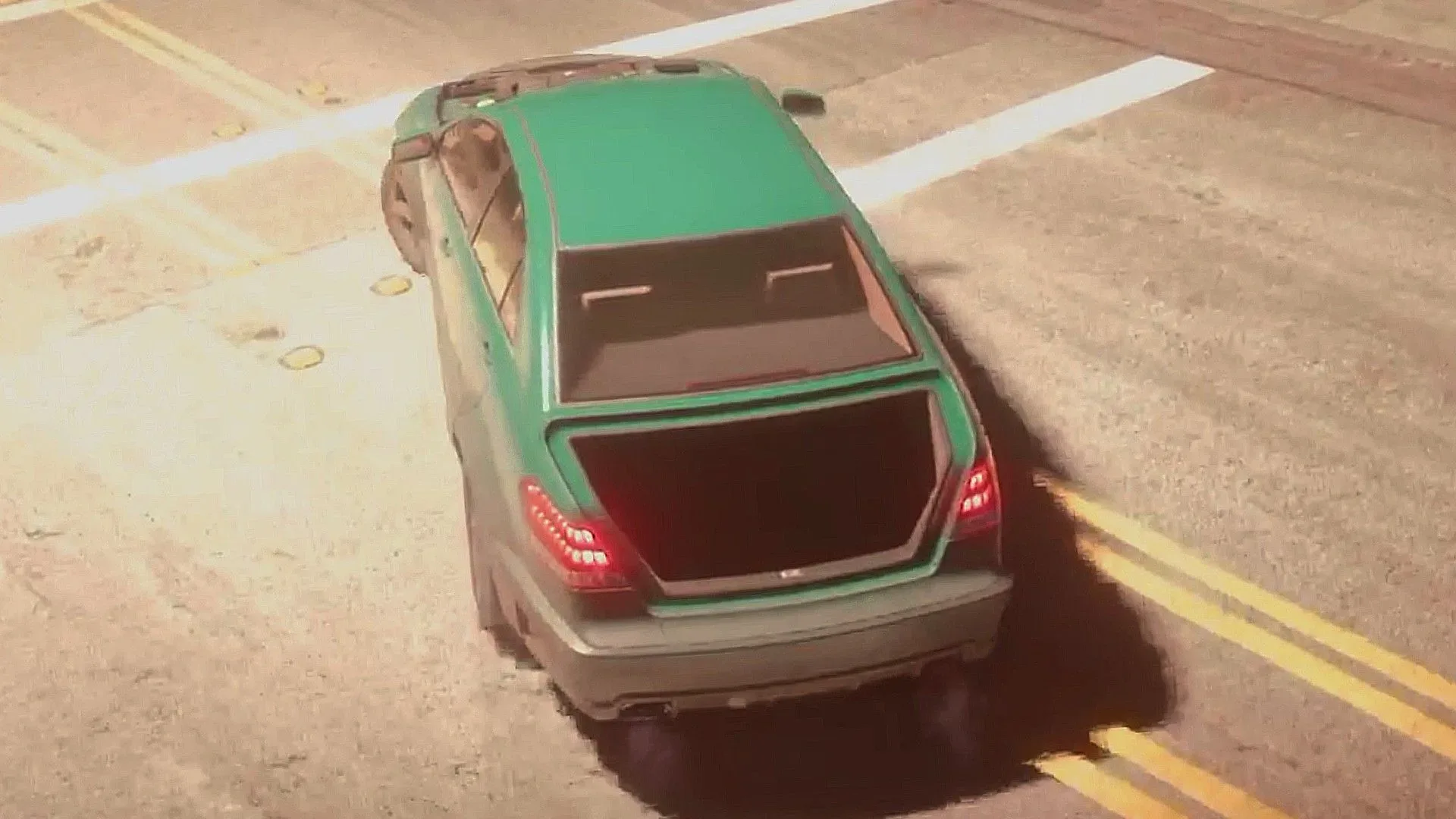
For an example of the more focused, task-driven side of the game, see our GTA 6 Schafter V12 for Raul car service job guide. Guides can help remove friction from a specific objective, though players who value surprise may want to use them selectively.
The headline number, then, is not one definitive duration. It is a range shaped by player behaviour: around 40 to 50 hours for an unusually focused campaign push, around 60 to 100 hours for story progress alongside exploration, and 150 hours or more for a serious attempt to see and complete everything available.