
Grand Theft Auto 6 is enormous, but it was not designed to include every activity imaginable. Rockstar leads Rob Nelson and Scott Mitchell have outlined several concepts that were considered and ultimately removed: tennis, crawling, survival-style crafting, extensive home decorating and movie-theater visits. Their reasoning is refreshingly direct. A feature could be ambitious, expensive, or immersive in isolation and still be the wrong fit for the finished game.
That is an important distinction for a series frequently judged by the sheer quantity of things it lets players do. GTA 6 has launched into extraordinary scale and attention, but the newly discussed omissions show a development team drawing boundaries rather than treating breadth as an automatic virtue. Minigolf made the final game; tennis did not. The difference was not simply that one activity existed in an earlier Grand Theft Auto while the other did not. Tennis was planned, but the team was dissatisfied with how it was shaping up and chose to remove it.
Nelson and Mitchell also indicated that some features were cut because they did not make sense for GTA 6’s gameplay or story. That covers a surprisingly wide range of possibilities. Jason and Lucia might have crawled, crafted items in a survival-sandbox vein, or taken far more control over furnishing and decorating their home. Players might also have visited cinemas. Each idea suggests a different version of an open-world crime game—and each would have imposed its own demands on pacing, controls, systems and player attention.
Tennis was planned, but minigolf survived
Tennis is perhaps the cleanest example of why “more” does not necessarily mean “better.” GTA 5 included the sport, so its apparent return would have been easy to imagine. Yet the developers were not happy with GTA 6’s version. Rather than ship an activity that did not meet their standard, they cut it.
That decision becomes more interesting beside minigolf, which did make it into GTA 6. Both are optional recreational activities, the kind that help an open world feel inhabited beyond missions, vehicles and combat. But they do not have to work the same way. A successful minigolf diversion can be compact, social and immediately readable. Tennis asks for a convincing rhythm of movement, ball physics, timing and opponent behavior. The source material does not specify what disappointed the team about tennis, so it would be wrong to assume a particular technical or design problem. What is clear is that Rockstar saw a quality gap and acted on it.
For players, that is a useful reminder that cut content is not always “missing content.” It can be a version of a feature that was not yet satisfying. The final activity list is shaped by what holds up inside the broader experience, not just by a desire to tick off familiar pastimes from earlier entries.
Crafting could have changed the game’s entire rhythm
Crafting is often a deceptively large promise. In a survival sandbox, crafting typically means gathering resources and combining them into usable items. That loop can turn exploration into a constant hunt for materials, while inventory management and recipes become major parts of the experience.
Putting a system like that into GTA 6 could have created new reasons to search its world, prepare before missions and make decisions about supplies. It also could have shifted the game’s focus. Instead of moving briskly through a story about Jason and Lucia, players might have been encouraged to pause for components, tools or consumables. That is not inherently bad; it is simply a different design priority.
Related coverage includes GTA 6 kept minigolf and cut tennis. Here’s what else Rockstar left out.
The leads’ explanation—that such systems did not suit the story and gameplay—suggests Rockstar saw that tension. Crafting needs to be meaningful enough that it is more than a menu distraction. But if its rewards are powerful or necessary, it can make collecting materials feel compulsory. If it is optional and weak, it risks becoming decorative busywork. GTA 6 evidently found its preferred balance elsewhere.
Crawling sounds small, but movement systems have consequences
Crawling may sound like a modest omission next to a home-decorating system, but character movement is foundational. A crawl state changes how spaces can be built, how players approach stealth, what routes level designers must account for, and how animation transitions have to look and feel. Once characters can crawl, players reasonably expect low gaps, concealed paths and tactical situations where crawling has a purpose.
In other words, a movement option is not just an animation. It is a commitment to support that action throughout a game’s missions and world. Cutting crawling may have helped the team keep traversal and encounters aligned with the actions GTA 6 actually prioritizes. The supplied information does not establish whether crawling was removed for technical, narrative or control reasons, only that it was among the ideas judged unsuitable for the final game.
The most painful loss may be a fully furnished home
Of the cut ideas, comprehensive house decorating is likely to generate the most immediate curiosity. The concept was compared to the furnishing and decorating freedom associated with The Sims 4: players could have customized their home far beyond selecting a fixed cosmetic option.
A feature like that has obvious appeal. A safehouse is already a natural place for a player to express identity, display progress, or take a break from the main action. Deep furnishing could make Jason and Lucia’s home feel more personal and make the player’s relationship to the setting more tangible.
But the same depth raises practical design questions. Is furnishing purely visual, or does it connect to progression? Are objects freely placed? Does every interior accommodate the system? How does the game communicate the characters’ own circumstances while allowing players broad control over the space? A full decorating suite can become a game within a game. Rockstar’s decision suggests it did not want that loop competing with the main experience.
That will not stop some players from wishing it had survived. In a world celebrated for detail, a persistent personal space is an especially tempting fantasy. Still, the absence of a full Sims-like toolset does not mean GTA 6 lacks places to explore or ways to spend time; it means the finished game chose a narrower definition of what that personal expression should be.
Why cinema visits were deemed too passive
Movie-theater visits were also considered, but the developers ultimately saw them as insufficiently interactive. This is a revealing cut because it gets at a longstanding open-world challenge: simulation is not the same thing as participation.
Entering a theater, buying a ticket and watching a film can make a city feel plausible. Yet if the player’s role ends there, it may not offer much game interaction beyond the novelty of being allowed to do it. Rockstar apparently concluded that the activity did not justify its place in GTA 6.
That does not mean passive details have no value in open worlds. Atmosphere matters. However, every optional activity sets expectations about the kind of engagement a game values. By leaving out cinema visits for being too passive, GTA 6 appears to favor diversions that ask more of the player than simply showing them another convincing slice of city life.
What the cuts say about GTA 6’s final shape
The common thread is selectivity. Tennis was removed because the implementation did not satisfy the developers. Crafting, crawling and deep home furnishing were set aside because they did not fit the game’s story or gameplay. Cinemas were dropped because they lacked enough interaction. None of those explanations reads as a claim that the ideas were impossible. They were choices about cohesion.
That matters especially given GTA 6’s reported scale, with its map described as rivaling the combined maps of GTA 4, GTA 5 and Red Dead Redemption 2. Larger worlds can create pressure to fill every space with a bespoke pastime. But a crowded checklist of systems can also dilute a game’s pace and identity. The more mechanics are added, the more they must work together—and the more every mission, interface and control scheme must accommodate them.
There is also a useful lesson in the contrast between a “cut feature” and an unfinished promise. Nothing here confirms that these mechanics will arrive later, nor should players treat early concepts as guaranteed future additions. They are better understood as windows into a development process where prototypes and proposals are tested against the game Rockstar wants to release.
The game has clearly not suffered for a shortage of interest. It is reported as the highest-rated game of all time on Metacritic and has been described as the biggest launch in PlayStation history, with Sony reporting more than 39 million unique PS5 players. Those numbers do not prove that every cut was automatically correct, but they underscore that GTA 6’s final package has resonated without tennis, crafting or an elaborate furniture catalogue.
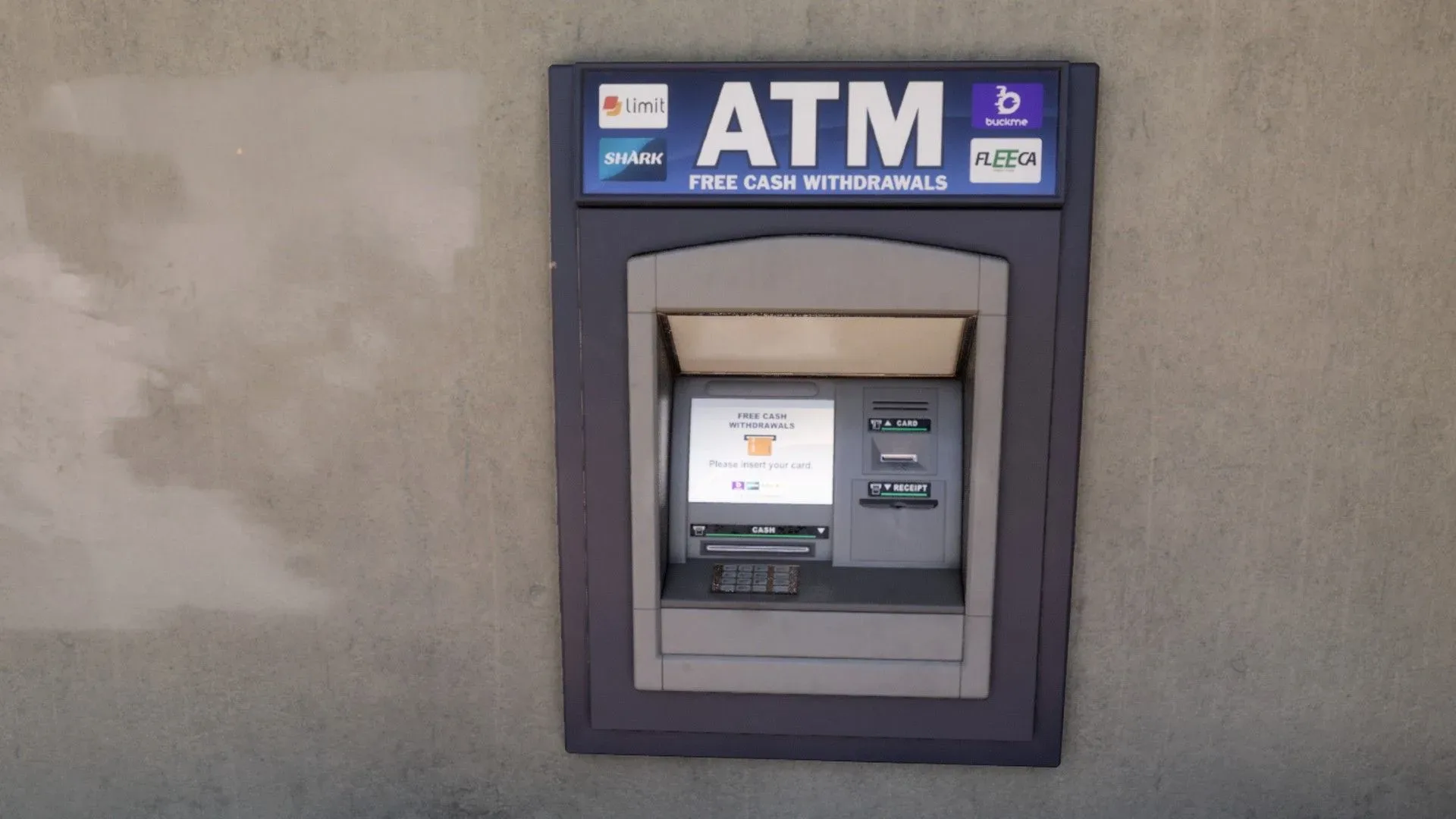
For anyone currently learning its criminal economy, the GTA 6 ATM robbery guide covers one of the game’s more interactive pursuits. As for the abandoned activities, they offer a fascinating look at the GTA 6 that might have been: one with a racket in the trunk, materials in the inventory, a crawl button on the controller and a suspiciously expensive sofa placed at a slightly crooked angle.