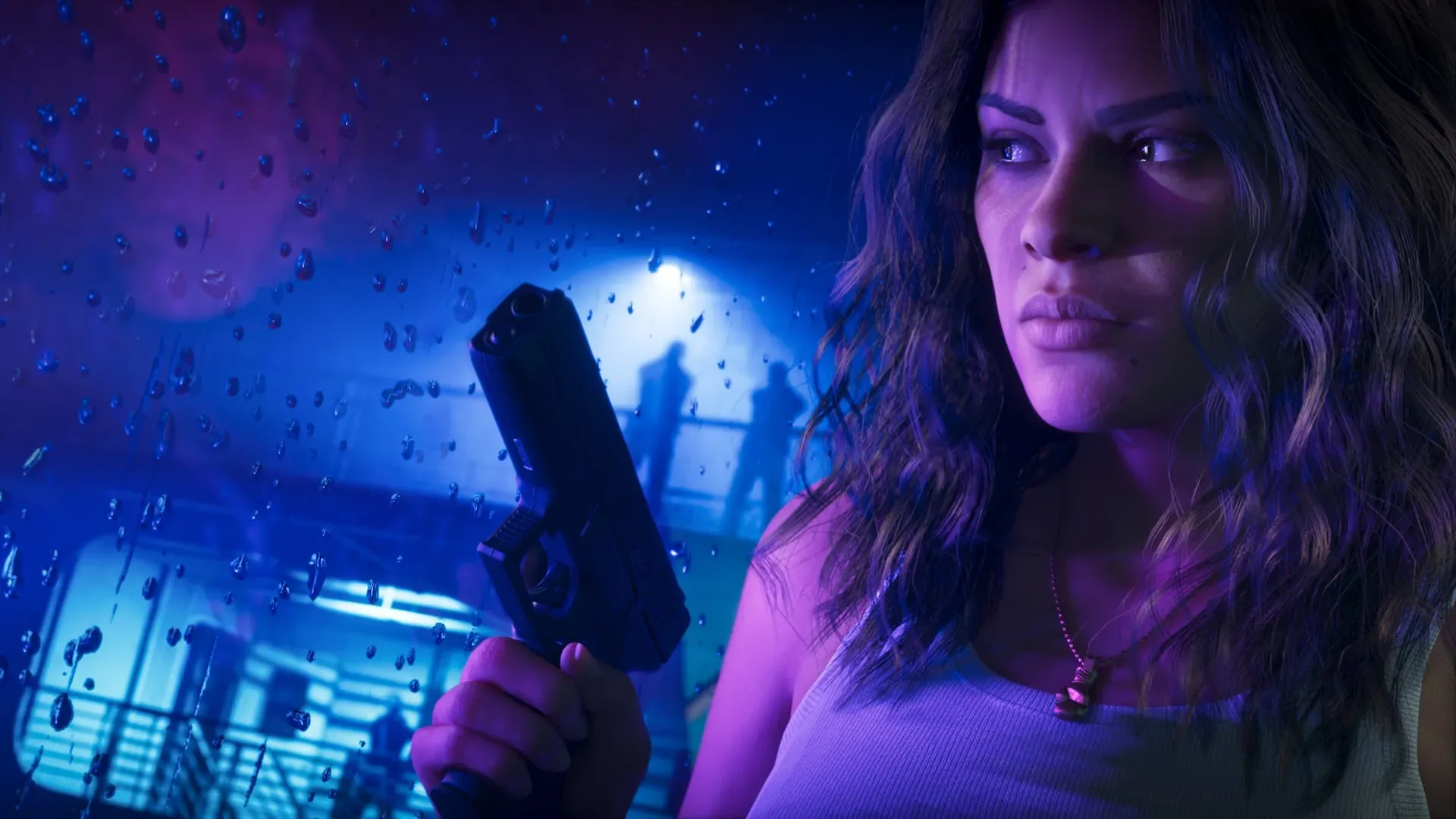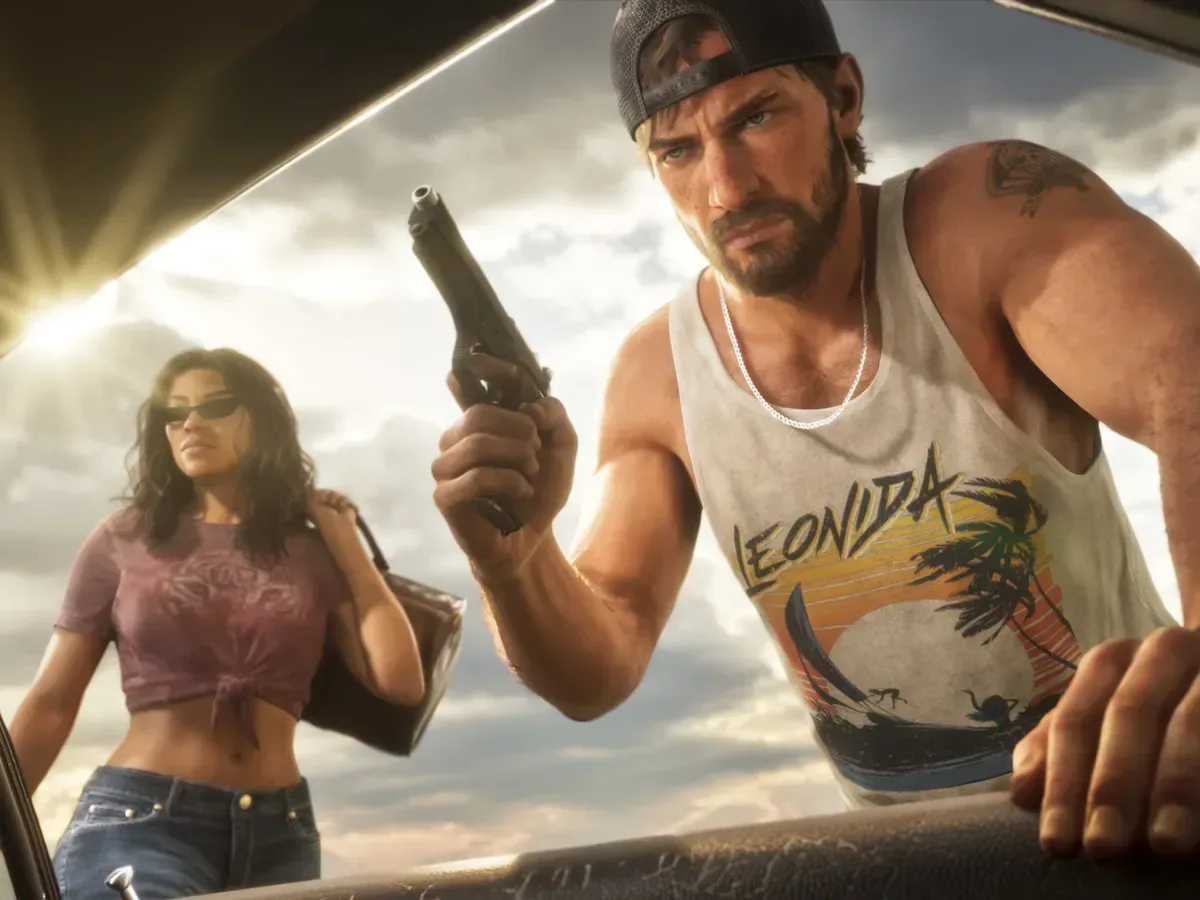
Grand Theft Auto 6’s headphones are more than a small convenience for keeping radio music playing away from a vehicle. They are also the apparent return of an idea Rockstar considered for Grand Theft Auto: Vice City in 2002, then left unrealized.
Obbe Vermeij, a former Rockstar Games technical lead who worked at the studio between 1995 and 2009, said a headphones feature had been planned for Vice City. In a social-media post, he described it as a feature that did not make the final game because of a technical issue he can no longer recall. He also shared an image of what appears to be the planned pickup icon.
“Fun fact: We planned a headphones feature in Vice City (2002),” Vermeij wrote, while stressing that he does not remember the technical reason it was abandoned.
The newly surfaced detail puts GTA 6’s portable listening option in a useful light. It is not simply a modern flourish attached to a much bigger game; it is a long-delayed solution to a player fantasy the series had already identified during its first trip to Vice City.
What the old Vice City plan was meant to do
Vermeij clarified one key point: the abandoned item was intended as a portable radio, not a Walkman-style device. That distinction matters.
A portable radio means carrying the game’s radio-station experience beyond a car. A Walkman-style music player, by contrast, suggests personal control over individual songs. Vermeij’s clarification indicates that the old concept was about retaining the station-based format that defines Grand Theft Auto radio, rather than turning music into an on-demand playlist.
That remains an important boundary in GTA 6. The headphone feature expands where players can hear the radio, but it does not mean players can freely select any song at will. Stations, rather than individual tracks, remain the organizing principle.
It is a sensible fit for the series. Radio in Grand Theft Auto has traditionally done more than fill silence. It gives a vehicle, a neighborhood, and even an aimless drive a particular character through music, DJs, commercials, and station identity. Making that same radio available on foot extends the format without replacing it.
Why headphones change the feel of moving through Leonida
GTA 6 allows its protagonists to listen while away from a vehicle, including while walking through Leonida’s streets and swamps. That seemingly narrow change affects the rhythm of free-roam play.
In older Grand Theft Auto games, leaving a car often meant leaving its music behind. The transition from driving to walking could feel like a clean audio break: the player stepped out, the vehicle radio stayed with the vehicle, and ambient world sound took over. Headphones soften that break. The radio can now accompany the player between destinations rather than functioning solely as a reward for being behind the wheel.
This has practical implications for people who like to explore at a slower pace. Players are no longer limited to driving if they want to spend time with a station. They can linger in an area, take in the setting, and keep the same soundtrack during the journey. That can make simple traversal feel more intentional, especially in a game world built to support time spent between missions.
There is also a contrast effect. A pop song playing through headphones during an escalating encounter can make the moment feel stranger, funnier, or more cinematic precisely because the music is not necessarily tailored to the action. The reported example of Natasha Bedingfield’s “Unwritten” accompanying a shootout illustrates the point: the mismatch between a familiar song and dangerous on-screen chaos creates its own kind of Grand Theft Auto tone.
Immersion, explained without overstating it
Immersion is often used loosely in game discussions. Here, it does not need to mean that headphones make GTA 6 realistic in every respect. The clearer meaning is continuity: players can preserve a chosen radio atmosphere while their character moves through different spaces and activities.
That continuity can make the world feel more personal. A player is not merely entering a car to access a feature and exiting it when the activity is over; they are carrying a small preference across the map. The headphones therefore act as a bridge between two familiar Grand Theft Auto modes—driving and being on foot.
At the same time, the feature is unlikely to be identical for every player. Some will use it to keep a favorite station on during exploration. Others may prefer the surrounding soundscape when they are walking, or may only equip headphones for the novelty of pairing an unexpected song with a mission. The meaningful addition is choice over that transition, not an obligation to score every moment with radio music.
A reminder that game features can have very long gestation periods
The Vice City revelation is also a useful reminder that an unrealized feature is not necessarily a bad idea. A concept may be creatively attractive but impractical for a particular project, then become viable—or simply worth revisiting—many years later.
Vermeij did not specify what prevented the Vice City version from shipping. It is important not to turn that uncertainty into a definitive technical explanation. Fans can speculate about memory limits, audio systems, mission scripting, interface design, or any number of other possible constraints, but none of those theories has been confirmed by Vermeij.
The firm facts are narrower: a headphone pickup was planned for 2002’s Vice City; it was intended to provide a portable radio; and it was cut for a technical reason the former developer does not remember. The absence of a detailed explanation makes the pickup icon particularly interesting, since it is tangible evidence that the notion advanced beyond an abstract conversation.
GTA 6’s implementation gives that old design impulse a second life in a much broader setting. The result is modest compared with the headline systems usually associated with a new Grand Theft Auto, but small systems often shape how players actually inhabit an open world. Music accompanies the dead time, the detours, and the unplanned sightseeing—not only the scripted high points.
The Vice City connection is more than geography
It is easy to focus on the obvious connection: both games return the series to the wider Vice City setting. But the headphones link is more specific than shared geography. It connects two design eras through a feature intended to give players a portable relationship with the game’s radio.
That makes the inclusion feel appropriately retrospective without being purely nostalgic. GTA 6 does not merely revisit a familiar locale; in this instance, it realizes a gameplay-adjacent idea associated with the earlier visit. For players interested in other changes shaping the game’s criminal economy, Joking Joystick has also explored GTA 6’s fuel, heat and split-cash systems.
There is a pleasing irony in the wait. A portable radio was envisioned for a game set in 1980s-inspired Vice City, an era strongly associated with personal cassette players. Yet Vermeij’s account says the original idea was not meant to offer that sort of track-by-track personal player. Instead, it was an extension of the in-game broadcast system—an idea that has finally found its place decades later.
For GTA 6 players, the immediate value is straightforward: radio stations no longer have to stay parked in the car. For people interested in how games get made, the longer story is just as compelling. Sometimes a discarded icon, an old design plan, and a former developer’s memory reveal that a new feature has been waiting in the wings for far longer than anyone realized.