Grand Theft Auto has always understood the joy of excess. A stolen car, an impulsive detour, an explosion that solves nothing: the series traditionally hands players a playground and lets mayhem make its own logic. GTA 6 appears to put an unusually pointed limit on that freedom in its early game. Money is not merely a score or a route to bigger guns. It is tied to gasoline, vehicle condition, clothing, escape options and the insecure way Jason and Lucia can store what they earn.
That is a potentially major change in emphasis. A player who runs a fuel tank near empty may not simply be inconvenienced on the way to the next objective. If they also lack the cash to refuel, a basic errand can become a source of pressure. GTA 6’s early Chapter One reportedly frames Jason not as an instantly powerful criminal mastermind, but as someone with too little cash, too few legitimate financial options and far too many liabilities.
It is a smart premise for a crime game. The fantasy of becoming rich remains important, but scarcity can give each decision a sharper edge before that point. In Leonida, the cost of a reckless moment may not be just a temporary wanted level. It may be a damaged car, a vehicle that is no longer safe to drive, money spent on a quick disguise, or funds that are stored somewhere they cannot immediately be used.
Fuel and engine health turn the car into a responsibility
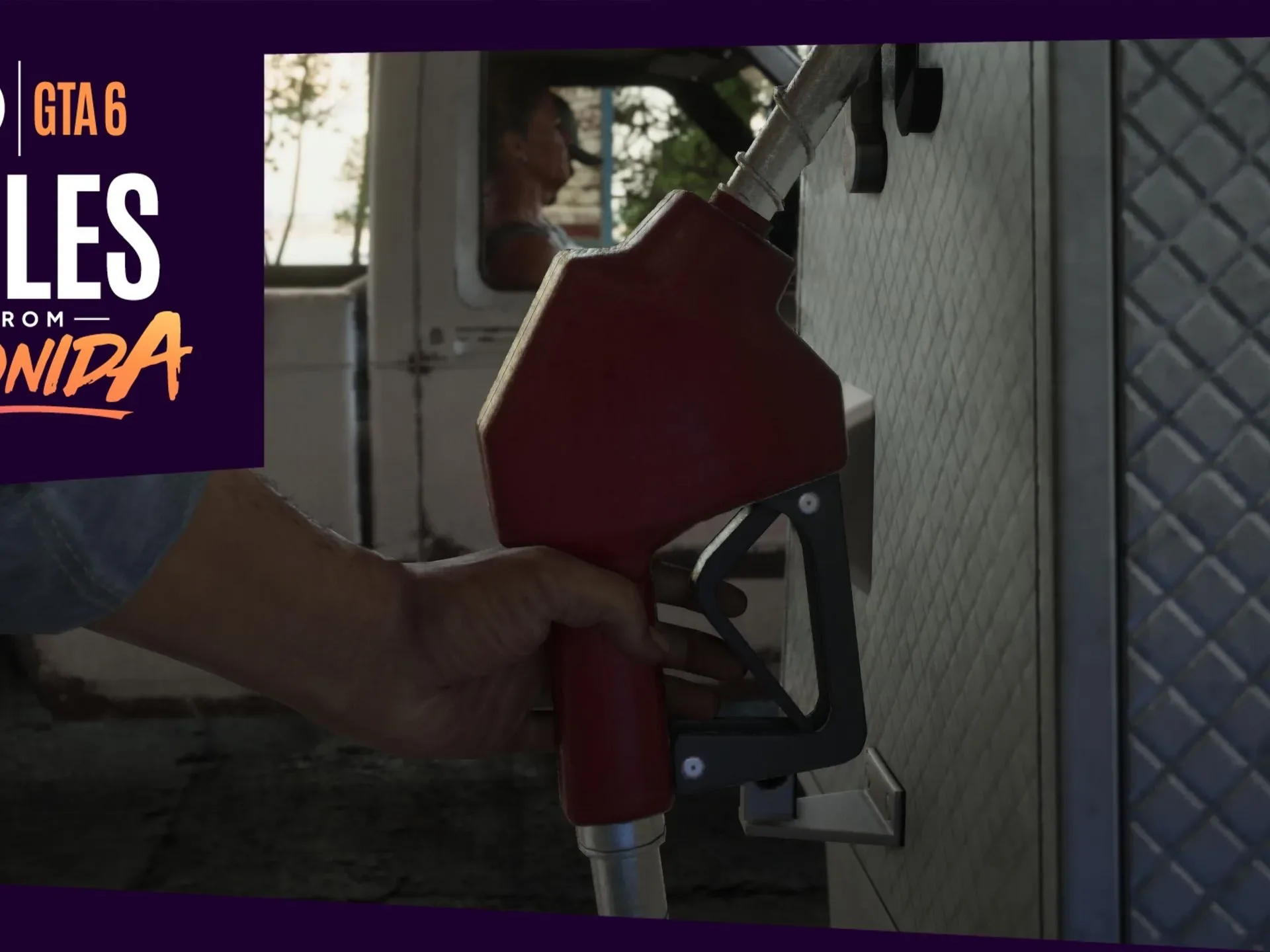
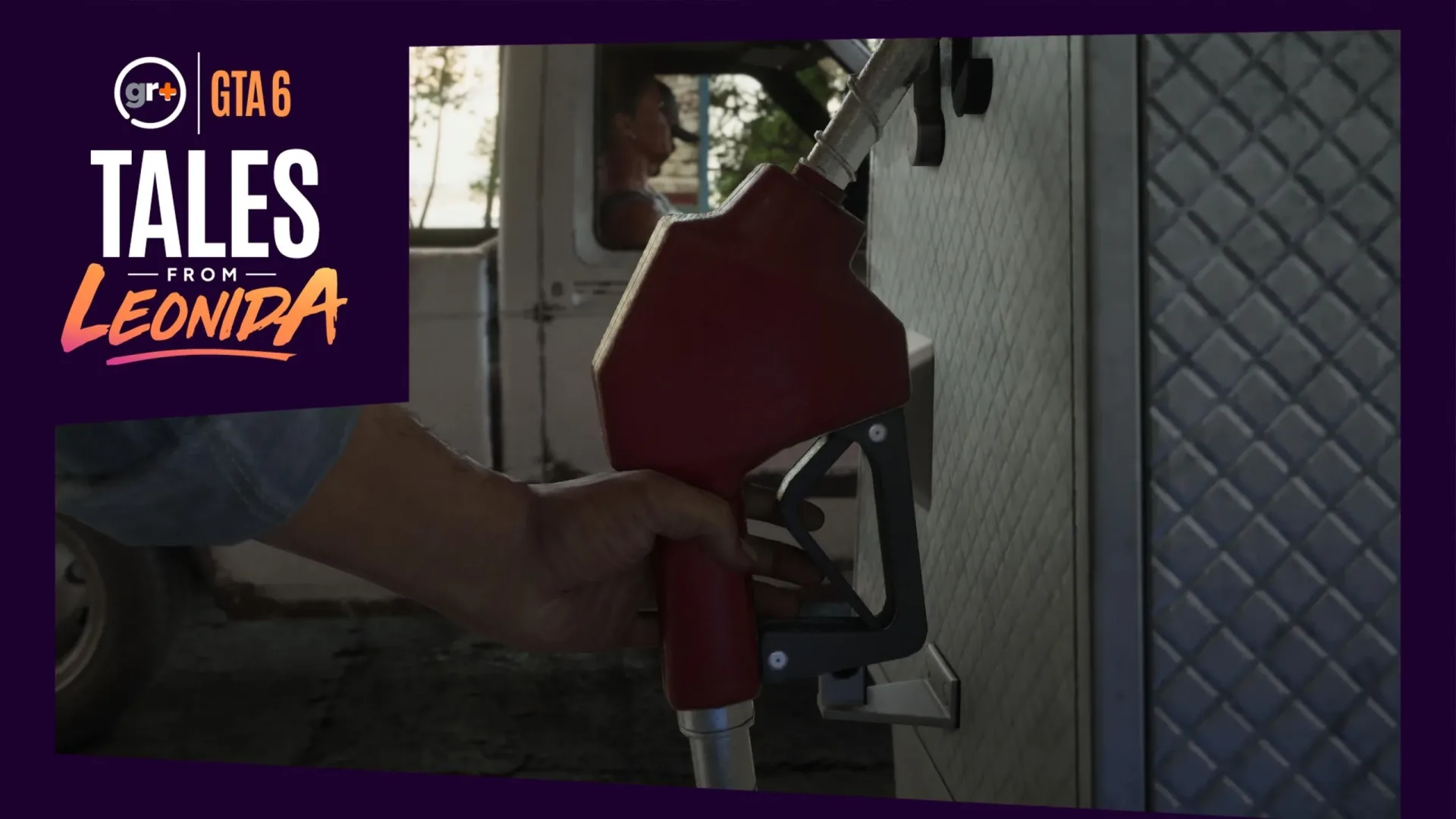
GTA 6 reportedly includes fuel management and engine health for vehicles. Those mechanics are simple to describe, but their effect depends on how they overlap with missions, travel and law enforcement. Fuel is the resource that determines whether the vehicle can continue moving; engine health refers to the vehicle’s mechanical state and the risk that damage can compromise its usefulness.
Neither mechanic has to be complicated to matter. A nearly empty tank is most interesting when it creates uncertainty: can the player reach a service station, complete an appointment, or get out of a neighborhood before the car stops? Likewise, vehicle damage becomes more meaningful if a car is not just disposable transport but a tool whose reliability has value.
This does not mean every trip needs to become a refueling chore. The reported early-game scenario works because the pressure comes from a collision of circumstances: Jason is low on fuel, has a time-sensitive obligation to pick Lucia up from a prison-release trash-cleaning job, and cannot afford to fill the tank. The humor is obvious, but the design implication is serious. GTA 6 may ask players to plan around practical limits rather than treating a car as a consequence-free extension of the player character.
That would also make the world feel more spatially coherent. Vice City and the wider state of Leonida are not just backdrops between mission markers when distance, fuel and a vehicle’s condition can affect what a player does next. An alley, a shop, an ATM and a gas station each have a clearer purpose in a system where a small amount of cash can decide whether they are useful.
Jason’s money is divided because his life is divided
The most intriguing reported feature is not simply that Jason starts poor. It is that his money is split across different forms of access. In the opening, he has no conventional bank account after living off the grid for years following military service. Illicit earnings are collected from a mailbox and can be hidden beneath the floorboards of his deteriorating home. Players must decide how much cash to carry and how much to stash.
Related coverage includes GTA 6 Makes Every Dollar Count With Fuel, Heat and Hard Choices.
That distinction gives physical cash a practical downside. Cash on hand is immediately spendable, but it is also easier to lose. Money stored under the floorboards is safer, yet it is not necessarily accessible at the instant a player needs it. Rather than treating all wealth as one abstract number, the game reportedly gives location and access real importance.
After Lucia leaves prison, the pair can establish a shared BuckMe account after being denied a proper bank account. BuckMe is described as a limited digital wallet rather than a full substitute for banking. Jason can contribute toward their joint savings goals, but cannot withdraw from that balance. Other jobs can pay funds that are usable through an ATM.
In interface terms, that means GTA 6 may have three distinct money trackers: cash Jason carries, money stored away, and restricted money in the joint BuckMe arrangement. It could have been a messy set of bars and balances. The stronger interpretation is that it represents the protagonists’ unstable position. They can earn, but they cannot freely secure or move their earnings. They can save, but certain savings are unavailable in an emergency. The financial friction is not incidental menu management; it is part of the story the systems are telling.
There is an important caveat here. These mechanics are described in the early portion of the game, and their long-term balance is unclear. GTA games often alter the player’s resources dramatically as the story advances. It remains to be seen whether limited money stays a central tension or whether it chiefly establishes the vulnerable starting point from which Jason and Lucia grow.
Police heat may make a low balance an escape problem
The reported wanted system is also more detailed than a simple “commit crime, evade police” loop. Police can recognize elements including the player’s face, appearance and vehicle for a period while heat remains active. Here, heat means the attention and pursuit generated by criminal activity, and it appears to be tied to identifiable details rather than only the player’s current location.
That makes money useful in a new way. If the police know the car, abandoning it is sensible. If clothing contributes to identification, buying a change of clothes may help. If both are necessary, a player who spent too freely beforehand is suddenly in trouble. The reported example of needing new clothes after attracting police attention, then discovering there is only ten dollars left, captures the relationship neatly: a cosmetic purchase is no longer always cosmetic when it may function as an escape resource.
Vehicle customization may play into that same loop. GTA 6 reportedly allows players to respray cars and shift vehicle heat, suggesting that a paint job could have a practical relationship to law-enforcement recognition. The broader lesson is that a reserve of money may act like insurance. It gives the player choices after something goes wrong.
That is a more interesting form of consequence than merely deducting a fixed fee after arrest. A player can create a crisis through a cascade of decisions: driving damaged or low on fuel, crashing into a police cruiser, attracting attention, being recognized, abandoning a compromised ride, and lacking the cash for a quick change in appearance. No individual step needs to be punishing. Together, they can make a botched plan feel like an actual scramble.
Illegal goods are not automatically profit
The same sense of precariousness reportedly carries into the drug trade. Recovering bags of drugs from a failed delivery is only the start of the process. The goods do not turn into usable money until Jason sells them, and different fences offer different rates.
A fence is a buyer who converts stolen or illegal property into money, usually at a discount because the buyer assumes risk and controls access to the market. In GTA 6’s reported setup, the choice is not just which buyer pays more. The higher-paying fence is also less stable and may bring further trouble, while the lower-paying option is linked to a superior who has already complained about Jason being late for missions.
This is a useful way to make criminal work feel less like picking up a glowing reward. The player weighs immediate payout against future risk and existing obligations. Even the supposedly better option may not be fully good; the available rates are characterized as low. That detail matters because it prevents the economy from becoming an effortless answer to every earlier problem. If Jason needs money for gas, clothing, repairs or a buffer against police heat, selling goods can help—but it may also deepen his involvement with people who have leverage over him.
For a broader Leonida context beyond the money systems, our guide to finding the mansion believed to reference Rick Ross on Starfish Island explores one specific corner of GTA VI’s setting.
Why scarcity could suit GTA 6’s two leads
Jason and Lucia’s situation appears designed around more than financial poverty. They are under pressure from legitimate institutions, criminal employers and police scrutiny at the same time. They have a damaged relationship to formal banking, imperfect ways to save money and reasons to be careful about the cash they carry.
This is where the game’s tactile systems have their best thematic potential. The difficulty is not just finding money, but converting it into the right kind of money in the right place before the next problem arrives. A bankroll hidden at home cannot necessarily buy fuel at the roadside. Joint savings cannot necessarily fund an immediate escape. A few dollars spent on a fashionable hat may leave too little for clothing that actually reduces attention.
That can make ordinary purchases carry dramatic weight without pretending that every small expense is exciting on its own. The objective is not to turn GTA into a household-budget simulator. It is to create moments where players feel the gap between having access to a lot of money and having enough usable money right now.
GTA 6’s early economy, as described, recognizes that crime stories are often powered by cash-flow problems. People make bad choices not only because they want more, but because the money they have is inaccessible, unsafe, insufficient or already promised to someone else. If the fuel, repairs, police heat and fractured financial accounts continue to interact cleanly, Leonida’s glitter may feel less like a reward for the player and more like a reminder that Jason and Lucia are not yet allowed inside.