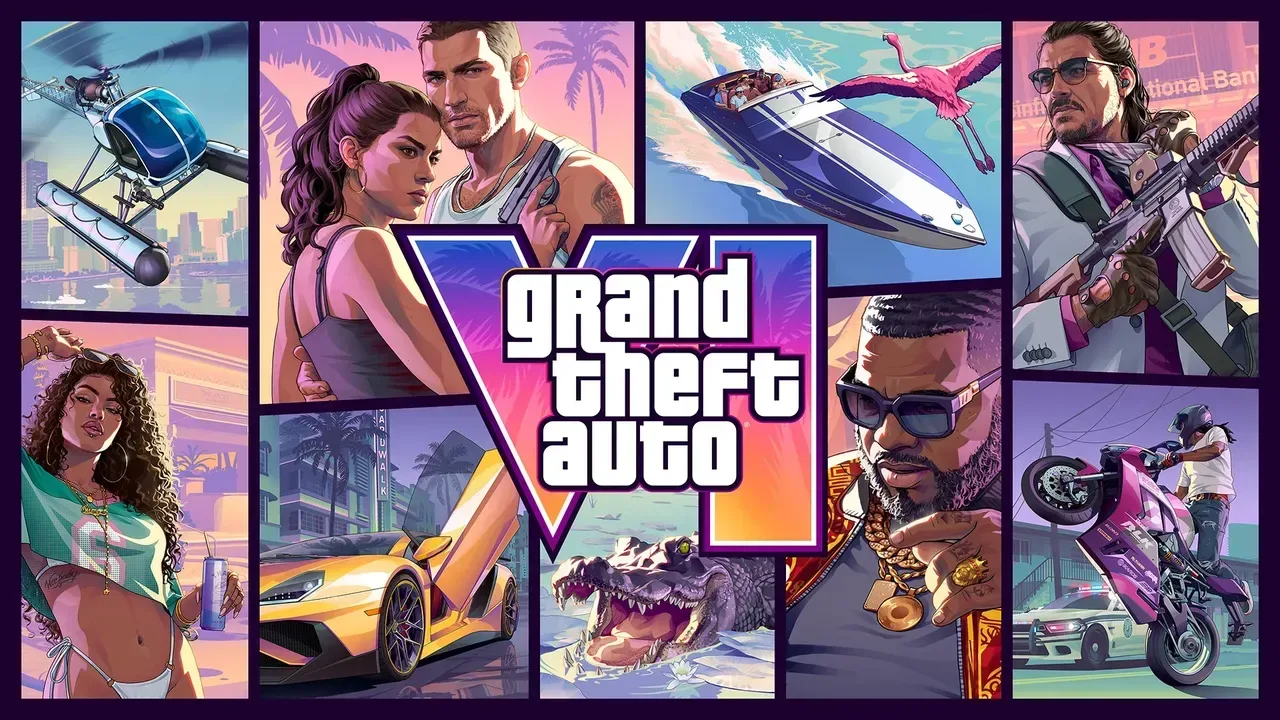
Grand Theft Auto VI may face an awards-season problem that has nothing to do with its eventual quality. With the game expected to arrive on November 19, 2026, its proximity to the likely nomination cutoff for The Game Awards has prompted a practical question: can a massive new Rockstar game be properly assessed in time for Game of the Year consideration?
Alanah Pearce, an actress and games writer who previously worked in games journalism, raised the issue during a livestream. Her point was not that GTA 6 cannot win, nor that it lacks the stature to become an awards frontrunner. It was that the timing could leave too little room between launch and the point at which nominations are decided.
That distinction matters. Awards eligibility is usually a procedural matter, while awards judgment is supposed to be an editorial one. GTA 6 could satisfy the calendar requirement yet still confront an awkward reality: a nomination jury may have very little opportunity to play enough of it to make a fully informed call.
A narrow window is not the same as a clear path
The Game Awards’ eligibility cutoff has historically fallen around the period when GTA 6 is due to launch. Last year’s cutoff was November 21, which would be only two days after the game’s current November 19 release date. That timing has led some observers to argue that GTA 6 would technically make the deadline.
Technically eligible, however, does not necessarily mean practically ready for a Game of the Year ballot.
For a smaller game, a late-November release might still leave enough time for a juror to get a reliable sense of the work. GTA 6 is expected to be a major open-world release from Rockstar Games, and games of that type invite assessment across far more than an opening stretch. A serious appraisal can involve the campaign’s pacing, mission design, technical performance, world design, writing, systems, and the overall experience that emerges over extended play.
None of those factors prove GTA 6 will be especially long; the available information does not establish its length or structure. But its position as a flagship Rockstar release is precisely why a two-day public-release window would create obvious scrutiny. A jury member who begins at launch may not have enough time to reach a conclusion that feels comparable to the evaluation given to games released months earlier.
What “eligibility cutoff” actually means
An eligibility cutoff is the date by which a work must be released to be considered for a particular awards cycle. It is not automatically a promise that every qualifying game receives identical evaluation time, review access, or attention. The cutoff answers the basic question of whether a game belongs in that year’s pool. It does not solve the more complicated question of whether voters have had a fair chance to judge it.
Related coverage includes GTA 6's Game of the Year Prospects Face a Crucial Eligibility Question.
That is the tension surrounding GTA 6. If the cutoff again falls after November 19, the game may be eligible on paper. But the nomination process could still be difficult if voters are expected to make decisions before they have meaningfully progressed through the game.
The concern is about voting standards, not merely logistics
Pearce’s concern points toward the ethics of a critical process. A Game of the Year nomination carries an implied claim: that the voters consider the nominated game among the year’s strongest overall releases. If jurors nominate a game without completing it, or without playing enough to evaluate its later material, people may reasonably question what standard was used.
That does not mean every voter must consume every possible part of every nominee in exactly the same way. Different games ask different things of their audiences, and voting organizations set their own policies. But an unusually late release puts the process under a microscope because the disparity in access is so clear. Earlier contenders may have been played, discussed, and revisited over weeks or months. GTA 6 could be assessed on an intensely compressed schedule.
There is also a difference between recognizing early technical or creative achievement and deciding that a complete game deserves the industry’s most visible honor. A dramatic introduction, a well-made first several hours, or broad anticipation may create momentum. They cannot fully substitute for sustained judgment of the finished work if a jury’s standards call for it.
The core issue is not whether GTA 6 will be important. It is whether the awards calendar gives voters enough time to determine exactly what that importance amounts to.
Possible ways the timing problem could be addressed
There are plausible routes through the calendar crunch, though none has been confirmed.
One possibility is an adjustment to nomination voting deadlines. The Game Awards is overseen by Geoff Keighley, and moving internal dates later could give GTA 6 more evaluation time. Such a choice would likely be noticed, especially because a Rockstar sweep would be a major draw for viewers, but it is not inherently impossible. The complication is that changing the schedule for one especially prominent release can itself invite questions about consistency and equal treatment.
A better solution, from the standpoint of informed voting, could be advance access for the relevant jury. Rockstar could potentially provide the game to voting members before the public release, giving them a meaningful head start. There is no confirmation of Rockstar’s review or jury-access plans, so this remains speculation rather than an announced arrangement.
Advance access would address the central practical issue more directly than simply extending a deadline. The important variable is not the date on the calendar alone, but the amount of time voters have with a finished, representative version of the game. Of course, it would also place a premium on clear embargo rules and careful handling of spoilers and confidentiality, subjects that often surround high-profile games before release.
A third outcome is the simplest administratively: GTA 6 could be left out of the 2026 nomination pool and become eligible in 2027 instead. That would avoid rushed evaluation, although it would also make the 2026 award conversation feel incomplete to players who regard its launch as one of the year’s defining events.
Why a 2027 run would not necessarily be a consolation prize
Missing a 2026 Game of the Year race would not automatically end GTA 6’s awards prospects. The game could return to the conversation in 2027, and there is a potential catalyst for renewed attention: Rockstar Games is heavily rumored to launch GTA 6’s online mode next year.
That rumored online component could give the release another major cultural moment, provided it materializes as expected. Online modes can extend a game’s public life by creating fresh reasons for players and critics to revisit it, even though an online rollout would not erase questions about how the base game was evaluated at launch.
The 2027 field may be formidable. Naughty Dog’s Intergalactic: The Heretic Prophet is among the potential heavyweight names mentioned in early discussion. No awards result can be predicted from release timing alone, and it would be premature to treat rumored plans as settled facts. Still, the possibility illustrates why a one-year delay in awards eligibility need not be equivalent to missing an opportunity altogether.
It may even create a more legible contest. A later nomination cycle could allow voters time to assess GTA 6 with less deadline pressure, while players can see whether its reputation holds beyond its initial release wave. For a game expected to command enormous attention, a longer view could be more valuable than a rushed attempt to fit it into the closing days of 2026.
What players should watch for
Until The Game Awards publishes its relevant timing and Rockstar clarifies its access plans, the situation remains uncertain. The key details to follow are straightforward:
- The official nomination eligibility date: A cutoff after November 19 would establish baseline eligibility, but not answer every evaluation concern.
- The nomination voting schedule: The amount of time between release and final voting is more revealing than the cutoff alone.
- Whether jurors receive early access: A substantial pre-release window could make informed consideration much more feasible.
- Whether voting procedures are explained: Clear rules help audiences understand how late releases are handled compared with games that launched earlier.
Late-year release timing has always made awards debates messier, but GTA 6 magnifies the issue because of the attention surrounding it. Its potential omission would not necessarily be a judgment on the game, just as a speedy nomination would not by itself resolve concerns about how thoroughly it was evaluated.
For now, the most defensible position is also the least dramatic: GTA 6’s 2026 Game of the Year status is unsettled. It may be eligible. It may receive adequate early access for jurors. Deadlines may shift. Or it may enter a later awards cycle with a rumored online launch helping to sustain interest. The eventual answer will say as much about awards-process transparency as it does about one of gaming’s biggest upcoming releases.
For another example of how release plans and platform context shape expectations around major games, see our look at Monster Hunter Wilds on Switch 2.