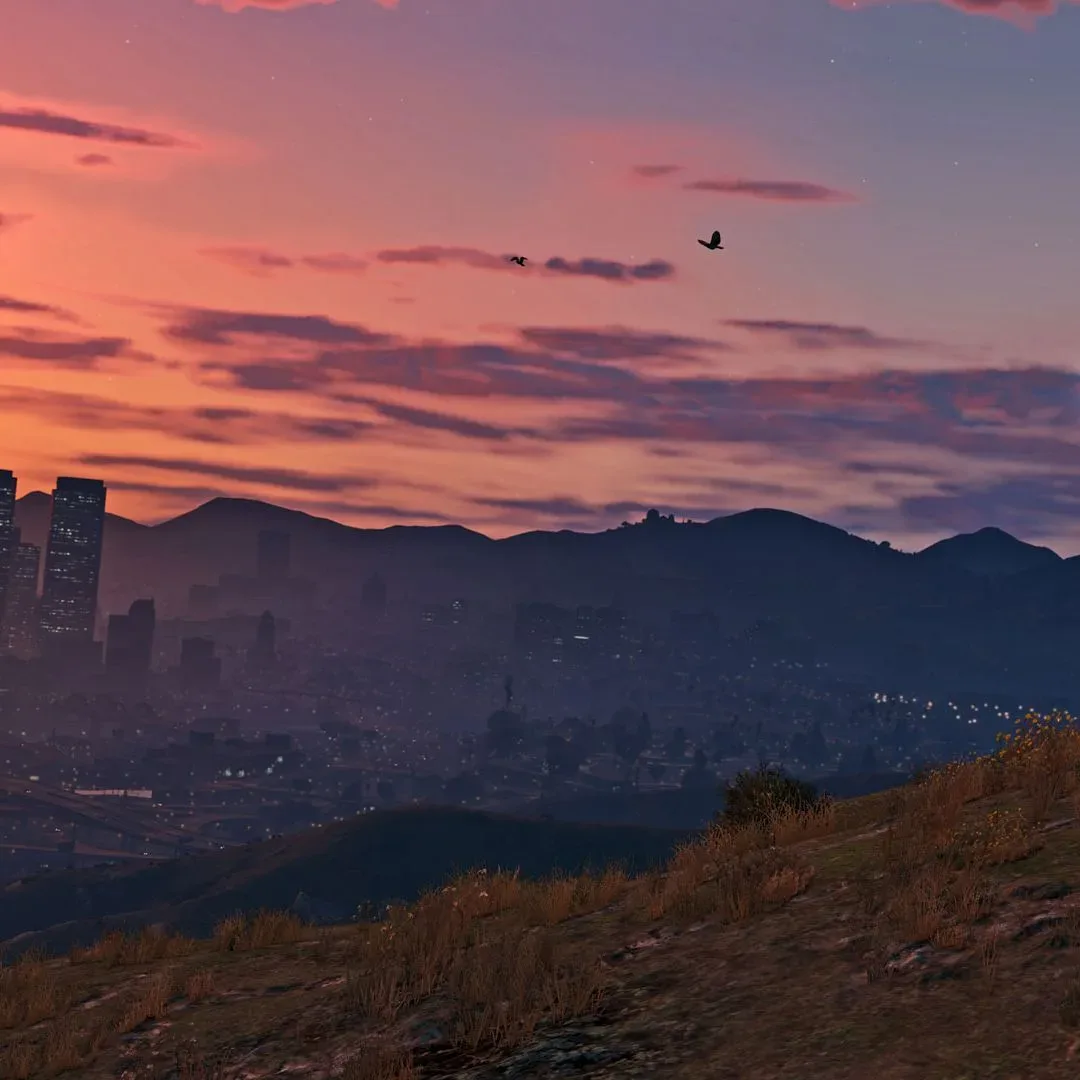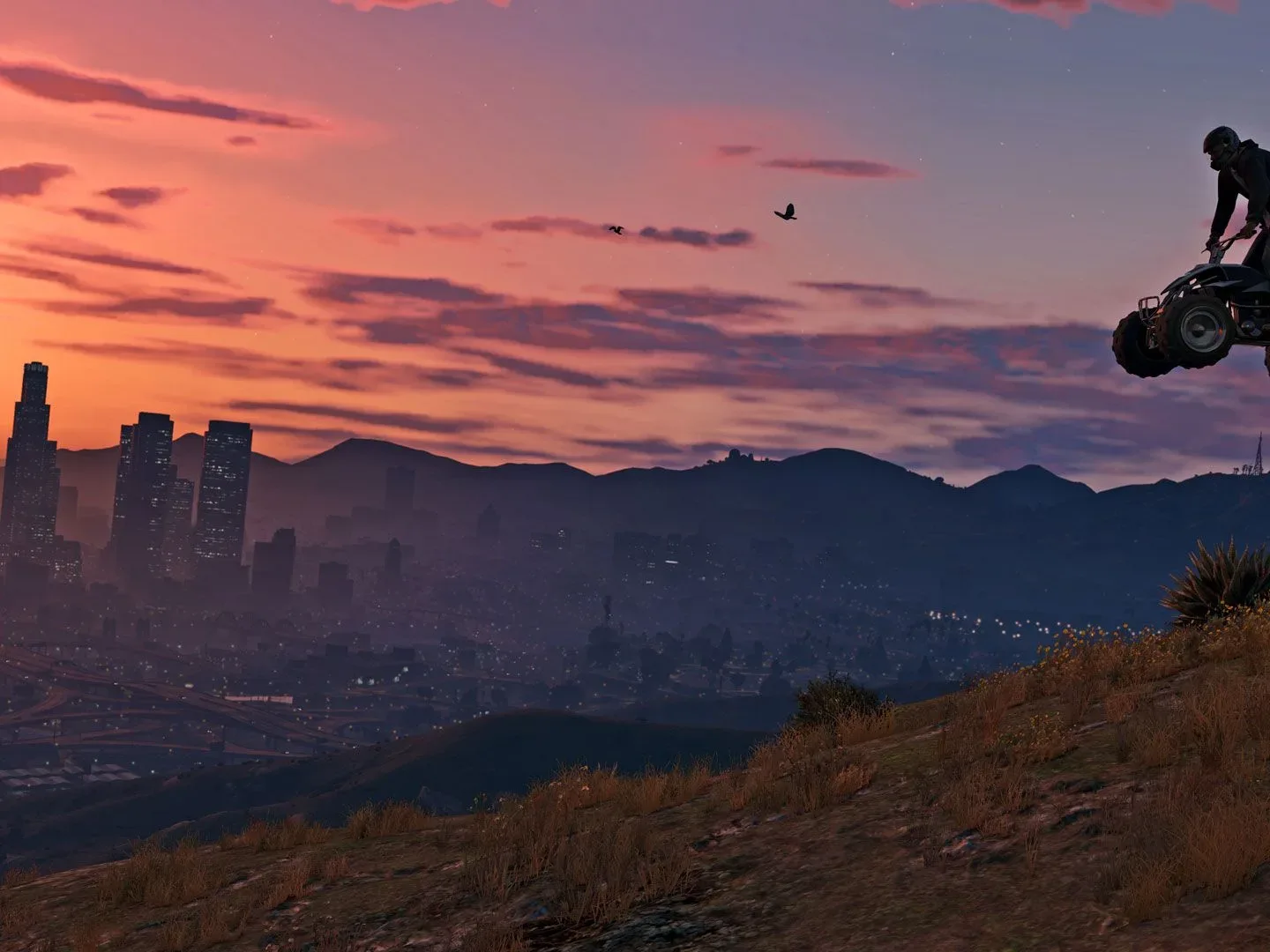
Grand Theft Auto 5’s Los Santos was not built as a literal replica of Los Angeles, and that distinction is central to understanding the game’s enduring sense of place. Aaron Garbut, who was GTA 5’s art director and is now co-studio head at Rockstar North on GTA 6, described a process driven first by the shape, rhythm and readability of an open world—not by a mission list, a strict map of reality, or any single protagonist’s itinerary.
That is a useful framework for approaching Rockstar’s return to Vice City with Jason and Lucia. It does not confirm specific GTA 6 mechanics, map details or systems. But Garbut’s account of GTA 5 does explain the difficult balancing act behind a city that needs to support story missions, free exploration and a long-lived online component while still feeling like one coherent place. In short: a successful GTA city has to work as a game space before it can convincingly perform as a city.
For more discussion of the series’ visual atmosphere and the attention it has drawn beyond games, see our look at why GTA VI’s texture caught William Gibson’s attention.
The city comes before the missions
Garbut described GTA 5’s early world-building in surprisingly direct terms: the world is designed before the game. During preproduction, part of the art team created a white-box city. White-boxing is an early development stage in which spaces are represented with simple, functional geometry rather than finished buildings, materials and scenery. Its purpose is not to impress visually. It lets a team test the essentials: road flow, travel routes, sightlines, skyline composition, landmark placement and the relationship between districts.
That order matters. If an open-world city is designed around a finalized mission sequence, it can become a collection of attractive but narrowly useful sets. A road may work beautifully for one chase but be awkward for ordinary driving. A district may suit a plot beat yet have no reason for a player to revisit it. By first tuning the roads, vistas and broad geography, the team creates a foundation that can absorb many kinds of activity.
Garbut said the team spent substantial time driving, building and adjusting until districts felt balanced and blended naturally. Only as missions and the story came together did he work alongside level designers to position missions and important locations, with an aim of using as much of the world as possible.
Level design, in this context, is the work of shaping the spaces where players act: routes, encounters, objectives, pacing and the physical logic that makes a mission playable. The art team’s city layout and the level designers’ mission requirements cannot be treated as separate projects. A location has to look right, but it also has to accommodate driving, navigation, action and scripted scenes. Garbut’s description makes the interdependence clear: art direction is not merely decoration added once gameplay is complete.
Three protagonists provided anchors, not a whole map blueprint
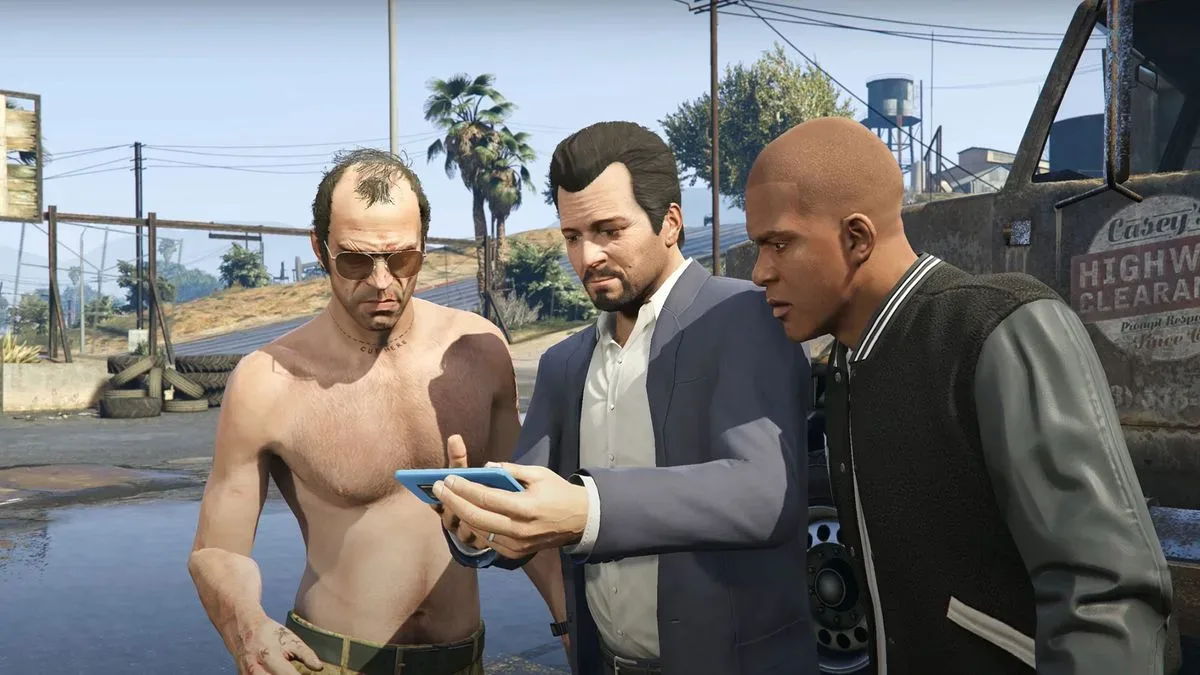
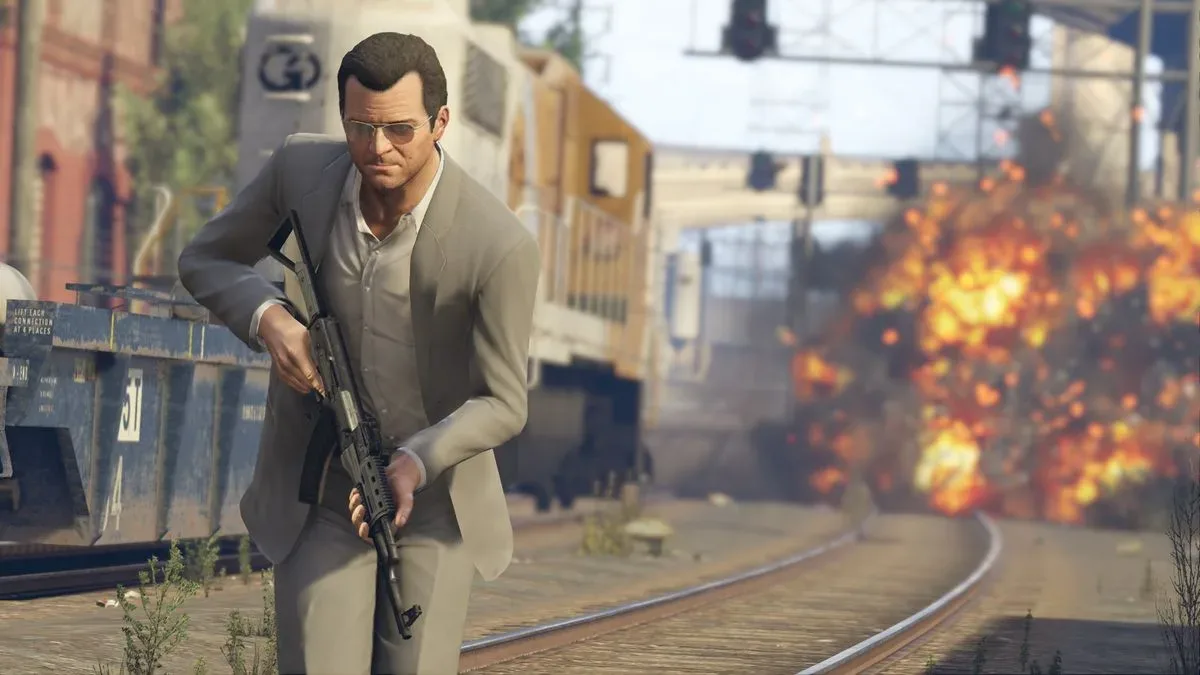
GTA 5’s three switchable leads—Michael, Franklin and Trevor—were a major formal change for the series. The team knew the characters’ biographies early enough to establish a distinct rural or desert-side area for Trevor. A research trip that included California’s Salton Sea and Bombay Beach helped inform that direction.
Related coverage includes How GTA 5's Design Philosophy Shaped Rockstar's Road Back to Vice City.
Yet Garbut’s retrospective suggests that the protagonists did not dictate every aspect of the city’s construction. They supplied what he called anchor points. The contrasts, personality and density of detail expected from the wider world would have been pursued regardless. GTA Online also meant Rockstar could not optimize the entire map only for a single-player route through three lives. The world needed consistent quality across the board, a feeling of life throughout, and reasons to wander beyond the critical path.
That is an important nuance when considering Jason and Lucia. Two named protagonists naturally invite questions about how their relationship might shape GTA 6, but GTA 5’s example cautions against viewing a multi-character setup as a simple map-design formula. Characters can establish useful social, geographic and tonal reference points without reducing the city to a set of personalized hubs.
Garbut characterized GTA 5’s multiple-character approach as a leap of faith. It was a promising idea, but also a change substantial enough that it could have failed. That is the appropriate way to read ambitious structural decisions in games of this scale: not as inevitable upgrades, but as choices that demand extensive testing once the world, missions and story start interacting.
Why a convincing city is not an accurate city
Los Santos may be closely associated with Los Angeles, but Garbut stressed that the goal was never to rebuild the real city building by building. The process began at a macro level—choosing broad districts and their functions—and moved inward. Reality was reference material, not a binding blueprint. Districts could be moved, compressed or rearranged geographically, while individual landmarks could be treated selectively.
This approach can sound counterintuitive. Surely a more faithful recreation would be more immersive? Garbut’s argument was that literal accuracy can actually be less satisfying to build and less useful to play. Most people experience major cities through edited forms: films, television, photographs, brief visits and shared cultural impressions. An open-world game is another kind of edit. It selects, compresses and emphasizes.
That compression serves practical player needs. A game city needs recognizable changes in mood, architecture and street character over a manageable travel distance. It needs routes that invite driving rather than reproduce every inconvenience of a real metropolitan layout. It needs memorable landmarks that assist orientation. It also needs space for missions and activities without the dead zones a literal urban reproduction might contain.
The result is not a claim that a fictional city is somehow more real than its inspiration. It is a deliberately authored version of a familiar idea. Garbut’s phrase for the effect was the popular perception of a place: a city shaped by what people expect it to feel like, rather than its exact physical plan. For players, that can be more legible and more emotionally immediate than geographic accuracy.
Applied cautiously to the Vice City setting, the lesson is straightforward. The most valuable question is not whether every road matches a real-world counterpart. It is whether the city’s districts, views, landmarks and transitions create a strong identity while supporting play. A city can be geographically fictional and still feel internally consistent enough to be believed.
Iteration is more than cutting content
The other major lesson Garbut identified from earlier GTA development was a refusal to become overly attached to a process, plan, asset or idea. The phrase often used in creative work is “kill your darlings,” but his explanation is more precise than an image of wholesale deletion. He emphasized adaptation: choosing the path that best serves the game rather than protecting an earlier decision out of habit.
Large open-world games make this necessity especially acute because development elements are connected. In the workflow Garbut described, the world arrives first, then missions, then the broader structure and story, while systems continue changing all the while. A change to one layer can create pressure on all the others. A route that looks good may alter how a chase plays. A mission’s needs may reveal a weakness in an area’s layout. A new system can affect the value of an existing activity. The work is continuous adjustment, not a clean series of handoffs.
Garbut compared the process to drawing or sculpting: begin with the broad vision, then add layers of detail until the desired result emerges. The complication is scale. Rather than one artist revising one page, a large team is working on the same overall piece at once. The comparison explains why clear collaboration is so valuable. Every department needs enough flexibility to respond when another department’s work exposes a better solution.
He also made clear that iteration does not necessarily mean frequently throwing work away. It can mean repurposing, revising and rethinking how existing material fits the larger experience. This is a useful correction to the simplistic idea that late development choices are only about cuts. Decisions can involve changing plans, reconnecting systems, relocating emphasis and testing whether parts of the game cooperate rather than compete.
The final stretch is especially consequential. Garbut described the moment when locations are in place, level-design flow starts taking shape and cutscenes connect the pieces. At that point, a project begins to feel like a game instead of a collection of disconnected components. It is also when the hard decisions arrive, because elements that do not work must be changed. The rewarding stage is therefore not the first successful sketch; it is the lengthy process of making the assembled game function as a whole.
Lighting does the quiet work of making a world cohere
GTA 5’s technical and artistic ambitions were also bound together by lighting. Garbut called it vital because lighting is what binds the experience. That does not merely mean making streets look attractive at sunset. Lighting affects mood, depth, readability and the sense that buildings, terrain, weather and time of day belong to the same world.
His comparison across entries illustrates how technical progress becomes perceptible to players. GTA IV marked the arrival of real-time shadows for the team after years of static, precomputed lighting on PlayStation 2-era work. Real-time shadows are calculated dynamically as lights and objects interact, allowing them to respond to changing positions and conditions. In Garbut’s account, that made the environment feel more solid.
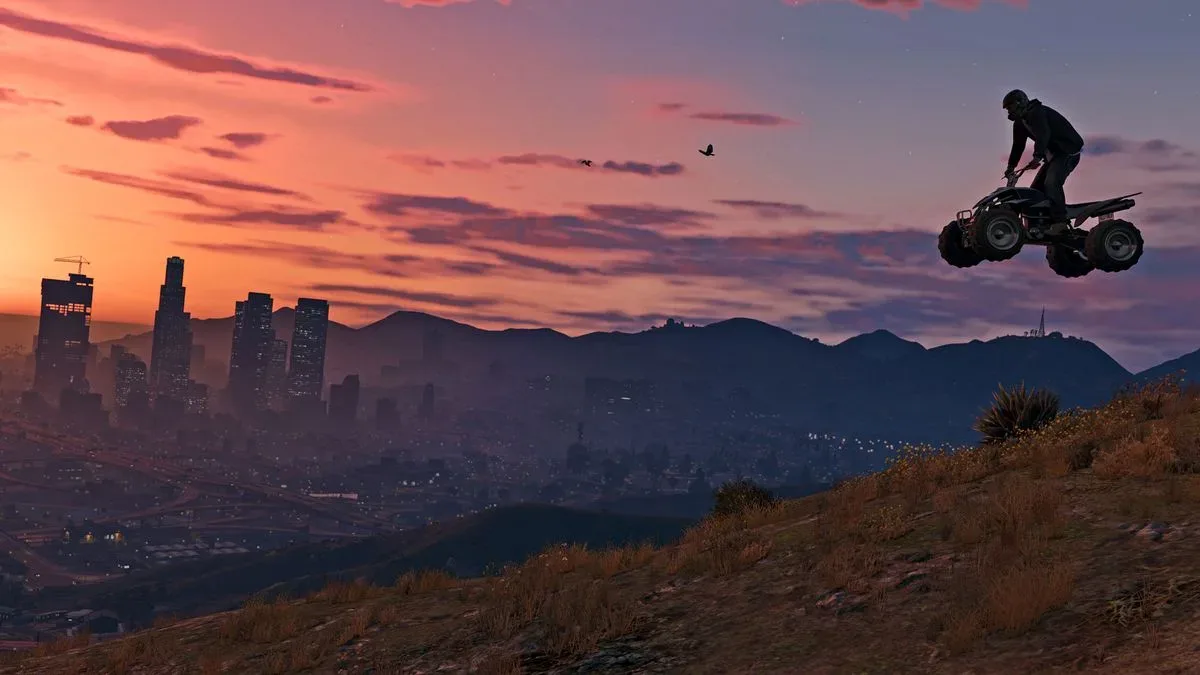
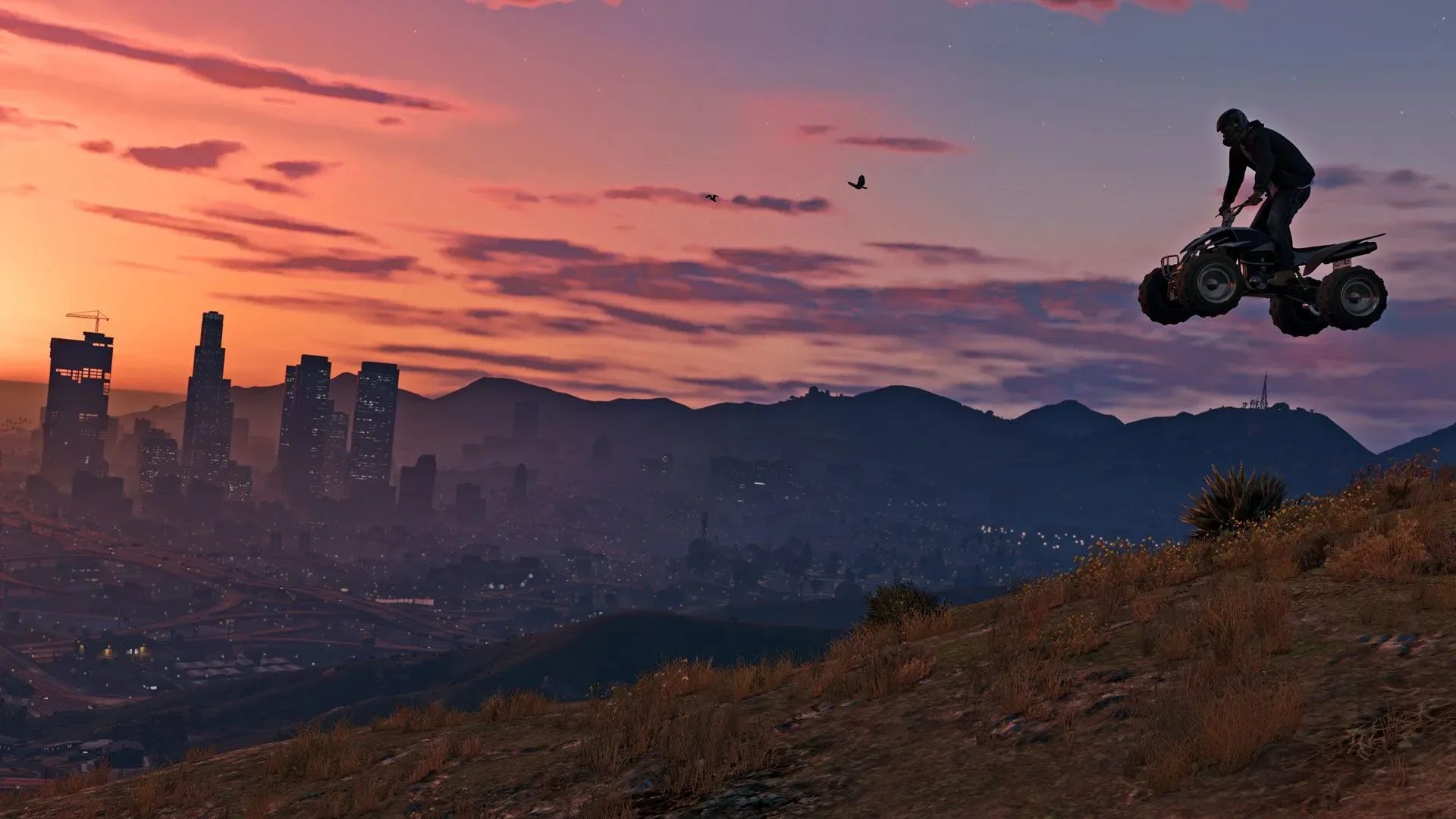
For GTA 5, the lighting system was reworked to deliver better shadows across greater distances. Garbut singled out the impact of seeing shadows extend far into the distance while flying over the city. He also highlighted a lighting level-of-detail system. Level of detail, often shortened to LOD, is a performance technique in which distant content is represented with less costly detail than content close to the player. A lighting LOD system applies that principle to illumination, preserving a richer sense of activity and depth across a large view without treating every faraway element as if it were immediately beside the camera.
At night, that effect can be decisive. Distant illumination is not simply background decoration; it tells the player that the world continues beyond the next intersection. It establishes scale while helping urban spaces feel inhabited. Garbut noted that older work on Vice City treated neon lighting as a significant breakthrough. The broader point across these examples is that technology succeeds artistically when it changes the player’s feeling of a place, whether through solidity, distance, atmosphere or the suggestion of life.
What GTA 5’s process says—and does not say—about GTA 6
Garbut’s GTA 5 comments should not be turned into a checklist of unannounced GTA 6 features. They come from a prior project, described in retrospect, and every game introduces different creative and technical constraints. Even the most durable principles have to be reinterpreted for a new setting, cast and production.
What the account does offer is a grounded way to understand the craft behind Rockstar’s next return to Vice City. A world may be planned from road feel and vistas outward. Its protagonists can guide its personality without wholly defining its geography. Its real-world inspiration can be edited in pursuit of clarity and playability rather than copied exactly. Lighting can carry as much of the city’s emotional identity as architecture. And the finished experience depends on teams remaining willing to revise a good-looking plan when the playable game demands something better.
For a series associated with expansive settings, that may be the most revealing point. Scale is not the achievement on its own. The difficult work is making the city’s art, routes, missions, systems, narrative and atmosphere feel as if they were always meant to occupy the same space.