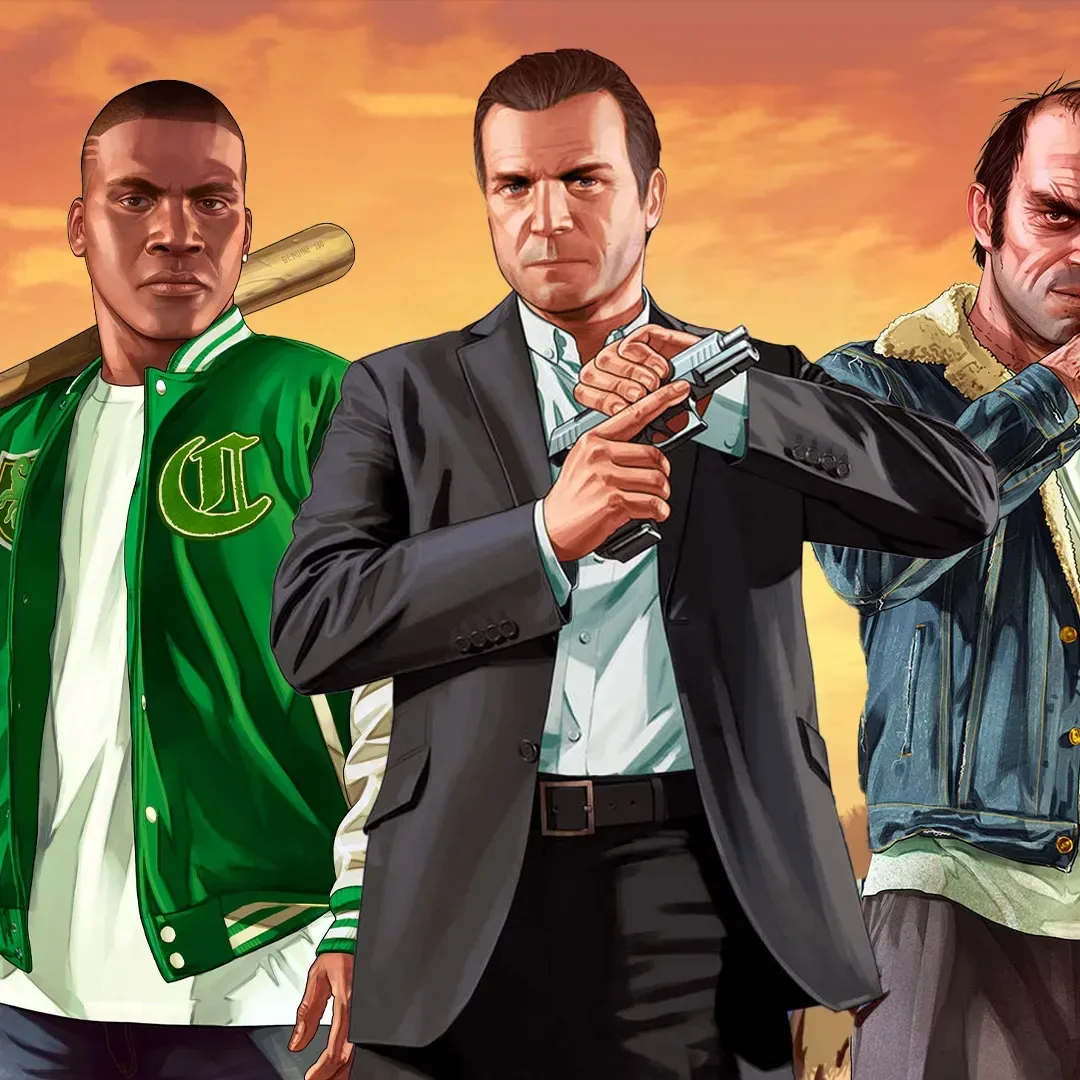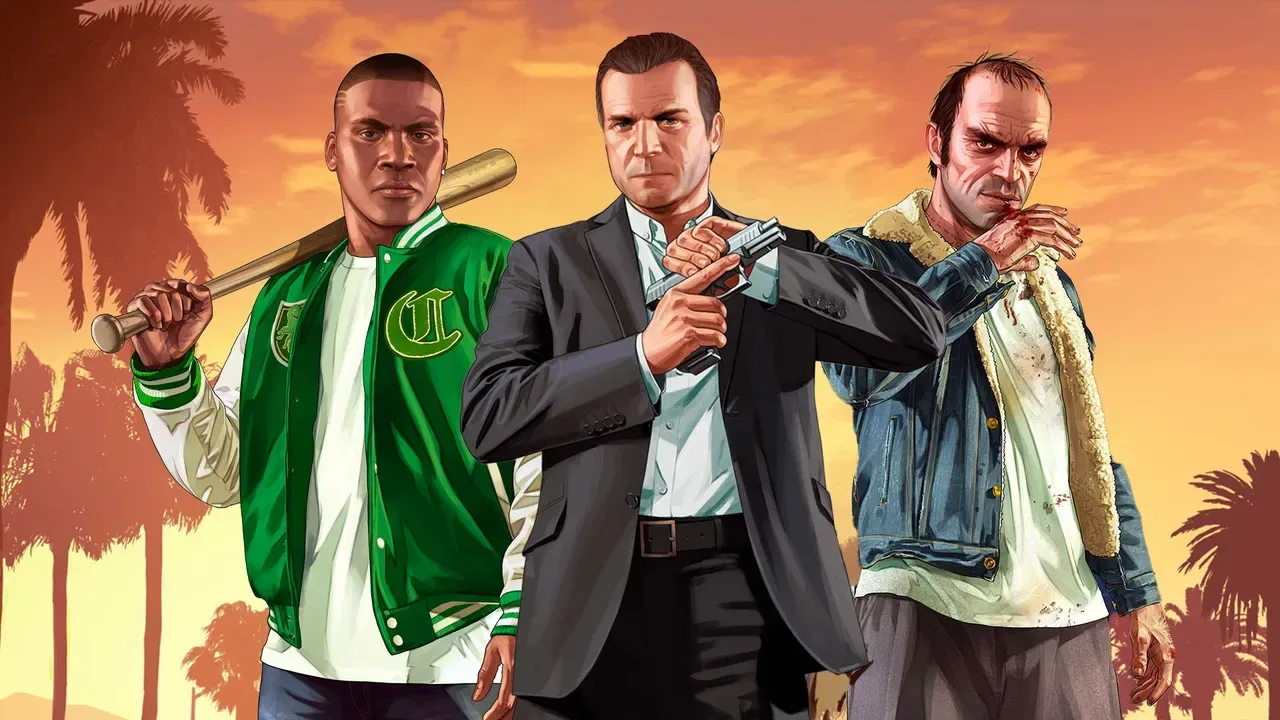
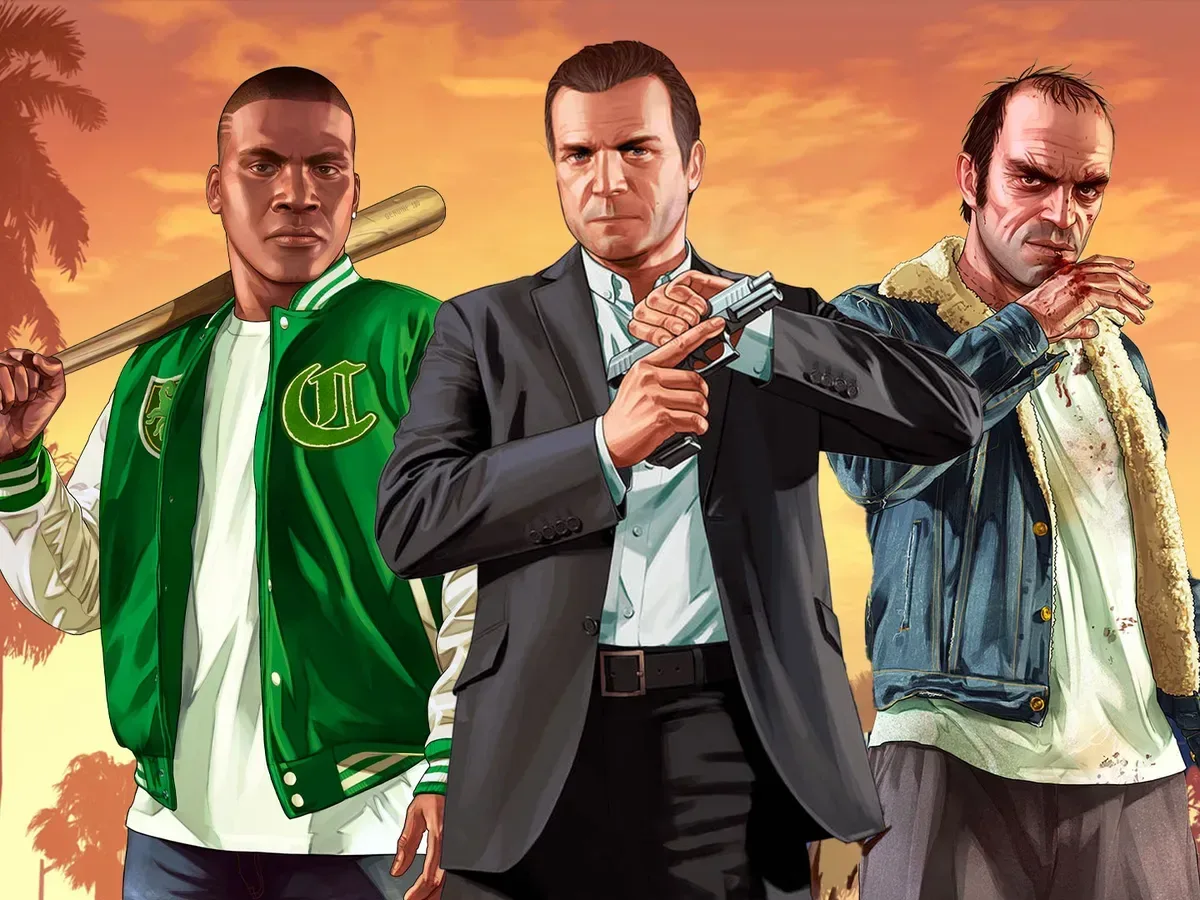
Grand Theft Auto V’s character-switching system was not simply a stylish camera move. It was a carefully managed handoff between distant parts of Los Santos, built to feel immediate on PlayStation 3 and Xbox 360 hardware. A former technical designer who worked on the feature says the most demanding versions were the mission switches: transitions between protagonists positioned far apart, without the aerial satellite view used for free-roam swaps.
That distinction explains why the feature remains so memorable. Switching among Michael, Franklin and Trevor in the open world sent the camera high over Los Santos before dropping back to the selected character. The sweeping view communicated the scale of the city, but it also created breathing room for the game to load the destination area. During major missions, the team could not rely on that same broad transition. The game still had to move the player into another active scenario quickly, while keeping the city visible and the sequence cinematic.
The result was a technical balancing act that turned limitations into presentation. GTA 5 did not need every object, texture and simulation across Los Santos held in memory at once. In fact, the designer explained that maintaining two full copies of the city simultaneously was not viable. Instead, the game had to stream in—load as needed—the area around the character taking over, fast enough that the player would perceive a continuous shot rather than a conventional loading screen.
A transition problem disguised as a camera problem
The basic obstacle is simple to state and hard to solve: two playable characters can be separated by a substantial portion of an open world. When control moves from one to the other, the machine needs the destination’s buildings, traffic, textures and relevant mission activity ready for display. It also needs to dispose of material no longer essential, all without freezing the game or cutting to a black screen.
Free-roam character switches gave the system a generous disguise. The camera’s climb to a satellite-like city view pulled attention away from the two characters and made the journey itself part of the game’s visual language. The world below could be presented at a scale where fine detail was less important, buying the streaming systems time before the camera returned to street level.
Mission swaps imposed a much stricter creative requirement. The city skyline had to remain on screen, rather than being obscured by a close-up or replaced with the skyward overview. Early solutions included tight camera framing around a character leaning against a wall, with the view focused on a hand while the destination loaded. That was functional, but it did not meet the mandate to show Los Santos. The location itself was considered part of the spectacle, not background data that could be hidden whenever the hardware needed a moment.
That decision made the final effect more impressive, because it required the technical solution to operate in plain sight. Rather than conceal the loading work completely, the team reduced what needed to be seen, carefully controlled what the player looked at, and restored detail as the transition completed.
LOD: the quiet trick behind a convincing skyline
The central tool was level of detail, usually shortened to LOD. In game development, LOD means representing an object with different versions depending on distance and visibility. Nearby objects need rich geometry and detailed textures because players can inspect them closely. Faraway objects can use much simpler versions because the screen provides fewer visual clues at long range.
Related coverage includes How GTA 5 Made Its Fast Character Switches Work on PS3 and Xbox 360.
For GTA 5’s character transitions, those changes were applied gradually in a radius around the player. Distant traffic could be represented as individual lights rather than fully realized vehicles. Far buildings could appear flatter and less defined until the game had time to load their more detailed forms. Depth of field—an effect that softens areas outside the camera’s focus—helped hide the reduced definition.
This was not a claim that the loading was literally invisible under every condition. The designer noted that a player deliberately watching the horizon, such as through a sniper rifle, could notice objects streaming in. But that is a much different standard from a transition breaking during ordinary play. The mission design helped: the character being switched to was occupied with something meaningful, while the moving skyline worked as an impressive backdrop rather than an invitation to scrutinize distant geometry.
The practical lesson is that seamlessness is often about attention management as much as raw speed. The technical systems rapidly increased detail where it mattered, while framing and activity guided the player toward the immediate action. A city can remain visible without every distant street needing to be fully realized at every instant.
Why Three’s Company was especially difficult
The mission Three’s Company demonstrates why character switching could not be treated as a pre-rendered cinematic. Trevor pilots a helicopter, Franklin watches from another rooftop with a sniper rifle, and Michael descends from the helicopter on a rope to retrieve a hostage from the IAA building. The player can shift among all three while downtown Los Santos remains spread out around them.
Each character places the camera in a different high-altitude vantage point, and the helicopter introduces a further complication: player freedom. Trevor’s aircraft could bank, rotate or even be upside down when a switch began. That made a simple camera path unreliable.
A straightforward transition often uses interpolation, which is the gradual calculation of a camera’s position and rotation between a starting point and an ending point. It normally produces a smooth movement. But it assumes the two endpoints create an intuitive path. With a helicopter in an arbitrary orientation, a mathematically direct route could look wrong to a player—seeming to flip or travel downward when the visual logic of the moment suggested the opposite.
In other words, the camera needed to account for more than where Trevor’s helicopter was. It had to account for how it was oriented, what the player had just seen, and how a motion would feel when transitioning in or out of that cockpit. This is a useful distinction between a technical transition and a good gameplay transition. One can reach the required coordinates; the other has to preserve the player’s spatial understanding.
The designer’s stated priority was to avoid taking control away from the player merely to make the shot easier. That meant additional work rather than forcing the helicopter into a fixed pose, constraining its movement, or briefly substituting a predetermined scene. The final system had to tolerate the unpredictability created by a vehicle the player could actively fly.
Two years for a few minutes of play
The former designer estimated spending roughly two years on material that amounts to only two or three minutes of gameplay. That figure is a revealing measure of game-development effort, not a suggestion that the feature had little value. A short interaction can support a much larger promise: that several protagonists can share one city and one mission without the usual visible interruptions.
The comparison used by the designer was to the kind of rapid world transition associated with an NVMe-equipped PlayStation 5 experience, except GTA 5’s work had to run on PS3 and Xbox 360. An NVMe drive is a fast modern storage technology often associated with reducing wait times when games pull in large amounts of data. The comparison underlines the ambition of achieving a similarly swift perceived transition on substantially older console hardware, rather than indicating that the older systems possessed equivalent storage.
It also explains why the finished feature is easy to underestimate. Players tend to remember the punchline—taking control of a different protagonist moments later—not the staging, LOD changes, streaming priorities and camera logic making it possible. The development team even treated individual transitions as a friendly internal competition, and a review montage ultimately spotlighted five sequences from each of two designers working on them.
What GTA 5’s solution means for GTA 6
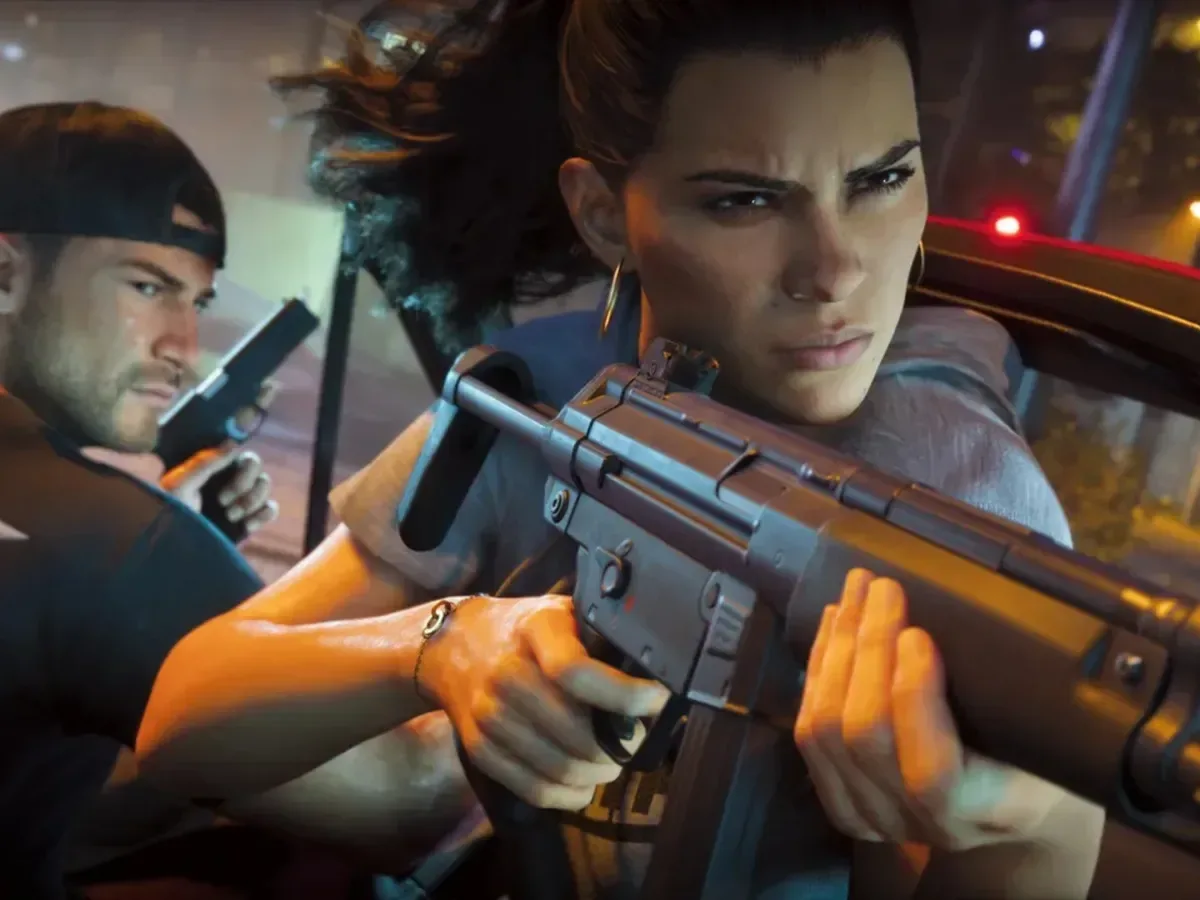
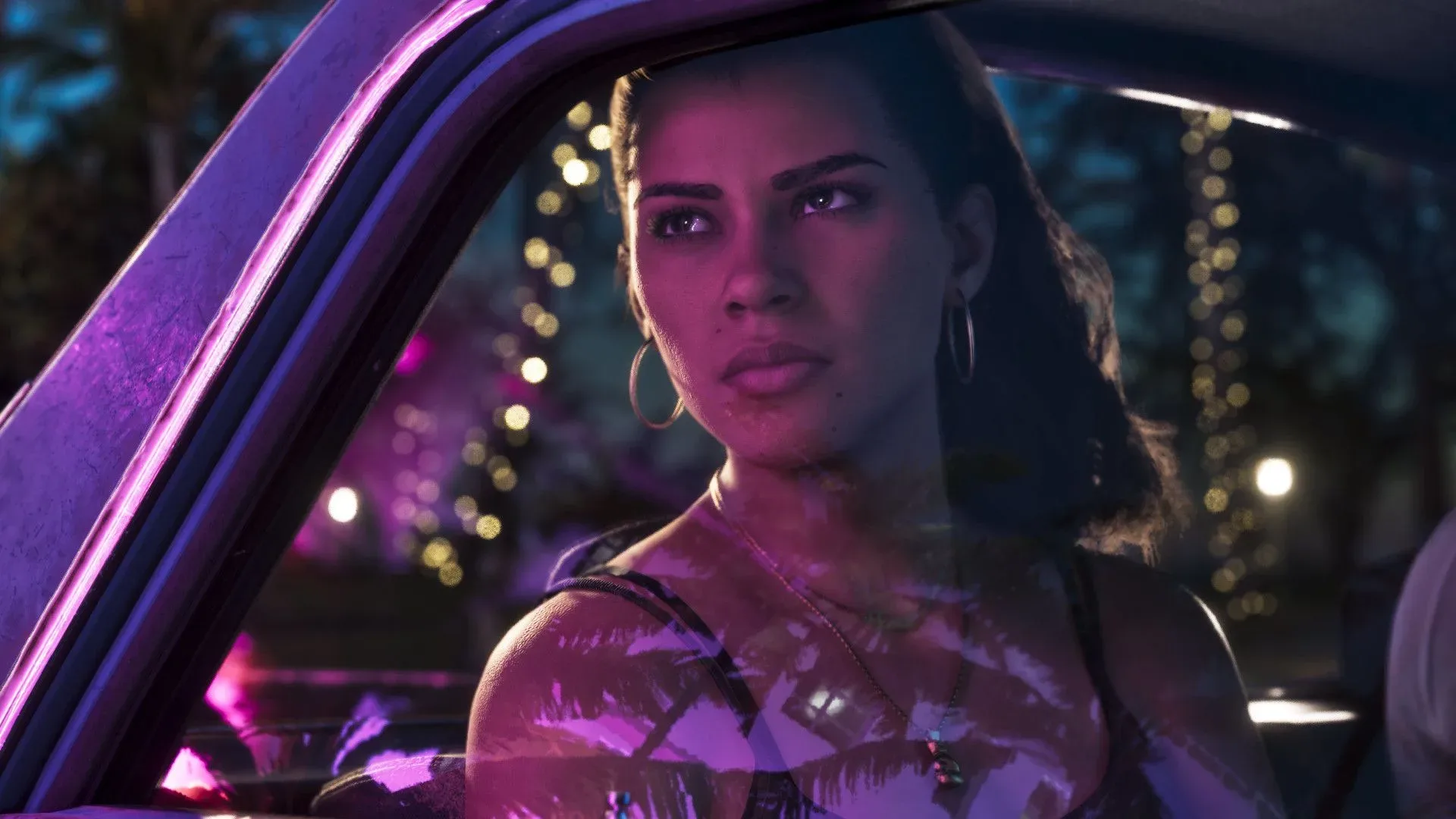
GTA 6 has been shown using character switching between its two protagonists, Jason and Lucia, including a trailer moment that moves control between a driver and gunner during a police escape. That establishes a familiar design direction, but it should not be read as proof that every technical behavior will match GTA 5. The newer game has two protagonists rather than three, and the available information here does not establish the precise mechanics, limits or loading approach of its switching system.
What GTA 5’s development story does provide is a sharper way to look at the feature when it appears. Smooth switching is not merely an interface option. It affects mission structure, camera choreography, how much autonomy players retain in vehicles, how an open world is streamed, and how developers decide where visual compromises are least likely to matter.
It also reinforces why a player may notice a skyline, a helicopter maneuver or a character’s immediate activity without realizing those details are helping an underlying system work. The switch succeeds when the player reads it as a natural continuation of the action. The technology is there to serve the illusion that the entire city—and every protagonist within it—is ready at once.
As attention turns to GTA 6, the anticipation surrounding its launch has reached beyond the usual game-discussion cycle; schools are also weighing how to handle the game’s arrival. For GTA 5, character switching became one of the clearest examples of a small, repeatable player action carrying an enormous amount of invisible engineering behind it.