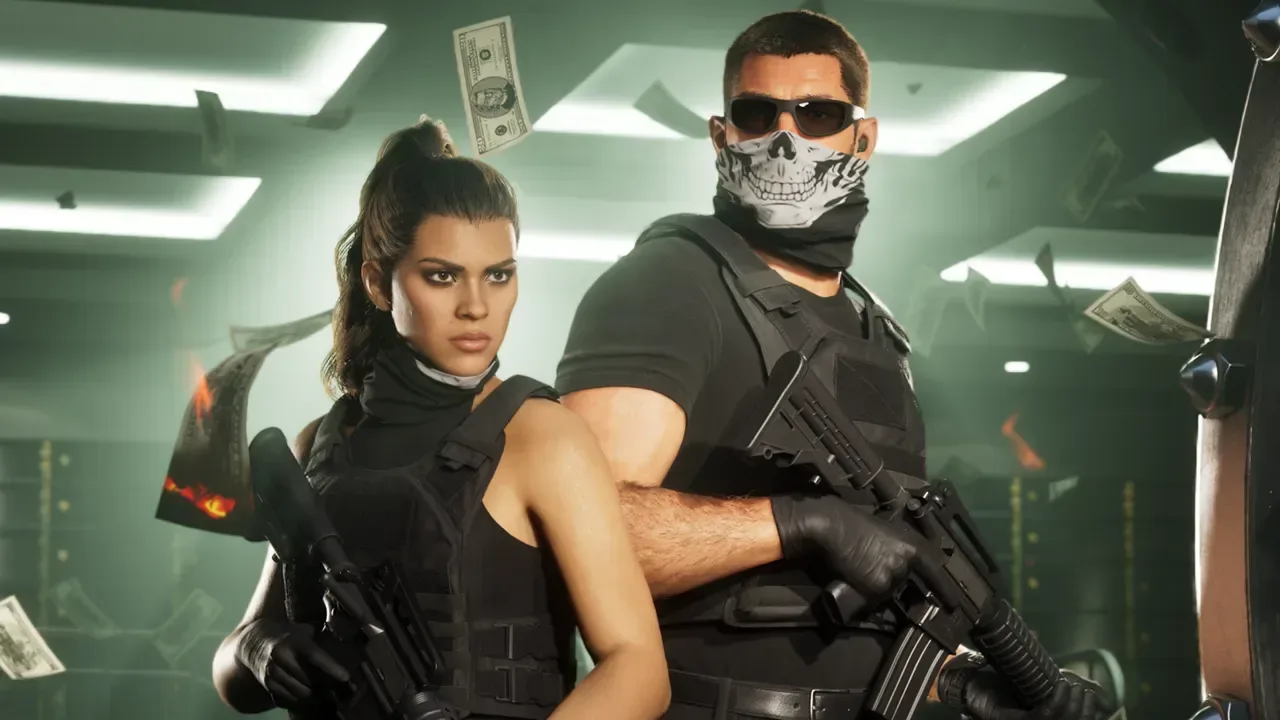
A police pursuit in Ripley, Derbyshire, has been turned into an unusually on-brand piece of Grand Theft Auto parody. Derbyshire Police posted a short TikTok on November 3 that frames footage of officers pursuing a black van through residential streets in the visual language of Grand Theft Auto VI: a wanted-level display, a corner minimap, soundtrack music identified as “Flower in a Hurricane,” and a three-star rating for the driver.
The joke lands because the real-world outcome is the exact opposite of the fantasy usually sold by an open-world crime game. In GTA, a player’s stars communicate how aggressively law enforcement is responding and escaping is part of the action. In this case, officers cut off the van and made an arrest. The force’s caption then drew the line with little ambiguity: the dangerous driving belonged nowhere near a real street, regardless of how familiar the imagery may look in a fictional Vice City.
Police identified the driver as 28-year-old Jack Vickrage and said he has received a 14-month prison sentence after admitting dangerous driving, driving while disqualified, drug-driving and cannabis possession. The post specifically noted that the sentence means he will not be playing GTA 6 on release day.
A wanted level becomes a real arrest
The video’s editing is central to why it spread. The Grand Theft Auto series uses visual shorthand that many players immediately understand: stars indicate the level of police attention, while a minimap is the small navigational display that tracks nearby roads and locations. Overlaying those game-like elements onto pursuit footage changes the viewer’s first impression from a standard official clip into a familiar gaming format.
That is not the same thing as treating the incident as a game. The edited clip’s structure makes the contrast do the work. A chase that might be an entertainment loop in a virtual city ends here with a vehicle stopped, an arrest made and criminal consequences. The constabulary’s message was that the reckless maneuvers shown in the video are unacceptable among pedestrians and other vehicles in the middle of the day.
The force’s caption said the driver could have waited for the game’s arrival rather than missing release day from prison, while stressing that no lengthy wait for a game excuses dangerous driving on public roads.
That combination of a current pop-culture reference and a direct public-safety message appears to have resonated with commenters. Responses praised the social-media editor and jokingly suggested they deserved early access to the game. The engagement is a reminder that recognisable game conventions can make an official message more visible without changing the seriousness of what the footage depicts.
Why the GTA styling is instantly legible
Grand Theft Auto’s criminal-chaos premise has always existed in a deliberately fictional setting. GTA 6 is set to return the series to Vice City, and the Derbyshire clip explicitly invokes that setting in its caption. The joke relies on viewers understanding the difference between a sandbox game and a residential road: game systems reward, punish or reset player actions within designed rules; a real pursuit places other road users and pedestrians at risk.
Related coverage includes Derbyshire Police Turn Real Car Chase Into a GTA 6-Style Video.
The three-star overlay is particularly effective because it compresses an entire premise into one icon. In series terms, it suggests escalating police interest. In the clip, however, it also tells viewers where the parody is going before the pursuit ends. The minimap similarly turns the route into a video-game visual cue, even though the outcome remains a real arrest rather than an objective completed on a controller.
There is also an important practical distinction in the force’s use of the aesthetic. The post does not present reckless driving as something to imitate. Its caption explicitly condemns cutting corners and speeding through residential areas. That framing matters when official accounts borrow entertainment language: the GTA-inspired visuals get attention, but the actual message is deterrence and accountability.
The release-day punchline has a date attached
The timing made the punchline especially easy to understand. GTA 6 is scheduled to launch on November 19, only weeks after the TikTok was posted. The force referred to a 13-year wait for the game in its caption, underscoring the scale of anticipation around its arrival while contrasting it with the immediate consequences of the case.
Rockstar has also said that the preload file can reach 212 GB, depending on the device, and has confirmed global release times. Preloading means downloading game data before the official unlock time, allowing players to be ready to start when the release window arrives rather than beginning a large download then. The 212 GB figure is a maximum stated as device-dependent, not a universal file size for every player.
For people planning ahead, the useful point is simple: available storage will matter. A large preload can require players to clear room before the download begins, particularly if a console or PC drive is already packed with installed games. Rockstar’s guidance to make sufficient space ahead of preloading is therefore more than routine launch-day advice.
GTA 6’s arrival has generated a wider run of promotions beyond the game itself. Miami has participated in a Vice City-themed takeover, while the Miami Heat have received special GTA 6-themed jerseys. Xbox, meanwhile, unveiled an alligator-shaped Xbox Series X connected to the game’s Florida-inspired setting; it is a sweepstakes prize rather than an actual animal, despite its appearance.
Those campaigns explain why a local British police video can plug so easily into the moment. GTA 6 is not just receiving attention from players tracking a release date or storage requirements. Its imagery, setting and anticipated launch have become common reference points in a way that lets a short public-information clip communicate with an audience already fluent in the visual language.
What the clip gets right about the line between fiction and reality
Grand Theft Auto is built around the freedom to make destructive choices in a controlled digital environment. A player can trigger pursuit systems, outrun police, fail and immediately try again. None of those safeguards exist on a real road. The Derbyshire edit makes that contrast unusually explicit: it borrows the look of a pursuit mechanic, then ends with the consequences that a game cannot replicate.
That is why the clip’s strongest detail may not be the three stars or the soundtrack, but the choice to retain the arrest as the payoff. The editor uses a popular format to reach people who might otherwise scroll past conventional pursuit footage. Yet the ending does not glamorise the escape attempt. It makes clear that it failed.
For the GTA audience, the practical message is equally direct. Enjoy Vice City as a fictional space when GTA 6 arrives on November 19, and make room on a device if preloading is part of the plan. But real streets do not have minimaps, reset buttons or stars that disappear after a few minutes. Derbyshire Police’s video turns that obvious truth into a sharp release-season gag — and, in the process, a much more memorable warning about dangerous driving.
The broader game-release calendar will continue to produce its share of cultural crossovers, particularly when an anticipated title has become a familiar public reference. Readers following other major projects can also keep an eye on the latest news around The Elder Scrolls 6: Sentinel. But the Ripley video is a useful example of why the GTA comparison works so well: it uses a fictional language everyone recognises to make sure nobody mistakes the real-world conduct for harmless play.