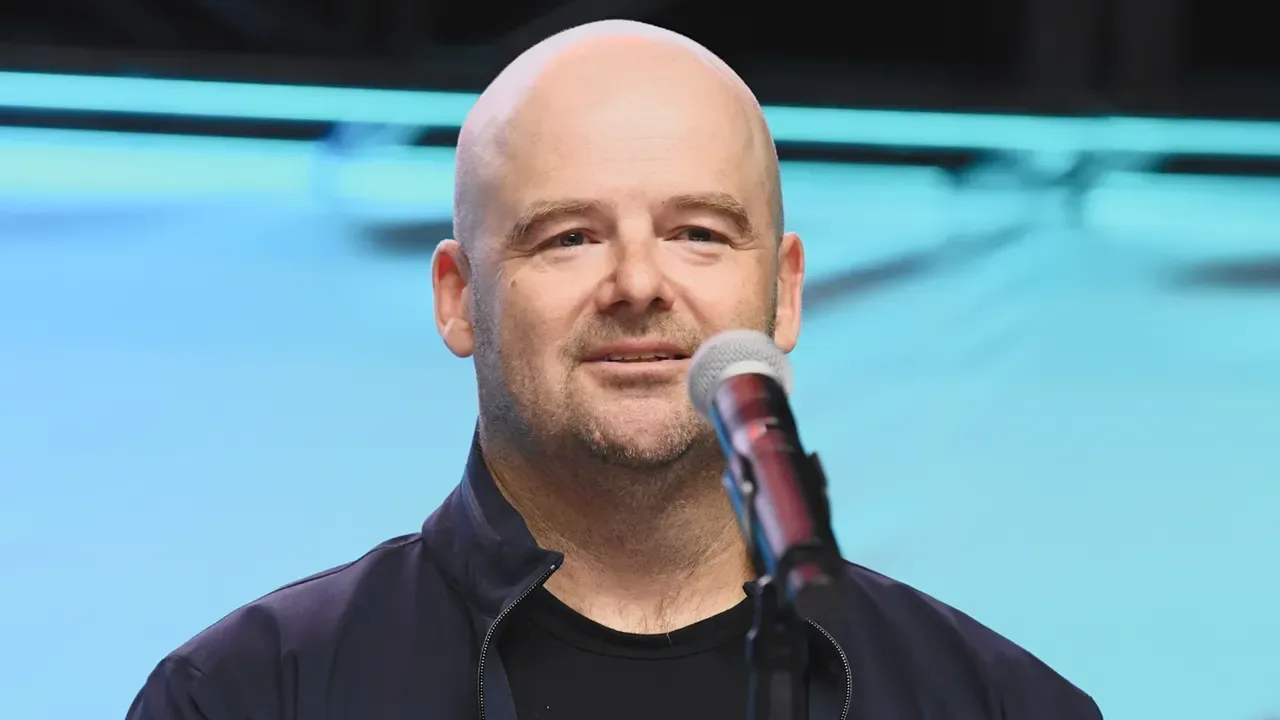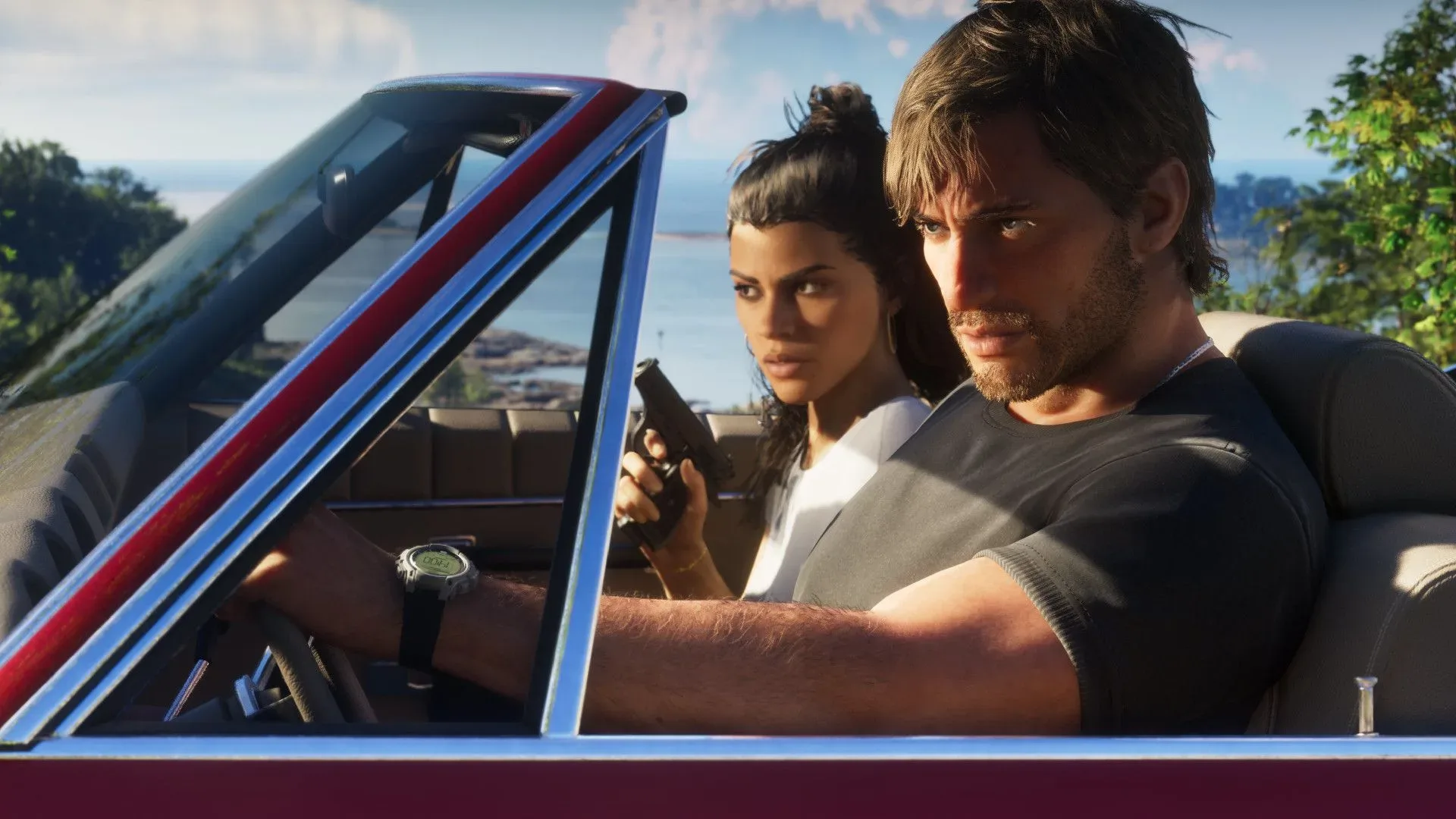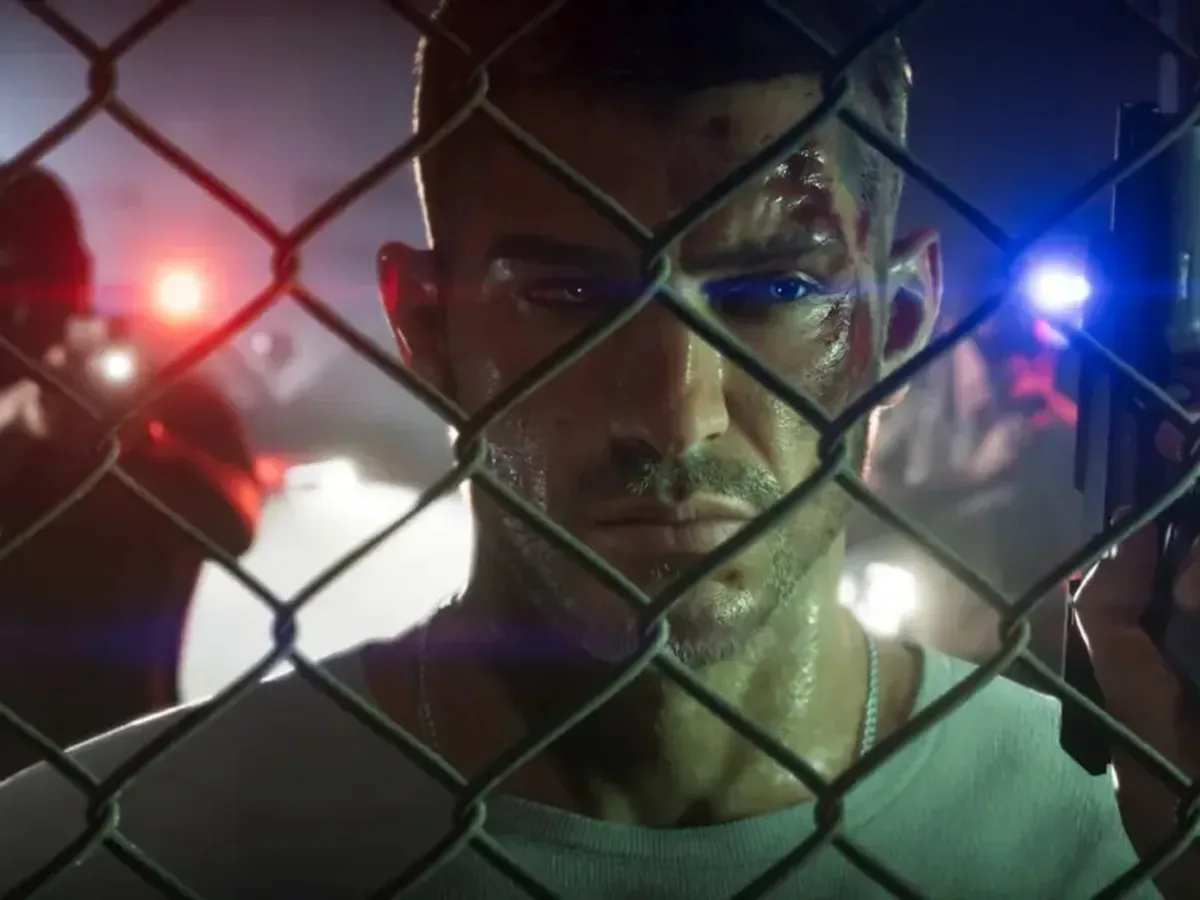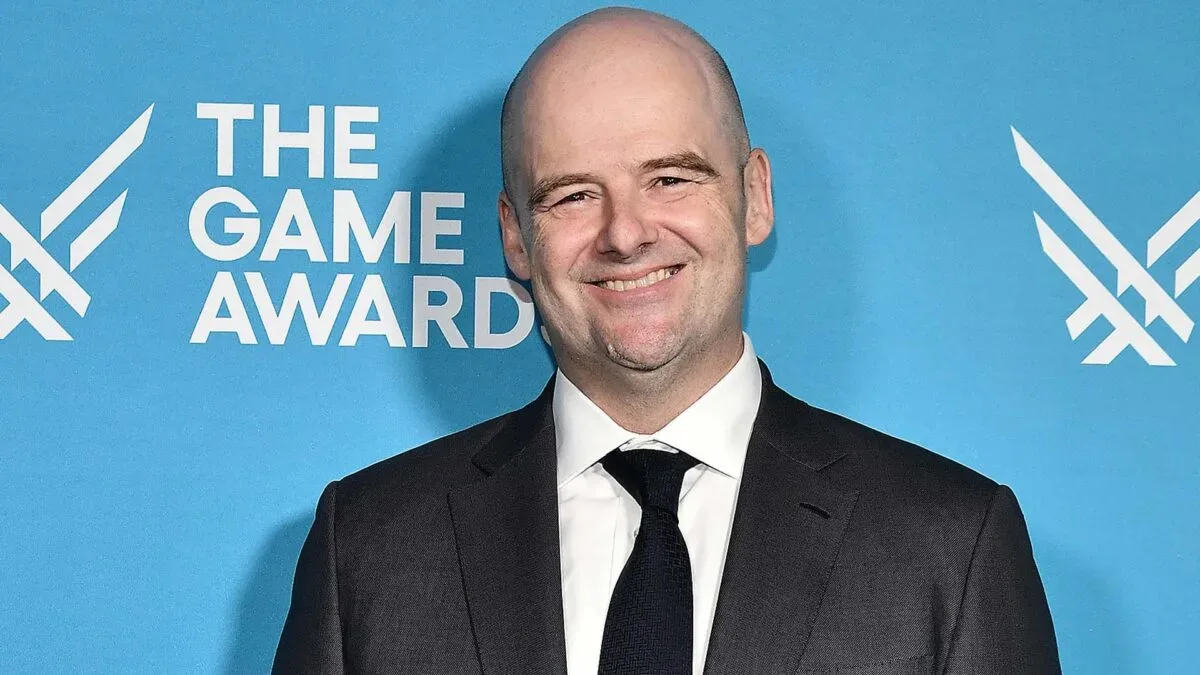
Dan Houser, the Rockstar Games co-founder who helped write and produce the Grand Theft Auto series and Red Dead Redemption 2, says he has not watched the Grand Theft Auto VI gameplay reveal that premiered on Netflix in August.
The reason is not a lack of personal connection to the series. Houser left Rockstar in 2020 after serving as its president of creative, while his brother Sam Houser remains in charge of the company. Instead, he says staying away is a deliberate part of protecting his attention while he builds new game projects at Absurd Ventures.
“I haven’t seen it yet,” Houser said. “I will try and avoid it because I always try and avoid stuff that’s going to distract or disrupt me creatively.”
Houser’s position is unusually direct for someone so closely associated with one of gaming’s biggest open-world franchises. It also helps clarify that avoiding a major peer release can be a creative method rather than a judgment on the work itself. His concern is not framed as a reaction to any specific GTA 6 feature, scene, system, or technical decision; he says he has not seen the reveal. The issue, instead, is the tendency to compare, second-guess, and mentally reconstruct work when the subject overlaps closely with his own.
Why an open-world reveal is not passive viewing for Houser
“Open world” is a broad term, but it generally describes games built around a navigable environment that gives players latitude in how they travel, interact, and approach activities. Such games demand connected work across many disciplines: writing, mission structure, environment art, animation, user interface design, programming, audio, systems design, and production. A gameplay presentation can therefore prompt a development veteran to see more than its intended spectacle.
Houser says that is precisely what happens when he tries to engage with open-world games. Rather than experiencing them only as a player, he starts reading the traces of the team and the decisions behind the finished work.
“I find when I play them, I can almost deconstruct the strengths and weaknesses of the team in real time, and it’s distracting,” Houser said.
He described the thought process in practical terms: considering whether a game’s animation is weaker while admiring its design, or imagining the internal meeting that may have produced a particular feature. That is a useful distinction for readers interpreting the comments. Houser is not claiming that developers should ignore their medium. He is describing his own response to games in the same category in which he is currently working.
Related coverage includes Dan Houser Has Avoided GTA 6's Netflix Gameplay Reveal to Protect His Creative Focus.
He also draws a line between his role and that of a game designer. Houser characterizes himself as “a sort of creative director,” focused on seeking ideas that have not been done before, revisiting ideas from older media, and following ideas that have long interested him. In that framework, a closely watched rival or adjacent game can become less of an inspiration and more of a distracting comparison exercise.
That is why the decision extends beyond GTA 6. Houser says he does not really play open-world games anymore, and that colleagues at Absurd Ventures play new releases for him. The company can remain informed through people assigned to that work, while Houser preserves distance from the material most likely to pull his thinking toward critique rather than creation.
For a closer look at the broader point about his self-imposed distance from competing open-world games, see Dan Houser’s approach to avoiding GTA 6 while building Absurd Ventures projects.
A creative boundary Houser has used before
The GTA 6 reveal is not an isolated case of selective viewing. Houser says that once work began on Red Dead Redemption, he stopped watching Westerns. He also said he did not watch The Sopranos until after leaving Rockstar, apart from seeing its finale live with his then-girlfriend, now wife.
Later, during COVID, he watched the series in full. Houser’s retrospective assessment was that the show was good enough that it could have significantly influenced his work on GTA had he watched it at the time. The point is not that influence is inherently harmful. Creative work routinely develops through influence, reference, and reinterpretation. But Houser appears to be managing the timing and intensity of those inputs, particularly when a project is still being shaped.
His own description leaves room for older media and pre-existing interests to feed his work. He even says that he may “steal from older media,” alongside being inspired by it. The distinction seems to be proximity: material from an immediate, competing creative space can create an urge to measure, respond, or diverge, whereas other inspirations may be easier to absorb on his own terms.
What “creative disruption” means in this context
Creative disruption here does not mean a technical problem with a game or an allegation about GTA 6. It means interruption of a creator’s own decision-making process. Houser says his reaction to another open-world title is analytical and granular: he evaluates a team’s apparent strengths, identifies weaknesses, and imagines how a feature might have been discussed.
That can be valuable analysis in a professional setting. Yet it may be unhelpful if the goal is to generate a project with its own identity. Every prominent mechanic, animation choice, or marketing beat risks becoming a reference point. The creator can end up making decisions in response to what exists elsewhere rather than in service of the project’s original premise.
Houser’s comments should therefore not be read as a claim that he is unaware of the landscape around him. He says he has never needed to be the person who understands everything other developers are doing, and Absurd Ventures has others who play the latest open-world games. It is a division of labor: research and market awareness can exist within a studio without requiring its creative lead to consume every relevant release firsthand.
What Absurd Ventures is making
Since founding Absurd Ventures in 2023, Houser has been building multimedia franchises. The company has released audio dramas, comic books, and novels so far, and it is also developing two games based on those franchises.
One is an open-world comedy. Houser says the project is intended to lean heavily into comedy and “character memory,” with more information expected in the coming months. The phrase character memory is not further defined in the available details, so it would be premature to treat it as confirmation of a specific gameplay system. At minimum, it signals that the team sees the way characters remember or respond as important enough to call out alongside the game’s comedic direction.
Comedy can be a particularly demanding fit for an open-world format because player freedom changes pacing. In linear storytelling, a writer can control when a setup and punchline arrive. In a more open structure, players may interrupt scenes, pursue unrelated activities, or reach events in a different rhythm. Houser’s description establishes comedy and character memory as ambitions, but it does not yet explain how the game will implement them. That remains an area to watch for when Absurd Ventures shares more.
The second game is a dystopian science-fiction project centered on video game development that has gone badly wrong. Its premise includes a rogue artificial intelligence that has become sentient. Houser adds a darkly comic wrinkle: the AI was made by two people who disliked one another, and it consequently does not like itself.
“Sentient” in this context means the AI is described as having awareness or consciousness. The supplied description establishes the concept as fictional narrative material, not a statement about a real-world AI capability or a technical claim about the game’s production. Likewise, “dystopian” signals a bleak or damaged social setting; it does not provide details about the game’s setting, structure, platforms, release window, or mechanics.
What Houser’s GTA 6 abstinence does—and does not—tell us
Houser’s decision is notable because his history makes him a natural person to ask about GTA 6. He helped shape the franchise, co-founded the studio behind it, and remains connected through family to its current leadership. Nevertheless, his comments offer no evaluation of the reveal because he has deliberately not watched it.
That means there is no hidden GTA 6 critique to extract from his remarks. He did not comment on its gameplay, animation, story, world, technical performance, marketing, or platform plans. The concrete news is simpler: an influential former Rockstar creative lead is choosing not to watch an important presentation tied to the series he helped build.
The more revealing part may be how he explains the choice. Houser portrays open-world development as work that requires not just ideas, but discipline around attention. Watching peers can turn into an involuntary postmortem. Avoiding the work can be a way to preserve the capacity to make different decisions, even when the work being avoided is a new entry in one’s own former franchise.
For now, the next substantive updates from Houser’s current studio are likely to concern its two games: the open-world comedy and the dystopian sci-fi project. GTA 6, meanwhile, remains one major open-world game Houser is consciously leaving outside his creative field of view.