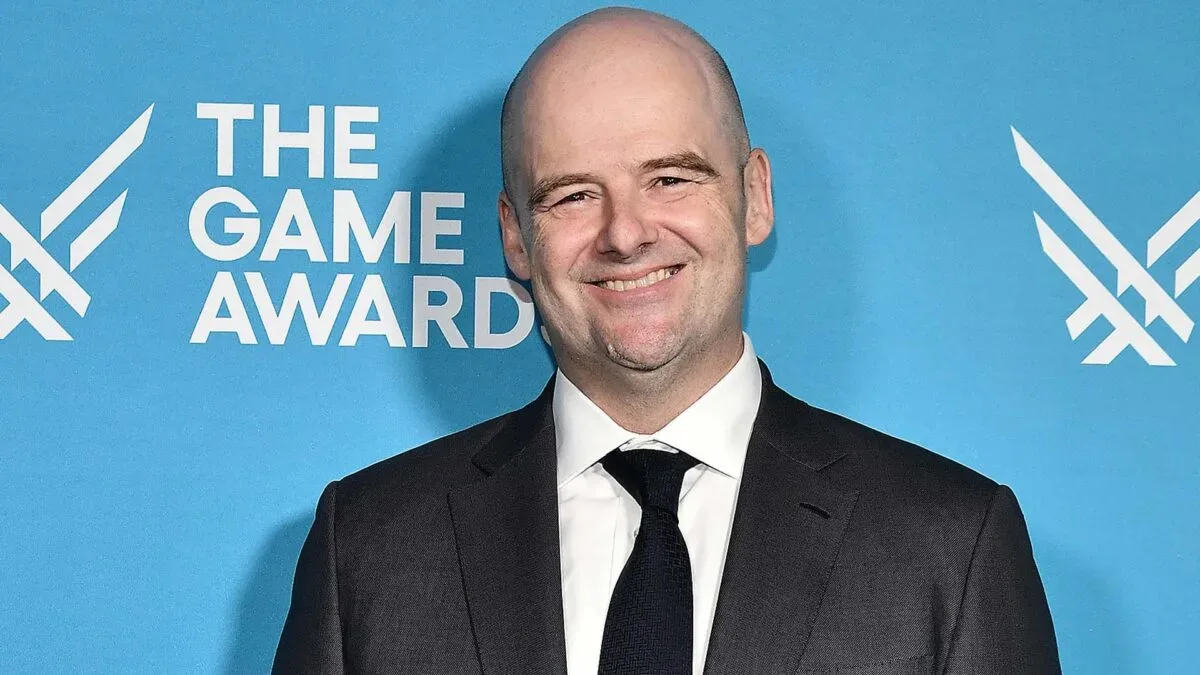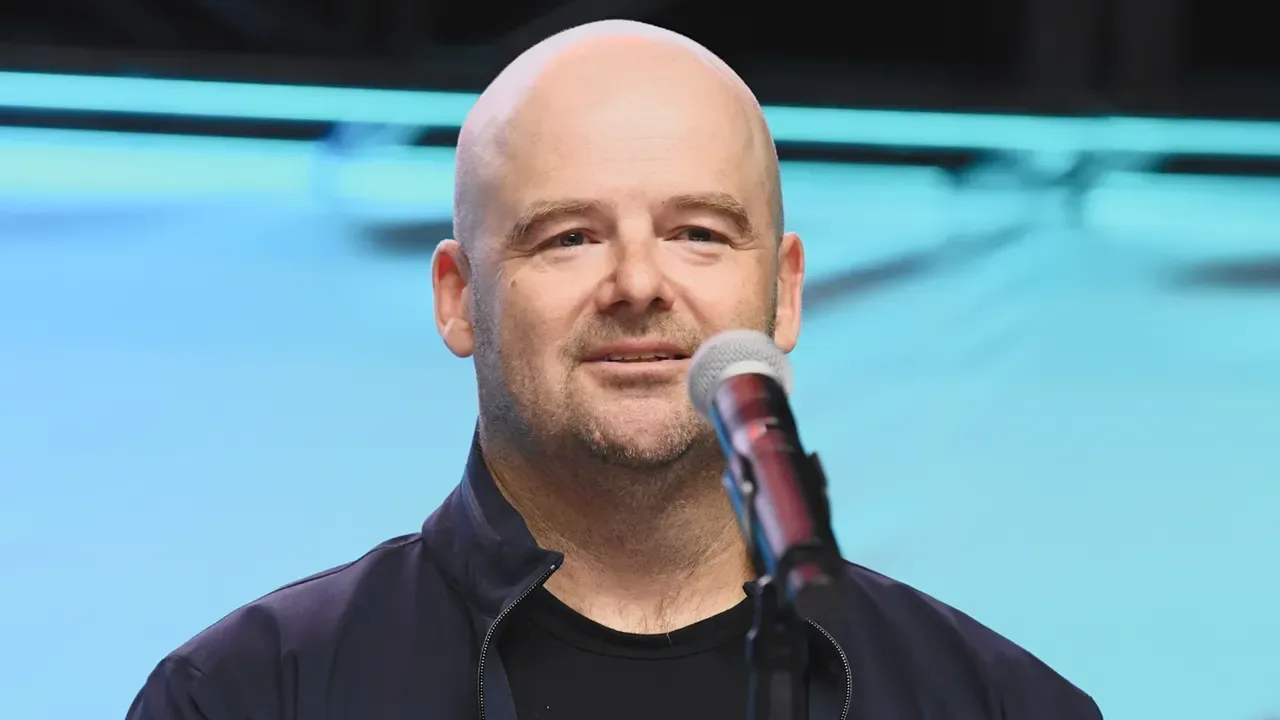
Dan Houser, the former Rockstar Games co-boss and creative director associated with the Grand Theft Auto series, says he does not plan to play Grand Theft Auto VI. The reason is not a casual lack of interest in the blockbuster he once helped define. Instead, Houser says he is intentionally limiting his exposure to open-world games while his newer company, Absurd Ventures, works on two game projects of its own.
For a prominent creative figure whose past work is closely associated with enormous, densely detailed virtual cities and frontiers, it is an unusually direct description of creative self-protection. Houser’s position is that routinely studying current competitors can become counterproductive when the job is to imagine something that has not been made yet.
“Given that I spend a large amount of time trying to make open-world games, and the rest of my conscious time trying to figure out innovative ways to market them, I don’t need to see what other people are [doing],” Houser said. “I’m always trying to think about new ways of doing it, not sit there in some kind of comparison of what I would have done differently.”
A deliberate distance from comparison
The key distinction in Houser’s comments is between awareness and immersion. He did not frame his approach as a claim that other open-world games are unimportant. Rather, he described the act of playing them as something that immediately turns into professional analysis—and, in turn, a distraction.
Open-world games generally give players a large traversable setting, often with optional activities and freedom over the order in which objectives are tackled. That format involves many interdependent disciplines: game design, mission structure, animation, writing, environmental art, technical performance and progression systems. For a player, these pieces ideally disappear into the experience. For someone with Houser’s background, he says, the seams are harder to ignore.
He explained that he finds himself assessing a team’s strengths and weaknesses in real time: imagining why a particular feature was approved, judging one discipline against another, and mentally reconstructing the decisions behind the game. “I find when I play them, I can almost deconstruct the strengths and weaknesses of the team in real time and it’s distracting,” he said.
That is a different kind of engagement from simply playing for entertainment. It is closer to watching the production machinery operate while trying to follow the story. Such scrutiny can be useful for criticism, research or competitive analysis. Houser’s argument is that it is less useful for the particular work he wants to do now: generating ideas without being pulled into a running mental comparison with a game already in front of him.
Why GTA 6 is part of that boundary
Houser’s decision not to play GTA 6 follows the same logic, even though the series is inseparable from his past career. His comments do not present the choice as a verdict on the upcoming game. They describe a boundary intended to preserve focus on the work happening at Absurd Ventures.
Related coverage includes Dan Houser Is Avoiding GTA 6 and Other Open-World Games While Building Absurd Ventures' Next Projects.
That makes the statement more practical than provocative. A former leader on a major series may be expected to have a public reaction to its next entry, but Houser is saying that a reaction is precisely what he does not want to cultivate while developing adjacent work. In his view, consuming another large open-world production risks encouraging the unhelpful question of what he would have done differently.
Players looking for concrete information about GTA 6 should therefore not treat Houser’s remarks as insight into its content, quality or development. They are about his own working method, not a preview or assessment. For currently reported content guidance around the game, see the PEGI 18 rating details for GTA 6.
The earlier example: avoiding Westerns during Red Dead Redemption
Houser described this approach as an established habit rather than a new rule made specifically for Absurd Ventures. During work on Red Dead Redemption, he said he stopped watching Westerns once development began. The purpose was to avoid allowing a familiar genre language to steer the project too strongly.
He also said he did not watch The Sopranos during his Rockstar tenure, except for seeing its finale live with his then-girlfriend, now wife. He later watched the full series during the COVID period after leaving Rockstar. Houser said he was grateful he had delayed it, because he considers it good enough that it could have disrupted what he was doing on GTA had he watched it at the time.
“I really try and avoid things that I think are going to overly influence me,” Houser said.
There is a useful nuance here. Houser did not claim that creators should avoid all influences forever. In fact, he openly described drawing from older media, from long-held ideas, and from material that inspires him. His concern is timing and intensity: consuming a work with a very strong creative identity during active development can cause its priorities, voice or solutions to occupy too much space in one’s own project.
That is also why his process should not be reduced to a blanket anti-research stance. He said he is trying to find new approaches, including ideas inspired by older media. The important difference is whether an influence becomes a direct, immediate benchmark that turns development into comparison rather than invention.
Creative director versus game designer
Houser also made a point of describing his role in particular terms. “I’m not a game designer, I’m a sort of creative director,” he said. That distinction matters because the titles can cover different responsibilities.
Game design commonly refers to work on rules, systems, player choices, mission flow, objectives and the ways mechanics interact. A creative director’s remit can be broader and may include the project’s tone, fictional world, narrative identity, thematic direction and high-level cohesion across departments. Actual responsibilities vary from studio to studio, but Houser’s comments suggest that he sees his central task as keeping a project pointed toward a distinct creative destination rather than tracking every current design trend.
His remarks about animation teams, feature discussions and game design show why open-world games become difficult leisure activities for him. He is not only seeing the player-facing result; he says he is imagining the organizational process behind it. When that happens, the game becomes an object lesson in production choices, whether he wants it to or not.
For an active creative lead, that can produce two competing impulses. One is admiration: another game may solve a problem elegantly. The other is resistance: an especially successful solution may invite imitation, or force a creator to define their work against it. Houser’s strategy is to avoid both pressures when he believes they would interfere with original thinking.
What Absurd Ventures has on its slate
Houser’s current work is taking place at Absurd Ventures, which is developing two games. No further details about those games’ formats, platforms, release windows or gameplay were provided here, so it would be premature to characterize them as open-world titles or compare them directly with Houser’s earlier work.
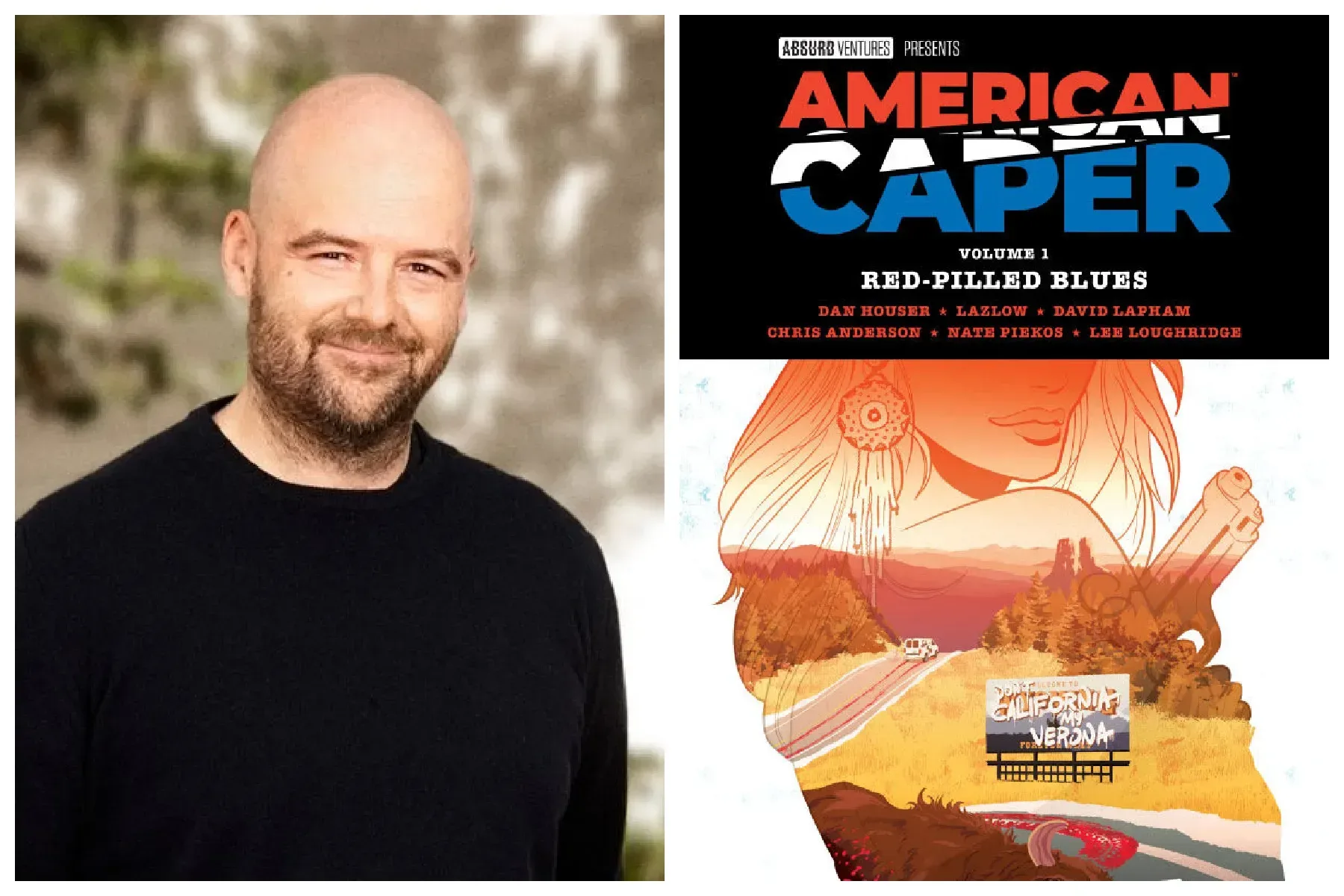
The company has already released American Caper, a graphic-novel series. Its double-sized season-finale issue is due next month, alongside the book A Better Paradise. The timing places those releases a week before GTA 6, but that proximity alone does not establish any creative or commercial connection between them.
What can be said is that Absurd Ventures is working across more than one medium while also preparing game projects. That gives Houser a setting in which narrative concepts can exist outside a conventional game release schedule. Still, the available information does not specify whether the graphic novel, the book and the two games share a setting, characters or development pipeline. Treating them as a single connected universe would go beyond the confirmed details.
What Houser’s approach means—and what it does not
Houser’s comments offer an unusually candid look at one possible way to manage influence in a field built on iteration. Open-world games are often discussed through feature lists and comparisons: map size, density of activities, movement, combat, mission variety, visual fidelity and the responsiveness of non-player characters. Those comparisons can help audiences understand a game, but they can also become restrictive for creators who are trying to identify a premise of their own.
His answer is not to become the person cataloguing the market in detail. He said it has not been his job in any company to understand everything everyone else is doing. Instead, he is focused on pursuing new methods and on revisiting inspiration from older media or ideas he has carried with him.
That approach will not fit every development role. Teams often need people who closely track the landscape, identify player expectations and understand evolving technical conventions. Houser is describing his own creative discipline, tied to the responsibilities he says he performs. The wider practical implication is that a studio can need both perspectives: close awareness of the present, and enough distance for someone to challenge its assumptions.
For now, the clearest takeaway is limited but notable. Houser is not positioning himself as a commentator on GTA 6, and he does not intend to engage with it as a player while his own projects are underway. He is choosing distance not because he lacks the tools to analyze an open-world game, but because he says he has too many of them—and wants room to think beyond comparison.