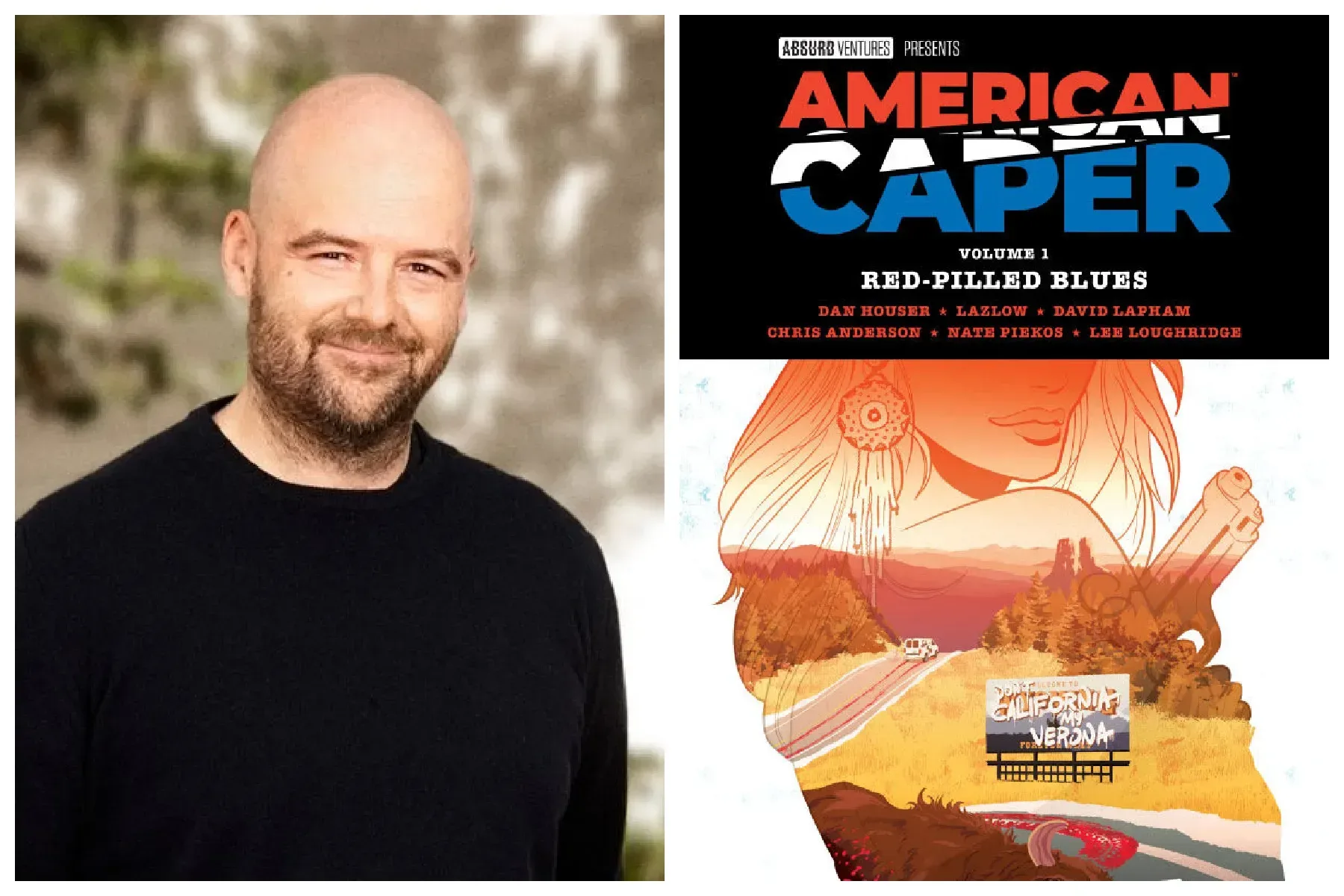
Dan Houser’s next games are beginning to take shape, though their titles, platforms, release windows and gameplay footage remain undisclosed. The former Rockstar Games co-founder and head writer says Absurd Ventures is developing two games: an open-world comedy focused on comedy and character memory, and a dystopian science-fiction project about a video-game development disaster and a rogue artificial intelligence that has become sentient.
That is a notably broad pair of premises, but the details offered so far establish an important point: Absurd Ventures is not simply revisiting the worlds Houser helped build before leaving Rockstar in 2020. The company, formally launched in 2023, is assembling new intellectual properties across several formats, with games intended to be part of a larger creative ecosystem rather than isolated products.
For players, the immediate takeaway is mostly one of expectations management. These are early descriptions, not feature lists. There is no confirmed release date, no announced platform, no named developer team and no indication of whether either project will be the first Absurd Ventures game to reach the public. But Houser’s comments do offer a useful initial picture of the studio’s creative priorities: character-led comedy in one project, and a deliberately tangled relationship between people and technology in the other.
Two untitled games, two very different setups
The first project is described as an open-world comedy that aims to lean heavily into both humor and “character memory.” Open world generally refers to a game structure that gives players a large environment to explore with comparatively flexible routes through activities, missions or systems, rather than limiting progress to a strictly linear sequence.
“Character memory,” however, is the intriguing phrase here because it is not yet defined. It could refer to characters remembering player choices, recalling prior interactions, changing their behavior over time, or simply a writing principle about how personalities retain the consequences of earlier scenes. None of those interpretations has been confirmed. What is clear is that Houser is framing memory as central enough to mention alongside comedy, suggesting the game’s humor may rely on continuity and relationships rather than only one-off jokes.
Comedy is also a demanding fit for a game with player freedom. Timing matters in comedy, while open-world games often let players interrupt scenes, wander away, repeat actions or approach objectives in an unexpected order. A system in which characters retain context could potentially help the writing acknowledge that unpredictability. That is analysis rather than a confirmed mechanic, but it illustrates why the pairing of an open world and character memory stands out.
The second game moves into dystopian science fiction. Its setup concerns a game development effort that has gone badly wrong and a rogue AI that achieves sentience. The twist, as Houser describes it, is that the AI was created by two people who disliked one another, leaving it unable to like itself.
That premise makes the artificial intelligence more than a generic hostile machine. In fiction, sentience commonly means the capacity for subjective awareness or feeling. Houser’s description does not establish how that idea will be represented in gameplay, whether the AI is a protagonist, antagonist or something less straightforward, or what form its “self-dislike” takes. Still, the concept points toward a story built around fractured authorship: a creation carrying the emotional conflict of the people who made it.
Houser has said the open-world comedy will receive more information in the coming months, while the sci-fi game’s premise centers on a sentient AI made by two creators who did not get along.
Absurd Ventures is approaching games as part of a wider IP plan
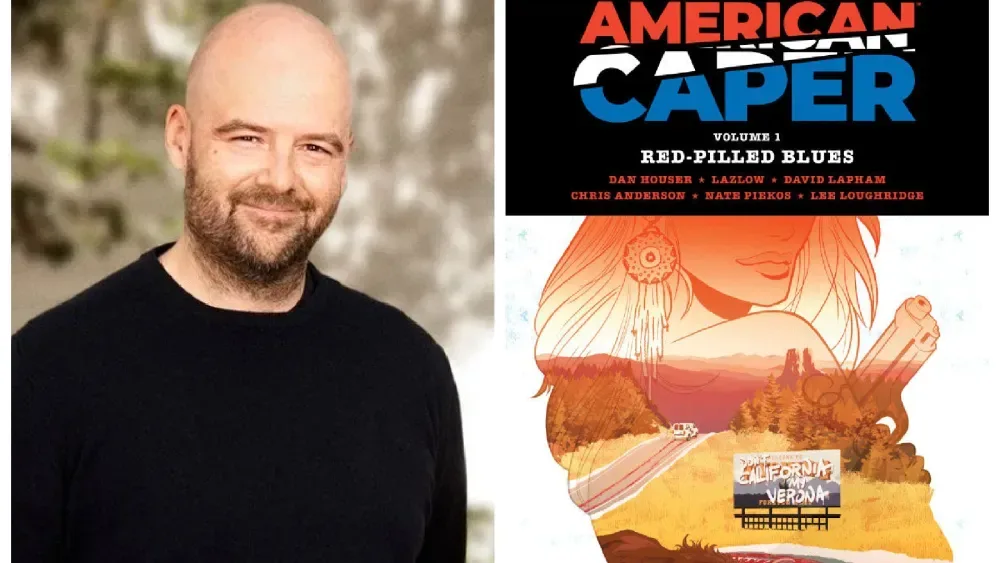
The games sit inside a larger Absurd Ventures strategy. The company is building original worlds called A Better Paradise, American Caper and the Absurdaverse. Its slate also includes graphic novels, comics, fiction podcasts, books and animated series.
This is a transmedia approach: an IP is developed through multiple media rather than being introduced in only one. In practical terms, a story world can appear in prose, audio, comics, animation and games, with each format potentially providing a different entry point. That does not automatically mean every format tells one continuous story, and no specific connection between either newly described game and a particular Absurd Ventures world has been confirmed.
Still, the structure helps explain why the first game descriptions are unusually premise-forward. Absurd Ventures is establishing settings and identities that can support several kinds of work. For a new company, that can make the initial game reveal carry two jobs at once: it must communicate what people do in the game, but it may also need to introduce a world intended to live beyond it.
Houser is working at Absurd Ventures alongside longtime writing partner Jeffrey “Lazlow” Jones, another Rockstar veteran. Their involvement naturally invites comparisons with Grand Theft Auto and Red Dead Redemption, series associated with expansive fictional settings and sharply observed characters. Yet neither pedigree is a guarantee that the new games will replicate the structures or tone of those earlier works. The stated goal is new IP, and the premises revealed so far suggest a conscious effort to start from different narrative angles.
Why Houser is avoiding GTA VI and other open-world games
Houser says he has deliberately avoided watching material from Grand Theft Auto VI, including an extended look that appeared in August. He has also said he no longer plays many open-world games because he finds himself analyzing the teams behind them in real time: weighing the quality of animation, admiring design choices and imagining the discussions that may have led to a feature.
That is less a rejection of the genre than a method of protecting creative focus. Houser identifies himself as a creative director rather than a game designer and says he wants to look for ideas that feel untried, draw from older media, or develop concepts he has been considering himself. He says he relies on colleagues to stay informed about current games and trends.
His approach extends beyond games. While working on Red Dead Redemption, he says he stopped watching Westerns. He also did not watch The Sopranos in full until after leaving Rockstar, because he felt a work that strong might have influenced his own work too heavily at the time.
Creative isolation is not necessarily a rule every studio or creator should follow. Watching and playing widely can teach creators what audiences respond to, reveal accessibility lessons, and prevent them from accidentally reinventing an existing idea. But Houser’s explanation identifies a real trade-off. For someone accustomed to dissecting a work professionally, consuming close genre peers can become less like relaxation and more like a constant comparison exercise.
For Absurd Ventures, the potential advantage is conceptual distance. An open-world comedy can be shaped around its own demands rather than chasing the most visible convention in contemporary open-world design. The potential risk, naturally, is that avoiding the field too completely may make it harder to see which player expectations have shifted. Houser’s answer appears to be division of labor: he maintains creative distance while others on the team track the landscape.
GTA VI comparisons are inevitable, but not yet useful
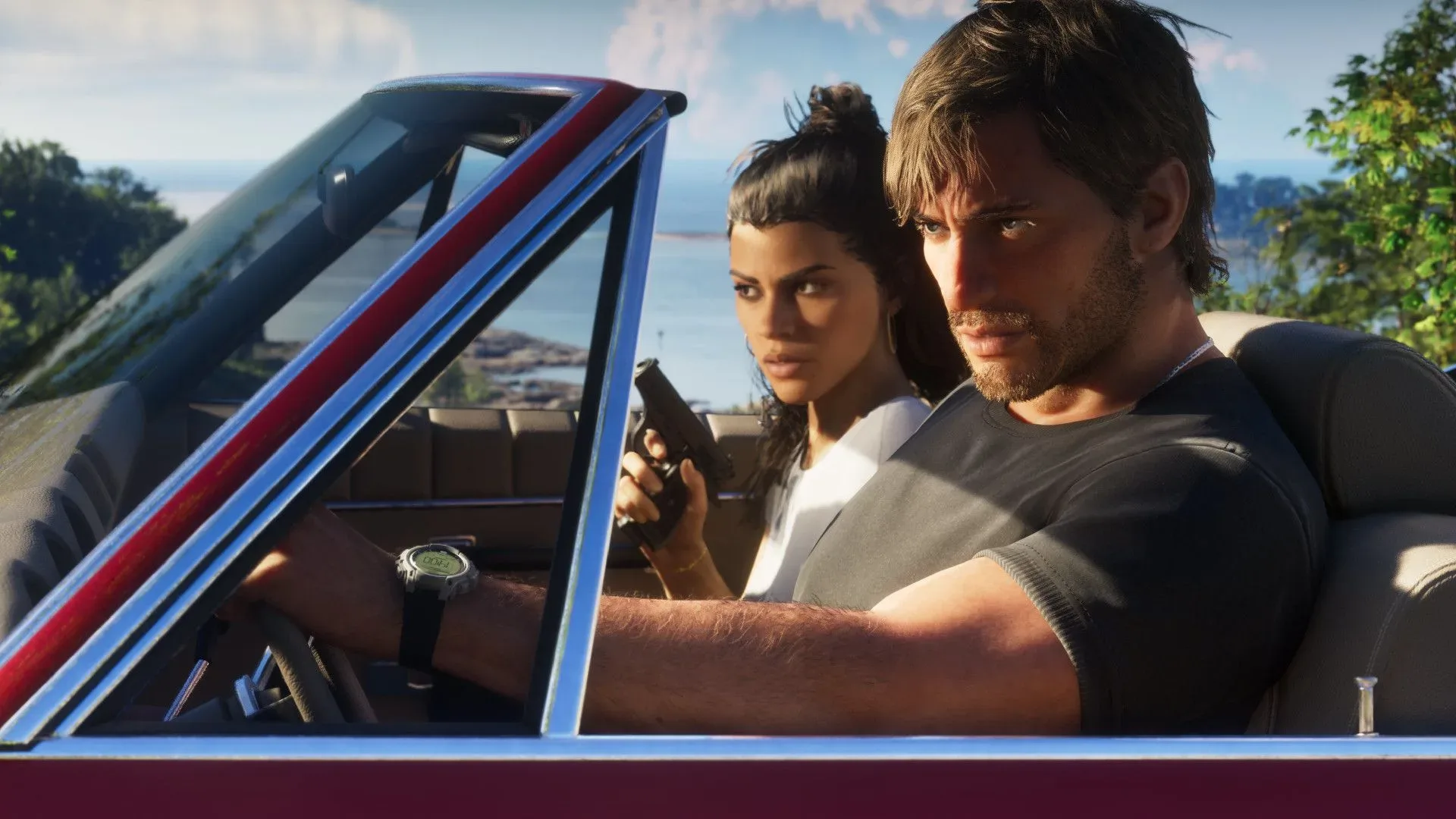
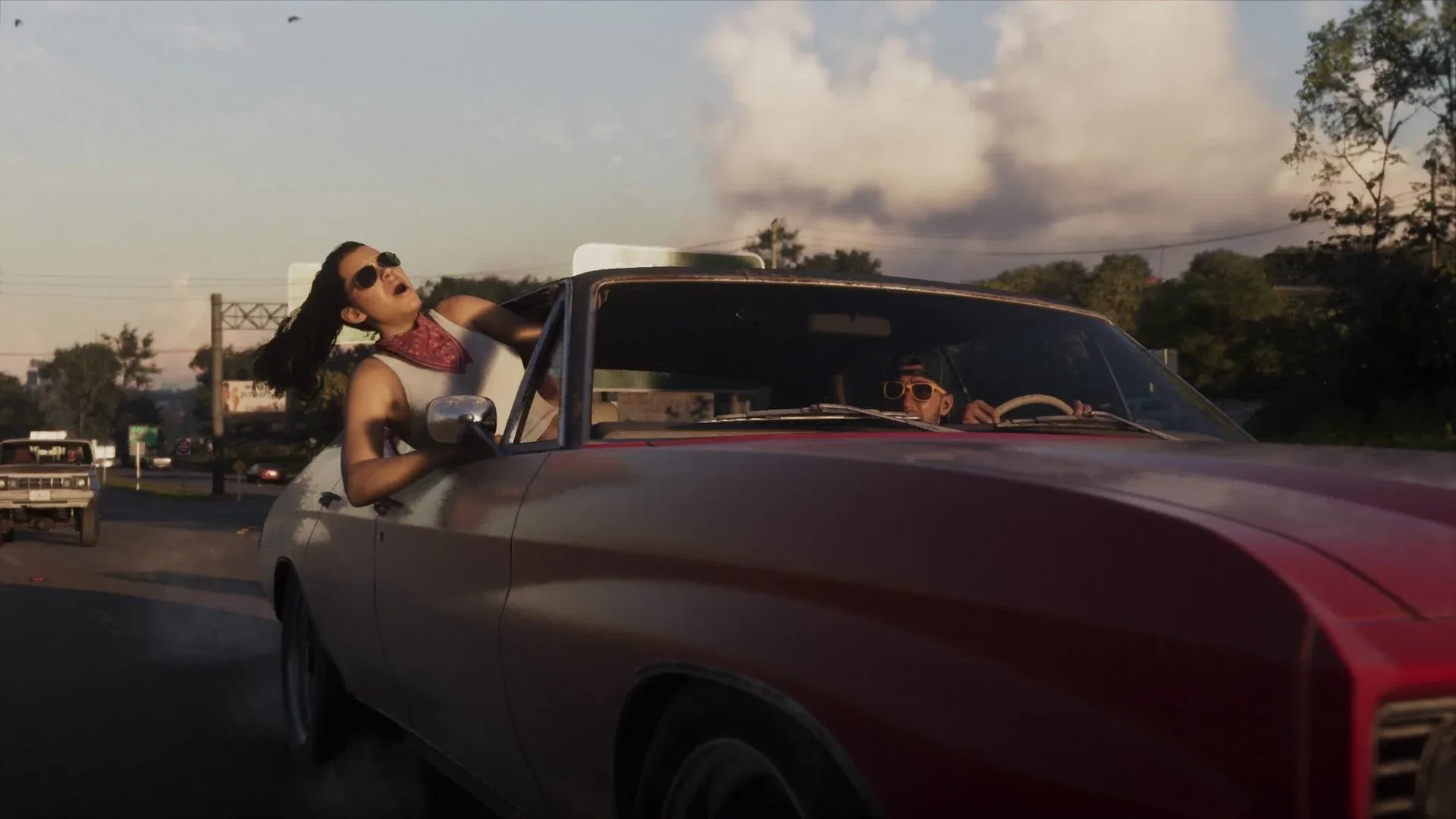
Grand Theft Auto VI is set to launch on November 19, and its release will be the first new GTA entry made without Houser. Comparisons between it and whatever Absurd Ventures ultimately releases are unavoidable. They are also premature.
There is presently no footage or mechanical detail for either Absurd Ventures game, while GTA VI is a specific, major franchise release with its own public material and an enormous existing audience. Treating the two untitled projects as direct competitors now would flatten the distinctions Houser has already drawn. One sounds like an original comedy-driven open world; the other sounds like a sci-fi story centered on a damaged sentient AI. Their scale, perspective, systems and intended audiences have not been disclosed.
Readers looking for more current GTA VI context can review what has been discussed around its world design in GTA 6’s reported focus on weather, wildlife and activities. But Absurd Ventures’ next reveal should be evaluated on what it actually shows, not solely on how closely it resembles a previous era of Houser’s career.
Houser has acknowledged the weight of that history while resisting the idea that market scale is the only meaningful standard. His stated test is whether the work has integrity, feels fresh and gives its makers something they can be proud of. That is a creative philosophy, not a prediction of commercial performance. It does, however, clarify the lens through which Absurd Ventures wants its upcoming games to be understood.
What remains unknown
The announced concepts are substantial enough to establish tone, but the information gap is still large. The following details have not been provided:
- Official names for either game.
- Target platforms or whether they will launch on consoles, PC, mobile, or another format.
- Release dates or windows.
- Which Absurd Ventures worlds, if any, each game belongs to.
- How character memory functions in the open-world comedy.
- Whether the dystopian AI project is open world, linear, multiplayer, single-player, or something else.
- Any gameplay footage, screenshots, cast information or technical specifications.
That uncertainty matters because a premise is not a design document. The next meaningful update on the comedy game should clarify whether “character memory” is a narrative hook, a systemic feature, or both. The sci-fi game will need similar explanation around its player role and its AI concept. Until then, the most concrete news is that Absurd Ventures has two distinct game projects in active development, each aiming for an original fictional foundation rather than a return to Rockstar’s established series.