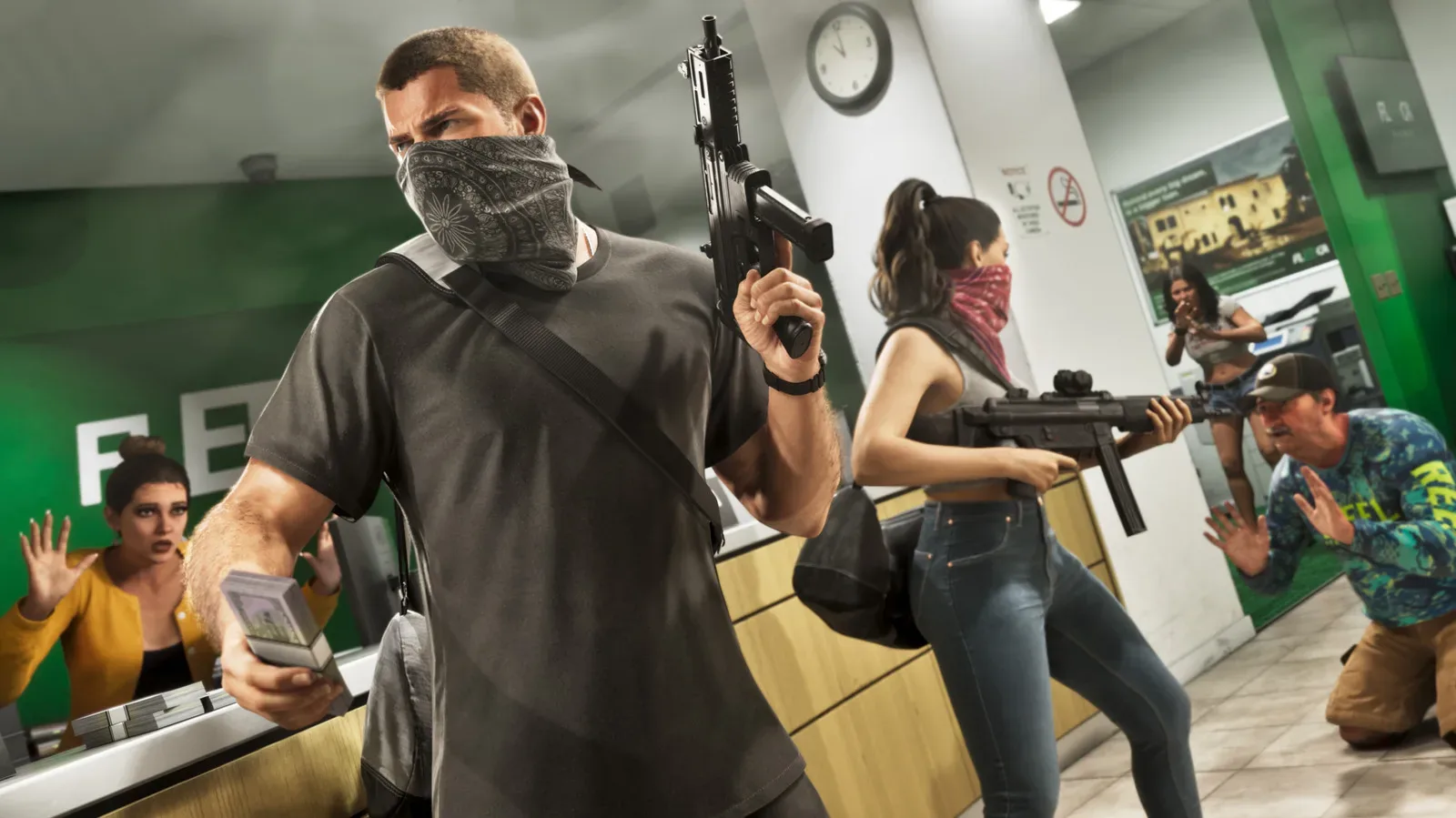

For 43 members of the 9th Brigade Engineer Battalion, the launch of Grand Theft Auto 6 now comes with a highly unusual piece of approved time away from duty. Soldiers who re-enlisted under an incentive circulated in August will receive leave from Thursday, November 19, through Sunday, November 22, specifically so they can play Rockstar’s new open-world game.
The deal did not present a video game as a replacement for the usual reasons someone might extend military service. The GTA 6 weekend was added to existing re-enlistment incentives, and the 43 participating soldiers committed to between two and six additional years. But it is an unusually direct acknowledgement of a cultural event that matters to some people in the unit: a major release date, a finite block of time, and permission to spend it on a hobby.
It also makes for an eye-catching example of how an institution can use a small, tailored benefit to make a larger offer more visible. Four days of leave is not equivalent to years of service, nor was it intended to be the sole reason for a decision of that scale. Staff Sgt. Brittany Wolfer, who brought the idea forward, said exactly that: the GTA 6 weekend was not meant to be “the deciding factor.” Its value was in catching attention and demonstrating that leadership recognized an interest shared by some soldiers.
A launch-weekend leave offer becomes a real retention result
The central fact is striking because the benefit is so specific. Rather than a generic holiday or broad morale event, the incentive is tied to one game and one release window. The 43 qualifying soldiers will have Thursday through Sunday off. In return, each agreed to a new service commitment lasting from two to six years.
That arrangement is best understood as a re-enlistment incentive: an additional benefit offered to a person who chooses to continue serving beyond an existing term. The evidence here does not suggest that GTA 6 leave displaced more substantial terms. Instead, it sat alongside them. Sgt. Jamire Smith, a combat engineer who committed to six more years, was already planning to re-enlist and will receive a $60,000 signing bonus. For him, the gaming leave was an enjoyable extra rather than the foundation of the decision.
“I’m all campaign. I’m all about the heist,” Smith said. “I think I have a good 24 hours to waste on it.”
Smith’s planned 24 hours illustrates the practical difference between being off during launch weekend and trying to exhaust an enormous game in one sitting. The supplied information puts the game’s minimum story campaign at roughly 50 hours, which means even the focused critical path could exceed the time Smith expects to spend playing. The broader experience may take considerably longer.
A campaign is the structured, narrative-driven portion of a game: the sequence of core missions that advances its main plot. That is distinct from an open-world game’s broader pool of activities, where players can spend time exploring, pursuing optional tasks, or simply moving through the setting outside the main narrative. Smith’s preference for the campaign and heists signals an intention to prioritize the directed material rather than treat four days as a promise to see every corner of Vice City.
Related coverage includes 43 Soldiers Re-Enlist for GTA 6 Long Weekend.
In other words, the leave creates a protected starting window, not a realistic guarantee of total completion. For a release with a main path estimated at around 50 hours, four calendar days can still be meaningful even if a player only gives a portion of them to the game. It removes the immediate work-schedule conflict that often turns a launch into a delayed purchase, delayed first session, or a weekend spent watching others play instead.
The personal history behind the idea
Wolfer’s proposal had a personal connection to the franchise. She said she entered basic training during the week that Grand Theft Auto V arrived in 2013 and nearly missed its release. GTA 6 therefore represents a kind of return point: an opportunity to help ensure other soldiers in her battalion do not face the same timing conflict.
She pitched the proposal to Lt. Col. Ryan Hodgson, the battalion commander. Hodgson was not closely following GTA 6’s pre-release coverage, but he did know the series, having played GTA 2 at some point. That familiarity helped make a potentially strange-looking proposal legible: it was not merely a request for unspecified downtime, but a request connected to a recognizable entertainment release and a group of people who cared about it.
Wolfer framed the purpose in terms of narrowing a gap between senior command and junior personnel. Her question was how leadership could show lower-ranking soldiers that their interests were noticed and valued. The game-specific leave offer is a clear, concrete answer to that question, even if it will not resonate with everyone in the unit.
That specificity is likely why the story travels beyond the normal language of personnel policy. Plenty of incentives can be important without being memorable. “Four days to play GTA 6” is instantly understandable to players, and it conveys the intended gesture without requiring someone to know the details of a service agreement. It also turns an abstract statement about leadership awareness into a calendar entry soldiers can actually use.
Why the offer is notable, and what it does not mean
There is a temptation to flatten this into a joke that people traded years of service for a long weekend with a game. The known details make that too simple. Smith’s case, at minimum, shows a more complicated decision: he had been considering leaving, said the battalion helped him navigate that period, felt there was still a need for his work, and was already on course to re-enlist. His $60,000 signing bonus and the longer service commitment are also part of the arrangement.
The GTA 6 leave, then, is better described as a targeted morale and communication measure attached to a consequential choice, not the whole bargain. Its power lies in being personal enough to feel distinct from a standard incentive. A soldier who loves the series gets a launch period free of duty obligations. A leader gets an opportunity to show that an individual interest can be taken seriously without pretending it outweighs the real stakes of re-enlistment.
There is also no evidence that every person who signed up did so for the same reason, played the same amount, or even plans to pursue the same part of the game. Smith is focused on the campaign and heists. Other players may use the time differently. The only firm shared outcome is the leave window for the 43 people who accepted the qualifying terms.
For GTA 6 itself, the arrangement reinforces the scale of anticipation surrounding the release. A launch can be more than a retail date when players plan time off around it, reorganize social plans, or decide how to divide limited free hours between story missions and everything else an open world offers. The battalion’s solution is especially unusual because it formalizes that scheduling decision as part of a retention incentive.
Those looking for another angle on how the release is playing into broader gaming culture can also read about Weird Al Yankovic’s role as one of Vice City FM’s radio hosts in GTA 6.
A small benefit with a very large cultural signal
The four-day arrangement is not a statement that every major game release deserves special leave, and nothing here establishes it as a general policy beyond this battalion and these qualifying re-enlistments. It is a one-off, game-specific incentive that reached 43 soldiers. Yet it demonstrates why seemingly modest benefits can have outsized visibility: they speak in a language people already understand.
For Smith, that language is simple. He has 24 hours he expects to spend on the game, and he knows exactly what he wants from them: campaign missions and heists. For Wolfer, the proposal closes a personal loop that began when basic training collided with the release of GTA 5. And for the 9th Brigade Engineer Battalion, it provided a distinctive way to connect a serious retention decision with a highly anticipated cultural moment.
The result is a four-day leave block that is far more memorable than the usual fine print. Whether each participant finishes the campaign is beside the point. The incentive ensured that 43 people who chose to continue serving will be able to start GTA 6 on their own time.