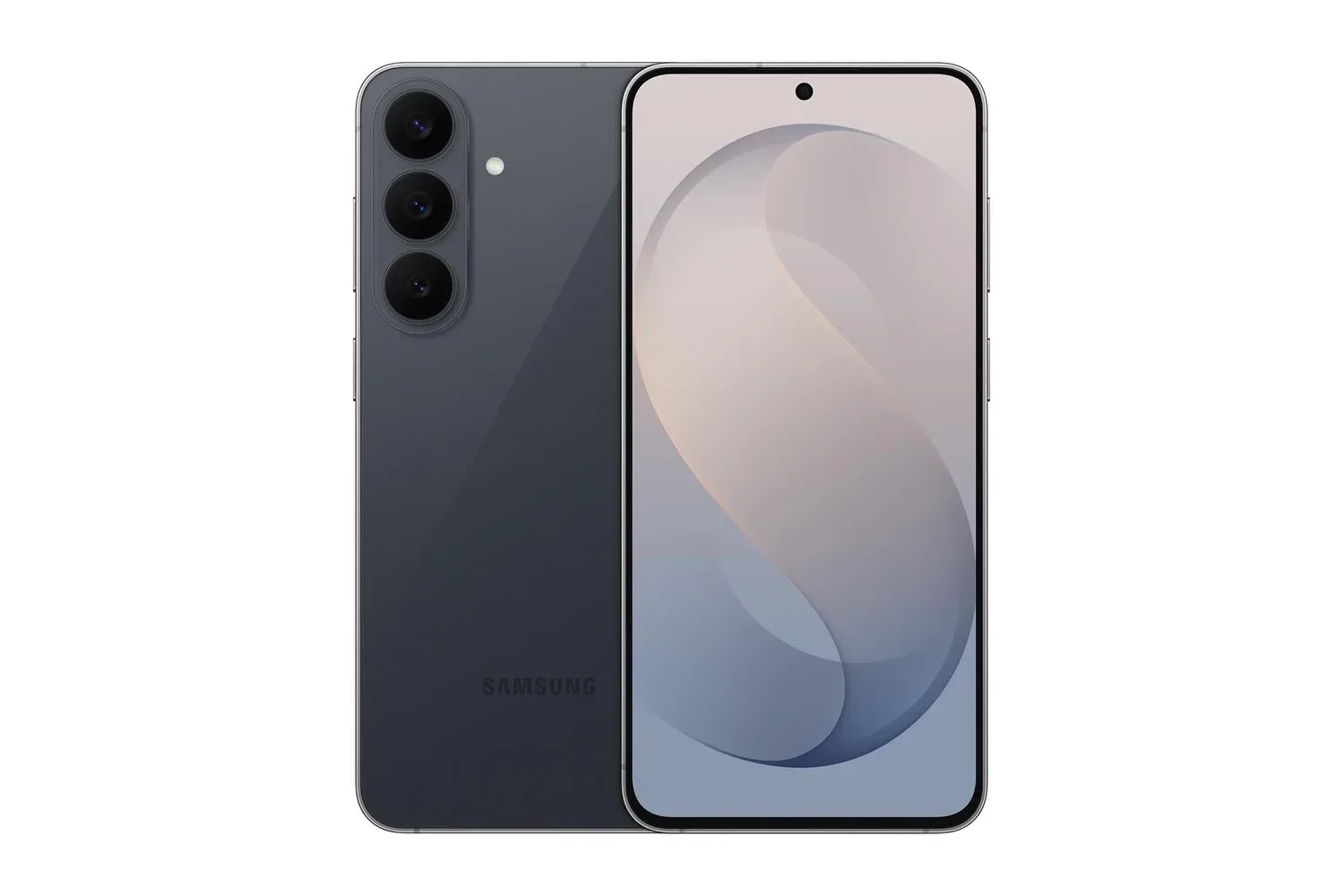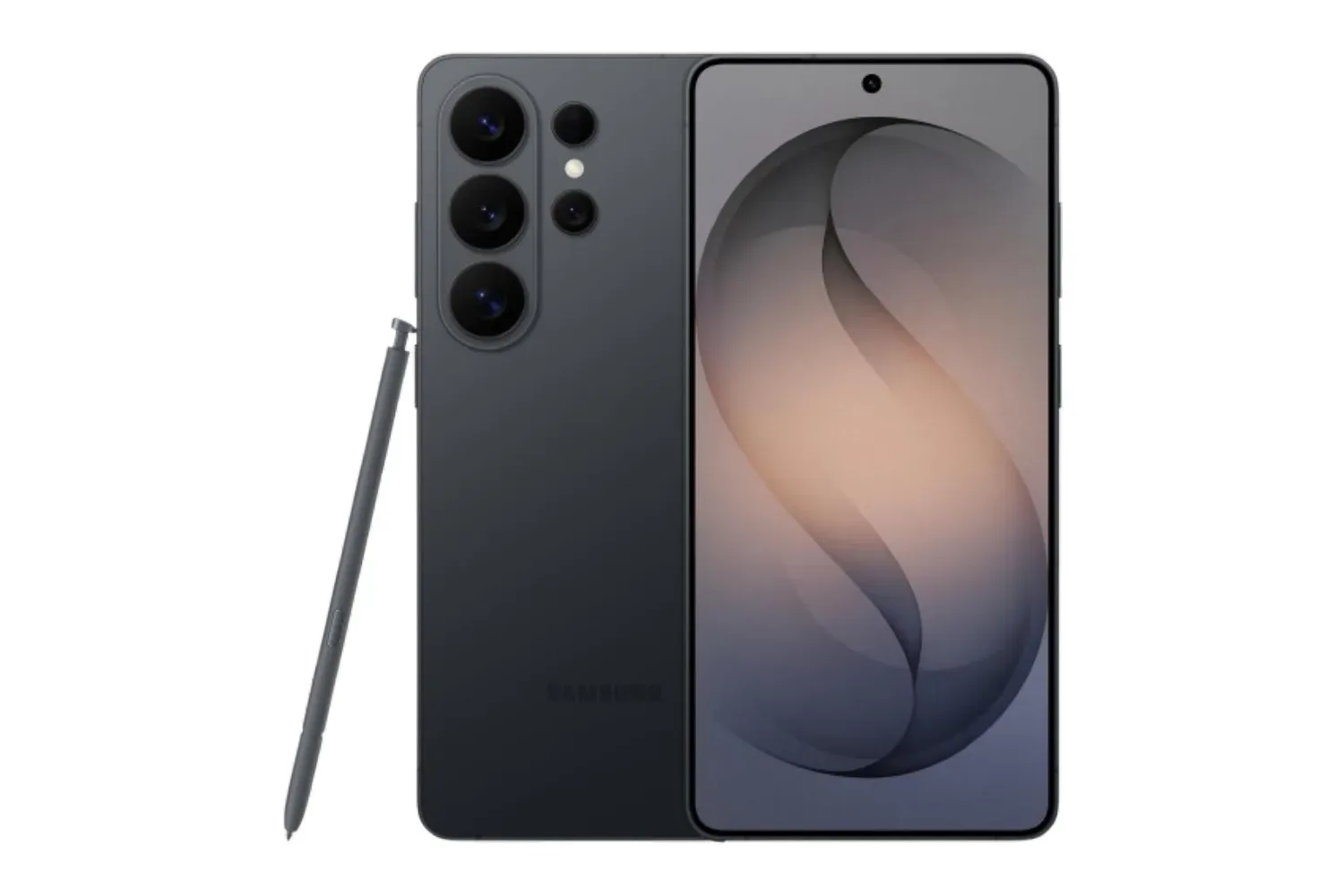
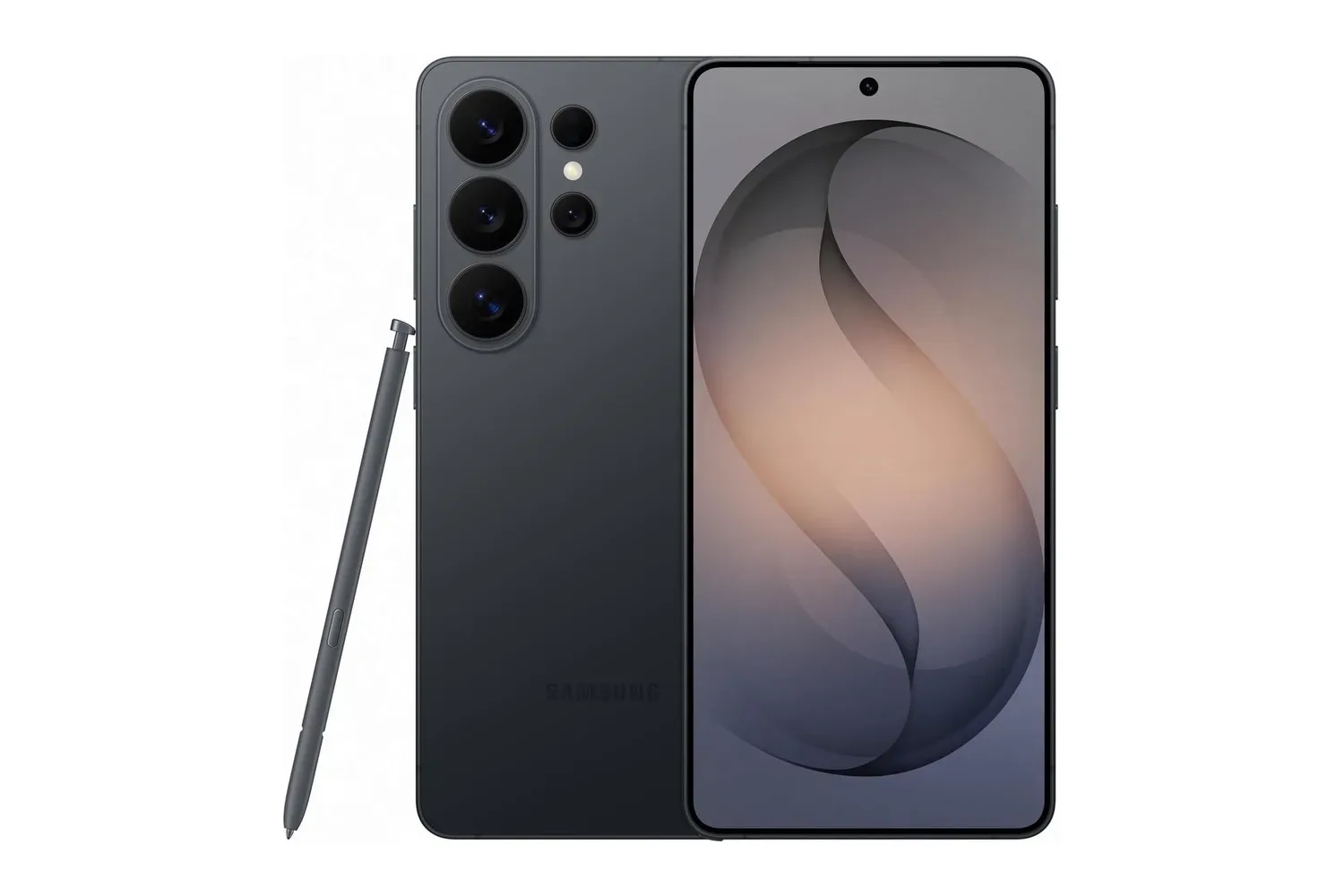
Samsung’s Galaxy S26 Ultra is reportedly listed at $950 for the unlocked 256GB black model, a $350 reduction from a stated $1,300 price. That is a 32% cut and, importantly for a phone in the Ultra tier, brings the advertised price beneath four figures without moving to a lower-storage configuration.
The listing describes a device built around a 6.9-inch Dynamic AMOLED 2X screen, Qualcomm’s Snapdragon 8 Elite Gen 5 for Galaxy processor, 12GB of RAM and a 5,000mAh battery. It also identifies a 200MP main camera, a titanium frame, Gorilla Glass Armor 2 on the front, IP68 protection and an under-display ultrasonic fingerprint reader.
For someone deciding whether the number is compelling, the useful question is not simply whether the Galaxy S26 Ultra has a big specification sheet. It plainly does. The practical question is whether its particular mix of display size, privacy controls, camera processing, cooling and long software support fits the way they use a phone—and whether the exact retailer listing still shows the advertised unlocked model, storage capacity, warranty and price at checkout.
The reported deal: what is included
The $950 price applies to the 256GB unlocked Galaxy S26 Ultra in black and is described with a one-year US warranty. “Unlocked” generally means the handset is not tied to one mobile carrier at purchase, though buyers should still verify compatibility with their own carrier and plan before making a decision.
Storage deserves more attention than it often gets in flagship-phone deal coverage. The 256GB designation is a fixed part of this reported offer, not a broad statement about every S26 Ultra configuration. People who expect to keep large libraries of locally stored games, video clips and high-resolution photos should factor that capacity into the comparison rather than assume a different model is discounted to the same level.
Likewise, retailer pricing can change. A good checkout routine is wonderfully unglamorous: confirm the model and color, look for the unlocked designation, check the final price before payment, and read the warranty details attached to that specific listing. That protects against confusing a similar handset or variation with the configuration tied to the reported $950 figure.
A display focused on size, smoothness and privacy
The Galaxy S26 Ultra’s 6.9-inch Dynamic AMOLED 2X panel has a 3120 x 1440 resolution, which works out to roughly 498 pixels per inch. Pixel density is simply a measure of how tightly pixels are packed into the display. At this figure, fine text and detailed interface elements have a lot of resolution to work with on a very large phone screen.
The screen is rated to reach 2,600 nits of brightness. A nit is a unit of display luminance: higher numbers can help a screen remain readable in bright conditions. The panel also scales up to a 120Hz refresh rate. Refresh rate measures how many times the image can update per second; at 120Hz, motion such as scrolling, system animations and supported games can appear smoother than at 60Hz.
Related coverage includes Galaxy S26 Ultra drops to a reported $950 on Amazon.
There is an especially distinctive element in the claimed feature set: Privacy Display. It is described as a built-in display capability that shifts pixels so the person viewing the phone head-on can read it while side viewers have difficulty seeing the content. The setting can reportedly activate automatically when a notification arrives, a password is entered or a specified application opens.
That is potentially more meaningful than another raw display statistic for commuters, students, travelers or anyone routinely using a phone in close quarters. Notifications and password entry are precisely the moments when a glance from the next seat can feel intrusive. The feature should not be confused with a promise of absolute secrecy—nothing in the reported details establishes that—but its event-based automation is the practical hook. It may reduce the need to remember to toggle a privacy mode before sensitive tasks.
Gaming performance is also a heat-management story
The phone pairs an octa-core Snapdragon 8 Elite Gen 5 for Galaxy chip with 12GB of RAM. “Octa-core” means the processor has eight CPU cores, while RAM is the phone’s short-term working memory for active apps and tasks. The chip is built on a 3nm process, a semiconductor manufacturing label associated here with the platform’s design rather than a standalone performance guarantee.
For game players, the more concrete claim is the revised cooling arrangement. Samsung reportedly added a vapor chamber and says the handset has 21% better thermal performance. A vapor chamber is a component intended to move heat away from the processor across a broader area. Heat matters because sustained demanding play can make a phone lower performance—often called thermal throttling—to control temperature.
That means the cooling claim is not merely about a device feeling less warm. In the best case, it is about helping demanding apps maintain more consistent behavior during longer sessions rather than only looking fast in a brief burst. It does not establish frame-rate results for any particular game, and it should not be read as one. Still, it identifies a real pressure point for a large Android flagship being used for extended gaming.
The 120Hz display complements that hardware proposition, but the pieces serve different roles. The panel can present rapidly updating motion; the processor and cooling system must sustain the game’s workload; and the game itself needs to support the relevant performance mode. Buyers looking specifically for a phone-gaming upgrade should view the package as a system, not treat any one number as a universal answer.
Android users dealing with everyday phone maintenance may also find it useful to keep basic software troubleshooting in their back pocket. For example, these steps for tackling Gmail sync problems on Android frame a frustrating issue as a short checklist rather than a device-ending emergency.
Camera hardware and computational editing
The reported main camera uses a 200MP sensor with an f/1.4 aperture. Megapixels describe the sensor’s image resolution, while aperture refers to the opening through which light reaches the camera sensor. A lower f-number denotes a wider aperture; the f/1.4 specification is presented as an advantage for admitting more light in dim conditions.
Low-light imagery is not solely a hardware matter on modern phones. The Galaxy S26 Ultra also lists Nightography processing with noise reduction intended for low-light video as well as still photos. Image noise is the visual grain or speckling that can become prominent when scenes are dark. Processing designed to reduce it may be relevant to people recording video indoors or after dark, although its results will naturally depend on the scene.
Photo Assist handles a different stage of the process: editing after capture. The described tools can fill missing portions of a photo and blend objects with existing lighting and shadows. This is a computational editing feature, not evidence that every result will be invisible or appropriate for every picture. Its value is in giving users a way to revise a composition without returning to the moment to shoot again.
That distinction is worth making because “camera quality” compresses several separate experiences into one phrase. The wide aperture concerns light entering the sensor; Nightography concerns processing difficult low-light captures; Photo Assist concerns alterations made after the image exists. Someone primarily interested in spontaneous nighttime video may prioritize the first two, while a frequent social poster or casual editor may care more about the last.
Battery, build and support horizon
The S26 Ultra has a 5,000mAh battery and is rated for up to 31 hours of video playback. Milliamp-hours, or mAh, describe battery capacity, but they do not predict identical endurance for every kind of use. Gaming, camera work, display brightness, network conditions and background apps can all make a phone’s day look different from a video-playback rating.
It supports Super Fast Charging 3.0, which is presented as refilling the battery quickly while avoiding the heat commonly associated with fast charging. For prospective buyers, the sensible takeaway is convenience during top-ups, not an assumed charging time that has not been specified here.
On durability, the phone combines a titanium frame with Gorilla Glass Armor 2 on the front and an IP68 rating. IP68 is a resistance classification commonly used to indicate protection against dust and water under defined test conditions; it should not be treated as permission to take unnecessary risks with a costly phone. The ultrasonic fingerprint reader sits beneath the glass, providing biometric authentication without a separate visible reader on the body.
Perhaps the most consequential ownership claim is Samsung’s commitment to seven Android upgrades and seven years of security patches. The phone ships with Android 16 and One UI 8.5, and the support promise places the Android-upgrade horizon out to 2033. An Android upgrade refers to a major operating-system generation, while security patches address vulnerabilities and related maintenance over time.
Long support does not make the large S26 Ultra the right size or price for everyone. But it materially changes the purchase calculation for a buyer who plans to keep the same phone for years. At the reported $950 price, the device’s appeal rests on that extended service window as much as its headline specifications: a large high-resolution screen, gaming-oriented thermal work, a substantial camera system and privacy controls are being paired with a stated long-term software commitment.
Who should give this listing a closer look?
- Large-screen Android users: The 6.9-inch, 3120 x 1440, 120Hz display is a central part of the package, not a minor extra.
- Mobile players: The Snapdragon platform, 12GB of RAM and vapor-chamber cooling point toward sustained-performance considerations, though individual game results are not established.
- Low-light shooters and editors: The 200MP main camera, f/1.4 aperture, Nightography and Photo Assist each target a different part of the imaging workflow.
- People concerned about shoulder surfing: Privacy Display’s automatic triggers for notifications, password entry and selected apps could be particularly relevant.
- Long-term owners: Seven Android upgrades and seven years of security patches make the support plan a major factor in the value discussion.
The reported $950 listing is substantial because it combines a $350 price reduction with the 256GB unlocked configuration rather than asking buyers to trade down the core specification. The final decision still comes down to priorities: this is an oversized flagship with high-end features, and its strongest case is for people who will actually use its screen, camera tools, privacy option, sustained-performance design and extended software support.
Shop the products
Check current price, model and availability at the retailer.