Food Devils is arriving two days earlier than planned. Studio Daimon has shifted the culinary tactical RPG from November 5 to November 3, after the newly revealed release date for The Legend of Zelda: Ocarina of Time remake landed on November 5.
The studio framed the change with deliberate comic timing. Food Devils had been dated for November 5 in a September 7 social-media post, then Nintendo revealed the remake’s matching date the following day. Daimon’s update jokingly insisted the move was “definitely not” connected to Zelda, while making its revised November 3 plan very clear.
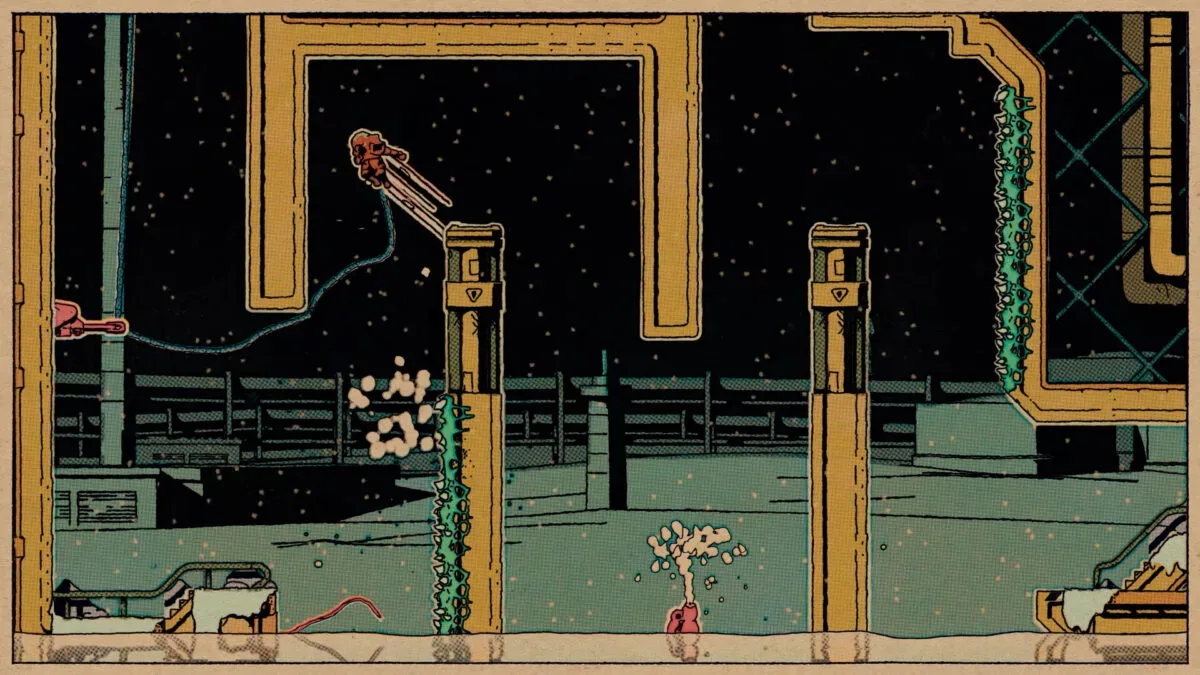
It is a small calendar adjustment, but a sensible one for a game that needs to establish its own strange, appetizing identity: Food Devils is a post-apocalyptic tactical RPG about a chef who hunts monsters, gathers their ingredients and turns them into food for wandering adventurers.
A release-date dodge with a clear practical upside
November 3 puts Food Devils immediately ahead of, rather than directly alongside, a high-profile remake of one of gaming’s most recognizable adventures. That does not make November 3 an empty date, nor does it guarantee attention. It does, however, give the game a short window in which its own premise can be the conversation before a major Nintendo release dominates the same week.
For players, the adjustment removes a forced choice between two very different fantasy games launching on the same day. Someone curious about Food Devils can now explore its premise first and still meet the Ocarina of Time remake on November 5. Two days is not a vast delay or a major separation in commercial terms, but it can be meaningful for coverage, social discussion and the simple reality of limited free time.
The decision also offers Food Devils some free visibility. A modest release-date collision became a memorable hook because the contrast is so sharp: Zelda is an established landmark, while Food Devils is introducing a new world built around kitchen craft, monster hunting and tactical positioning. Studio Daimon’s self-description of its project as an “indie spicy Fire Emblem” makes the contrast even more playful.
What Food Devils is actually about
Studio Daimon describes Food Devils as tactical combat in which players literally cook their enemies. That phrase is colorful, but the available details point to a defined gameplay loop rather than a food-themed garnish placed on a conventional strategy game.
Players take the role of the last living chef in a post-apocalyptic world. The task is to attract worn-down adventurers with appealing meals, except the ingredients are acquired from monsters. In the studio’s framing, a monster on the battlefield is not solely an obstacle to defeat; it is also dinner. That gives combat an additional purpose: victories and scavenging appear to feed into the cooking side of the game.
Related coverage includes Food Devils Moves Up to November 3 After Ocarina of Time Remake Lands on Its Original Date.
The developer has also said players will plan tactics in changing biomes with difficult maps while gathering as many ingredients as possible. In practical terms, the tactical portion is not described merely as selecting attacks. Map layout, biome variation and ingredient collection are all presented as pressures within the same activity. A player may need to consider where a battle takes place and what can be collected there, alongside the immediate problem of surviving it.
Tactical RPG: the useful definition here
A tactical RPG is a role-playing game structured around deliberate, strategy-led encounters. Rather than emphasizing fast reactions alone, the genre commonly asks players to make choices about placement, routes, enemy threats and the order in which actions are taken. Food Devils’ references to tricky maps and tactical planning place it in that general design space.
The Fire Emblem comparison should therefore be read as a shorthand for the game’s tactical ambitions, not as confirmation that Food Devils shares every feature of Nintendo’s series. The confirmed elements are narrower: tactical combat, shifting biomes, challenging maps and ingredient scavenging. Details such as party structure, progression systems, battle rules or the exact role of cooking have not been established here, so it would be premature to assume how closely the games align.
Why the Hades comparison needs care
Food Devils has also been positioned alongside Hades, another useful but broad point of reference. Hades is associated with the roguelike tradition: games built around repeatable attempts, changing conditions and the prospect of learning or building momentum through repeated runs. Food Devils’ ever-changing biomes could suggest a related interest in variation, but the supplied information does not definitively confirm a roguelike structure.
That distinction matters. “Changing biomes” means environments change; it does not, on its own, establish a full run-based progression model, procedural generation or permanent upgrades. For now, the most accurate expectation is a tactical RPG with variable environments and a cooking-centered resource loop, rather than a game that can be neatly reduced to either Fire Emblem or Hades.
Cooking is the premise, not just the punchline
Food Devils’ central joke is easy to understand: the creature trying to bite the party may soon become an ingredient. Yet the setting gives that joke a more functional role. The last chef must entice adventurers with food in a difficult world, making meals a form of survival, community-building and recruitment rather than a simple recovery item or cosmetic minigame.
That premise also creates an appealing tension between the battlefield and the kitchen. Hunting monsters is productive because it creates culinary possibilities, while cooking makes those victories valuable to people beyond the fight. If the final game follows the loop outlined by Studio Daimon, ingredients will be the bridge linking exploration, combat and the wider goal of drawing adventurers in.
There is a clear fantasy logic to it. In many games, monster drops are abstract crafting materials whose use is only explained by a menu recipe. Food Devils makes the transformation more direct and thematically legible: identify the monster, win the encounter, gather what is useful and turn it into a meal. The hook is macabre in a cartoonish way, but it gives resource collection a concrete narrative purpose.
The premise naturally recalls food-focused fantasy stories in which dungeon delving and cooking are inseparable. Still, Food Devils has its own stated setup: a post-apocalyptic setting, a sole surviving chef, world-weary adventurers and tactical maps. The most useful expectation is not a direct adaptation of any other work, but a game using cuisine as the lens through which it approaches combat and exploration.
The value of being specific
Indie games often face an awareness problem before they face a review or sales problem. People need a fast explanation of why a project is distinct. “Tactical RPG where you cook your enemies” is unusually effective at doing that. It communicates genre, tone and a major system in one line.
But a memorable tagline can set expectations that a game must then fulfill. The important question for Food Devils is how deeply cooking affects choices. Does ingredient gathering meaningfully alter planning? Are monster types tied to different culinary outcomes? Do meals change how adventurers respond or how the player approaches later maps? Those are the kinds of specifics that will determine whether the food concept is a lasting strategic layer or simply an entertaining visual wrapper.
None of those details have been confirmed, so the right approach is curiosity rather than assumption. What is known is already enough to make Food Devils stand out: it combines tactical map-based combat, ingredient scavenging, changing biomes and a world where meals made from monsters are central to the player’s role.
Two fantasy games, no longer competing on day one
The November 3 move is ultimately a concise piece of release strategy delivered with a joke. Food Devils now arrives just before the Ocarina of Time remake, and Studio Daimon has turned what could have been an awkward coincidence into an introduction for its game’s personality.
That personality is likely to be Food Devils’ biggest asset. Its pitch is neither generic heroic fantasy nor ordinary cooking simulation: it is a game about tactical encounters, dangerous landscapes and the practical question of what to do with the monster after it has been defeated. On November 3, players will get their chance to find out how well that recipe comes together.
For a broader look at the business environment around computer games, see our report on Japan’s reported PC gaming revenue growth and Steam’s global hits.