Polydin Studio has released a story trailer for BLACK LAKE, its first game as a studio. The first-person survival horror project follows Elena, who returns to the orphanage where she and her missing twin, Rita, grew up after receiving a message from her.
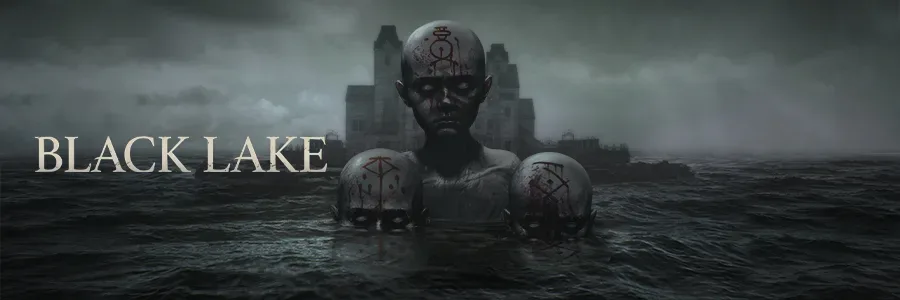
That homecoming has a deliberately unreal setting: the orphanage is stranded in an endless black ocean. And Elena is not returning to an empty building. Some of the children remain inside.
The premise immediately gives BLACK LAKE two kinds of mystery to carry. There is the personal question of what happened to Rita and why she has contacted Elena. Then there is the larger, stranger question of what has happened to the orphanage and the children still trapped within it. The game’s creators frame the story as a tragedy about one generation sacrificing the next, an idea that positions the setting as more than a convenient haunted location.
The official story trailer offers the first formal look at that setup. It is also an early statement of where Polydin wants the game’s horror to come from: dread, loss, and an emphasis on the people who existed before they became frightening.
A horror premise built around grief as well as fear
Survival horror is a broad label, but its basic promise is usually tension created by vulnerability. It commonly places the player in an unsafe environment with limited certainty, where exploration and the prospect of danger are inseparable. BLACK LAKE is specifically described as first-person survival horror, meaning the action is presented through Elena’s viewpoint rather than from an external camera angle.
That perspective can make a setting feel more immediate. A hallway, a distant sound, or a poorly lit room is encountered as Elena encounters it, not as a scene viewed from above. Still, the announcement does not set out the game’s mechanics, systems, combat, puzzles, inventory, or platforms. It would be premature to infer any of those elements from the genre label alone. What is clear is the narrative framework: Elena’s search is inseparable from the place that shaped both sisters.
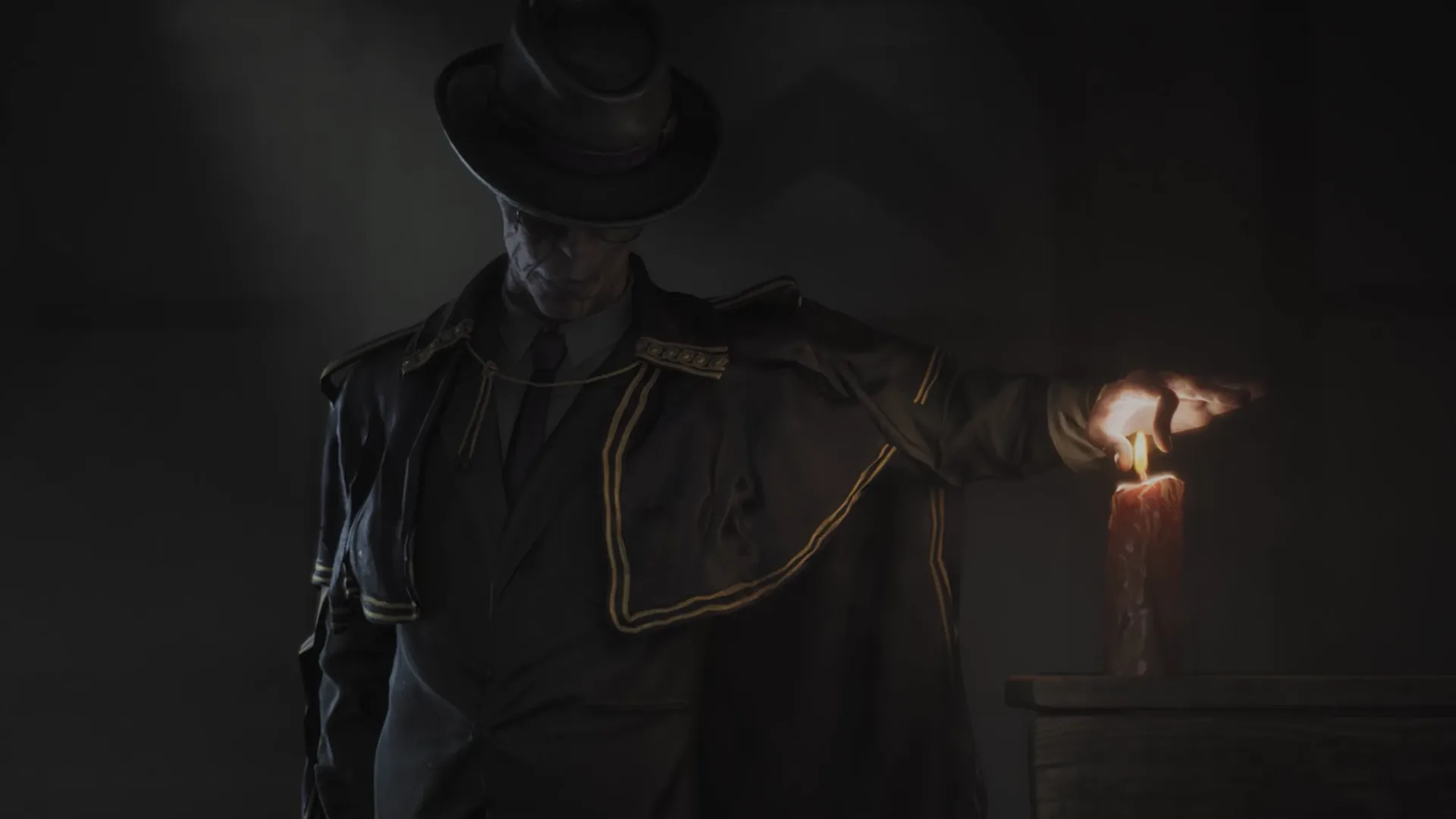
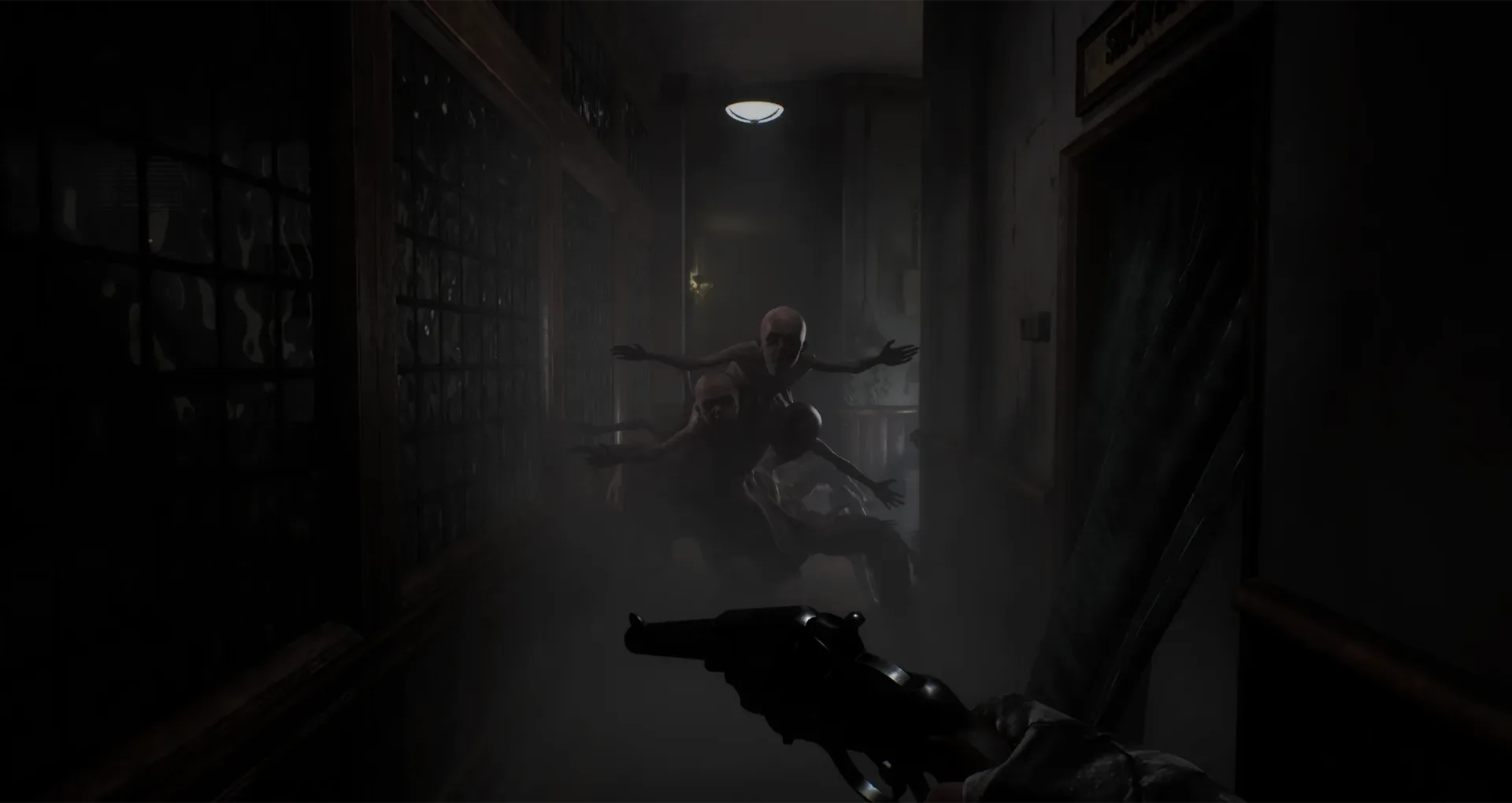
The game’s central emotional ambition is unusually explicit. Polydin wants players to be scared of what the children became while also grieving who they once were. That is an important distinction. Horror can treat a threatening figure as a straightforward obstacle, but BLACK LAKE’s stated approach asks the audience to hold two reactions together: fear of a present danger and sadness for the life that preceded it.
In practical storytelling terms, that can make the orphanage’s inhabitants feel like part of the tragedy rather than merely its decoration. The premise of generational sacrifice suggests harm passed downward, from those with power or responsibility to those who must live with the consequences. The announcement does not identify who made those sacrifices, how they occurred, or what transformed the children, so those specifics remain unknown. But the theme gives Elena’s return a potentially painful moral dimension: she is entering a place with a history, not only a mystery.
The black ocean is more than a backdrop
An orphanage adrift in an endless black ocean is a compact image with several narrative effects. Most obviously, it removes any ordinary sense of escape. A building can be frightening on its own, but surrounding it with a seemingly boundless body of dark water turns isolation into part of the threat. The ocean is not described as a navigable world or an explorable region, so it should not be read as confirmation of any particular game structure. Its confirmed role is environmental and atmospheric.
It also makes the orphanage feel disconnected from the normal world. Elena is returning to a place tied to childhood, family, and memory, yet that place now exists in an impossible landscape. That contrast fits the game’s tragic framing. A home for children is conventionally associated with care and protection; here it is a remote, ominous space where children remain and where the past has evidently not been allowed to stay past.
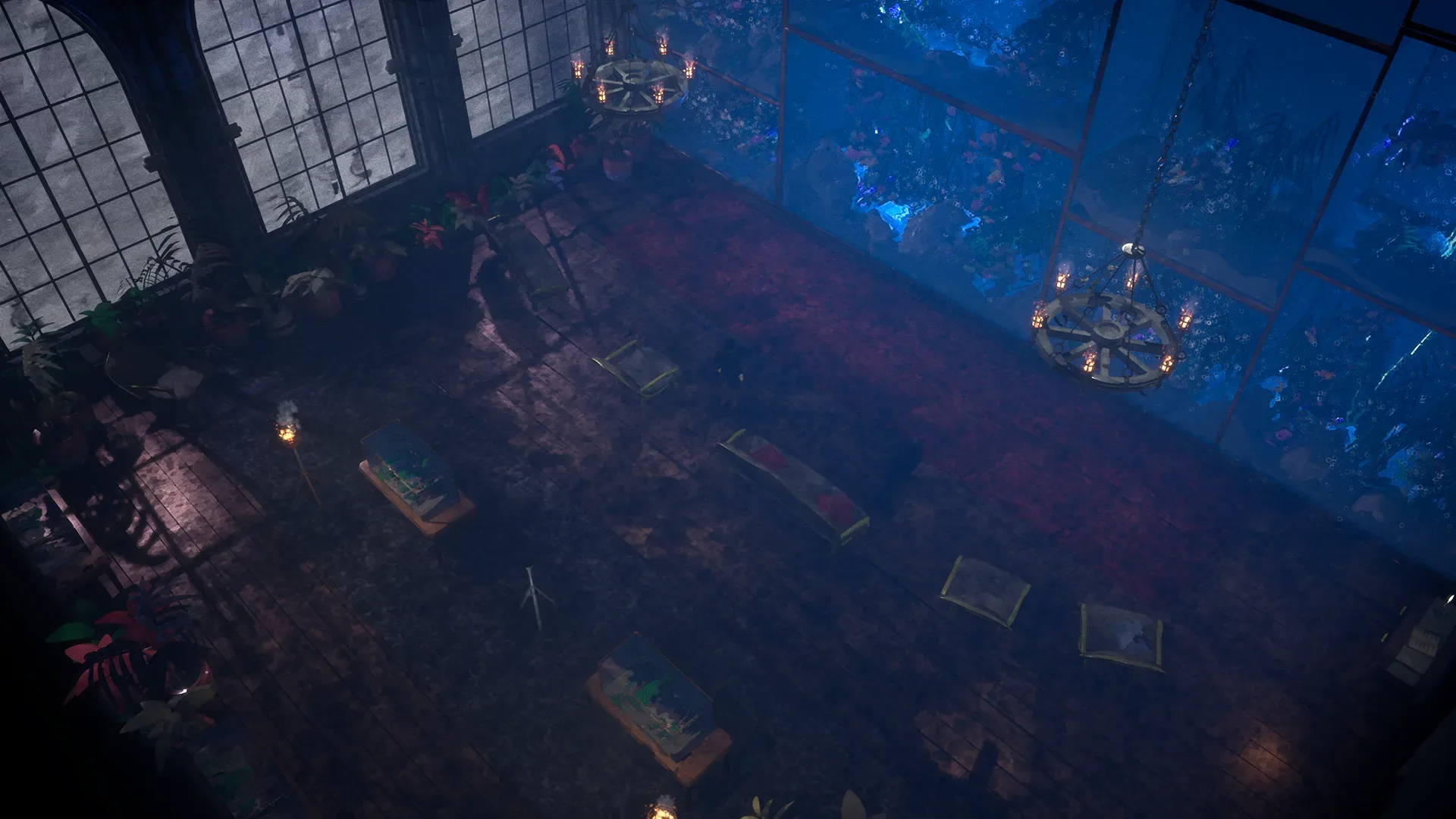
For a first-person horror game, environments do a great deal of narrative labor. A room can communicate neglect, routine, confinement, or the residue of a former life without an explanation appearing on screen. Polydin has pointed to environmental detail as a key part of its work, so the orphanage’s physical spaces are likely intended to carry mood and story together. The studio has not claimed that every detail is a clue, and viewers should resist treating trailer imagery as a solved puzzle. But the attention to place suggests the game’s horror will rely on sustained atmosphere, not just the outline of its premise.
Why light and sound matter in this kind of horror
Polydin has highlighted the placement of lights and the design of sound as areas of careful attention. Those choices may sound small in isolation, but they are central tools for creating suspense.
Lighting directs attention. It can make a route appear safe, conceal part of a room, establish distance, or leave the player unsure of what is occupying the darkness. In horror, the point is not simply to make a scene dark. A well-placed light can be more unsettling than total darkness because it gives the player partial information: enough to imagine a threat, but not enough to verify what is there.
Sound design is the construction and placement of the audio that makes a world feel present: ambience, movement, mechanical noises, voices, reverberation, and silence. The team’s example of a bell heard through a wall illustrates an interest in spatial audio cues. A sound heard from the other side of a barrier implies a source, a distance, and a separation. It may make players wonder whether the sound is moving closer, whether it is a signal, or whether the wall is protecting Elena from something.
Crucially, the announcement does not say that a bell is an enemy warning, a puzzle device, or a recurring gameplay mechanic. It is an example of the studio’s attention to how sound travels through the environment. Its value is in the specificity of the approach: horror audio is being considered not only as a musical sting or a loud surprise, but as something embedded in the architecture of the orphanage.
Music has a separate role in the trailer. Polydin says the music represents Elena. That makes the score part of character storytelling rather than a layer placed over the visuals solely to tell viewers when to feel tense. Exactly how that musical representation will operate in the finished game has not been detailed. Still, the intent is notable: Elena’s interior life appears to be a major part of the project’s tone, which makes sense for a story driven by a missing twin and a return to a shared childhood home.
Polydin’s first game arrives with a clear creative focus
BLACK LAKE is Polydin Studio’s first game as a studio, following years in which the team worked on AAA titles for other teams. “AAA” generally refers to large-scale, high-budget game development, often involving substantial teams and established publishing structures. The announcement does not name the projects Polydin’s developers previously worked on, nor does it suggest that BLACK LAKE should be measured against any particular major release.
What the background does establish is a shift in creative position. Work on another team’s production can contribute craft experience, while a studio’s first original game is where it has to express its own priorities. Here, those priorities have been identified with unusual clarity: minute environmental details, sound behavior within spaces, and music connected to the protagonist. It is a focused set of values for a horror project whose setting is one contained but visually striking location.
That focus also helps explain why the trailer’s story and atmosphere are so closely linked. Elena is not simply entering a scary building to investigate an abstract threat. She is entering the place where she and Rita were raised, while confronting children whose current state is meant to inspire both fear and mourning. Every environmental choice has the potential to reinforce that contradiction between remembered childhood and present horror.
For readers interested in the wider independent-development conversation, Joking Joystick has also covered how creative identity can become part of the discussion around game-making in a look at an AI-free entry in Epic’s AI MegaJam vote. BLACK LAKE is not presented as part of that story; the connection is simply that a new studio’s debut often places its chosen craft and perspective under close attention.
What the trailer establishes—and what remains unanswered
At this stage, BLACK LAKE’s confirmed details are concentrated on story, perspective, setting, and artistic intent. Elena is following a message from Rita. Rita is Elena’s missing twin. Their former orphanage sits in an endless black ocean, and some children are still inside. The game is first-person survival horror, and Polydin is building it around tragic horror rather than fear detached from empathy.
Many practical details remain unannounced. There is no confirmed release date, no platform list, no price, and no gameplay breakdown in the supplied information. There is likewise no stated answer to Rita’s fate, the nature of the children’s transformations, or the origin of the ocean-bound orphanage. Those gaps are not shortcomings in the trailer’s purpose. A story trailer is designed to establish a question and a mood; in BLACK LAKE’s case, both lead back to Elena’s fraught connection with the place she once called home.
For now, BLACK LAKE stands out through the severity of that image: a woman pursuing a trace of her lost twin into a childhood institution that has become an island in blackness. The trailer’s task is to make the audience fear what survives there. Polydin’s larger aim is to make that fear hurt.