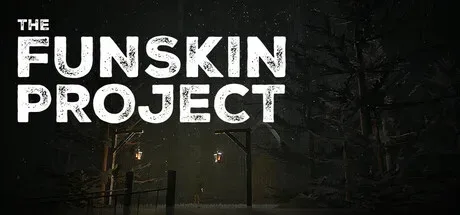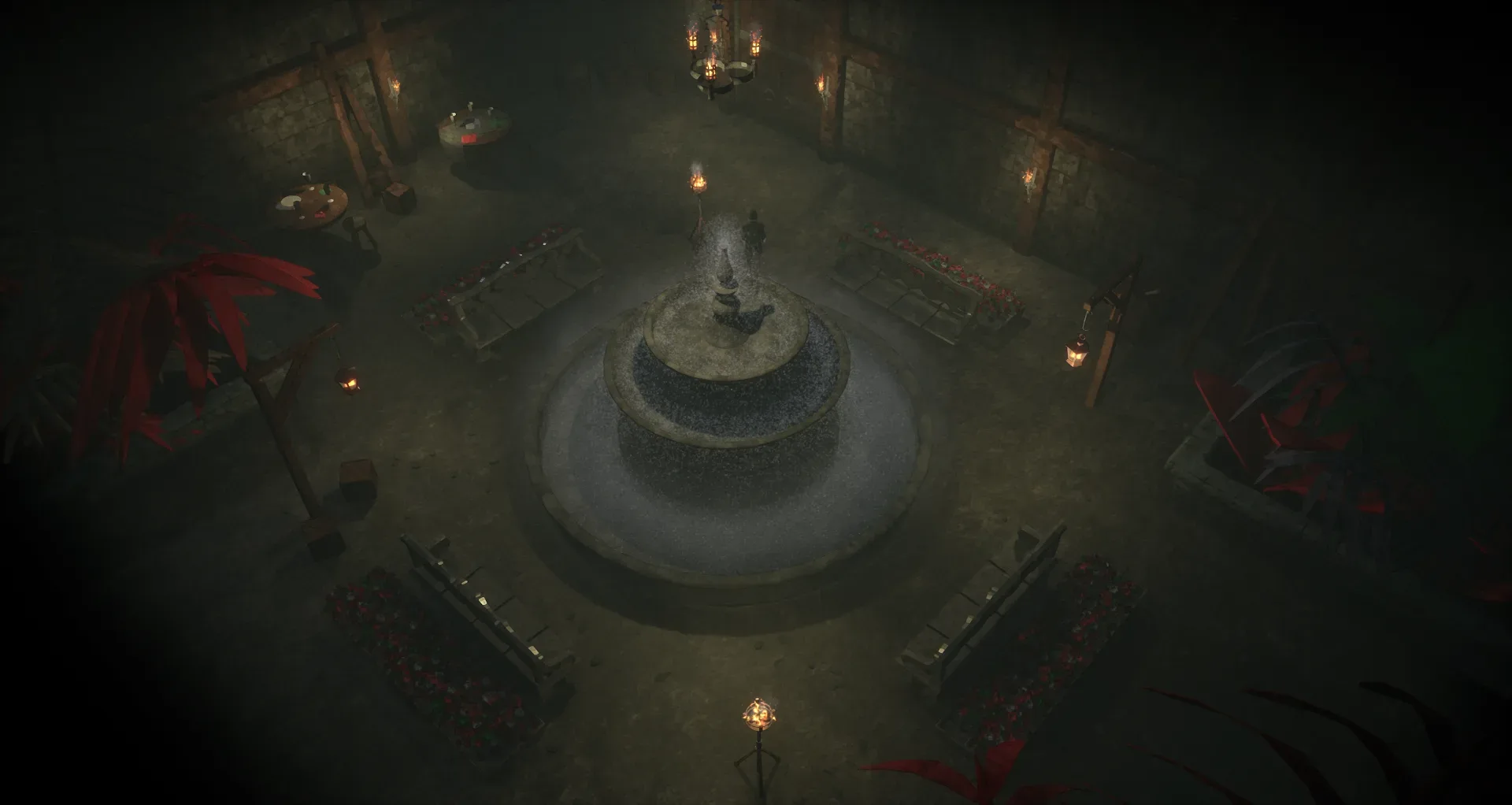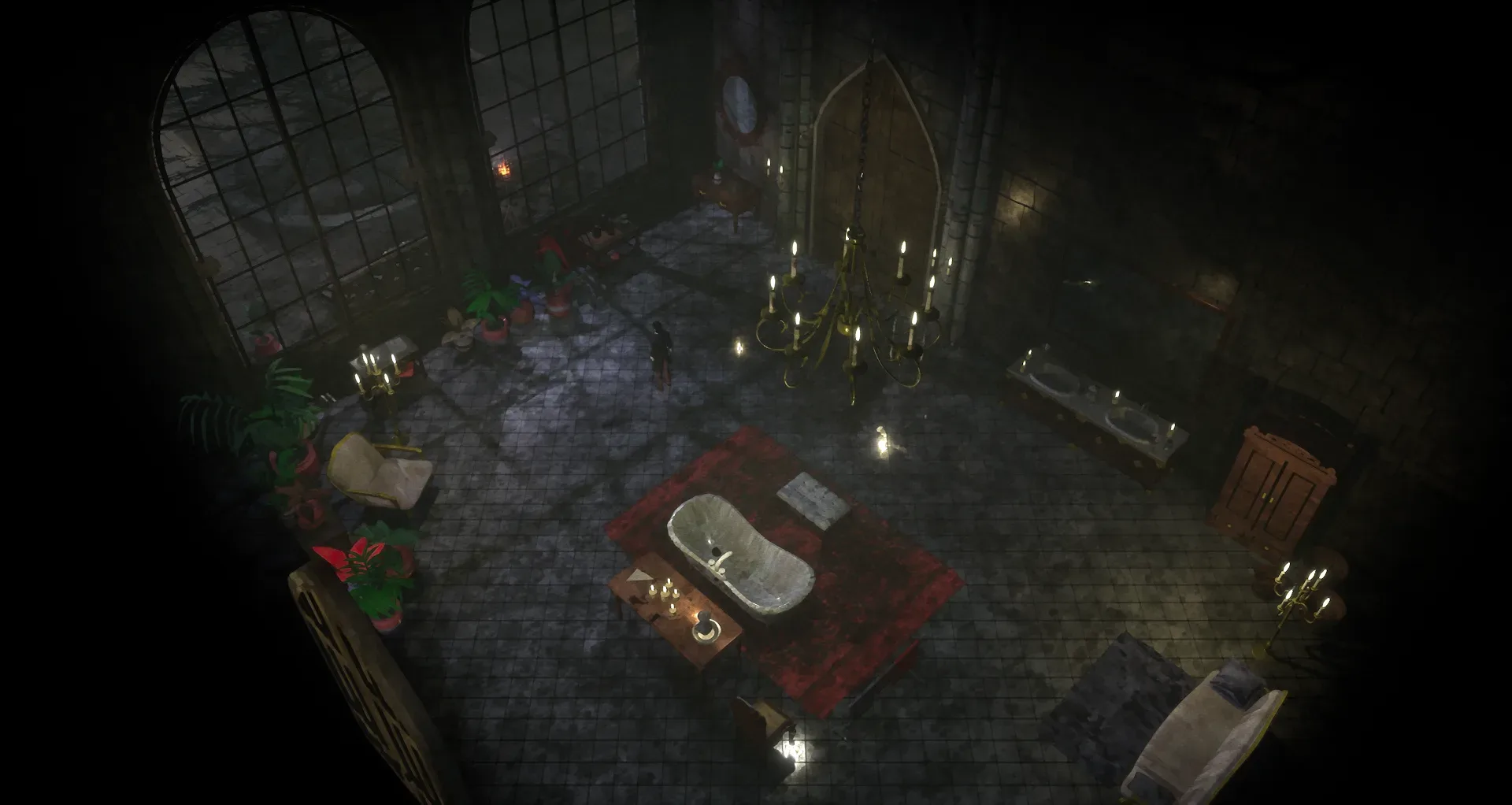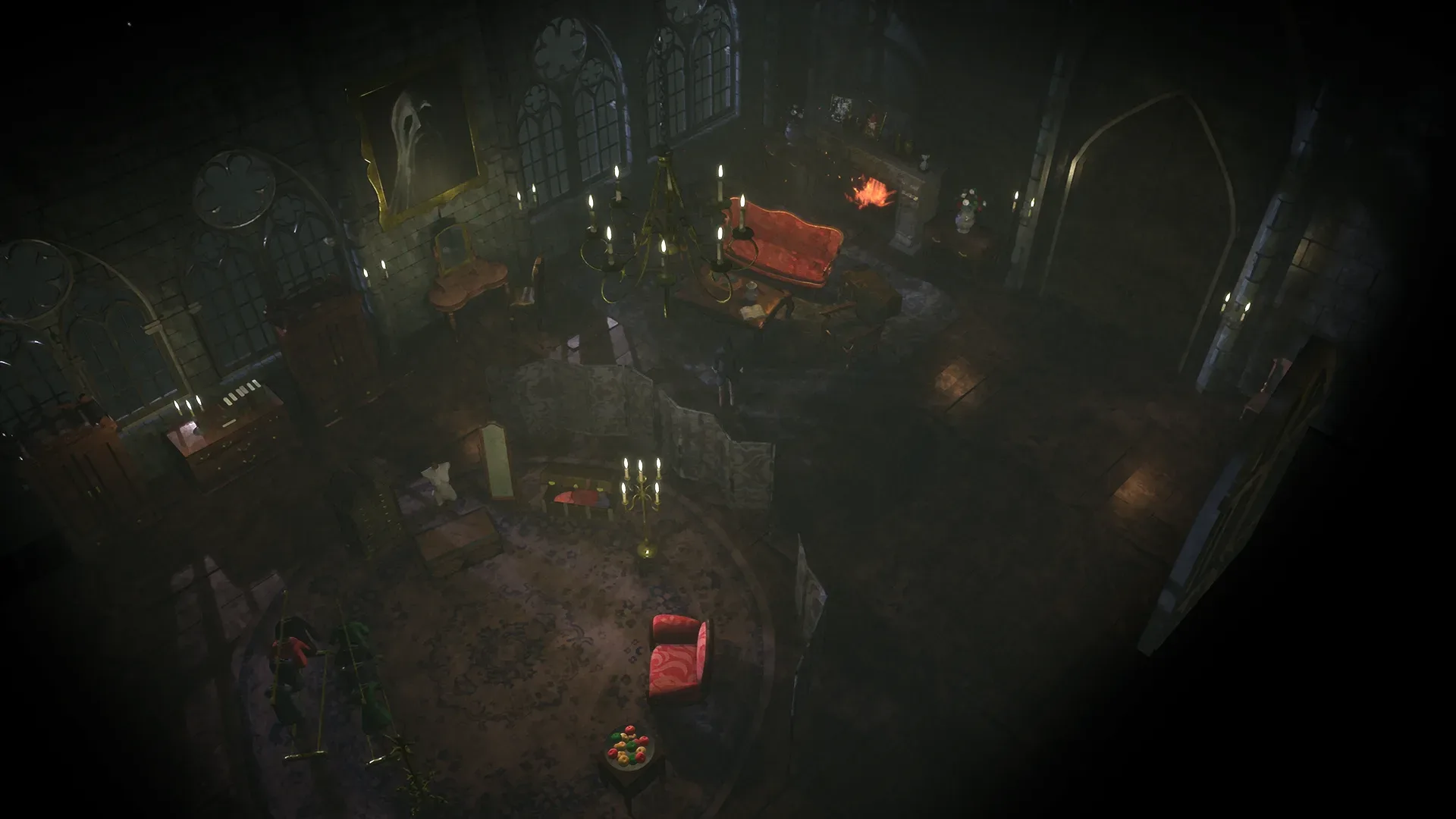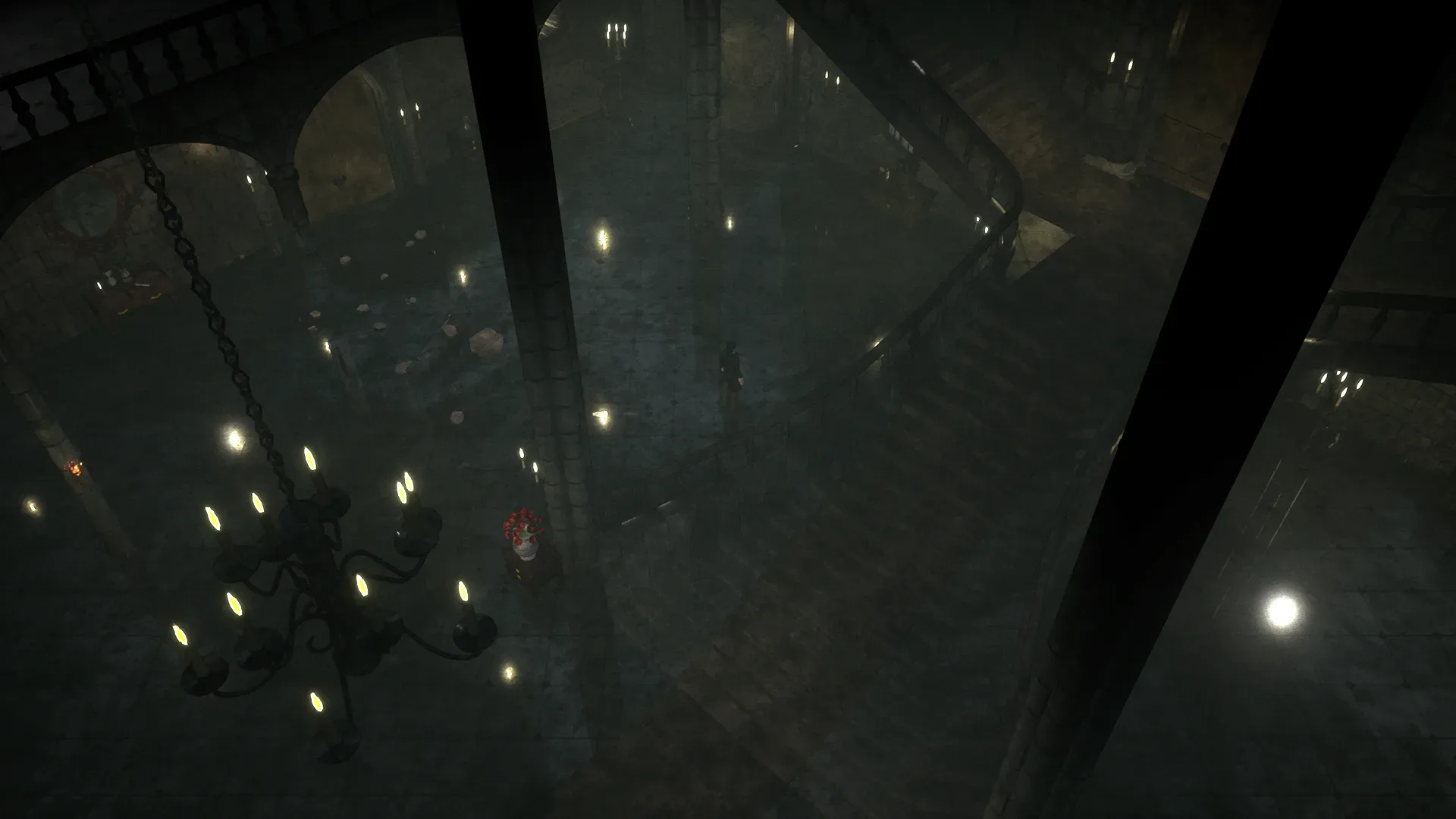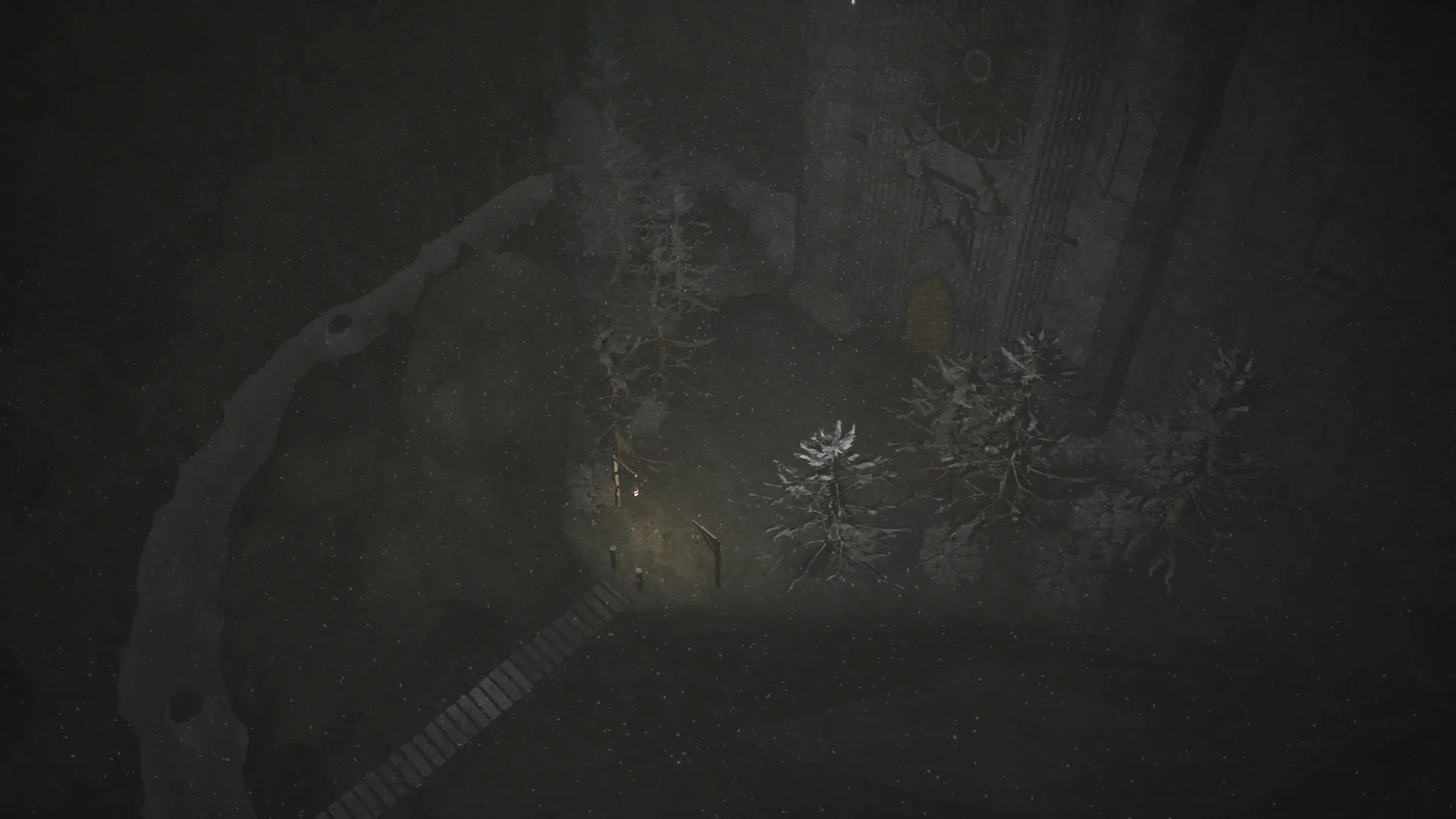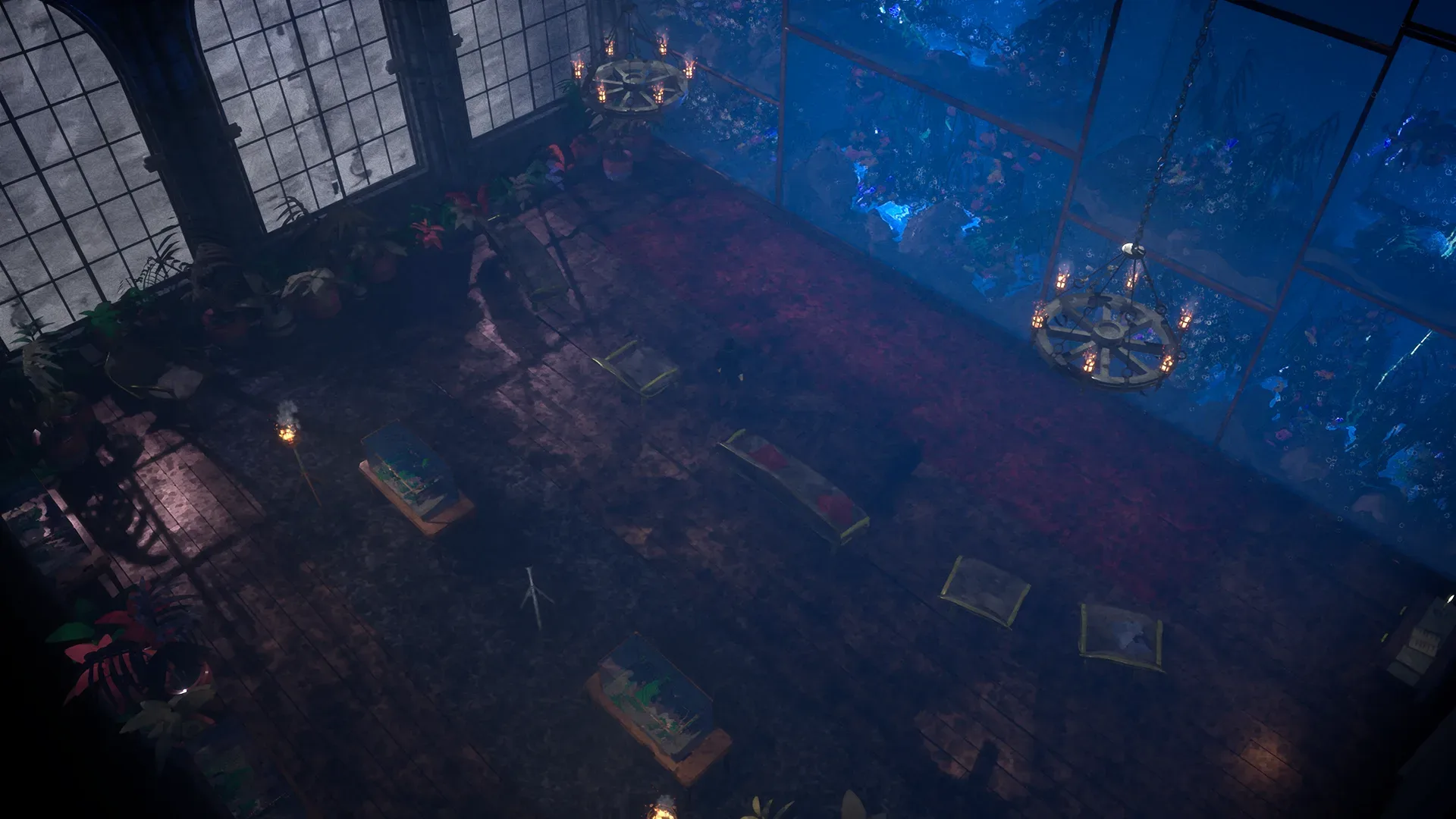
The Funskin Project has set a 2027 release window, alongside a newly revealed trailer shown during the 28 Games Later showcase. The survival-horror adventure is built around a forbidding premise: refugees caught beyond a blizzard seek shelter at the castle of Baron Fettuccini, only to find themselves in a strange universe outside ordinary time.
Safety, unsurprisingly, appears to be temporary. The group must investigate the castle’s secrets and search for a way out, navigating an interconnected environment where exploration, puzzle-solving and resource management all carry risk. The project’s stated design priorities point to deliberately old-school survival horror rather than a straightforward action game: limited resources, difficult environmental riddles, hidden routes and threats that become more severe after daylight disappears.
The newly shared 2027 window does not yet provide a precise launch date or confirm platforms. What is clear is the kind of pressure the game intends to place on players: the castle is not just a backdrop, but a maze whose rules and dangers change with the clock.
A refuge that turns into a trap
The opening setup has a strong survival-horror foundation. A blizzard makes the castle a plausible sanctuary, while the revelation that it occupies a timeless, abnormal setting turns that sanctuary into an unknown. The central objective is not simply to endure enemy encounters; it is to uncover enough about the building to escape it.
That distinction matters. In action-focused horror, forward movement can often be driven mainly by combat skill. The Funskin Project instead frames progress around understanding place: finding passages, identifying what a riddle is asking, opening routes and deciding when it is worth entering a new area. Curiosity is explicitly positioned as something that can threaten survival, suggesting that optional investigation may have a real cost rather than serving only as a source of bonus rewards.
“Timeless universe” is an evocative piece of the premise, but its specific narrative implications have not been detailed. It should not be read as confirmation of time travel, multiple eras or any particular supernatural explanation. What has been established is that the castle is strange, secret-filled and governed by conditions that the refugees will need to learn.
What old-school survival horror means here
The phrase old-school survival horror can cover many approaches, but the announced feature set gives it practical meaning in this case. The game emphasizes limited resources, exploration and puzzles. Together, those ideas create a more cautious rhythm than one where every obstacle is meant to be defeated through force.
- Limited resources: Players are expected to make decisions around supplies rather than assume an unlimited capacity to deal with every danger. The exact items and inventory systems have not been specified.
- Exploration: Advancement depends on searching a connected castle, locating hidden passages and discovering how separate areas relate to one another.
- Environmental puzzles and riddles: Obstacles are designed to be solved within the space itself, opening paths and revealing further parts of the setting.
- Escalating danger: The day-night system changes enemy behavior and may change which spaces are available, making timing part of the survival equation.
This mixture makes information a resource alongside whatever physical supplies the game provides. Learning that a shortcut exists, recognizing that a door can only be approached at a certain time, or understanding a riddle’s clue can all alter the safest route through the castle. That is the appeal of a labyrinthine survival-horror structure: a place initially read as hostile and confusing can gradually become legible, without necessarily becoming safe.
There is also a built-in tension between exploration and restraint. A hidden corridor could offer the key to continued progress. It could also take the player into an area that becomes harder to survive in after dark. Because the game describes curiosity as a potential danger, its puzzles and optional paths may ask players to weigh possible knowledge against immediate exposure.
The day-night cycle is more than atmosphere
The most distinctive announced system is the dynamic transition between day and night. Daylight fading is not merely a visual cue for a scarier mood. The cycle affects enemy behavior, saving mechanics and access to certain locations.
Enemy behavior means the kinds of threats players face can change based on the time of day. The details are still unknown: there is no confirmation of specific enemy types, spawn rules or whether enemies become stronger, more numerous or simply behave differently. Still, the promise that nights bring more dangerous encounters gives the clock immediate strategic significance.
Saving mechanics refers to how and when players can record their progress. Linking saves to time of day could make planning an essential skill. However, no exact save restrictions have been announced, so it would be premature to assume limited save items, fixed save rooms or any other familiar genre convention. The important confirmed point is that saving is tied into the changing temporal structure.
Access to areas suggests that a route, room or event may not always be available. That can turn the castle into a shifting puzzle box. A location discovered during one phase may require a return visit under different conditions, while a path that seems safe in daylight may become a poor option when the night’s encounters intensify.
For players, this could make route planning more important than simply pushing ahead. A useful exploratory run might mean identifying an obstacle, retreating before night conditions worsen, then returning after preparing for the relevant time window. Conversely, the game may reward those willing to take calculated risks during more dangerous hours. The precise balance remains to be seen, but the premise aims to make time part of the level design rather than a passive countdown.
A castle designed to be learned
The Funskin Project describes its setting as an interconnected, labyrinthine environment. In design terms, that means areas should not function as isolated stages. Instead, paths link back to earlier locations, locked obstacles invite later returns, and hidden passages can reframe a player’s mental map of the castle.
That structure is especially well suited to the game’s puzzle focus. A riddle can point toward a location encountered earlier. A newly opened connection can cut down on travel through risky ground. A concealed route can offer an alternative to a known danger. The goal is not only to find an exit but to understand how the building is assembled and what conditions govern it.
It also creates a natural place for tension without requiring constant combat. Entering an unexplored wing can be frightening because the player does not know whether it contains a solution, a dead end, a shortcut or an encounter that will drain needed supplies. Returning through familiar spaces has a different tension: the layout may be known, but the time of day can change the calculation.
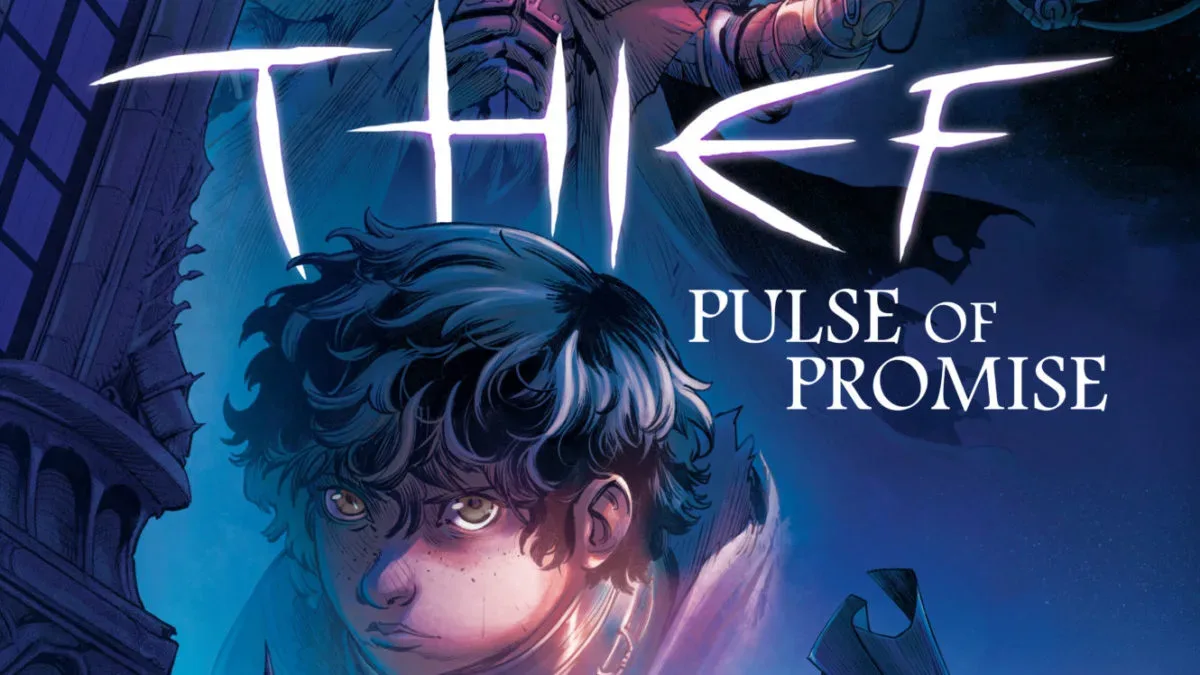
Fans interested in games that center a hostile, navigable space may also want to revisit the enduring appeal of stealthy, environment-driven design in this look at Garrett’s return in Thief: Pulse of Promise. The two projects are not presented as mechanically alike, but both foreground the importance of reading a dangerous setting rather than treating it as scenery.
What has and has not been confirmed
The 2027 target gives The Funskin Project a broad place on the calendar, but many practical details have yet to be announced. There is currently no precise release date, price, platform list, developer or publisher information in the available details. There is also no stated information on playable characters, combat systems, inventory capacity, co-op support, accessibility options or the exact rules for saves and the day-night cycle.
That uncertainty leaves the trailer and feature outline as an early statement of direction rather than a complete gameplay breakdown. The headline ideas are already coherent, though: refugees enter Baron Fettuccini’s castle during a blizzard; the shelter leads into a timeless and dangerous mystery; progress rests on exploration and riddles; and night changes the stakes in ways that touch enemies, saves and access.
For now, The Funskin Project looks positioned for players who enjoy horror built on caution, spatial awareness and the uneasy sense that every opened door may create as many problems as it solves. Its 2027 release window is the firmest timing information available, with further details needed to show exactly how the castle’s shifting rules will work in play.