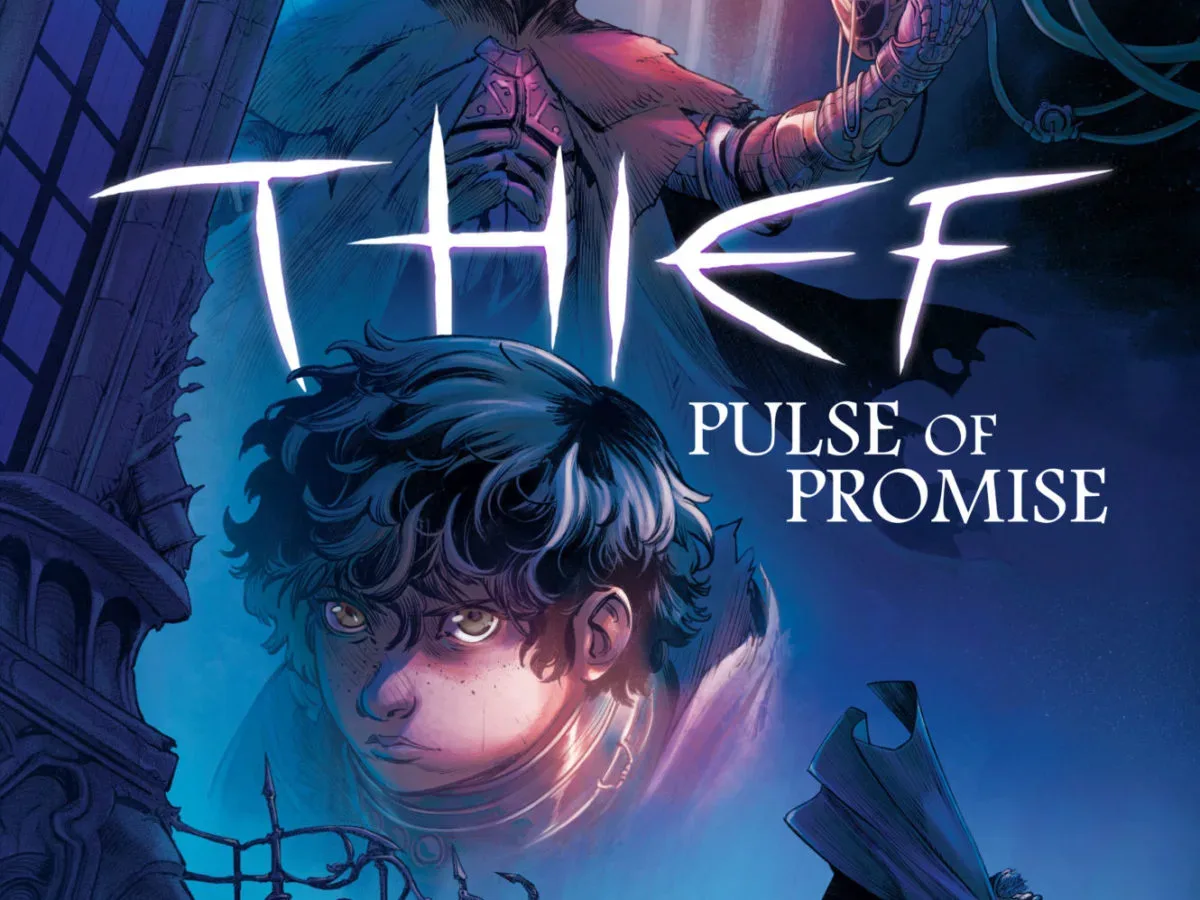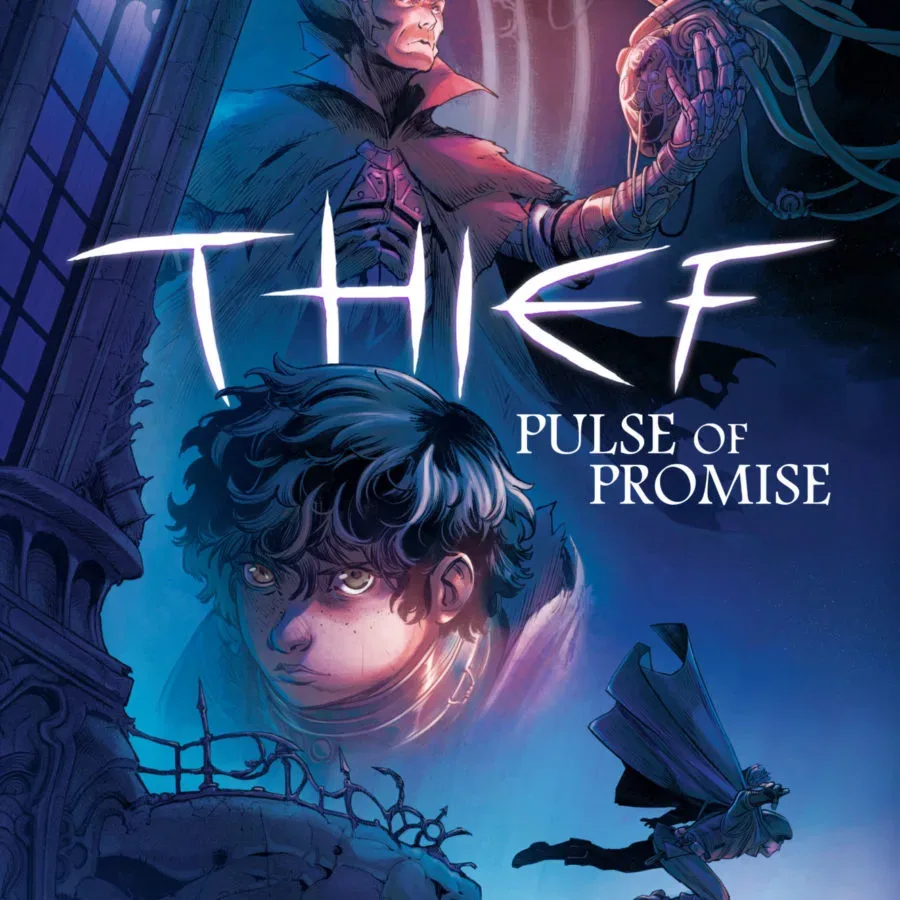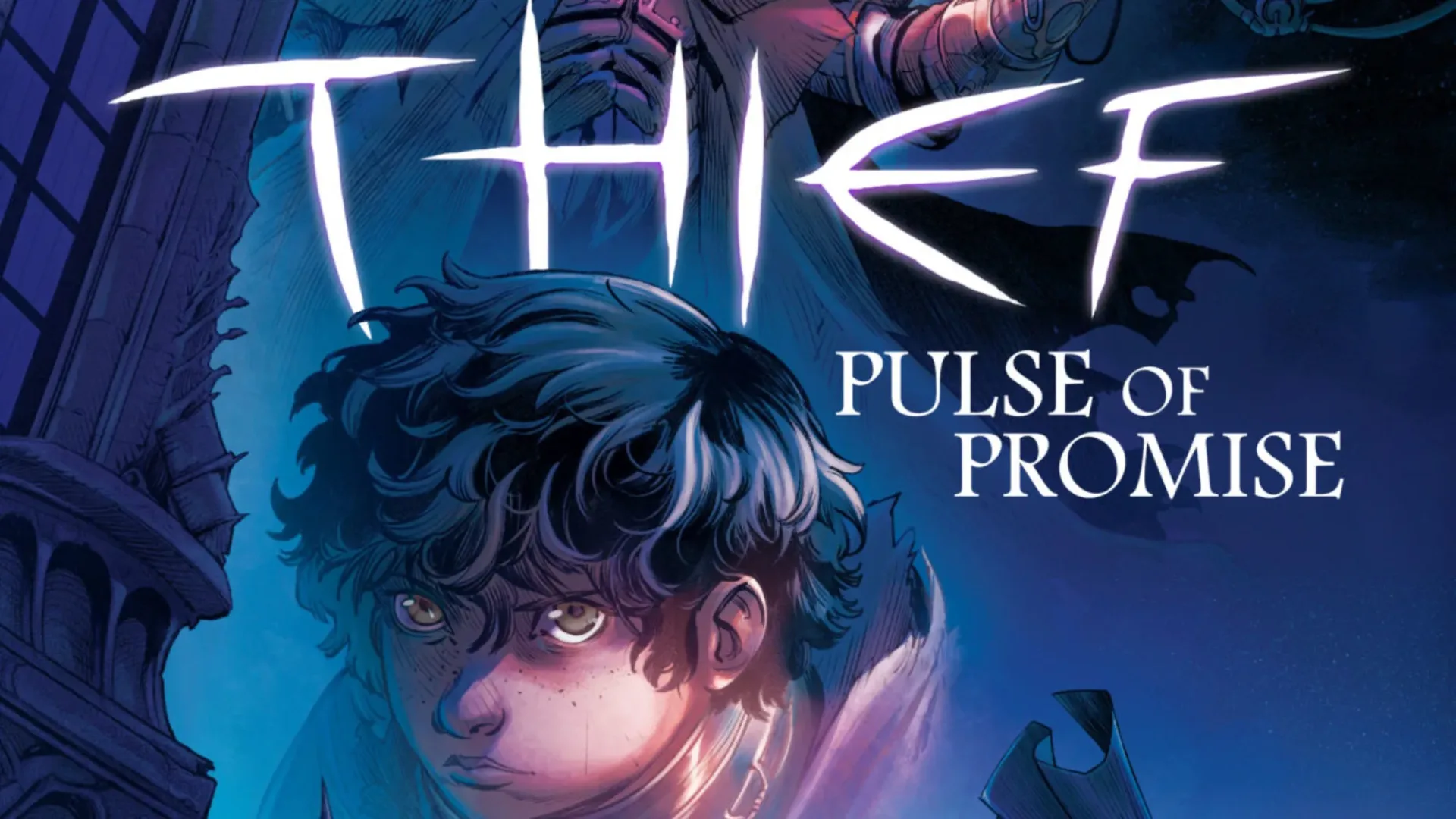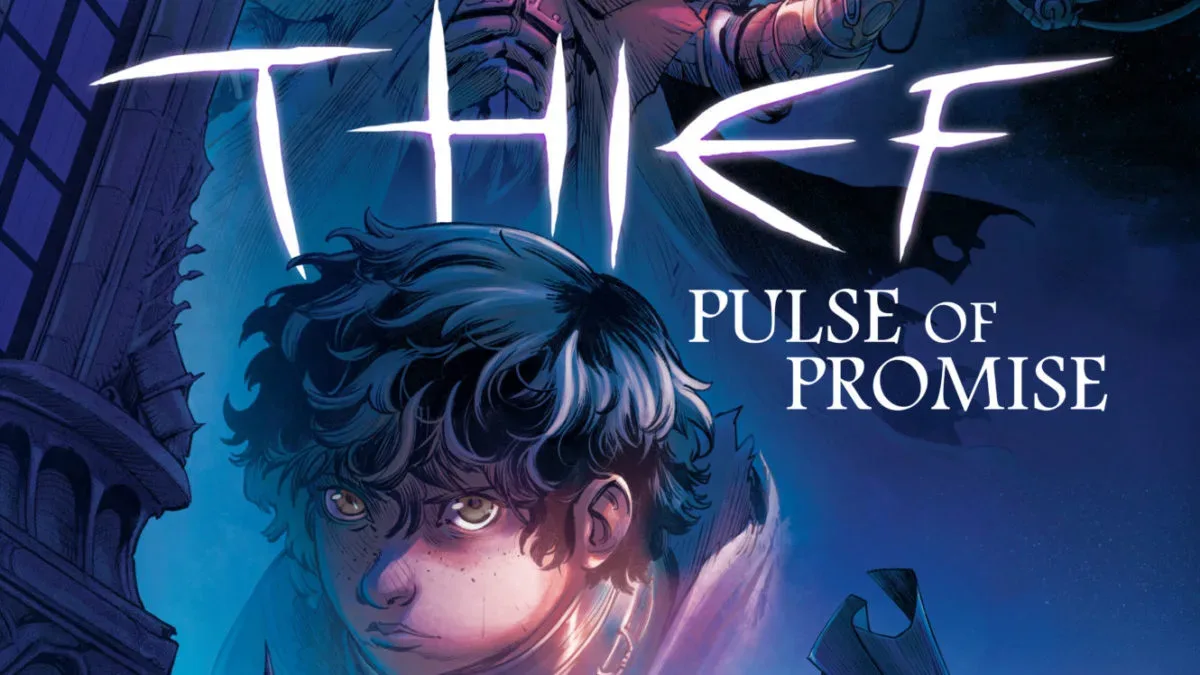
Garrett is returning to The City, but this time the master thief’s next job is being told on the page rather than played from the shadows. Thief: Pulse of Promise is a 147-page standalone graphic novel developed in collaboration with Eidos-Montréal and set between Thief: The Dark Project and Thief II: The Metal Age.
The project is written by Joshua Viola with art by Emanuele Ercolani. Its crowdfunding campaign is active on BackerKit, and the campaign had raised $194,825 against a $75,000 target from 786 backers at the time those figures were provided, with 28 days remaining. Publication is planned for next year.
That placement in the series timeline is the important hook. Rather than retell one of Garrett’s existing missions or leap to a wholly disconnected version of the setting, Pulse of Promise occupies the stretch between the 1998 original and its sequel. It is a period positioned before the rise of the Mechanists, allowing the book to bring together familiar people and groups while telling a self-contained story.
A new job beneath The City
Pulse of Promise begins with a mysterious assignment that sends Garrett below The City in pursuit of a powerful artefact. The deeper he goes, the more the job draws him into Father Karras’s plans and forces him to confront parts of his own past.
The premise also brings back the Hammerites, the Keepers and Artemus. Those names make the book’s setting clear: it is meant to work within the series’ established industrial-fantasy world, with its Gothic architecture, rival belief systems and underworld intrigue. The stated aim is fidelity to the lore and atmosphere of the earlier games while exploring a less-developed interval in their chronology.
That distinction matters for a property built around mood as much as plot. Thief is a first-person stealth series centered on a cynical professional burglar who typically prefers avoiding guards to fighting them. The original Thief: The Dark Project, released by Looking Glass Studios in 1998, established Garrett’s world as a dark city where clandestine routes, guarded spaces and tension are fundamental to the experience.
A graphic novel cannot reproduce the interactive mechanics of stealth play. There is no player deciding whether to slip past a patrol, wait in darkness or risk being seen. What it can do is put the consequences of that kind of work at the center of a linear narrative: an assignment, a target, factions with conflicting agendas and a protagonist who is better served by caution than open confrontation. The choice to set this tale between two foundational games gives the creative team room to build around those elements without presenting the comic as a replacement for either game.
Why the pre-Mechanist setting is useful
The announced story takes place during the lead-up to the Mechanists’ rise. In practical narrative terms, that creates a bridge between the first game’s world and the conditions that surround The Metal Age. Father Karras’s involvement provides a direct connection to that transition, while the inclusion of Hammerites, Keepers and Artemus means the story can draw from multiple corners of The City’s established power structure.
For readers who know the games, this is a familiar period viewed from a new angle. For readers arriving through the comic, it is a standalone story rather than a requirement to replay the series first. The stated format and setting suggest that the book’s purpose is not to deliver an encyclopedic history of Thief, but to give Garrett one additional high-stakes caper whose place in the wider timeline is recognizable.
It is also arriving alongside renewed attention on the first game. A remaster of Thief: The Dark Project from Nightdive Studios and Eidos-Montréal is scheduled for winter. The graphic novel and remaster are separate projects, but both point back to the original game’s version of Garrett and The City. Readers interested in other game worlds revisiting earlier entries can also see how Metro 2033 and Last Light are receiving updates ahead of a new chapter.
Hardcover editions and what changes between them
All print editions of Thief: Pulse of Promise include a digital copy of the complete story. The central difference between the main book tiers is the cover presentation and, for the deluxe version, the included extras.
- Standard Edition: hardcover with cover art by Emanuele Ercolani.
- Exclusive Edition: hardcover with cover art by Claudio Mastronardi.
- Deluxe Edition: hardcover with cover art by Tyler Kirkham, packaged in a premium slipcase. It includes a signed bookplate from Kirkham and Viola, along with bonus concept art and developmental material.
- Original Sketch Card Edition: limited to 25 copies. It pairs the Standard Edition with a unique hand-drawn sketch by Ercolani.
A slipcase is a rigid protective case that a book slides into, rather than a jacket wrapped around the book. In this campaign it is part of the deluxe presentation, alongside process material that may be of particular interest to readers who want to see concept art and development work rather than only the finished narrative.
The Original Sketch Card Edition is the most explicitly limited offering named in the campaign. Its appeal is not an alternate reading experience—the Standard Edition remains part of the package—but the individual artwork. “Unique hand-drawn” means each included sketch is an original drawing rather than simply another reproduced cover image.
Soundtrack, Mechanical Eye and other campaign items
The campaign extends beyond the graphic novel with several physical collectibles and an original soundtrack. The soundtrack is by Celldweller and includes new dialogue from Stephen Russell, the original voice of Garrett. It is offered on vinyl, CD and digitally.
Other listed items include:
- Garrett’s Mechanical Eye in illuminated LED and standard versions, supplied with a custom engraved wooden box, display stand, Hammerite scroll and wax seal.
- An 8-inch polystone Garrett statue.
- A 9-inch Garrett plush.
- A collector’s coin recreating the classic halfpenny.
- Apparel, art prints and higher-tier bundles.
The Mechanical Eye is particularly rooted in the character’s iconography, while the halfpenny coin translates an in-world object into a display collectible. The soundtrack takes a different route: instead of depicting The City visually, it adds newly recorded Garrett dialogue to a music release. None of those additions changes the graphic novel’s core story, but they give the campaign options for supporters interested in display pieces, music or print extras alongside the book.
What readers should take from the campaign
The clearest promise of Thief: Pulse of Promise is a Garrett story positioned carefully within the continuity of the original games. Its artefact hunt, subterranean journey, Father Karras connection and returning factions all point toward a tale shaped by the series’ established setting rather than a complete reinvention of it.
The campaign’s range is broad: a reader can focus on a hardcover and digital copy, while collectors have alternate covers, a slipcased deluxe edition, a highly limited sketch-card version, props, a statue, plush and soundtrack formats to consider. The edition details make it possible to distinguish the story itself from the presentation or collectible additions around it.
With the original game’s remaster also scheduled for winter, the project gives longtime fans two different ways to revisit Garrett’s early era: one through a refreshed version of the first game, and another through a new comic story set in the gap before The Metal Age.