
Final Fantasy 7: Revelation is drawing a line between two very different kinds of player feedback. Director Naoki Hamaguchi says the remake trilogy’s major story decisions will be made by its creators, not shaped around fan reaction. At the same time, he says feedback from the first two games is helping the team improve Revelation’s usability and overall gameplay experience.
That distinction matters for a project carrying both the legacy of Final Fantasy 7 and the burden of closing a remake trilogy. Players can have intense opinions about a familiar story, its characters and where its reinterpretation should go. Hamaguchi’s position is that audience response should not become the steering wheel for the narrative. It can, however, be useful evidence when developers are deciding whether the game is clear, approachable and comfortable to play.
A creator-led story, rather than a crowd-written one
Hamaguchi, who directs Revelation and oversees the Final Fantasy 7 remake trilogy, addressed the subject in posts on X. He said the team considers it its responsibility as creators to determine the story’s broad direction instead of having that direction formed by fan reactions. He also framed the trilogy as a contemporary reimagining of Final Fantasy 7 being made alongside a newer generation of developers.
“We believe it’s our responsibility as creators to decide the major direction of the story, rather than having it shaped by fan reactions,” Hamaguchi wrote.
The wording is measured but firm. It does not say player opinions are unwelcome. Rather, it separates feedback from authorship. The studio can listen to how an audience responds without treating popular demands, theories or disagreements as instructions for what must happen next.
That is especially relevant to a remake project. A remake is not simply a technical update of an old game: it must decide what to preserve, what to reinterpret and how to present its own identity. Once a team invites players back into a world with an established emotional history, every major change can be debated as though it were a referendum. Hamaguchi’s comments indicate that Revelation’s developers intend to retain responsibility for resolving that creative challenge themselves.
For players, that means the final chapter should not be read as a checklist of the internet’s most requested outcomes. The story’s course remains a deliberate creative choice by the people building it. Whether every player agrees with those choices is a separate question, but the comments make the decision-making framework clear.
Where feedback does have a direct role
Hamaguchi also made clear that the team values feedback concerning usability and the larger gameplay experience. He specifically acknowledged people who use accessibility options, and said feedback received from the two earlier remake games has helped shape Revelation’s experience.
Related coverage includes Final Fantasy 7: Revelation Will Keep Its Story Direction Independent of Fan Reaction.
“We truly value your feedback when it comes to usability and the overall gameplay experience,” Hamaguchi wrote.
Usability is the practical side of interacting with a game: whether players can understand what the game asks of them, navigate its systems and carry out actions without unnecessary friction. It is not limited to one feature or one type of player. A system can be ambitious yet still be hard to read, awkward to control or poorly communicated. Feedback can identify those friction points in a way that matters even when the central creative vision remains unchanged.
Accessibility options, meanwhile, are tools or settings intended to let more people engage with a game. Hamaguchi did not identify particular Revelation features, so there is no basis yet to promise specific settings or changes. His statement is nevertheless significant because it expressly includes players who rely on such options in the conversation about the game’s design.
This is a useful division of responsibilities. Players are uniquely positioned to describe their experience of a finished game’s controls, interface, pace and clarity. Developers still need to interpret that feedback, determine which problems are broadly shared and decide what can be changed without damaging the game’s aims. Feedback is not an automatic order, but it can be meaningful design evidence.
It also avoids a false choice between authorial intent and responsiveness. A team can protect the intended story while working to ensure players have a fairer, clearer route through the combat and exploration that support it. The former concerns what the game wants to say; the latter concerns how effectively and inclusively players can experience it.
What “overall gameplay experience” can encompass
Hamaguchi’s phrasing is broad. It should not be stretched into a list of unannounced changes, but it does point beyond a single menu or accessibility setting. The “overall gameplay experience” can encompass how all of the game’s playable parts feel together: moving through areas, finding objectives, entering combat, interpreting information and adjusting the experience to suit a player’s needs.
That broad view is important in a large role-playing game. A polished individual combat mechanic cannot entirely offset confusion in exploration, while a strong narrative moment can lose some force if a player repeatedly struggles with the system around it. Usability is often most valuable when it reduces those interruptions without demanding that every player use the same approach.
There is also a meaningful difference between making a game easier and making it more usable. Difficulty concerns the level of challenge. Usability concerns whether the player can understand and operate the game’s tools. Accessibility can intersect with both, but it is not reducible to either one. Hamaguchi’s comments do not define Revelation’s exact approach; they do establish that the prior games’ player feedback is part of the team’s consideration of the experience.
That is a more grounded use of audience response than asking fans to settle narrative questions by volume. It focuses on the interaction between the player and the game rather than on turning a creative work into a live poll.
The final chapter faces unusually high expectations
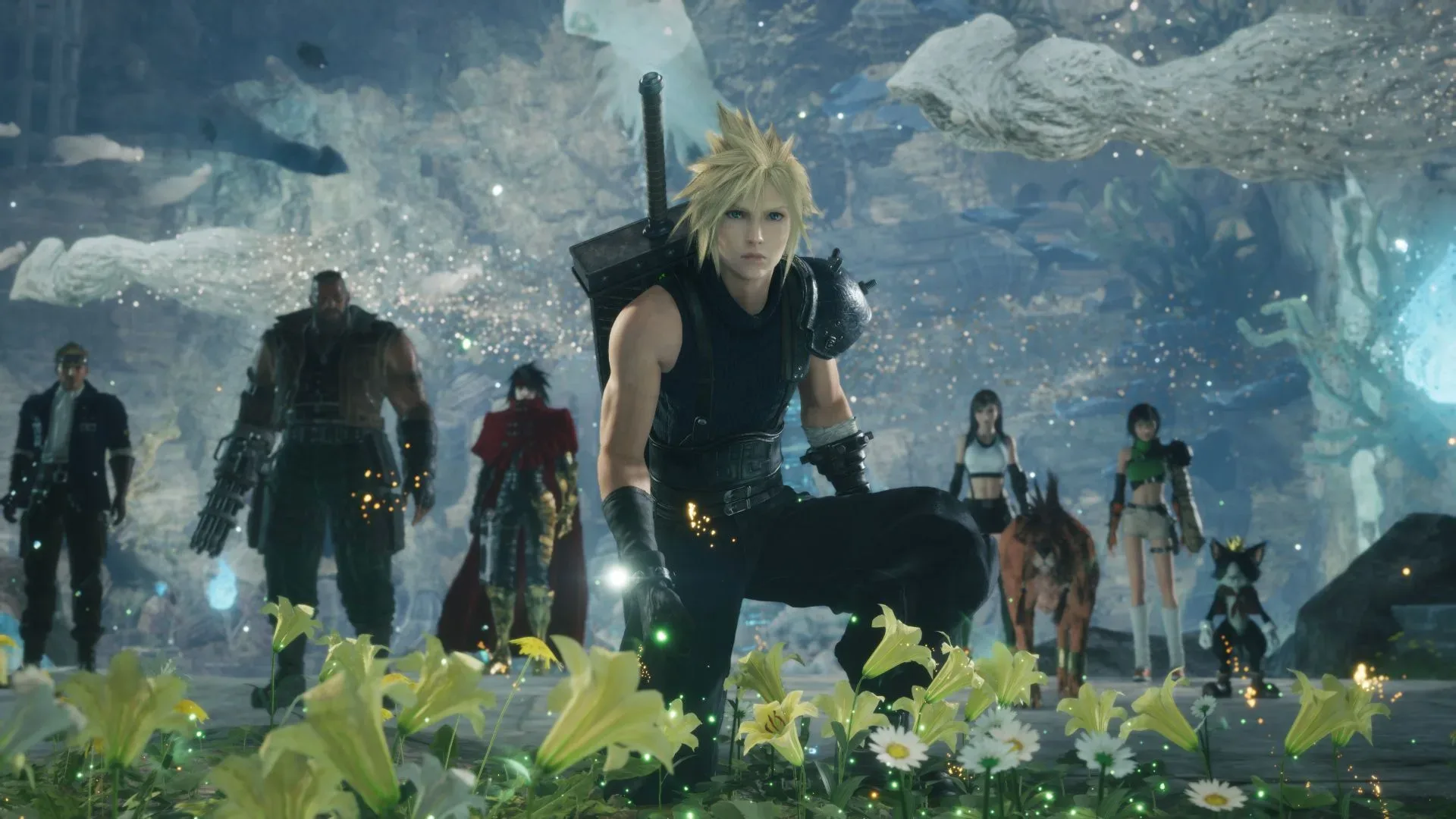
Revelation has been presented as the trilogy’s climax, with Cloud and his companions facing Sephiroth over the fate of the planet. Aerith is also part of the story’s stakes. The preceding entries have already created a complex context for that resolution, including timeline-related developments that have prompted considerable discussion.
Those circumstances help explain why Hamaguchi chose to speak plainly about story ownership. The closer a long-running narrative gets to its resolution, the more every detail can be treated as evidence for a preferred interpretation. A creative team that changes direction in response to the loudest immediate reaction risks producing a story driven by short-term pressure rather than a considered destination.
There is a practical implication, too. A player can be unhappy with a story decision while still benefiting from improvements to how they access and play the game. Separating these matters allows the studio to take seriously the parts of feedback it can evaluate through player experience without suggesting that narrative choices are negotiable after every response cycle.
For Revelation, that means the useful questions are likely to be different depending on the subject. On story, the team is asserting that it will make the major calls. On gameplay, it is inviting a more direct relationship between prior player feedback and the development process. That is not a promise that every request will appear in the final game. It is a commitment to treat experience-focused feedback as valuable input.
Why the distinction is relevant beyond Final Fantasy 7
Game development frequently requires teams to balance a clear identity with lessons learned from players. The details vary from project to project, but the underlying tension is familiar: a game needs a point of view, yet it also needs to work for the people expected to play it. Conversations about leadership, staffing and development priorities remain an important part of the wider industry, as seen in recent reporting on studio leadership and milestone pressures.
Hamaguchi’s comments offer a concise formulation of one possible boundary. Creative leadership sets the narrative destination. Player feedback can improve the route a player takes to get there. Neither task is trivial, particularly for a game expected to unite a major story finale with combat, exploration and options that work for a broad audience.
For now, the confirmed takeaway is deliberately narrower than fan speculation: Final Fantasy 7: Revelation’s story will follow the developers’ intended direction, while the lessons players provided through the first two entries are helping inform usability, accessibility-minded consideration and the game’s overall play experience.