Amazon’s early Prime Day promotion has put a meaningful spread of Apple hardware on sale, from portable audio to laptops and tablets. The prominent headline figure is the AirPods Pro 3 at $179, reduced from $249, while M5 MacBook Air configurations are generally receiving $200 reductions. For players, students and anyone assembling a portable setup around Apple devices, the key is not simply that several products are cheaper at once. It is that each product addresses a very different part of the setup: audio, computing, a larger secondary screen, a compact tablet, or a wearable.
There is one major qualification before treating any listed price as a purchase decision: these are Prime Day offers. A Prime membership is required to access them. The membership is listed at $14.99 monthly or $139 annually, with a 30-day trial for eligible new subscribers. The offers are also described as time-sensitive, meaning a price or configuration can disappear before the broader event does. A good deal is still only a good deal if the exact model, storage tier, screen size and connectivity option are the ones a buyer actually needs.
For an audio-specific check before replacing earbuds, see our practical checklist for a silent AirPod. A fault may be resolvable, while a discounted replacement might make more sense for somebody already planning an upgrade.
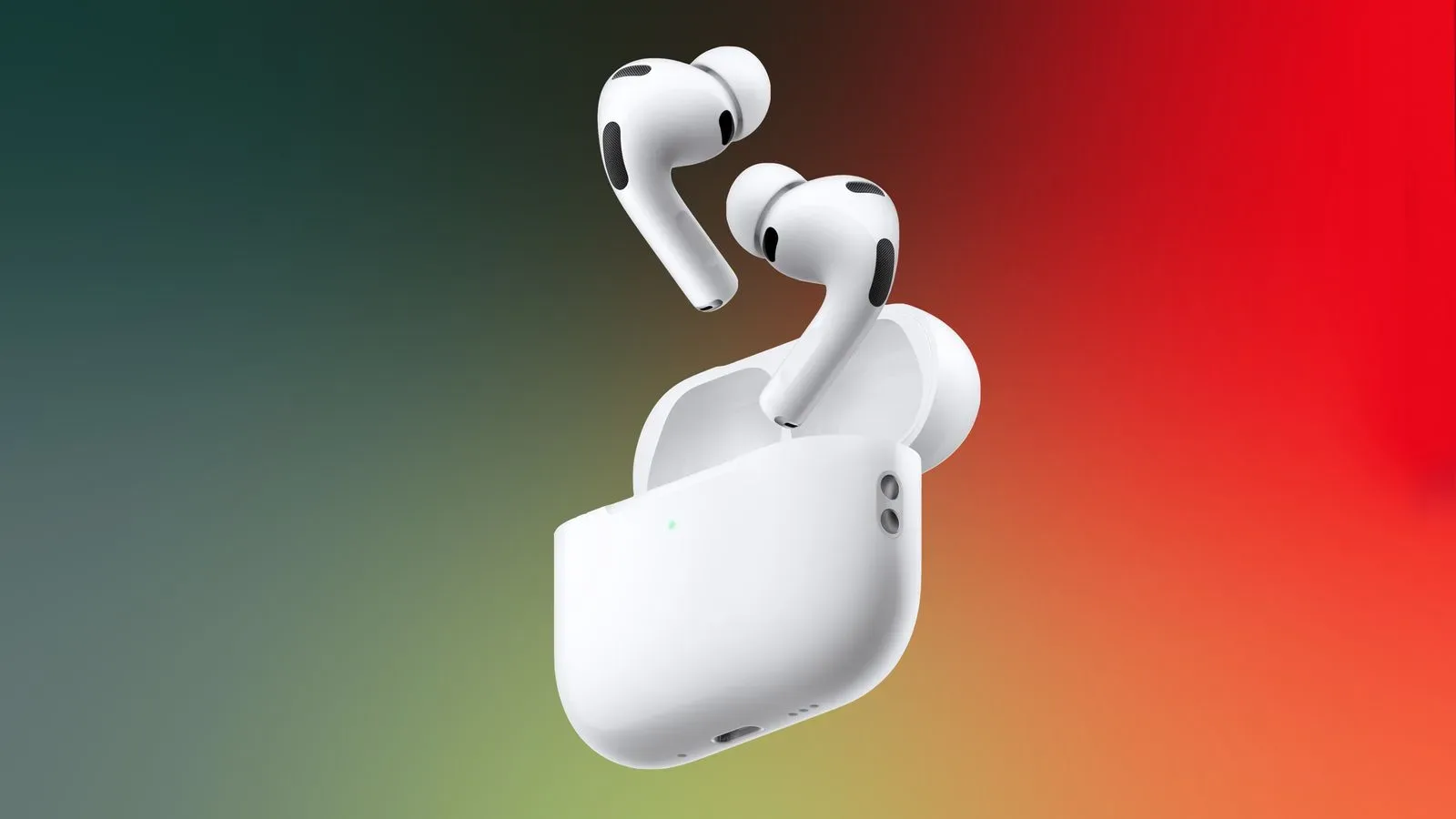
AirPods Pro 3 reaches $179
The AirPods Pro 3 are listed at $179, a $70 reduction from $249. That is described as the lowest price so far in this Prime Day period and a return to a level last seen during the June Prime Day event. It is the simplest deal in the group: there are no RAM, storage, display-size or cellular choices to untangle. The practical question is whether wireless earbuds are the item that will most noticeably improve a person’s everyday use.
For gaming, headphones and earbuds do not change a game’s performance, but they are central to how a game is heard and how easily a player can move between a handheld, tablet, laptop and phone. That distinction matters when weighing this $70 discount against larger but more expensive reductions elsewhere in the sale. Buying an audio accessory is a different financial commitment from buying a new computer, even if both carry a “record low” label.
M5 MacBook Air discounts: $200 off selected configurations
Amazon is discounting nearly every M5 MacBook Air model by $200 across the 13-inch and 15-inch ranges. These prices are characterized as the best seen since Apple’s summer price increases. The M5 name identifies the processor family in these laptops; the configurations below also vary by unified memory and storage. Memory is the working space used while applications are open, while storage is the long-term device capacity for files and installed software. Neither should be confused with screen size.
13-inch MacBook Air
The 13-inch MacBook Air with 16GB of memory and 512GB of storage is listed at $1,099, down from $1,299, and is available in three colors. The 16GB/1TB and 24GB/1TB models are also reduced by $200, although specific sale prices for those versions are not listed here.
The 13-inch model is the smaller option in this sale. Buyers comparing it with the 15-inch version should keep the decision grounded in physical screen space rather than assuming the larger model automatically has a different processor or memory allocation. The advertised configurations show that capacity choices remain separate from the diagonal display measurement.
15-inch MacBook Air
Among the 15-inch options, the 16GB/512GB version is listed at $1,299, reduced from $1,499. The 16GB/1TB model is $1,599, down from $1,799. Both represent $200 off.
That creates a clear price ladder in the advertised models: the 15-inch 16GB/512GB machine costs $200 more than the comparably specified 13-inch model, while moving the listed 15-inch model from 512GB to 1TB adds another $300. This does not establish which option is best for every buyer, but it makes the trade-off visible. Someone prioritizing a larger display can compare the $200 size premium; someone prioritizing capacity can see the listed step between the two 15-inch storage tiers.
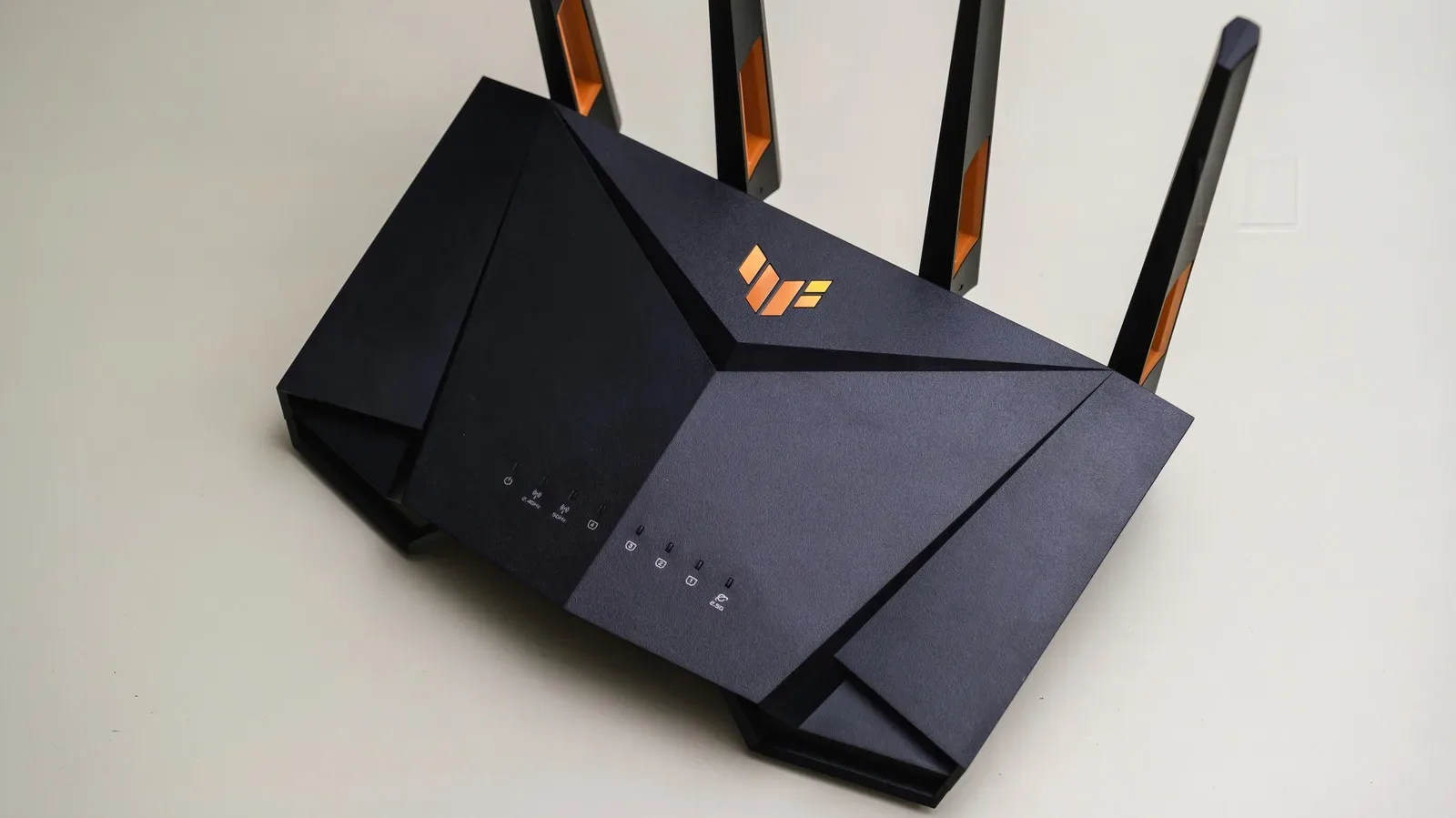
For people who game on more than one device, a laptop purchase may overlap with broader network concerns. A newer laptop does not, by itself, solve every online-play issue; our look at what gaming routers can and cannot do explains why traffic-management tools and a laptop upgrade answer different problems.
Apple Watch SE 3: two GPS sizes at record-low pricing
The Apple Watch SE 3 is also part of the promotion, a comparatively uncommon discount for this model. The 40mm GPS version is listed at $199, and the 44mm GPS version at $229. Each is $50 below its stated regular price and matches the lowest tracked prices for the devices.
GPS refers to the listed version’s positioning capability; it is also a useful label for distinguishing the offered watches from cellular models, which are not the configurations cited in these prices. The difference between these two deals is therefore primarily the case-size choice and $30 in price, rather than an advertised difference in the deal’s discount depth. Buyers should check size preference rather than reflexively treating the higher price as a feature upgrade.
M4 iPad Air: specifications and the discounted models
The 2026 M4 iPad Air is receiving discounts of up to $149, with the listed configurations below each marked $100 off. These models use Apple’s M4 chip, plus a C1X modem and N1 networking chip. The networking hardware brings support for Wi-Fi 7 and Bluetooth 6. In plain terms, Wi-Fi and Bluetooth are wireless connection standards, while a modem is associated with cellular connectivity in models that include it. Support for a standard should not be read as a promise that every network or accessory will use it; it identifies the supported capability of the hardware.
Visually, the 2026 iPad Air is said to retain the 2025 iPad Air design: an edge-to-edge display, slim bezels and an aluminum chassis. For a buyer who already has a 2025 model, that means the cited changes are inside the device rather than a new exterior format. For a first-time buyer, the more immediate decision remains size, capacity and whether Wi-Fi alone is sufficient.
11-inch M4 iPad Air prices
- 128GB Wi-Fi: $649, $100 off
- 256GB Wi-Fi: $749, $100 off
- 512GB Wi-Fi: $949, $100 off
- 256GB Cellular: $899, $100 off
- 1TB Cellular: $1,399, $100 off
13-inch M4 iPad Air prices
- 128GB Wi-Fi: $849, $100 off
- 256GB Wi-Fi: $949, $100 off
- 1TB Wi-Fi: $1,449, $100 off
The 11-inch and 13-inch lists illustrate how several variables can affect cost. Storage is measured in gigabytes (GB) or terabytes (TB), with 1TB representing more capacity than the lower GB options. Cellular models add cellular connection hardware, whereas Wi-Fi models rely on Wi-Fi for wireless data. None of those categories is inherently the right pick; a buyer should decide first whether more screen area, more local capacity or cellular connectivity is a real requirement.
The visible price structure makes one aspect especially straightforward: at the entry capacities provided, the 13-inch Wi-Fi model is $200 more than the 11-inch Wi-Fi model. At 256GB Wi-Fi, the same $200 gap remains. The two screen sizes are therefore a direct budget comparison at those capacities. The cellular listings supplied are only for the 11-inch device, so they should not be used to infer the price of an unlisted 13-inch cellular configuration.
iPad mini 7 starts at $499
Every Wi-Fi iPad mini 7 configuration is discounted, starting with the 128GB Wi-Fi version at $499, down from $599. Some cellular models are also included, though no individual cellular prices are provided. This is the lowest entry price named among the iPads in the promotion, but it is not a substitute for the iPad Air in every scenario. The products have different names and formats, and the available evidence here does not justify assigning them the same hardware or feature set.
That restraint is useful during broad sales. It is tempting to turn a price list into a ranking, but the listed information supports a more practical approach: identify the category needed, compare only like-for-like configurations where possible, and avoid paying for storage, cellular capability or physical size that will not be used.
How to read a time-limited hardware sale
The most useful comparison is often between the final price and a buyer’s actual requirement, not between two unrelated percentage discounts. The AirPods Pro 3 have the largest stated reduction relative to their listed $249 price, while MacBook Air deals remove $200 in cash terms. An iPad Air starts at $649 even after its $100 cut. Each can be accurately called discounted; they do not occupy the same spending category.
- Confirm eligibility first. The stated offers require Prime, so include membership cost if it is not already part of the household budget.
- Match the exact configuration. A 13-inch laptop is not the 15-inch listing; Wi-Fi is not cellular; and 128GB is not 1TB.
- Use the advertised price, not assumptions. Only the configurations listed above have specific figures in this roundup. Other models may have different prices, or no equivalent discount.
- Expect movement. These markdowns are presented as short-lived. Check the current listing before checkout rather than relying on a previously seen figure.
For shoppers already committed to one of these specific devices, the prices present clear savings: $70 on AirPods Pro 3, $200 on the cited M5 MacBook Air models, $50 on either listed Apple Watch SE 3 GPS size, $100 on the named iPad Air configurations, and $100 on the entry iPad mini 7. For everyone else, the strongest deal may be waiting until a device requirement is clear. A flash sale is not a reason to turn “maybe” into a more expensive piece of hardware.
Shop the products
Check current price, model and availability at the retailer.