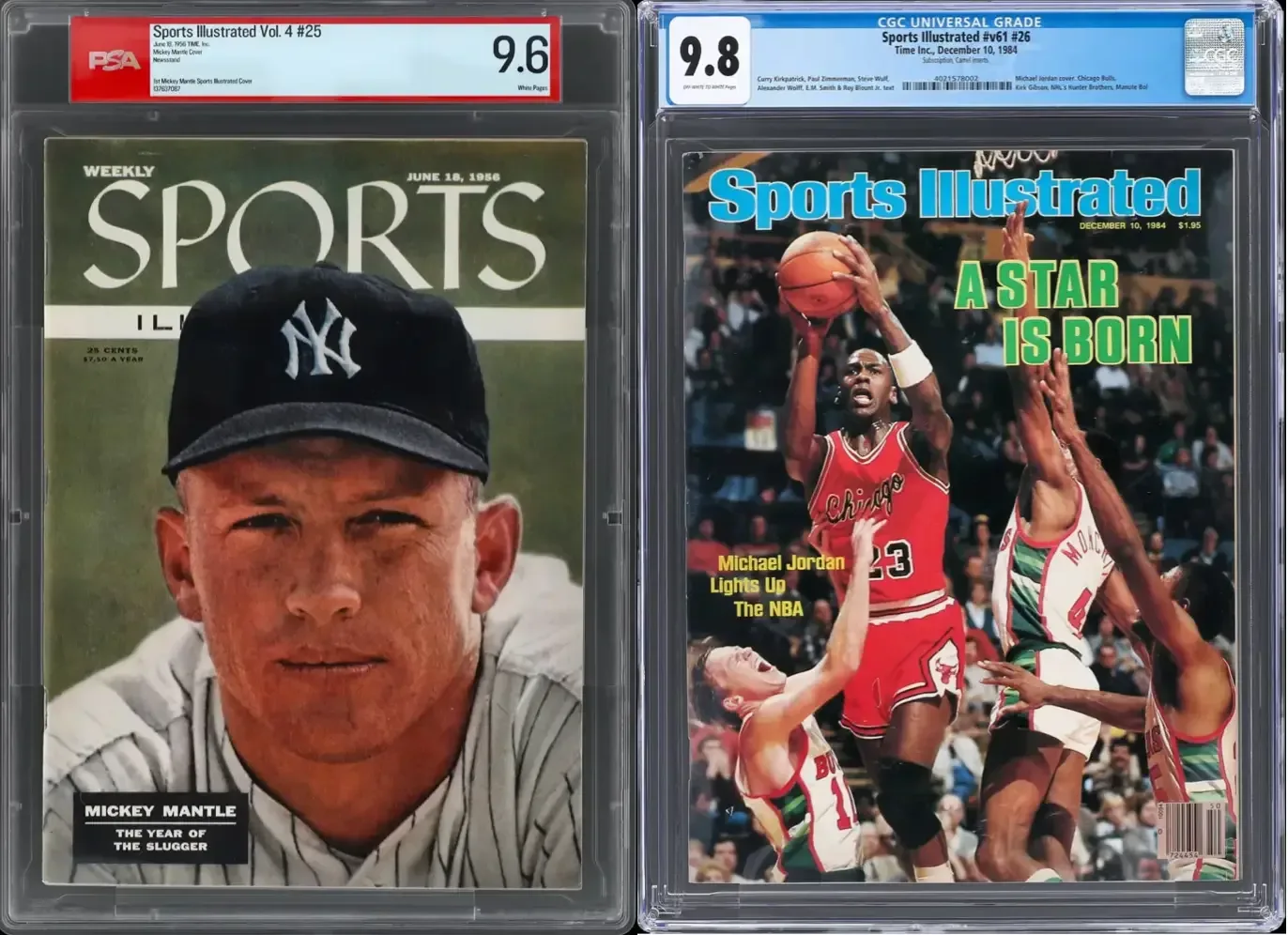
For most of their lives, sports magazines had a job, and it was not sitting upright in a display case. They were bought, read, folded, passed around, stacked in a bedroom, and often eventually discarded. That ordinary fate is a major reason exceptional surviving copies now attract collector attention—especially when an issue connects an athlete, a cultural moment and genuinely scarce condition.
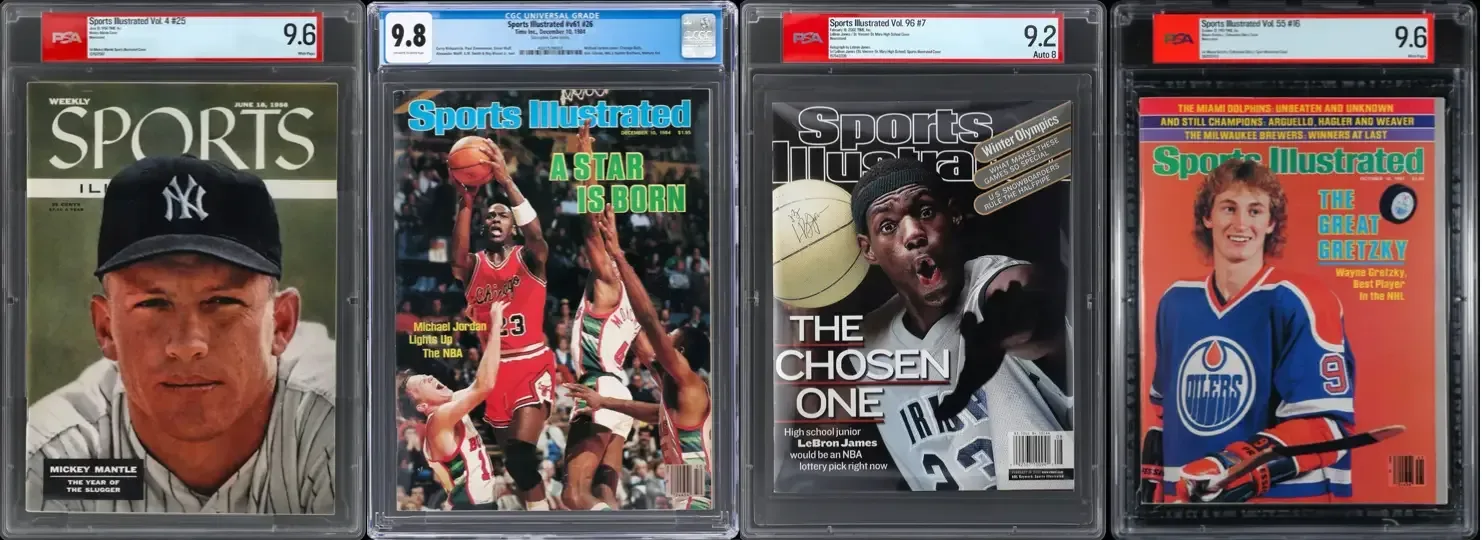
The headline numbers are extraordinary. A 1956 Sports Illustrated with Mickey Mantle on the cover sold for $328,180 on June 28, only for a 1984 Sports Illustrated featuring Michael Jordan to establish a new magazine-sale record at $378,200 in September. Those results do not mean an old magazine is automatically a jackpot. They do show that the market can assign major value to the right issue when it has iconic subject matter, an exceptional certified grade, and an edition collectors want.
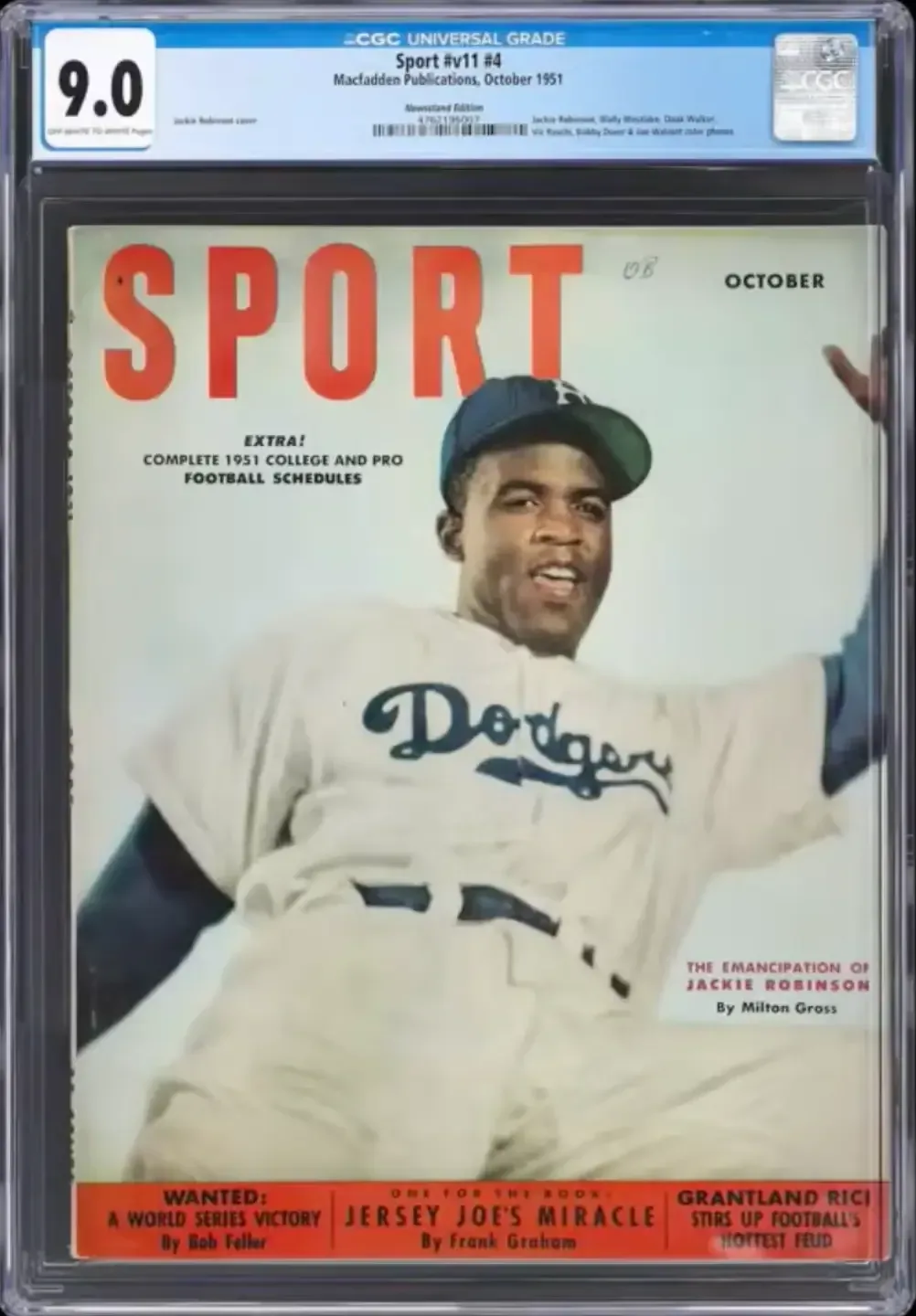
Several other sales illustrate the range beneath those two record setters. A CGC 9.2 copy of Larry Bird’s first Sports Illustrated cover from 1977 sold for $21,960 in September. A CGC 9.6 1996 issue of The Fan with Kobe Bryant on its cover sold for $11,950 that same month. And a CGC 9.0 newsstand copy of the October 1951 SPORT issue with Jackie Robinson sold for $5,185.
For collectors accustomed to sports cards, the emerging appeal should be recognizable but not identical. A magazine cover is a larger, more visual artifact from a particular point in time. It can work as a display centerpiece, an autographed item, a historical document, or an ungraded reading copy. The same object can carry more than one kind of appeal—which is precisely why a single price guide number cannot tell its full story.
Why a high-grade magazine is a different challenge from a high-grade card
Third-party grading firms such as CGC and PSA assess physical condition and encapsulate eligible collectibles in protective holders. On a numerical scale, a higher number generally represents stronger condition. But the route to a top magazine grade is unusually demanding. A magazine has a broad cover, spine, corners, pages and staples, all of which could have been affected by reading, shelving, mailing and casual handling.
That is the physical explanation behind the emphasis on grades such as PSA 9.6 or CGC 9.8. Magazine collectors view a truly sharp 9.4-and-up newsstand copy as difficult to find because magazines were designed to be handled. A card might spend much of its life in a box, binder or holder; a periodical was made to be opened repeatedly. Creases, spine wear, tears, writing, soiling and cover wear all matter.
“High grade” also needs context. A lower-grade early issue can still be compelling because it may be historically important and extremely difficult to locate. Conversely, a relatively recent magazine with an ordinary cover subject may not become valuable simply because it is old enough to be called vintage. The big sales concentrate around a combination of cultural importance, athlete appeal, edition and preservation—not age alone.
Population reports are clues, not census data
One reason collectors are comparing magazines with cards is the striking difference in certified population figures. A population report counts examples submitted to and recorded by grading firms. It is useful evidence of how many graded examples are known through those services. It is not a complete count of every surviving copy in attics, shops, personal collections or recycling bins.
Related coverage includes Why Graded Sports Magazines Are Becoming Serious Collectibles.
That distinction matters particularly here. Sports-card grading began in 1991, while CGC began grading magazines in 2009. Many magazines have never been submitted. A small certified population can signal scarcity in graded form, but it cannot prove that only that many copies exist.
Even with that limitation, the supplied figures frame why collectors are intrigued by several first Sports Illustrated covers:
- Michael Jordan’s 1986 Fleer card has a combined population of 51,612 across PSA, CGC, Beckett and SGC, compared with 1,113 total graded copies of his 1984 first Sports Illustrated cover across PSA and CGC. Of those magazine copies, 187 are newsstand editions.
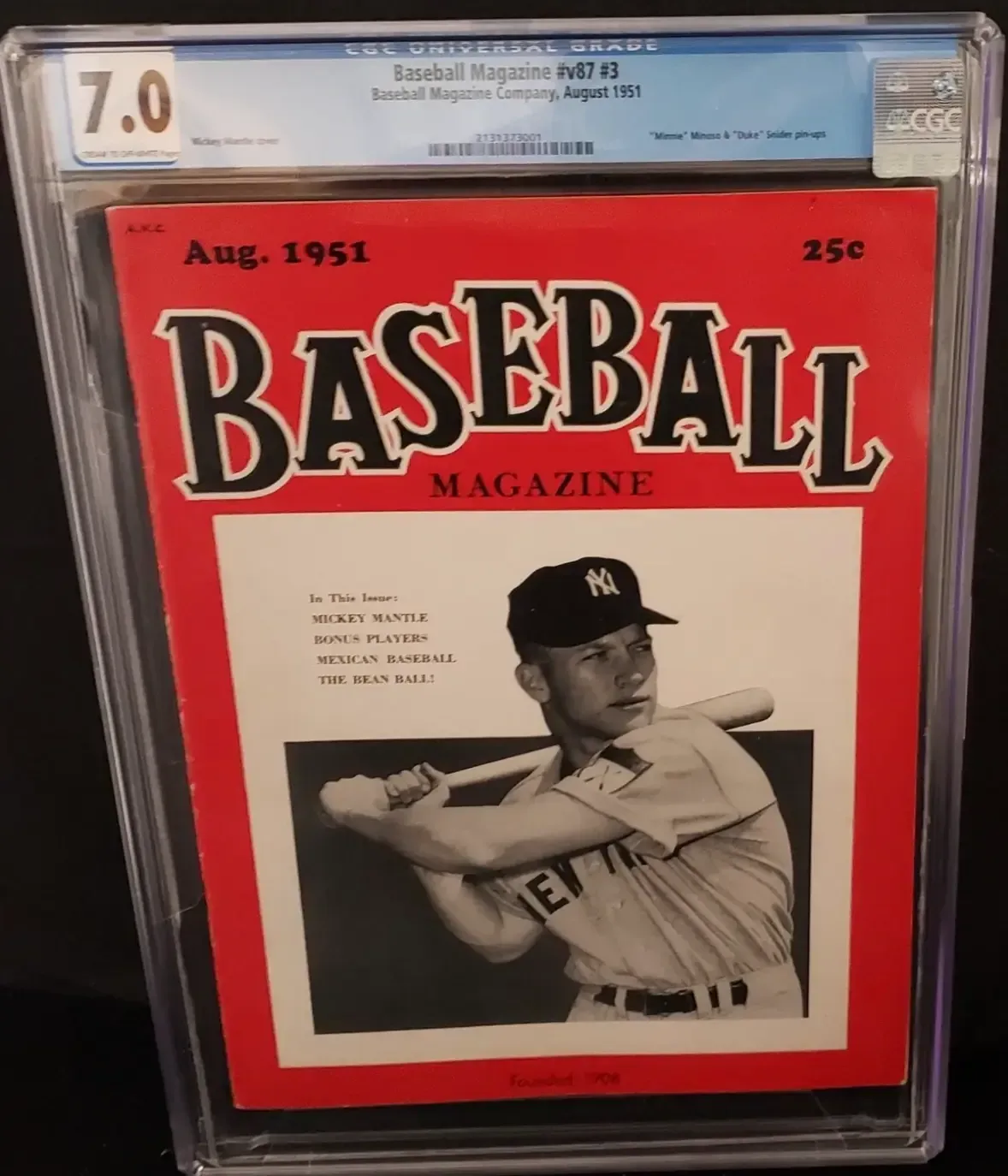
- Mickey Mantle’s 1952 Topps card has a combined population of 3,038, while his 1956 first Sports Illustrated cover has 137 combined graded copies, including 81 newsstand copies.
- LeBron James’ 2003 Topps Chrome card has a combined population of 21,070, while his February 2002 “The Chosen One” cover has 829 combined graded examples, including 503 newsstand copies.
- Wayne Gretzky’s 1979 O-Pee-Chee card has a combined population of 23,056, while his 1981 first Sports Illustrated cover has 451 combined graded copies, 151 of them newsstand.
These comparisons should not be read as a simple formula that makes every magazine more desirable than every card. Card and magazine populations have different submission histories, collector bases and grading timelines. Still, they demonstrate the appeal of a focused collecting lane. LeBron James has 138 distinct rookie cards in the cited comparison, whereas he has one first Sports Illustrated cover. For collectors fatigued by endless inserts, parallels and set variations, the appeal of a defined cover run is easy to understand.
Newsstand and subscription editions add another important wrinkle. Newsstand copies were sold individually at retail, while subscription copies were mailed to subscribers. The stated estimate is that newsstand copies made up only 3% of magazine print runs. They are generally seen as scarcer and more desirable, though both types can be hard to locate in high grade—especially with older publications. Collectors should therefore identify the edition before comparing prices or population figures, rather than treating two outwardly similar copies as interchangeable.
The grading market has grown, which changes how the numbers should be read
Interest in grading has accelerated. Approximately 13,000 Sports Illustrated magazines were graded by CGC from 2009 through 2022. From 2023 through 2026, another 36,000 were graded. That growth helps explain why population reports are becoming more relevant to the hobby, but it also means those reports are moving targets. As more collectors submit magazines, totals can rise.
Practical takeaway: do not assume today’s figure will be permanent. Check the grading company’s current report when making a purchase decision, and compare like with like: same issue, same edition, same grading company where possible, and comparable grades. A combined total can provide broad perspective, but an edition-specific figure is often more useful when assessing a particular copy.
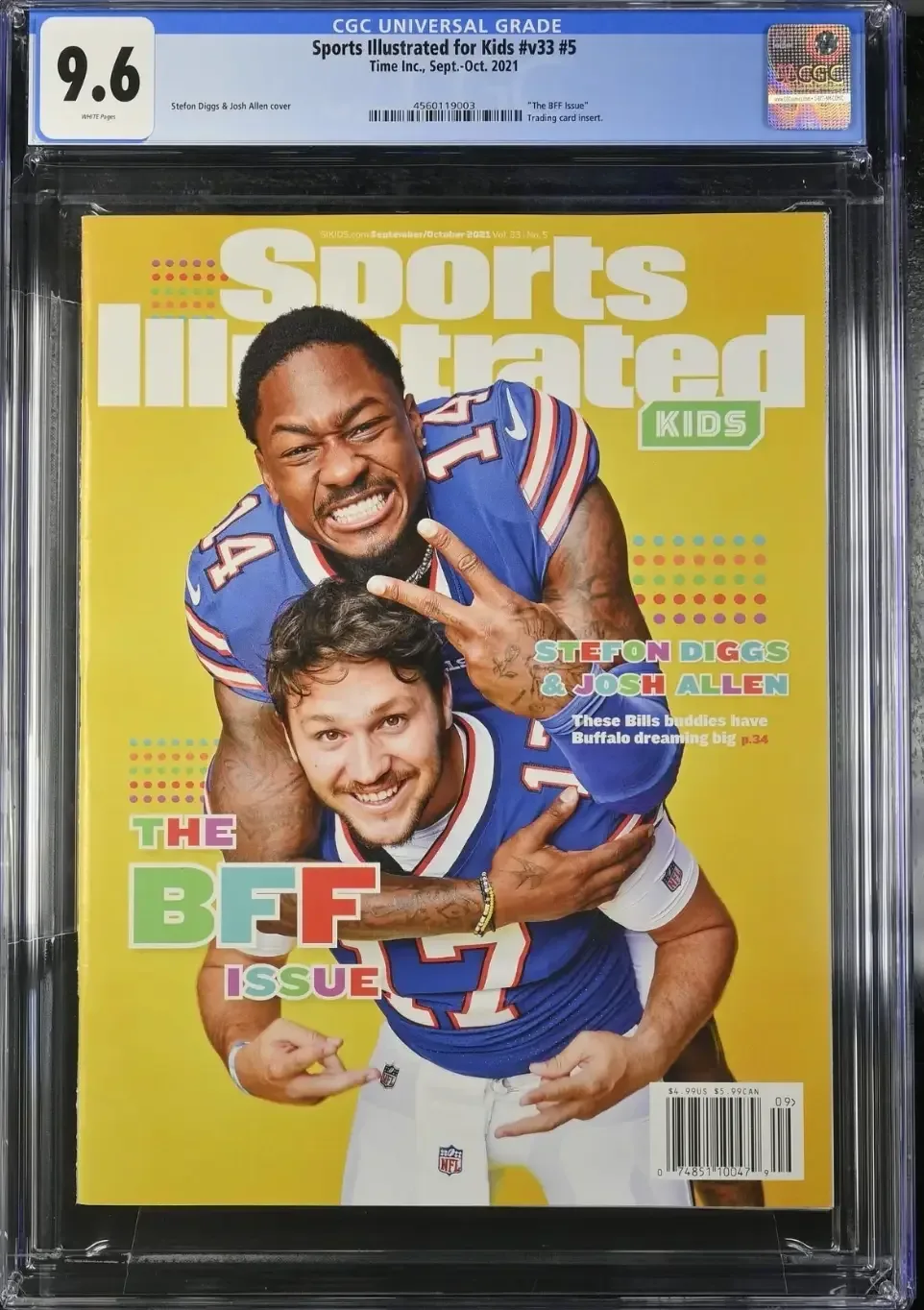
The market has also shown that modern or adjacent formats can have low certification counts. One Sports Illustrated for Kids issue featuring Josh Allen and Stefon Diggs has been graded only 11 times by CGC. That alone does not establish demand or value; it simply illustrates how limited the certified population of some magazines can be. Low population becomes meaningful when collectors also care about the athlete, image, issue and condition.
What makes a magazine meaningful beyond the label
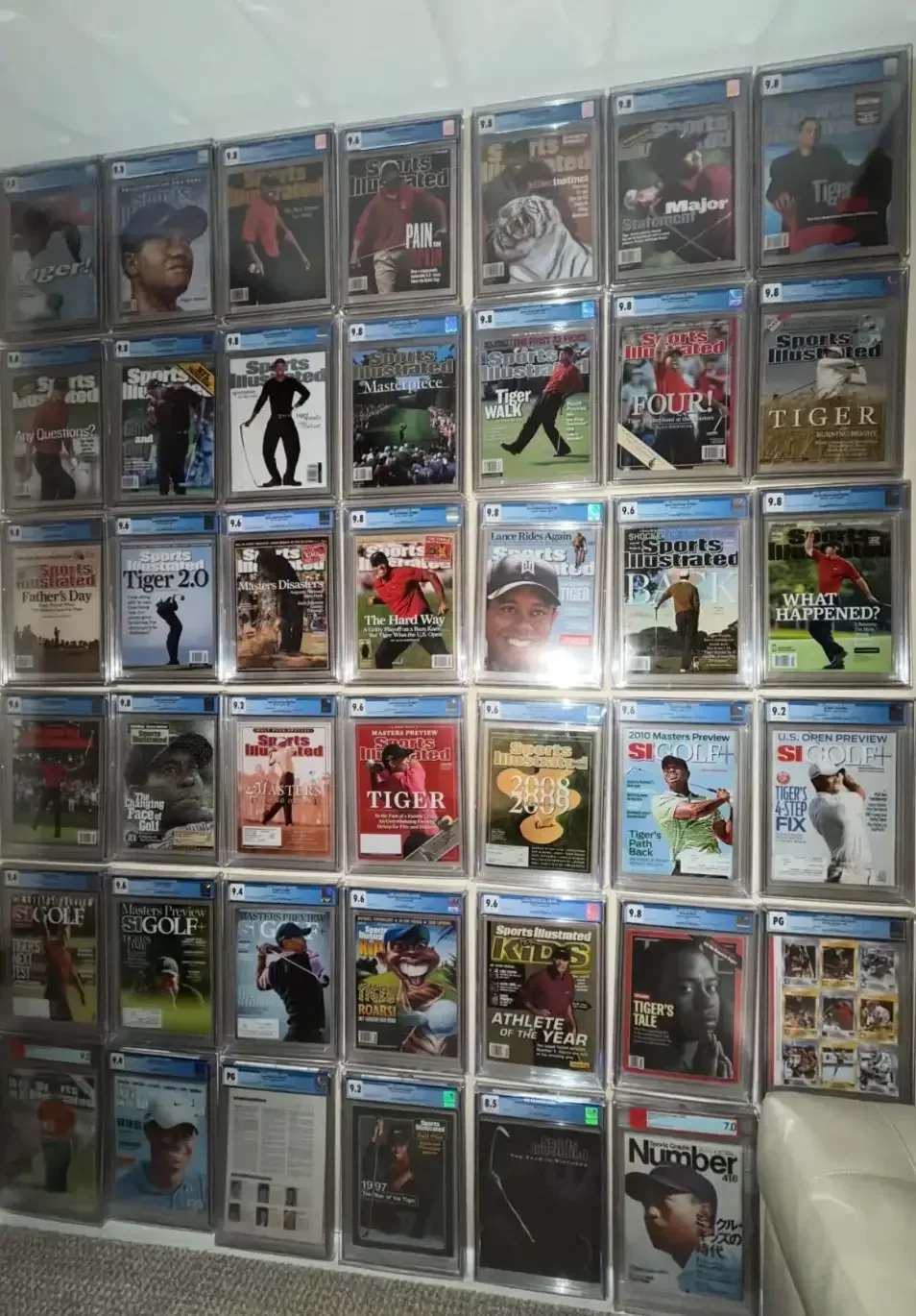
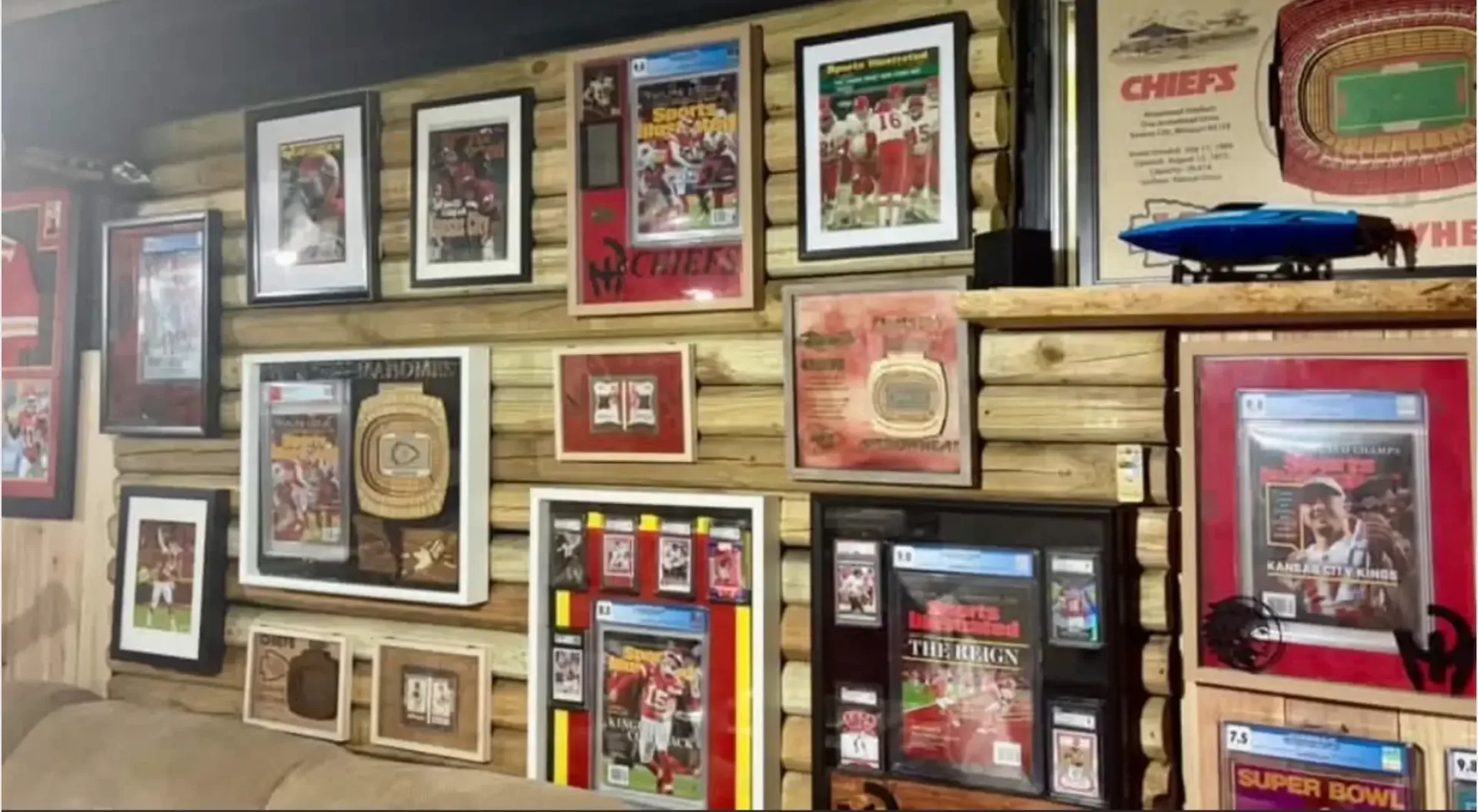
The strongest case for magazine collecting may be visual rather than numerical. Covers use large photography, artwork, typography and headlines to preserve the emotional temperature of a moment. The format allows details to breathe in a way a standard trading card cannot. That makes a graded magazine a natural companion to cards, framed photographs and other memorabilia in a themed display.
Sports imagery is also central to the appeal of periodicals. A cover can be appreciated not just as athlete memorabilia but as an editorially chosen image from its era—an angle worth considering alongside the lasting cultural role of major photographic work. In a sports magazine, the surrounding cover lines, design and publication date contribute to the artifact’s identity.
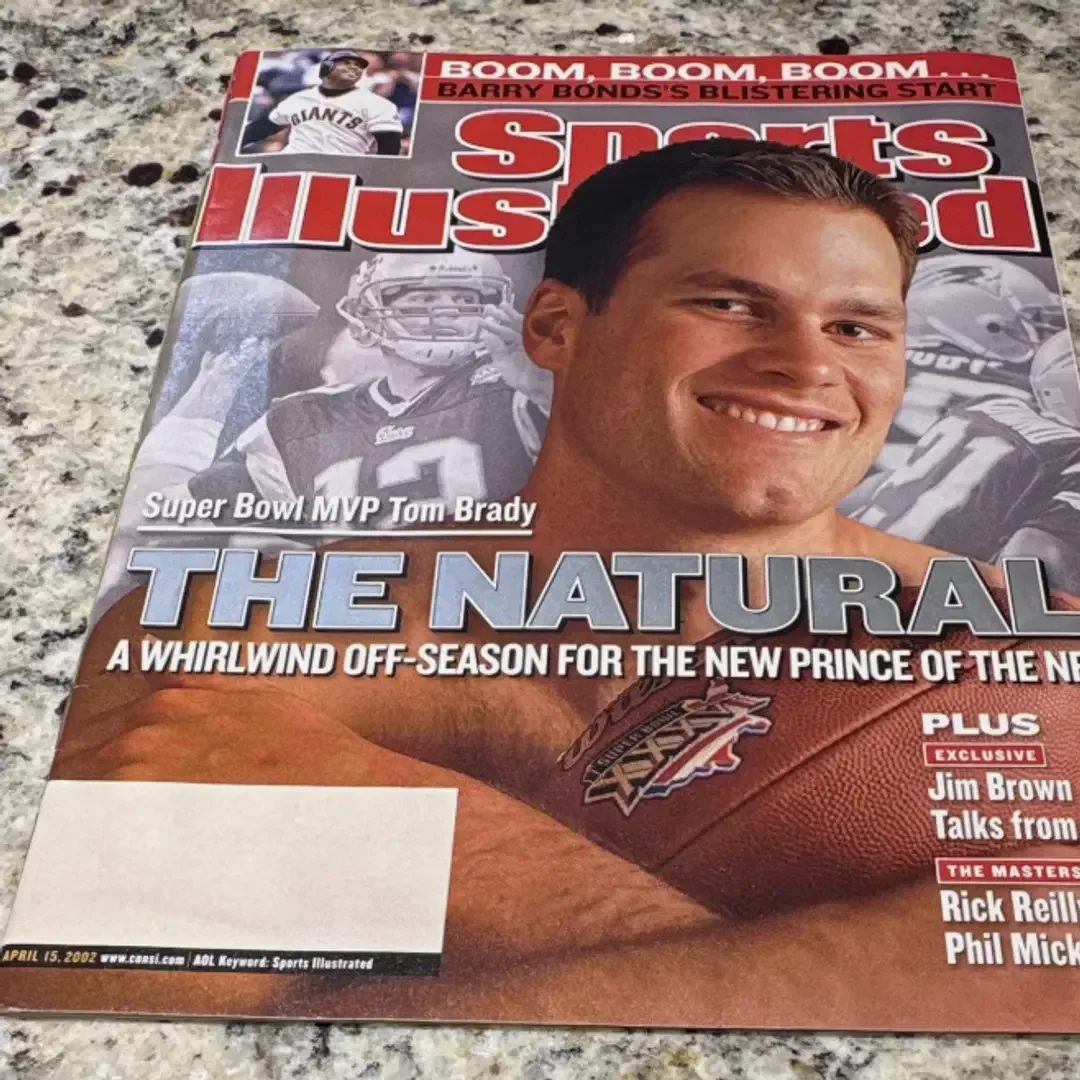
Autographs can heighten the display factor. A magazine’s larger signing area gives an athlete room for a prominent signature, and the autograph can sit directly beside a significant cover image. The appeal is especially clear in examples such as Tom Brady’s first Sports Illustrated cover from 2002 and Muhammad Ali’s first cover from 1963, published when he was still known as Cassius Clay. The magazine is simultaneously a cover collectible and a signature display piece.
Grading is not compulsory. A raw, meaning ungraded, copy can be the better choice for someone who wants to read the contemporary story, inspect period advertisements or enjoy the publication as it was originally used. Encapsulation favors protection and presentation; an ungraded copy favors tactile access. Those are different collecting goals, and neither is inherently wrong.
Historically significant issues that are not the two record holders
The record-setting Mantle and Jordan covers have obvious name recognition, but several other issues show how historical significance, nostalgia and edition scarcity can create interest at lower price points.
Jackie Robinson on Time, September 22, 1947
This issue arrived during Robinson’s groundbreaking rookie season with the Brooklyn Dodgers and has exceptional cultural weight. It is described as the first instance of a Black athlete appearing on a national magazine cover in the United States. The cited population figures list 43 CGC newsstand copies and 12 subscription copies, plus three PSA newsstand and six PSA subscription copies. A CGC 4.5 sold for $995 on September 2, 2026.
The lesson is that a magazine need not be a flashy high-grade modern sports cover to matter. Its importance comes from the athlete, the moment and what the cover represented nationally. Condition remains relevant, but historical context leads the conversation.
Beckett Basketball #1 with Michael Jordan, March 1990
For card collectors who remember waiting for monthly price guides, the first Beckett Basketball has an unusually direct nostalgia link to the hobby itself. The supplied counts are 60 CGC newsstand copies and 1,720 CGC subscription copies, alongside 22 PSA newsstand copies and 355 PSA subscription copies. Recent cited sales include $339 for a PSA 9.6 on October 21, 2026, and $223 for a CGC 9.6 on November 2, 2026.
Here, the gap between newsstand and subscription populations is more revealing than the cover subject alone. The issue connects to Jordan, but its attraction also comes from being a document of the card boom’s lived experience: collectors used the publication rather than merely admiring it from a distance.
Magic Johnson’s first NBA Sports Illustrated cover, November 19, 1979
Magic Johnson’s first NBA cover offers a different type of value proposition: recognized basketball history with comparatively accessible reported sales. The listed populations total 118 across the two graders—21 CGC newsstand, 65 CGC subscription, 23 PSA newsstand and nine PSA subscription copies. A CGC 7.5 sold for $150 on November 6, 2026, while a CGC 8.0 sold for $250 on September 20, 2026.
Its card comparison is instructive. Magic Johnson’s famous 1980 Topps rookie card shared with Larry Bird and Julius Erving has a stated total population of 27,076. The magazine cover is a much narrower, singular collectible, yet it can be found for substantially less in decent condition. Scarcity and price do not move in lockstep; demand, grade and collector awareness remain decisive.
For deep-pocketed history hunters, Babe Ruth’s early cover is a different kind of grail
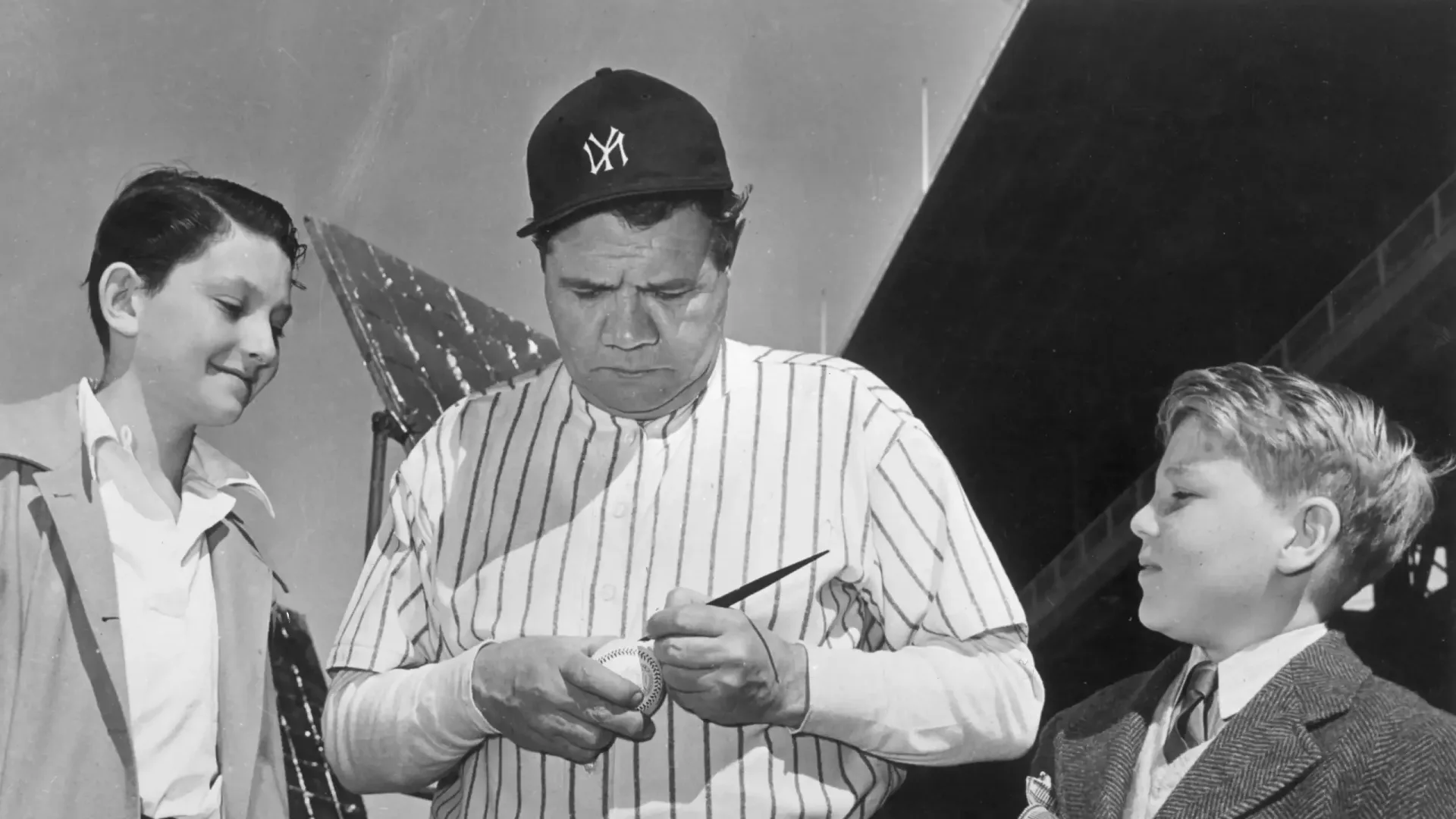
The March 4, 1916 issue of Sporting Life offers the clearest example of a magazine whose pull lies in early history rather than modern grading statistics. It features a young Babe Ruth during his Boston Red Sox pitching years, long before his identity as baseball’s home-run king. The issue also contains an unusual error: Ruth is mistakenly identified as teammate Dutch Leonard.
One longtime collector reports encountering fewer than five copies in more than 30 years of collecting. That is an anecdotal observation, not a formal population count, but it underscores the difficulty of locating particular early publications. For such material, provenance, completeness, condition and careful identification are likely to matter enormously. The cover itself is only part of the appeal.
A sensible approach for prospective collectors
Sports magazines reward specificity. Rather than buying randomly because an issue is old, collectors can choose a manageable theme: an athlete’s first covers, a favorite team’s championship covers, a publication run, a particular sport, signed issues, or a historical era. A narrower goal makes research more useful and the collection more personal.
- Identify the exact issue. Confirm the date, athlete, publication and cover variation before judging scarcity.
- Separate newsstand from subscription. They may have different population figures and collector preference.
- Read grades carefully. A 9.6 and a 7.5 are not close substitutes in a condition-sensitive market, even if both are professionally graded.
- Use population reports correctly. They track certified copies, not all surviving copies, and totals can change as new submissions arrive.
- Prioritize the collection’s purpose. A sealed high-grade display piece and a readable raw copy solve different problems.
- Buy historical or personal significance, not just a low number. A tiny graded population without sustained collector interest is not automatically a wise target.
There is no pack-opening rush in magazine collecting. Its thrill is closer to research and discovery: recognizing a meaningful cover, finding an overlooked issue, understanding why its edition matters, and deciding whether it belongs protected on the wall or open on the table. The recent record sales make the category impossible to dismiss, but the real opportunity is broader than chasing six-figure headlines. It is the chance to collect sports history in the very format that once helped make those athletes feel larger than life.
Shop the products
Check current price, model and availability at the retailer.