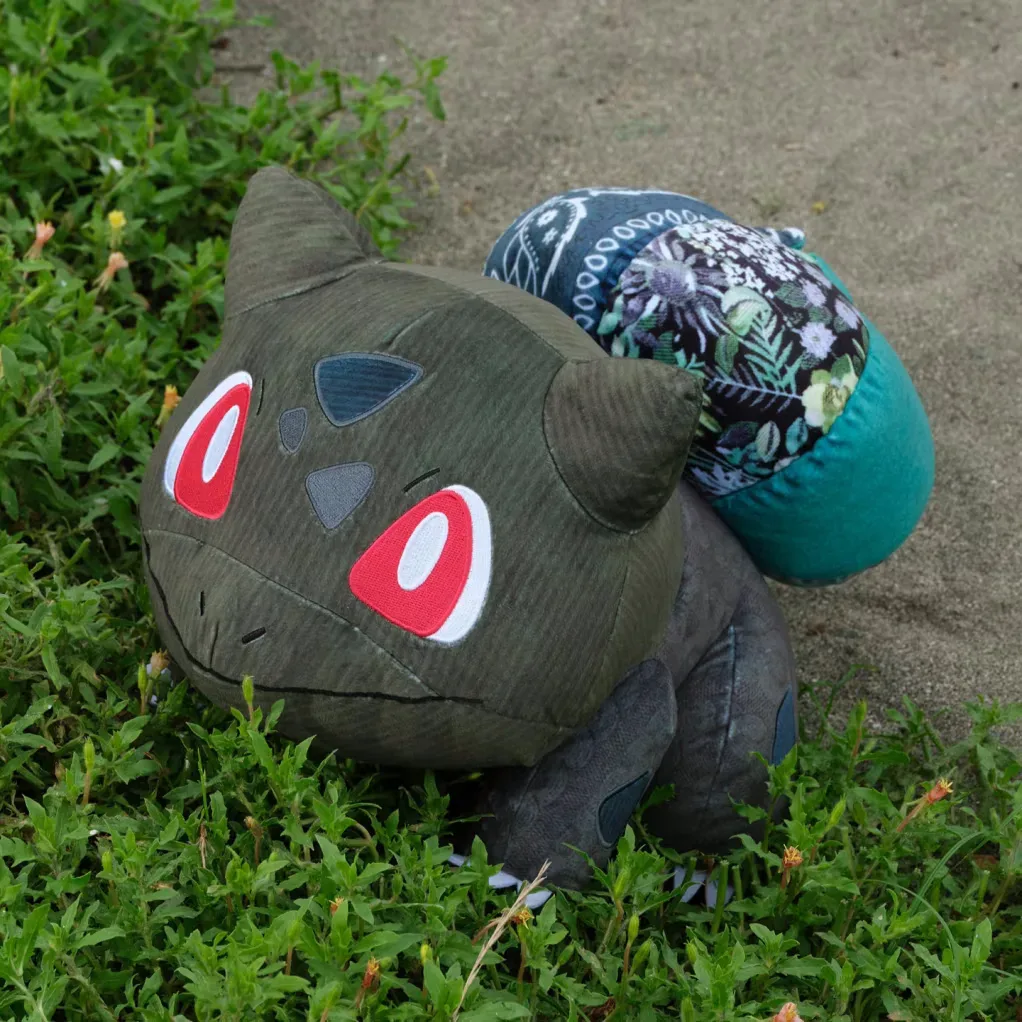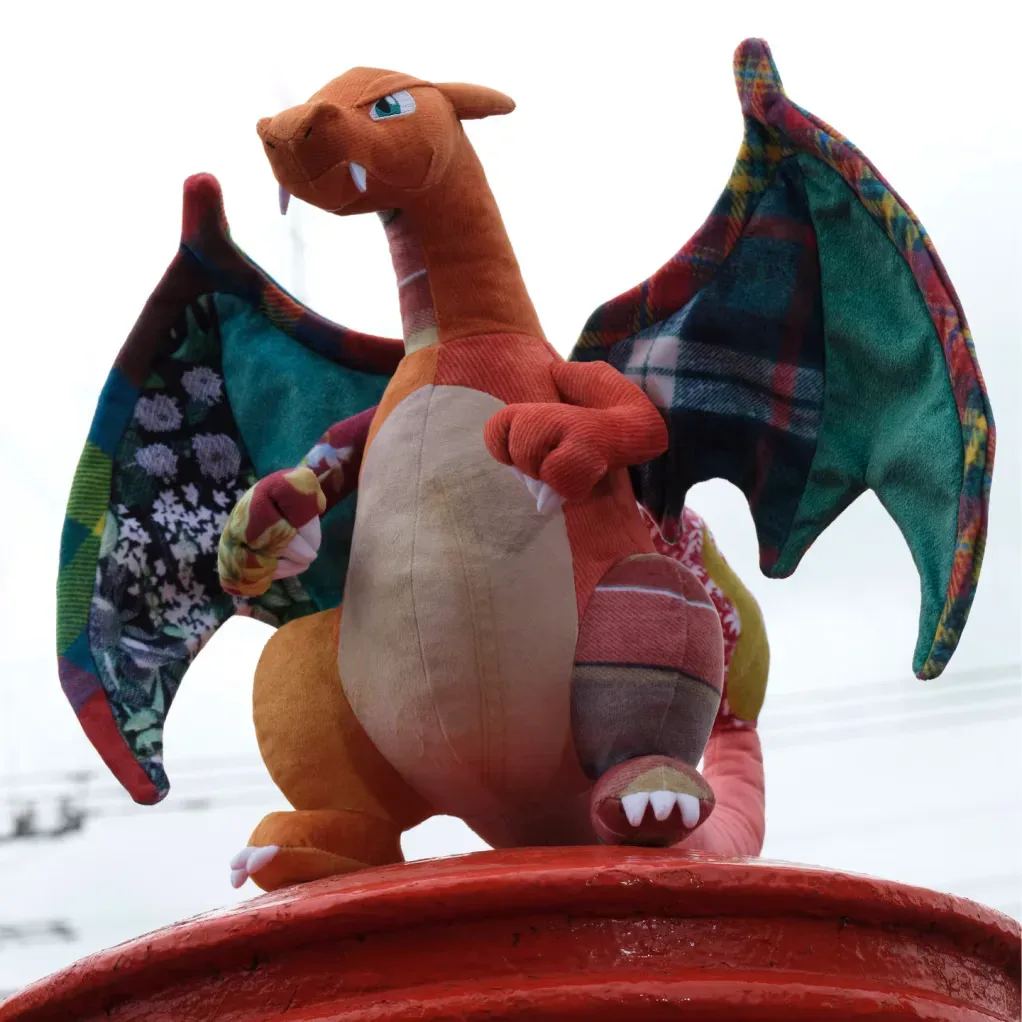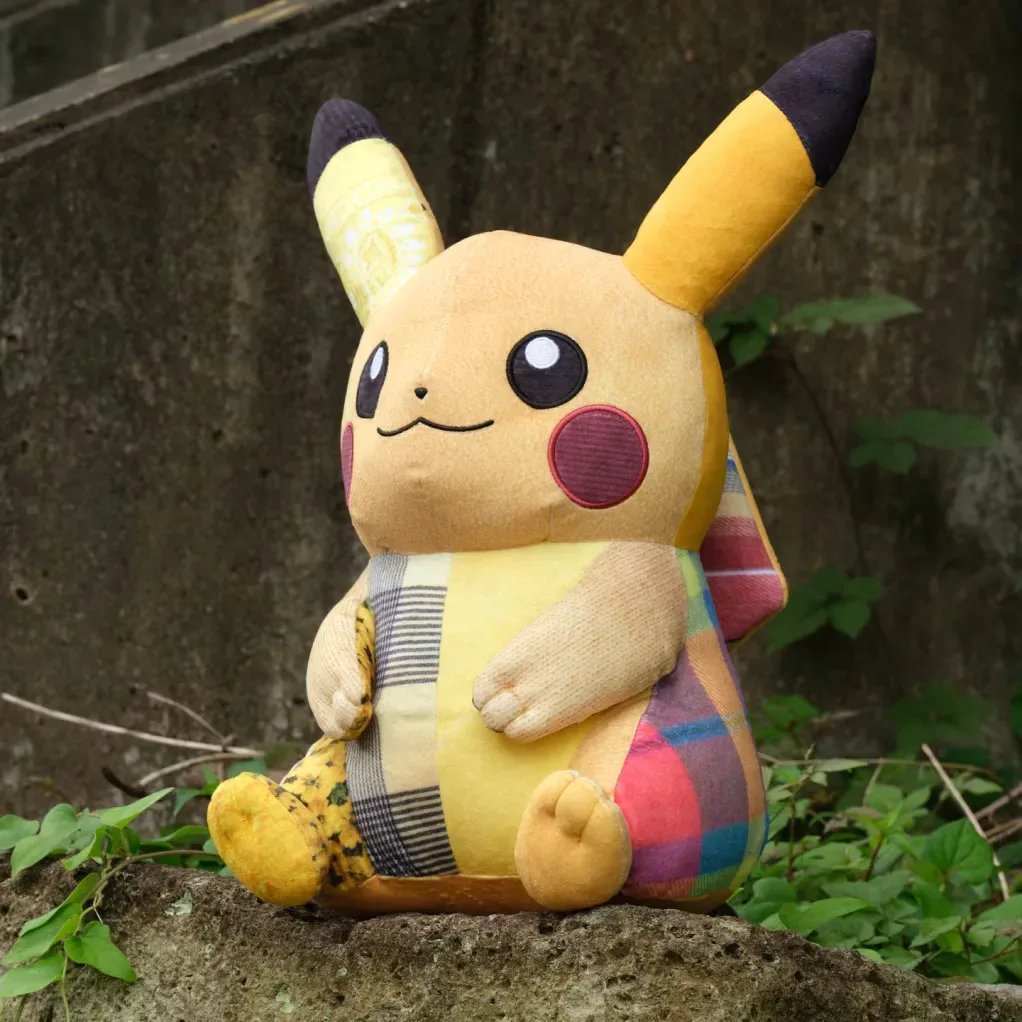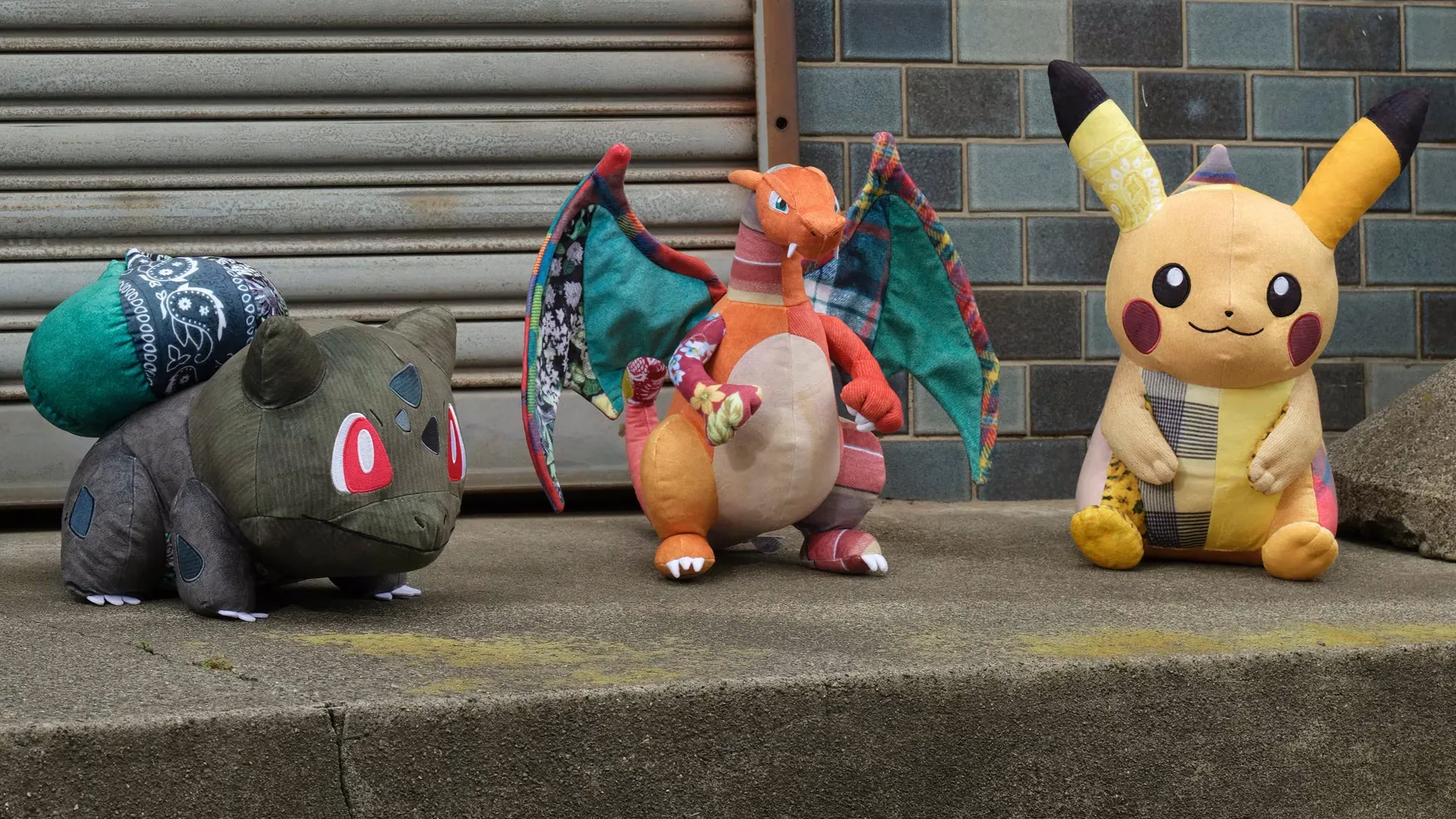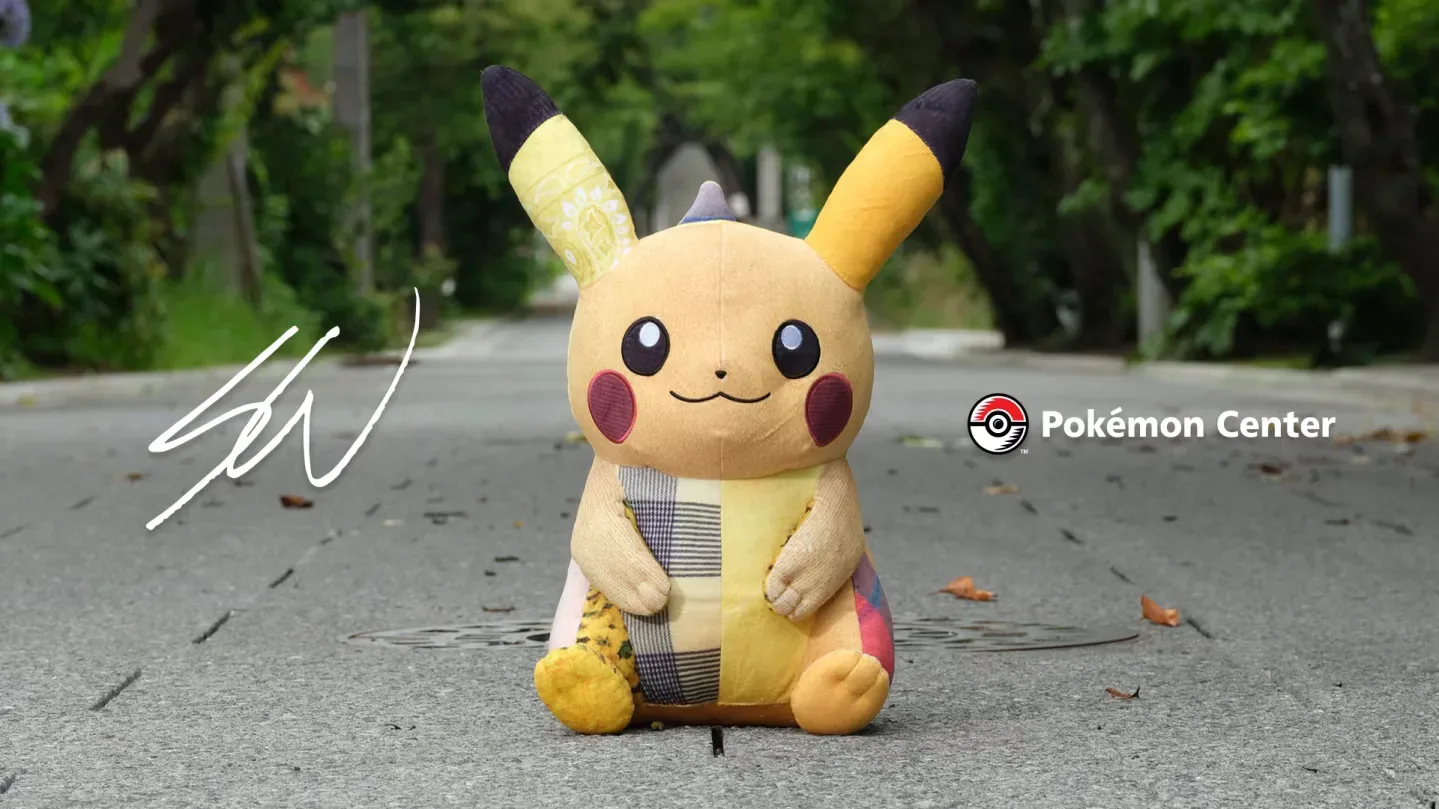
Pokémon Center has released a new three-character plush collection created with Los Angeles-based designer, curator, collector and vintage enthusiast Sean Wotherspoon. The collaboration puts a deliberately worn-in spin on three of the franchise’s most familiar faces: Pikachu, Charizard and Bulbasaur.
Rather than presenting the characters in a uniform, clean-color finish, the trio draws from the visual language of old clothes, well-loved toys and eclectic personal collections. Patchwork textiles, clashing or complementary patterns, mixed textures and a faded appearance are the defining features. The result is less “factory-fresh mascot” and more “treasured find with a story”—while still being newly made plush.
A familiar trio treated as design objects
Pikachu, Charizard and Bulbasaur are hardly obscure Pokémon choices. That is partly what makes the styling direction notable. Each character arrives with an instantly readable silhouette and a deep connection to Pokémon merchandise history, so the collaboration does not need to rely on rarity or an unfamiliar species to establish its identity. Its point of difference is material treatment.
Patchwork generally refers to a surface assembled to resemble separate fabric pieces. Here, it is part of a broader handmade and archival aesthetic: the designs pair varied textile-like elements instead of pursuing one uninterrupted color field. The approach gives the plush a layered appearance and emphasizes the sense that the work is inspired by garments and objects that have lived a life before reaching a collector’s shelf.
The faded and weathered look should not be confused with actual wear. The supplied description frames it as intentional design inspiration drawn from pre-loved clothing and collectibles. For collectors, that distinction matters. These are new retail products whose visual character references age, repair, mismatch and history; they are not described as secondhand or vintage Pokémon items.
Wotherspoon’s nostalgic-contemporary approach
The collection is presented as an expression of Wotherspoon’s recognizable blend of contemporary design and nostalgia. That pairing is apparent in the premise alone. Pokémon is a long-running entertainment property with characters that connect different generations of fans, while the plush use visual cues associated with vintage fashion and older toys.
There is an appealing tension in that combination. Pokémon merchandise is often built around visual consistency: the recognizable yellow of Pikachu, the orange associated with Charizard and Bulbasaur’s green-and-blue palette make immediate identification easy. This trio appears to make room for a more irregular visual read. Mismatched colors and textures add personality without moving away from the three characters selected for the collection.
That is likely to be the main appeal for people who already own standard versions of these Pokémon. A collector who has seen many conventional Pikachu, Charizard or Bulbasaur plush may find this set distinct because it changes the surface, pattern and mood rather than merely altering a pose. It is a collaboration designed around display character as much as character recognition.
Related coverage includes Sean Wotherspoon x Pokémon Center Plush Collection Launches With Bulbasaur, Charizard, and Pikachu.
Why a “pre-loved” aesthetic works on plush
Plush already carries an association with comfort, childhood and attachment. A vintage-inspired finish amplifies those ideas visually. A toy that looks pristine can feel like a newly issued product; a toy styled around fading, patchwork and mixed material cues can suggest the memory of a favorite possession, even before it has spent time on a shelf.
That does not mean every collector will prefer it. Fans who value screen-accurate colors or a coordinated display may gravitate toward more traditional Pokémon Center plush. The Wotherspoon designs serve a different collecting instinct: one focused on texture, fashion-influenced styling and a less standardized visual identity.
It also gives the three-piece lineup a shared theme. Bulbasaur, Charizard and Pikachu do not need to be linked by evolution or a single in-game region to make sense together here. Their connection is the material and stylistic treatment applied across the collaboration.
What is confirmed about the release
The collection consists of three plush: Bulbasaur, Charizard and Pikachu. Pokémon Center has made the trio available now. The available details identify the retro-inspired patchwork styling, eclectic patterns, mismatched textures and faded finish as central characteristics of the products.
No price, size, material composition, regional storefront coverage, production quantity or restock plan is provided in the release details. Collectors should therefore avoid assuming that the three plush share the same dimensions, that they are limited editions, or that they will remain available for a particular length of time. Those details require confirmation directly from the relevant Pokémon Center product listings.
Likewise, the description does not establish whether the three characters are sold only individually, as a bundle, or through both options. The safest takeaway is simply that the trio has launched and that each design is part of the same Sean Wotherspoon collaboration.
Practical considerations for collectors
The strongest reason to consider these plush is their visual specificity. This is not a release whose described appeal rests on gameplay functionality, trading-card pull rates or an in-universe tie-in. It is a physical collectible line where the design treatment is the attraction.
- For a coordinated shelf: The three pieces share a common retro, textile-led aesthetic, making them suitable as a grouped display even though the characters come from different points in Pokémon’s catalog.
- For character-focused collections: Pikachu, Charizard and Bulbasaur collectors now have a style variation that differs from standard plush presentations through its patchwork and faded look.
- For condition-minded buyers: The weathered appearance is intentional. Collectors assessing a new item should distinguish designed fading and pattern variation from accidental damage after purchase.
- For shoppers comparing releases: Check the actual product pages for dimensions, care information, price and stock status rather than inferring those particulars from the collection announcement.
The condition point deserves particular attention in a hobby where presentation can shape collecting decisions. An intentionally distressed aesthetic can make an item look different from the unmarked, high-saturation finish many buyers expect from new merchandise. That is the concept here, not an indication that the plush have been used. Keeping packaging and purchase information may be useful for collectors who want to document exactly which collaboration edition they own.
Not a card release, but a notable Pokémon collectible
Although Pikachu, Charizard and Bulbasaur are names with enormous trading-card presence, this launch belongs to a different side of Pokémon collecting. It is about physical display objects and designer collaboration rather than cards, set completion or grading. Collectors tracking Pokémon across formats can nevertheless view it as another example of how the same core characters can be reinterpreted through distinct material cultures.
For card-focused readers, Joking Joystick has also covered the early discussion surrounding the Pokémon TCG 30th Celebration pull reports. The two stories address different collecting lanes, but both underline the enduring pull of Pokémon’s best-known characters and the importance of separating confirmed details from assumptions.
A collaboration built around texture and personality
Sean Wotherspoon’s Pokémon Center trio is a focused reinterpretation, not an attempt to replace the conventional version of these characters. Bulbasaur, Charizard and Pikachu remain recognizable favorites, but their presentation leans into the imperfections and visual richness associated with vintage clothing and cherished toys.
For plush collectors, the value proposition is clear from the confirmed details: an officially released trio with patchwork textiles, eclectic patterns, mixed textures and a purposely faded retro feel. The collection is available now, while the practical specifics that matter to individual buyers—such as price, measurements and current stock—should be verified on Pokémon Center before making a purchase decision.