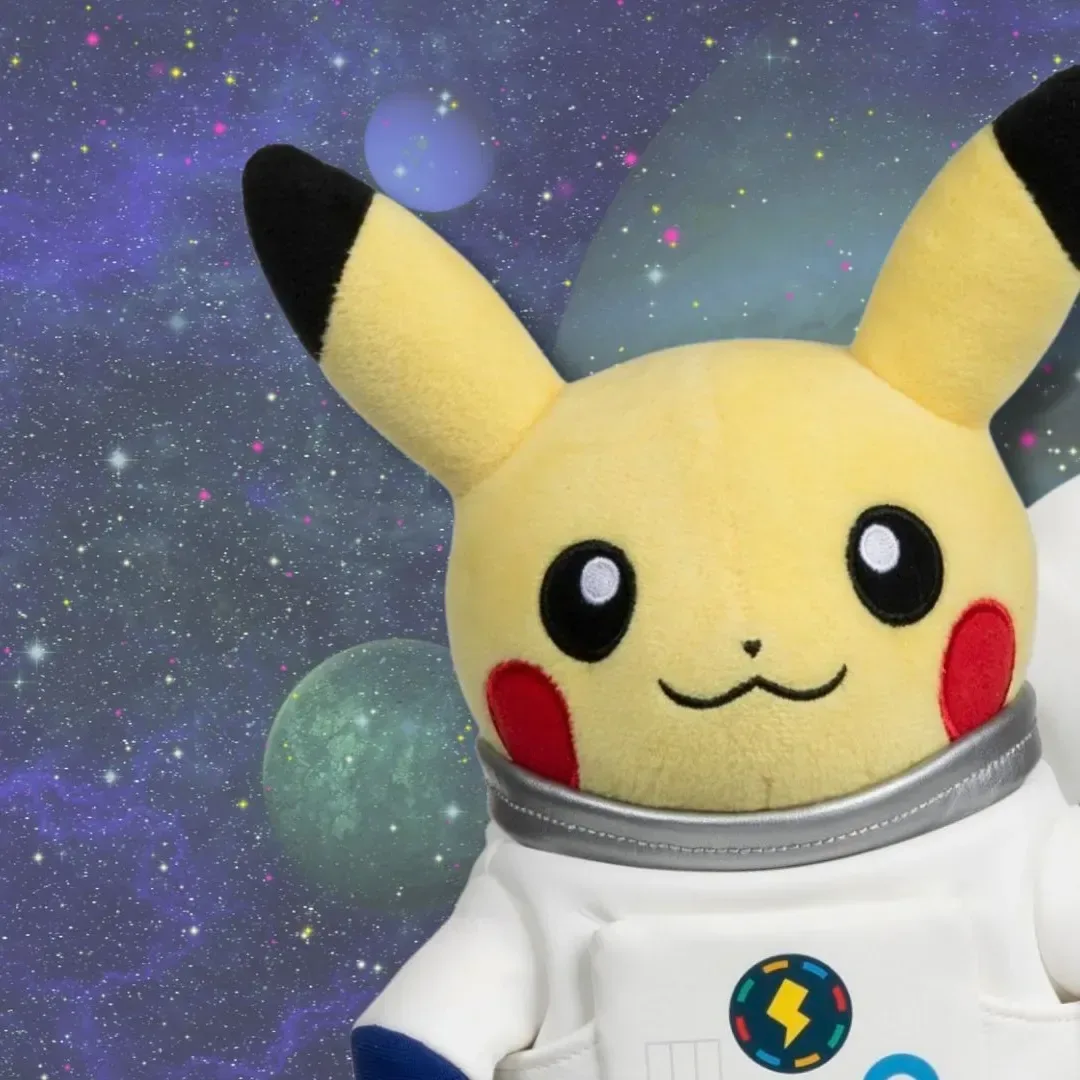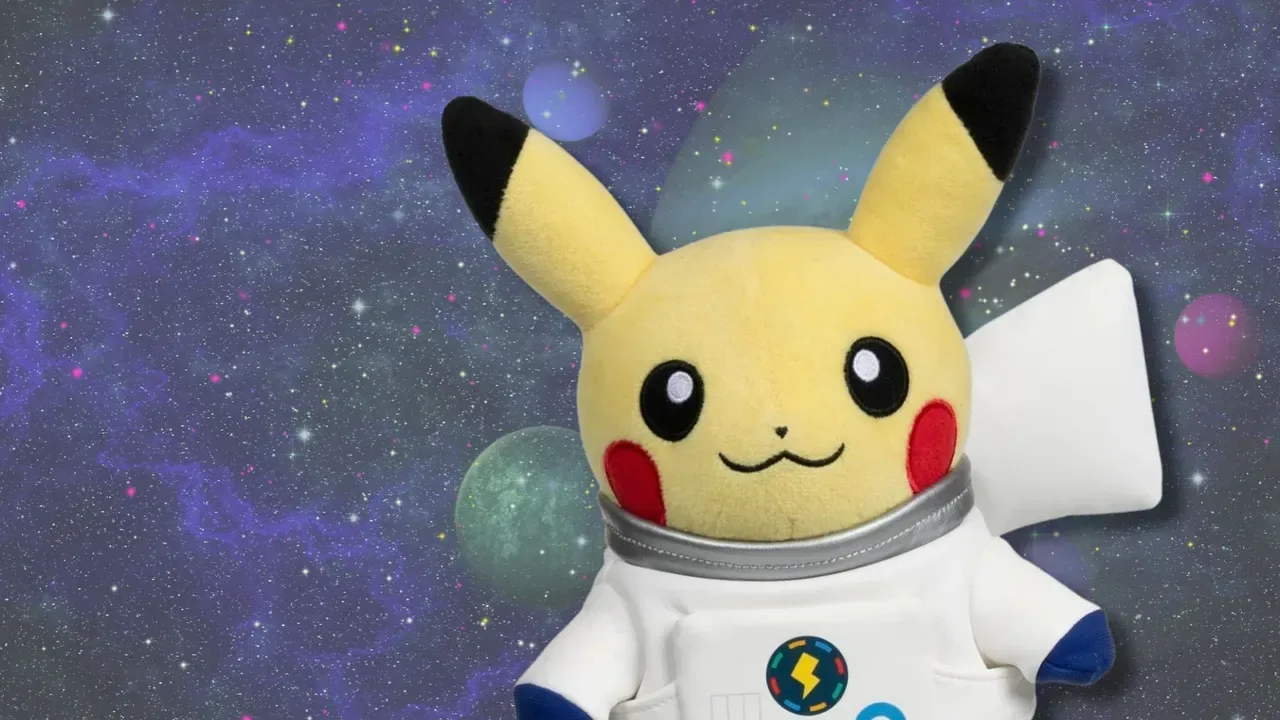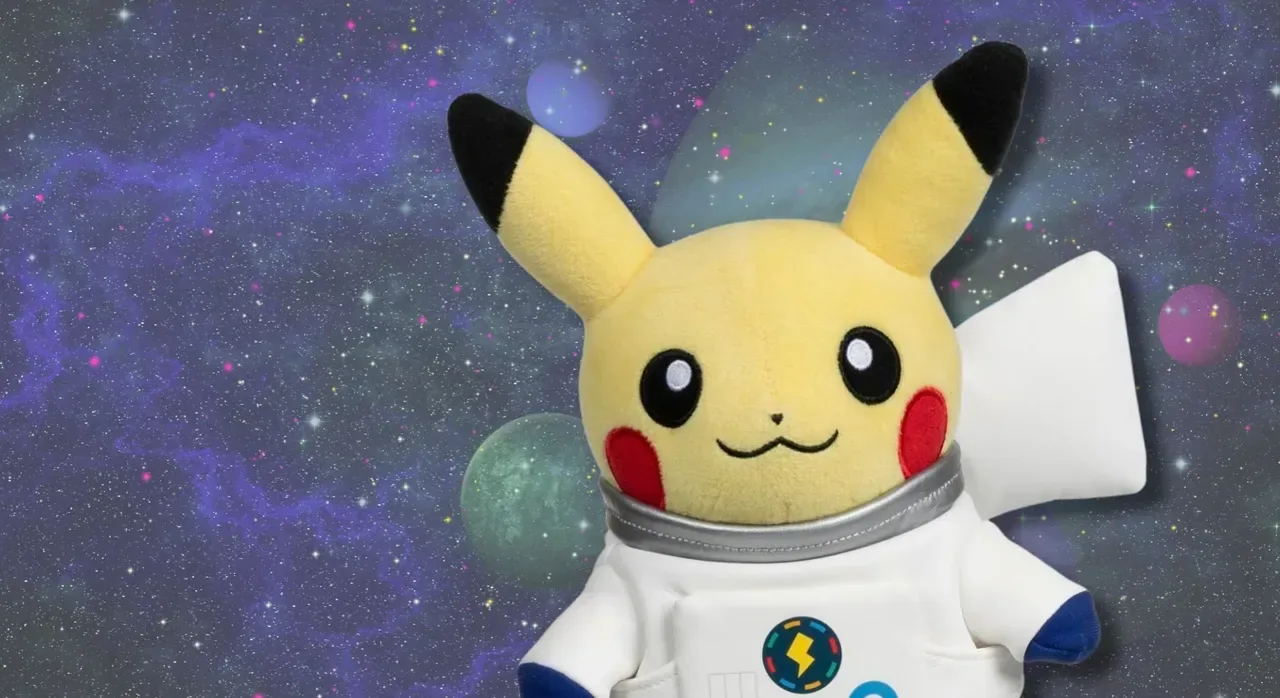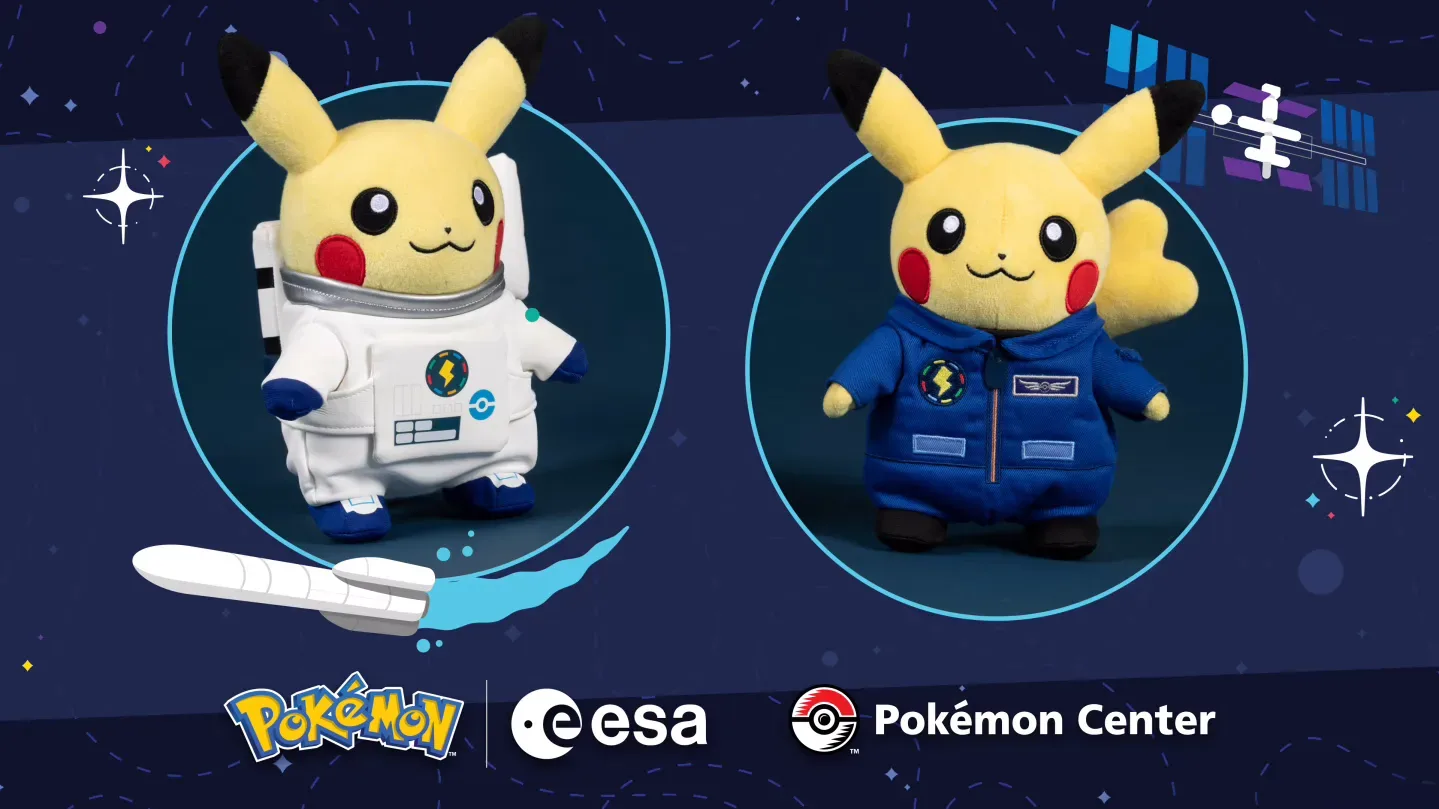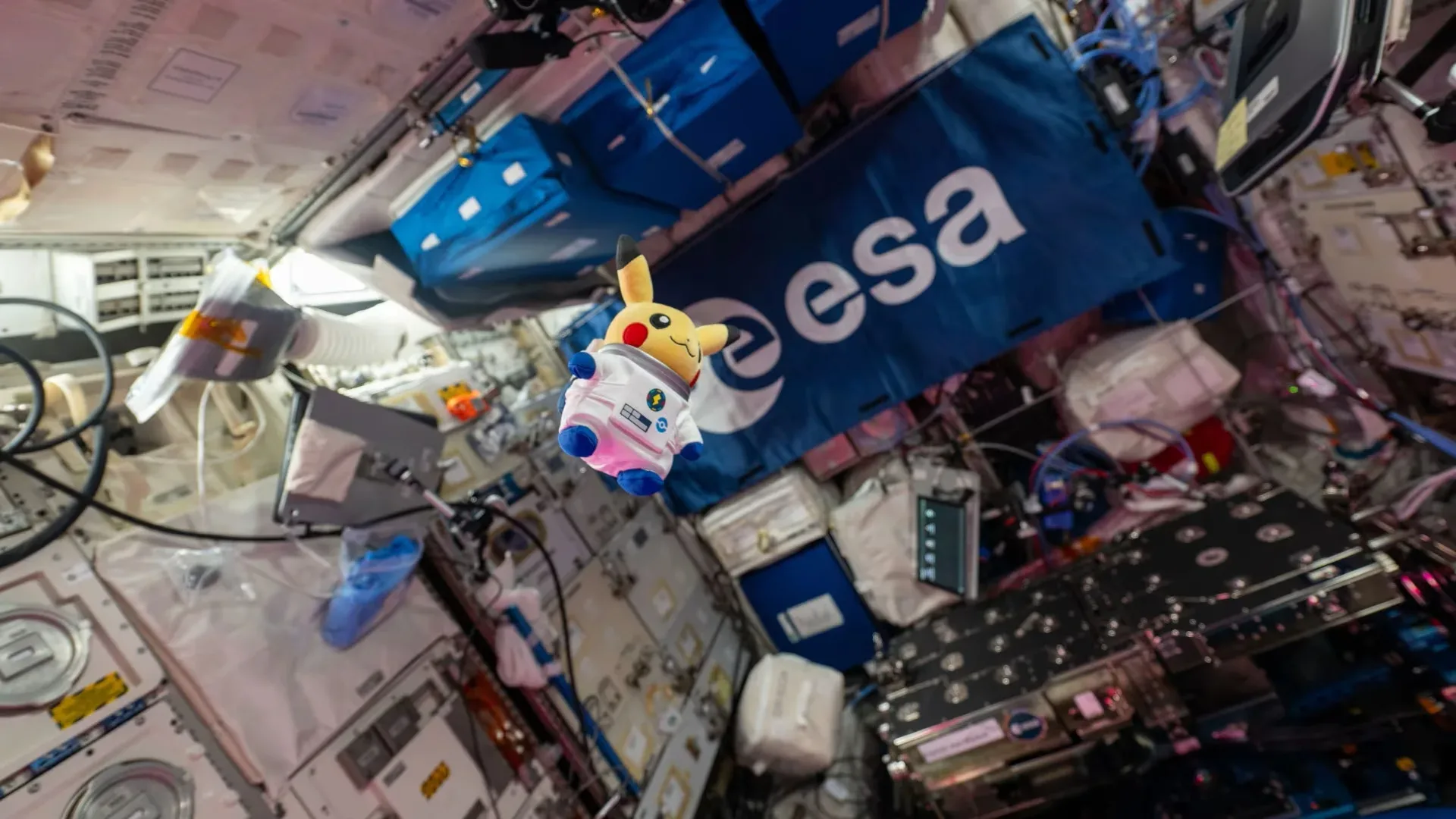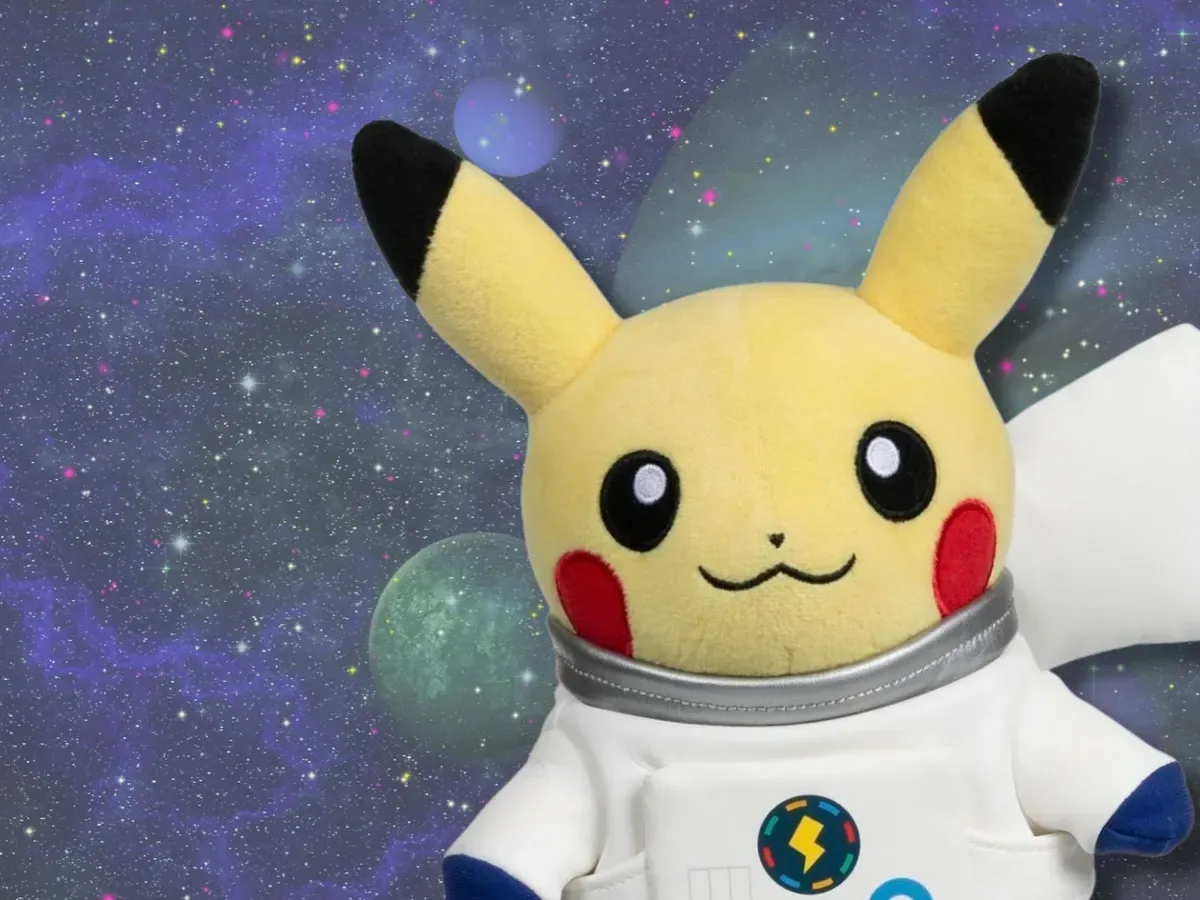
Pokémon’s collaboration with the European Space Agency has reached its retail phase with a space-themed collection at Pokémon Center. Its centerpiece is a pair of Pikachu plushies in versions of an ESA spacesuit, each listed at $29.99. The design has an unusually direct connection to the real-world project behind the range: it is modeled after the Pikachu plush that astronaut Sophie Adenot took on a flight to the International Space Station earlier this year.
That original plush launched on April 11 and spent 67 days in orbit, circling Earth more than 1,000 times. In a category where “space-themed” often just means stars printed on a familiar character, that mission gives this Pikachu a specific story. The retail plush is not simply a cosmic redesign; it references a character plush that was part of an ESA flight associated with the ISS.
The release also arrives immediately before World Space Week, which begins October 4. Pokémon’s wider space activity on that date includes a new space-themed event in Pokémon GO and interactive “Space and Pokémon” exhibitions at select museums in Europe. The merchandise collection itself extends beyond plush, covering apparel, pins and accessories for the Pokémon Trading Card Game.
What is in the Pokémon x ESA range?
The two astronaut Pikachu plushies are the clearest expression of the ESA partnership, but the collection is built to serve several kinds of Pokémon fan. Alongside the plush are TCG accessories including a binder, deck box and playmat. These are practical items for players and collectors who organize cards, carry a deck or protect a play surface during games.
The artwork on those accessories depicts astronaut Pikachu floating with Lunatone, Cosmog and Minior. That character selection makes sense within the collection’s visual language: Lunatone is explicitly lunar in design, Cosmog is closely associated with space in the Pokémon world, and Minior has a meteor-like form. The effect is a broader cosmic Pokémon scene rather than merchandise limited to Pikachu alone.
Apparel is another major portion of the drop. T-shirts and hoodies use the same space-oriented Pokémon graphic seen across the accessories. At the top end is a bomber jacket listed at $129.99, featuring individual Pokémon patches and a Poké Ball zipper. Pins are also part of the assortment.
- Two ESA spacesuit Pikachu plushies: listed at $29.99 each.
- TCG accessories: a binder, deck box and playmat with astronaut Pikachu, Lunatone, Cosmog and Minior artwork.
- Apparel: T-shirts, hoodies and a $129.99 bomber jacket.
- Small-format merchandise: pins.
Most of the range is available now through Pokémon Center. One related item remains on the horizon: a figure of Pikachu in the astronaut outfit has been identified, but does not yet have a release date. That distinction matters for anyone trying to complete the theme. The plush, apparel and TCG products constitute the current release, while the figure is a future product rather than an item shoppers can presently add to an order.
Why the ISS connection changes the appeal
There is a meaningful difference between a plush that looks like an astronaut and a plush whose look follows one that went to the ISS. The original Pikachu’s 67-day stay in orbit is the factual anchor for the collection. It also ties the retail products to ESA’s participation in a highly visible educational and cultural context rather than asking fans to infer the connection from a logo alone.
Related coverage includes Pokémon x ESA Collection Lands With Astronaut Pikachu Plush.
The International Space Station, or ISS, is the orbital station named in the collaboration’s story. “Orbit” here means traveling around Earth rather than traveling away from the planet into deep space. The reported tally of more than 1,000 trips around Earth conveys the scale of the plush’s time aboard: its mission was not a brief launch-day appearance, but a stay stretching over more than two months.
For Pokémon collectors, the collaboration’s appeal is likely to sit at the intersection of character collecting and event-linked merchandise. The evidence supporting the connection is unusually easy to describe: an astronaut Pikachu plush flew to the ISS; the new plush designs are modeled after it; and the merchandise is releasing around World Space Week alongside other Pokémon space initiatives. That is a much firmer collecting narrative than a generic seasonal graphic.
It is also worth separating what is known from what is not. The $29.99 price applies to the two new Pikachu plushies, while the bomber jacket is listed at $129.99. No release date has been provided for the astronaut Pikachu figure. Likewise, the available information identifies select European museums for the exhibitions but does not name specific venues here. Avoiding assumptions is especially helpful for a collaboration spread across physical merchandise, a mobile-game event and in-person programming.
TCG accessories are not the same as new cards
The binder, deck box and playmat are Pokémon TCG accessories, not a newly described card expansion or promotional-card release. That technical distinction is useful for buyers who collect cards and for players who want functional equipment.
- Binder: a storage and display format intended for cards.
- Deck box: a container for carrying a playing deck.
- Playmat: a surface used to define and protect a play area during card games.
In other words, the collection gives players a coordinated space theme for table setup and transport without the supplied details establishing any new cards as part of the drop. For collectors, that means the appeal is primarily the accessory art and the ESA collaboration, rather than a chase-card or set-completion proposition. It is a practical distinction when deciding whether the products fit a card collection, an everyday play kit or a broader Pikachu display.
The branded accessories also create a bridge between Pokémon’s game-facing audience and its physical-goods audience. A plush or jacket can be displayed or worn, while a deck box and playmat have an ongoing use at the table. The shared illustration brings those different product types together around the same astronaut Pikachu concept.
World Space Week places the drop in a larger Pokémon program
The timing is part of the point. World Space Week begins October 4, and Pokémon is using that date for more than the merchandise push. The incoming Pokémon GO event gives the space theme a playable component, while the museum exhibitions bring it into a public, interactive setting in Europe. The collection is therefore one portion of a larger campaign that uses Pokémon as a route into space-focused activities.
That broader structure helps explain why the ESA theme includes more than the obvious astronaut Pikachu. The TCG artwork’s Lunatone, Cosmog and Minior foreground celestial imagery, and the apparel repeats that group presentation. Pikachu remains the recognizable focal point, but the visual system makes room for Pokémon whose designs naturally support the setting.
The release also lands during Pokémon’s 30th-anniversary year, when the franchise has been marking the milestone with partnerships. This ESA project stands apart because its premise is connected to an actual journey to the ISS. The new product line takes a moment that began with an astronaut-carried plush and turns it into a wider selection of display items, clothing and play accessories.
What prospective buyers should keep in mind
For someone interested specifically in the mission-linked portion of the collaboration, the astronaut Pikachu plushies are the most direct choice. They trace their design to the ISS-bound original and are listed at $29.99. Someone more interested in utility can look to the binder, deck box or playmat, while the clothing makes the artwork wearable. The bomber jacket is the collection’s highest-priced disclosed item at $129.99.
It is sensible to distinguish those aims before purchasing. A plush is the clearest physical reference to the flight; the TCG products are the most functional; and the jacket is the premium apparel statement. The still-undated figure may appeal to display-focused collectors, but it should be treated as an announced future item rather than part of the merchandise currently available.
The collection’s main value is not that it promises a new Pokémon generation or a new card set. It is a themed physical release built around a real ESA-linked moment, with a coordinated design language across several product categories. Fans looking for more game bargains rather than merchandise can also browse the current roundup of notable PC game deals under $15.
For Pokémon fans, space enthusiasts and Pikachu collectors, the compelling detail remains delightfully straightforward: an astronaut Pikachu spent 67 days orbiting Earth, and the new Pokémon Center collection gives that unusual journey a tangible afterlife on shelves, game tables and jackets.