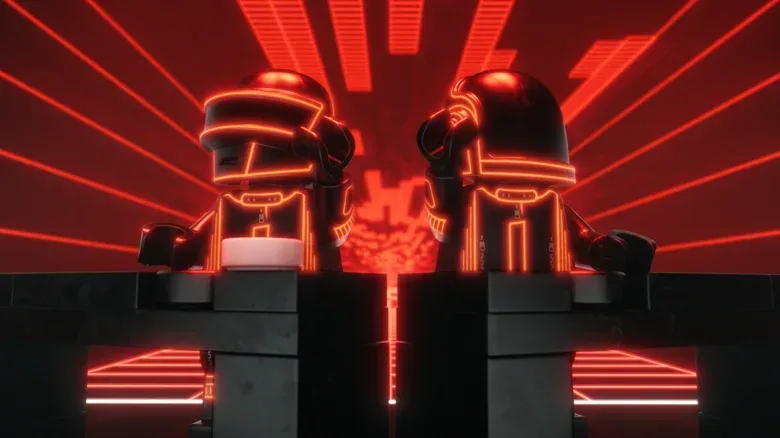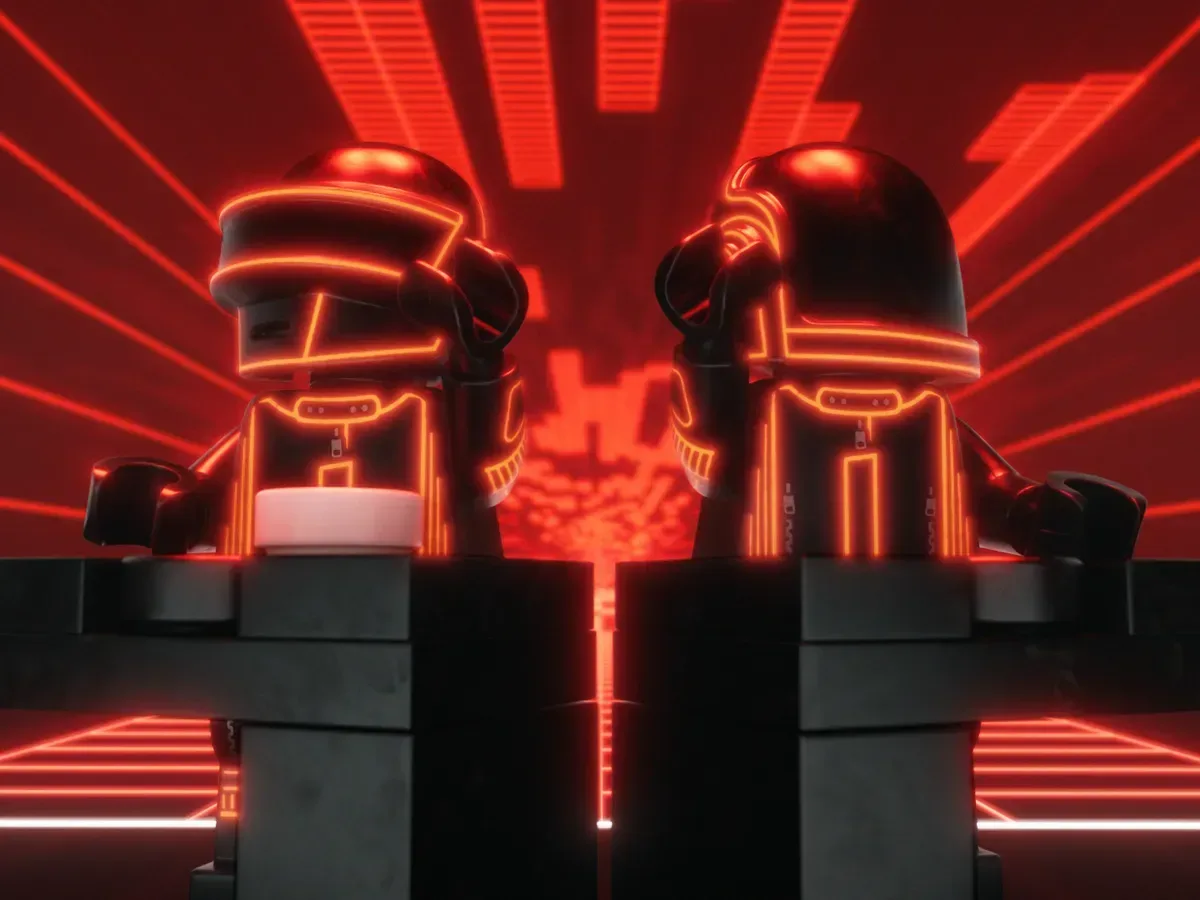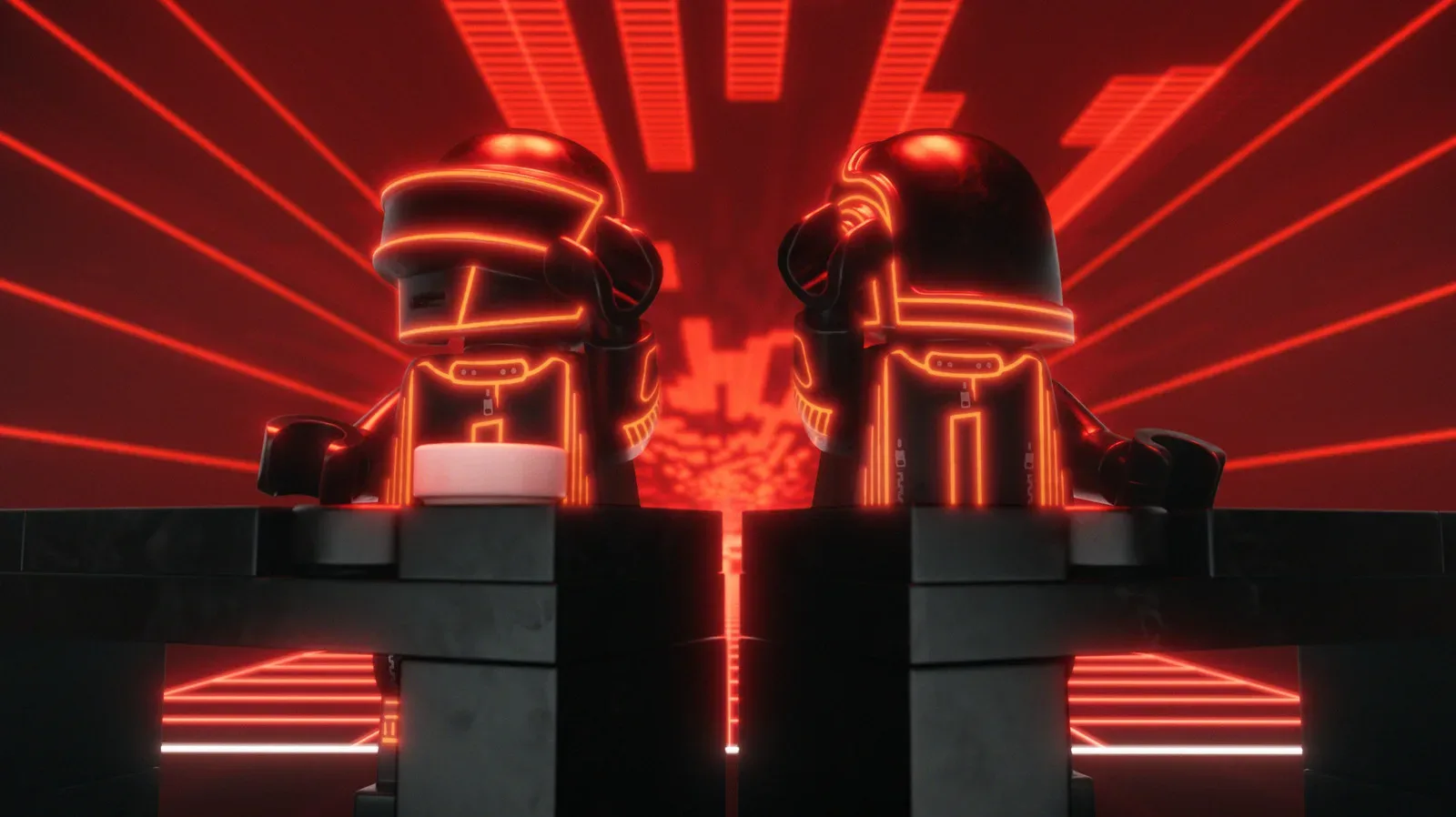
Daft Punk’s towering Alive 2007 stage pyramid is being rebuilt in bricks. LEGO has confirmed that an official set based on the French duo’s landmark live-production centerpiece is in development, adapting a fan-created model that won the company’s Music to Our Ears contest in 2020.
The news gives a formal future to an idea already built around the defining visual of Daft Punk’s 2007 tour: a glowing pyramid with the helmeted performers positioned at its center. The final retail version is being developed with Patrick Harboun, the fan designer known as RobotRock. Crucially, LEGO has not announced a price, release date, final piece count or complete feature list. More information is expected in 2027.
For the core announcement and the confirmed connection to the Alive 2007 stage production, see our LEGO Daft Punk set coverage.
A fan build moves toward an official product
This project began as a father-and-son lockdown build from Luxembourg. Their approximately 2,000-piece concept was designed to capture the live pyramid’s illuminated, kinetic presentation rather than merely make a static triangular display. At its heart was a motorized rotating box made from transparent bricks, intended to evoke the shifting visual energy associated with the concert staging.
That distinction matters. A display model recreates an object’s outline; a kinetic display aims to suggest how the object behaved and felt in use. The fan model’s rotating transparent-brick assembly was therefore not just an extra play function. It was an attempt to translate changing light, motion and a large-scale stage illusion into a compact LEGO mechanism.
The winning design came through LEGO’s Music to Our Ears contest in 2020. Its transition from contest project to licensed product is a notable part of the story, especially because Harboun is working with LEGO’s designers on the finished release. The resulting set should be treated as an evolution of the original concept, not as a promise that every element of that roughly 2,000-piece model will appear unchanged on shelves.
That is a normal distinction between a fan submission and an official release. The confirmed facts establish the theme, the source design and the creator’s continued participation in final development. They do not establish the final scale, construction approach, included figures, electronic elements or motorized functionality. Until LEGO publishes those specifics, each remains unknown.
Why the pyramid is the obvious Daft Punk build
The announced set is centered on the Alive 2007 pyramid rather than a general Daft Punk collage, a studio scene or one of the duo’s many other visual motifs. That gives the product a highly specific focal point: it is built around a performance environment, not simply the pair’s recognizable robot helmets.
Related coverage includes Daft Punk’s Alive Pyramid Is Becoming an Official Lego Set.
In practical display terms, the pyramid has several advantages for a brick model. Its strong silhouette remains recognizable from a distance, while transparent elements can convey lighting without requiring the builder to reproduce every detail of a concert venue. The original fan model’s moving internal component also points toward an approach where the stage’s visual drama is represented through mechanics and translucent construction rather than an attempt to create literal concert-scale effects.
The official reveal material has leaned into that concert identity. Daft Punk and LEGO initially teased the collaboration through the duo’s WDPK 83.7 YouTube stream with a red holographic speaker-brick image. A subsequent short video depicts Daft Punk minifigures following the glowing brick through a dark setting before their console appears. “Voyager” and “Human After All” are used in the clip.
Those visuals confirm the collaboration’s musical and performance-oriented direction. But a promotional animation is not an inventory sheet. It should not be read as confirmation that every item shown—whether minifigures, the console or the glowing-brick concept—will be included in the box. The announced product is the pyramid-based set; further product details remain pending.
What builders and collectors should watch for next
The next announcement will matter more than the teaser for anyone planning to build, display or collect the set. Four details in particular are still unresolved.
- Price: No cost has been disclosed, so there is no reliable basis for comparing it with other LEGO releases or estimating its position within the company’s lineup.
- Release date: LEGO has only indicated that more news is coming in 2027. That is not the same as a confirmed launch window.
- Final scale and piece count: The approximately 2,000-piece figure applies to the original fan construction. The official set’s count has not been provided.
- Functions and contents: The fan model used a motorized rotating transparent-brick mechanism, but LEGO has not confirmed whether the finalized product will retain that mechanism, alter it or use a different solution.
For prospective buyers, the useful move is patience rather than inference. A set can preserve the spirit of an Ideas-style fan concept while changing its dimensions, internal engineering, colors or functions to meet official design requirements. Harboun’s collaboration with LEGO confirms a meaningful link to the fan creation; it does not make the early build a final product specification.
More than a one-off appearance?
LEGO’s marketing chief Julia Goldin characterized the reveal as the beginning of a broader creative collaboration for fans “ready to lose themselves to play.” That wording suggests the company sees room for Daft Punk beyond this single pyramid project, though it does not confirm any additional sets, characters or release plans.
Daft Punk had already appeared in LEGO form before this announcement. The duo made a LEGO-animated cameo performing “Get Lucky” in the 2024 Pharrell Williams film Piece By Piece. The new pyramid set is different in purpose: rather than a brief screen appearance, it is a dedicated physical product centered on a particular live-era visual.
That specificity is likely to be the set’s appeal. It addresses Daft Punk as a live spectacle with a single, instantly identifiable stage object at the center, while also recognizing the work of the community member who made the concept tangible first. If the final model retains the fan project’s interest in light-like transparent elements and physical movement, it could offer builders an especially fitting interpretation of a production remembered for motion and visual intensity.
For now, the confirmed promise is straightforward: an official LEGO Daft Punk set based on the Alive 2007 pyramid is on the way, and its original fan creator is involved in shaping the final version. The unanswered questions—particularly the final build, price and date—will have to wait for LEGO’s planned 2027 update.