Some Halloween costumes communicate their inspiration with one logo, one prop, or one very brave decision involving a cardboard box. A Catan fan who posts as atallel took a considerably more ambitious route: a handmade, hand-painted dress that turns the recognizable parts of the tabletop game into a full outfit.
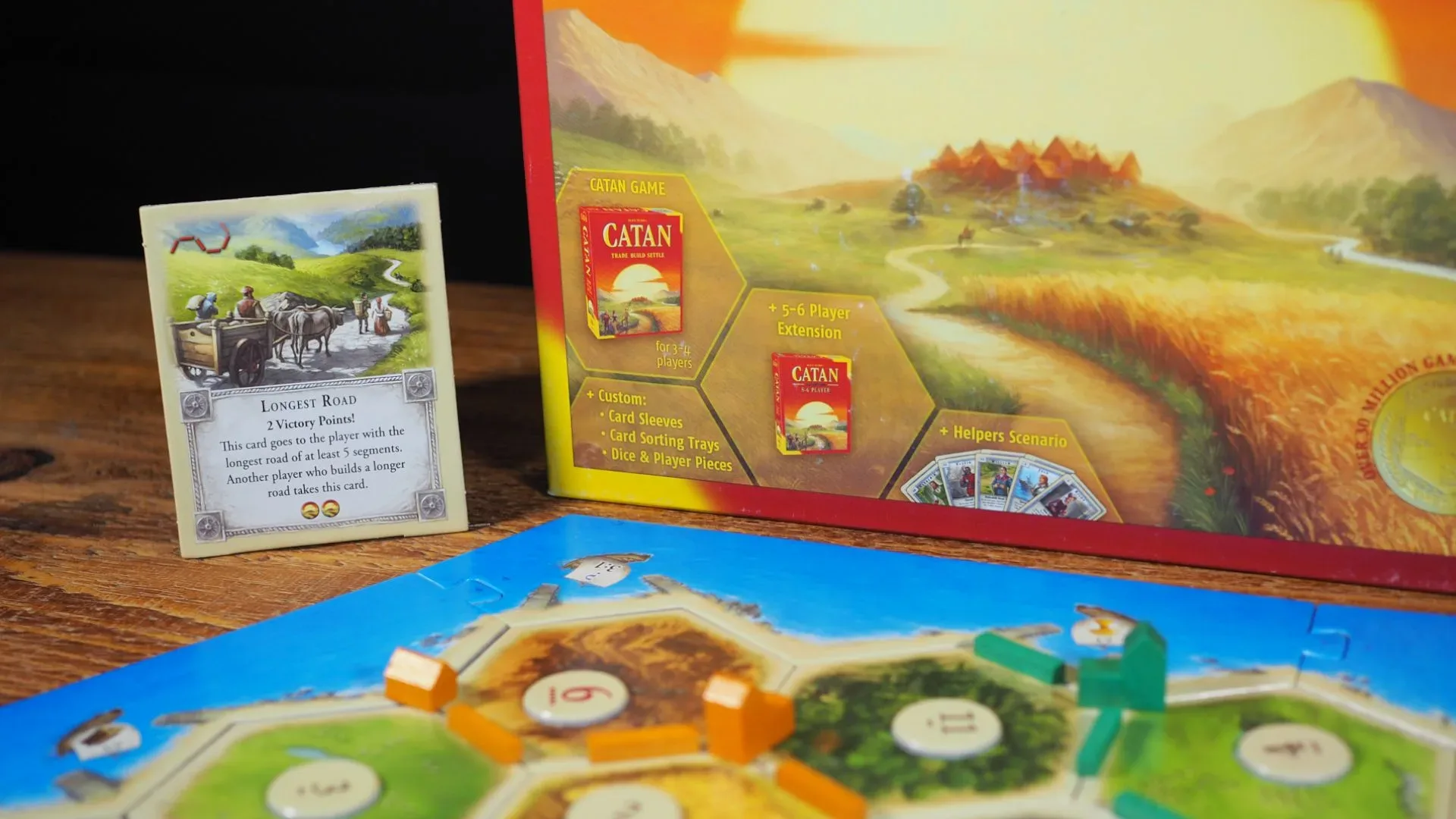
The creator said the project took more than 40 hours over 16 days. The result is not simply a dress printed with a board-game image. Its visual language is built around the individual elements players recognize from a game of Catan: hexagonal terrain tiles, ports, the surrounding sea, resource cards, number tokens, dice, and the robber piece.
That attention to the game’s specific components is why the costume reads as Catan rather than just “a board game dress.” It is also a neat demonstration of how tabletop design can move beyond the table. The game is made of modular pieces and strong color-and-shape cues, which gives a determined maker plenty of material to translate into clothing.
From tabletop map to wearable design
The dress’s lower portion is lined with hand-painted hexagons modeled after Catan’s tiles. In the game, those hexes form the island map, with each tile representing a terrain area. A hexagonal grid is especially suited to a board game because each space touches several others without the awkward diagonal relationships found in square grids. Here, it also gives the outfit an immediately recognizable, repeating pattern.
Ports and a sea-themed hem complete the island-board effect. On a Catan board, ports sit along the coastline and are part of the map’s trading identity. Including them is a small but telling design decision: it brings the edge of the board into the outfit, rather than depicting only a generic field of terrain hexes.
The accessories take the concept further. Atallel made a fan and a crown from resource cards, used the game’s probability tokens as another accessory, and added dice earrings. The finishing flourish is a necklace featuring the robber meeple.
For anyone less familiar with Catan’s iconography, the robber is one of the game’s standout pieces: its appearance is connected to a dice result and it affects a particular terrain tile. It is a much more characterful choice than a plain game logo, and it shows the costume was assembled by somebody thinking about the play experience as well as the game’s artwork.
Why the details matter
A themed costume succeeds when it gives people more than one route to recognizing it. The broad silhouette and tile pattern establish the premise from a distance. The ports, resource cards, number tokens, dice, and robber provide confirmation as viewers look closer. That layered approach makes the costume appealing both to people who know Catan well and to people simply encountering a detailed handmade Halloween look.
Related coverage includes Catan Fan Spends More Than 40 Hours Creating a Hand-Painted Halloween Dress.
The use of probability tokens is particularly fitting. In Catan, the numbered tokens placed on terrain areas correspond to dice outcomes and communicate how frequently players might expect a number to be rolled. They are a functional gameplay component, but their visual treatment also makes them a distinctive decorative motif. Turning them into costume adornment preserves the game’s personality without requiring an explanation of every rule.
The card fan and crown likewise make smart use of objects associated with a player’s hand and resources. Instead of treating the cards as a flat image, the maker appears to have used their physical form to add dimension and theatricality. That is the difference between clothing with a reference printed on it and a costume designed around the objects people handle during play.
A community-approved build
The post displaying the Catan outfit drew roughly 16,000 upvotes, a sizeable response that suggests the design landed with fellow tabletop fans. It is also not atallel’s first game-themed Halloween creation. A previous costume paid tribute to several classics, including Monopoly and Trivial Pursuit.
There is an understandable appeal to tabletop costumes that do not stop at a single familiar symbol. Board games are tactile, social objects. Their components are part of the memory of playing: passing cards, rolling dice, placing a piece, scanning a map, or reacting when an inconvenient rule suddenly changes the room’s mood. A costume can tap into that shared recognition quickly, often with more specificity than a single character costume.
Catan is especially fertile material because its pieces have a coherent visual vocabulary. The island’s modular tiles, trade ports, resource cards, numbered markers, dice, and robber all belong to the same play space while remaining visually distinct. Atallel’s outfit uses that vocabulary across the dress and accessories rather than relying on one repeated motif.
Catan’s long afterlife as a hobby touchstone
The costume also reflects Catan’s continuing place in tabletop culture. The game has accumulated expansions and merchandise, while fans have produced custom and three-dimensional versions of its components. That ongoing creative attention matters because it means people do not only recognize Catan as a game they once played; they recognize its physical design as an enduring part of the hobby.
Its reputation as an accessible entry point to broader tabletop gaming helps explain that visibility. Catan has long been associated with bringing players toward modern board games built around shared maps, trading, resources, and player interaction. Those mechanics become part of the costume’s subtext. The hexes are not merely decorative geometry; they point to a board whose layout changes. The cards invoke resources and exchange. The robber signals one of the moments that can upend an otherwise orderly plan.
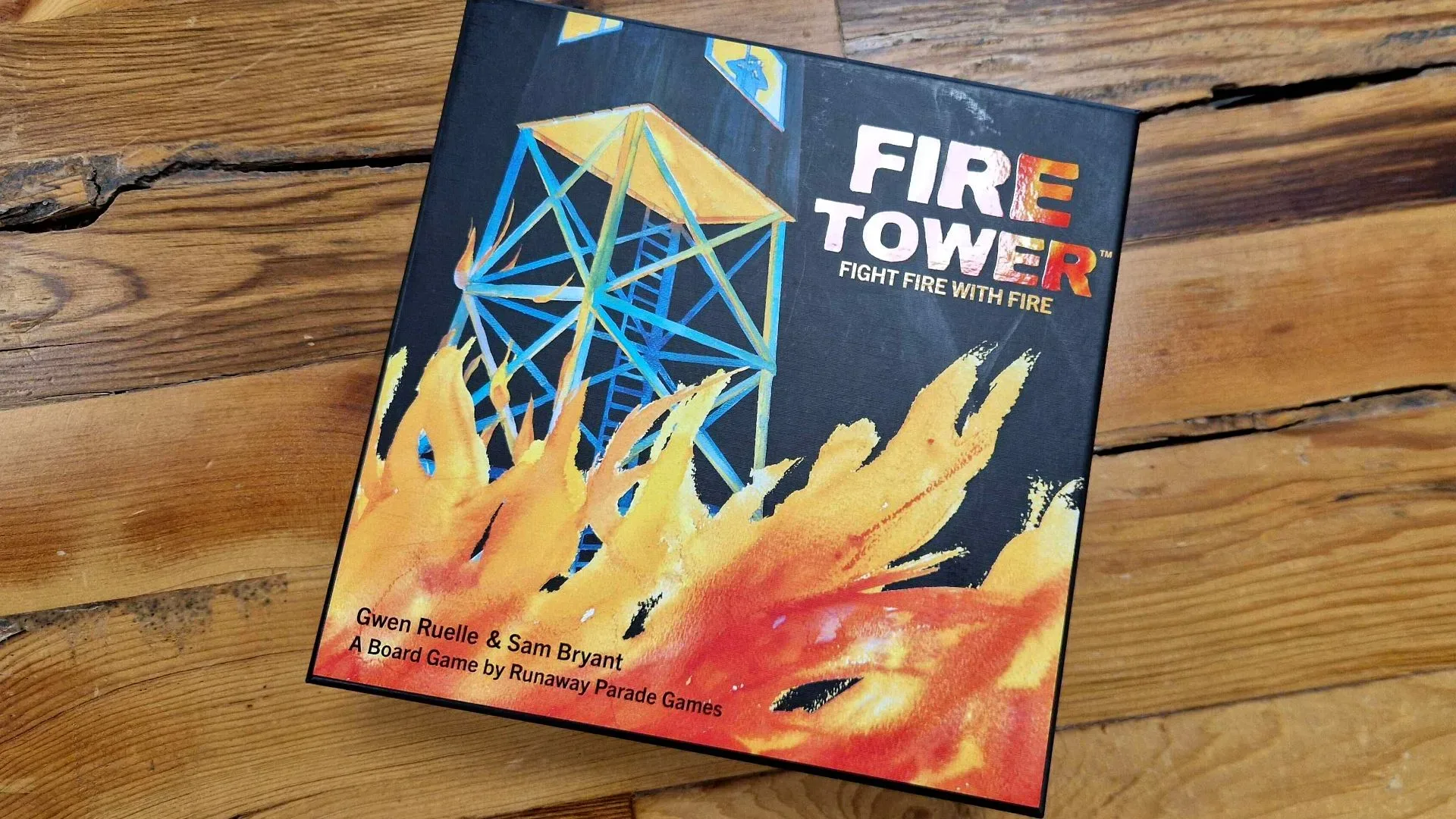
For readers looking for another tabletop game with a sharply defined visual idea and a central system that shapes the whole experience, Fire Tower’s wind-driven tabletop strategy offers a different example of a game whose core concept is easy to see and understand.
What a build like this can teach future costume makers
The Catan dress offers a useful template for anyone considering a board-game costume next Halloween: identify the game’s visual grammar before choosing materials. A title with a famous logo may be recognizable, but a better costume usually borrows the pieces, colors, symbols, and actions that make the game feel like itself.
- Start with a single defining shape: Catan’s hexagon makes an ideal repeated foundation.
- Use a few high-recognition components: dice, cards, tokens, and a signature piece can communicate the game without crowding every surface.
- Build at more than one scale: a tile-lined garment establishes the theme, while jewelry and headwear reward closer attention.
- Favor details that mean something in play: the robber meeple and probability tokens carry more personality than a generic board-game pattern.
None of that lessens the scale of the work involved. More than 40 hours across 16 days is a serious commitment, particularly for an item that combines painting, garment design, and several separate accessories. But the final effect makes a persuasive case for treating a tabletop game as a complete design world rather than a logo waiting to be put on a shirt.
Atallel’s Catan dress is a playful piece of fan creativity, but it is also unusually precise. From the sea hem to the robber necklace, it understands which visual details make the game memorable—and puts them all on the board, so to speak.
Shop the products
Check current price, model and availability at the retailer.