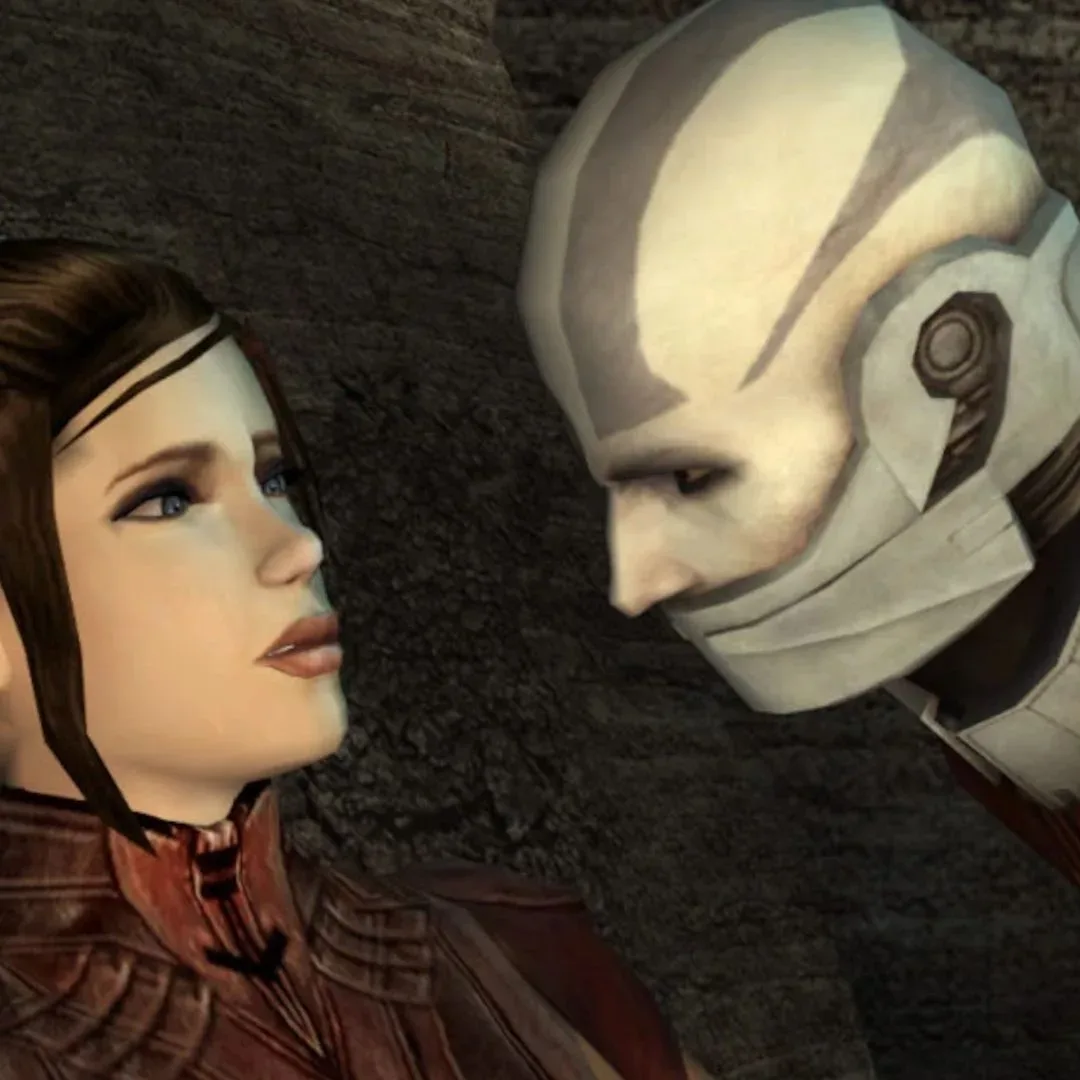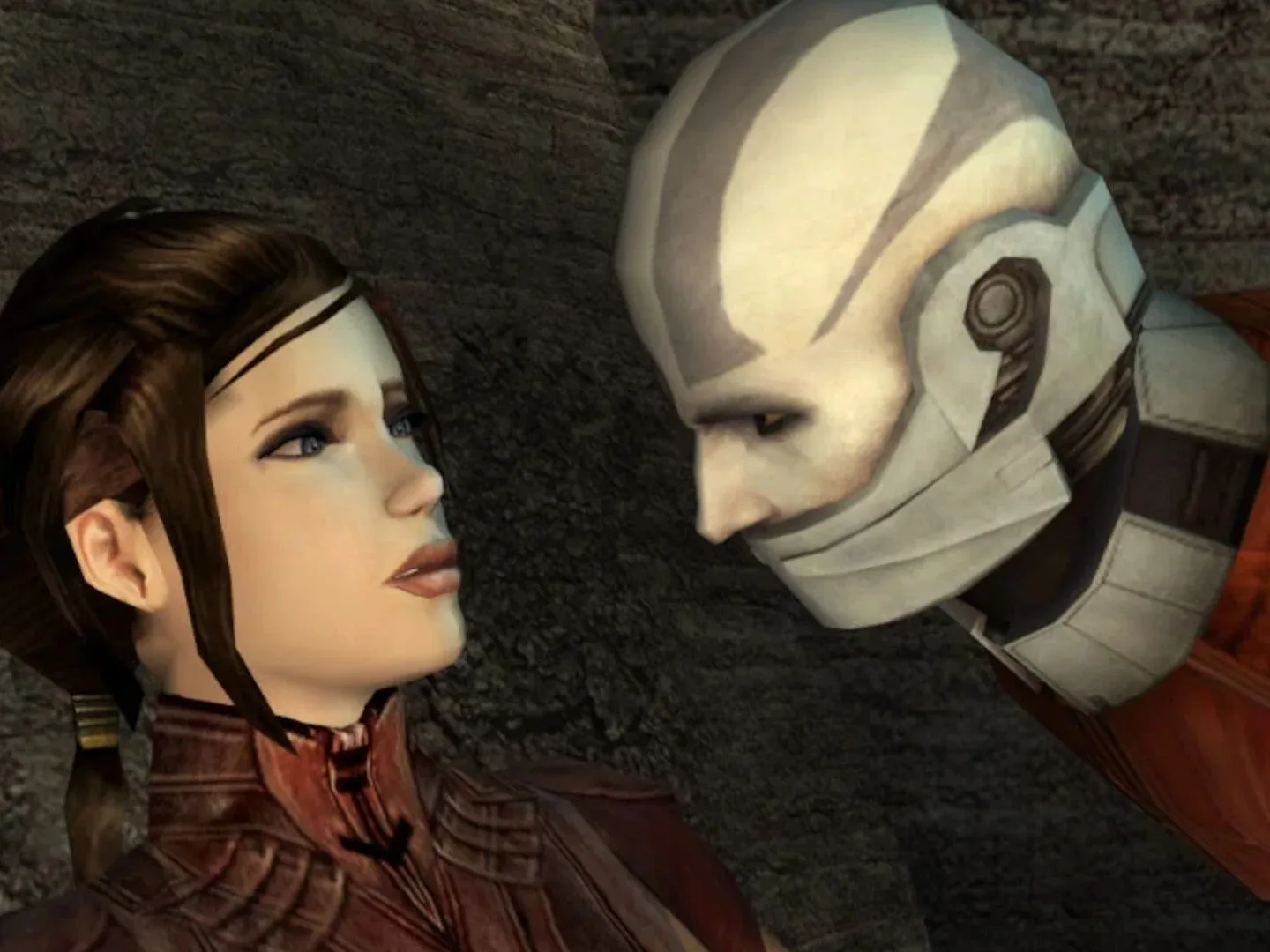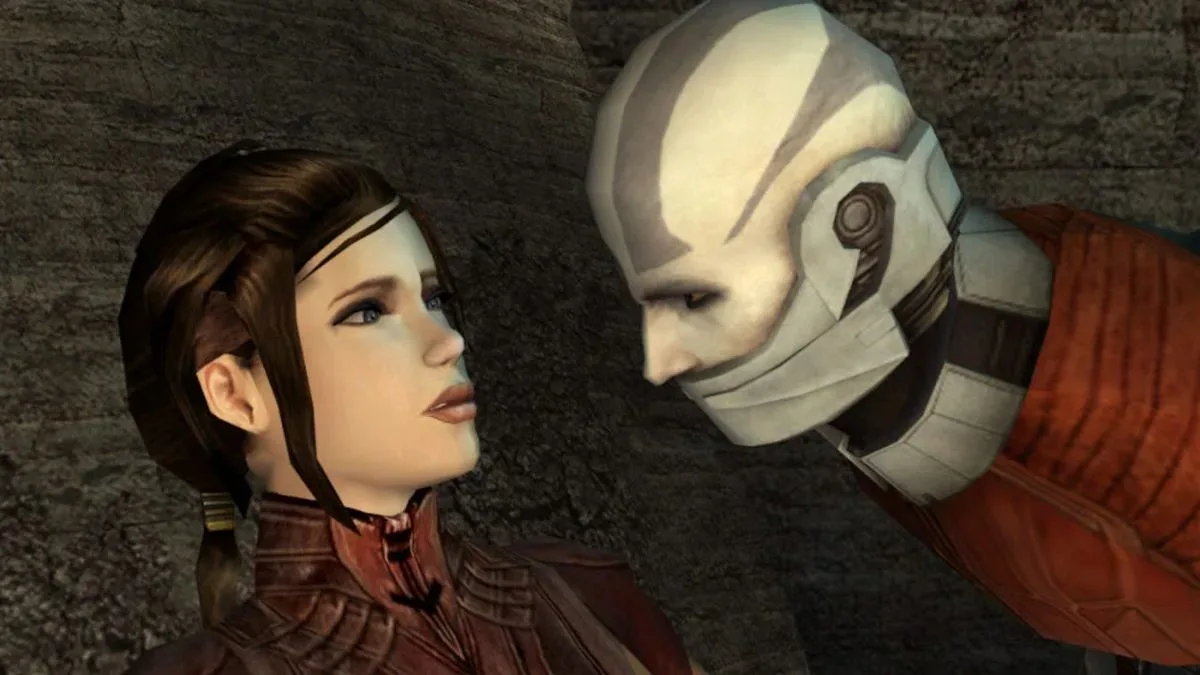
Star Wars: Fate of the Old Republic has a daunting legacy baked into its name. It is positioned as a spiritual successor to Star Wars: Knights of the Old Republic, a game with an unusually durable reputation among role-playing fans. But director Casey Hudson’s response to the inevitable expectations is not that Arcanaut Studios will attempt to replicate every familiar choice, system, or feeling from that earlier game.
Instead, Hudson argues that the project comes from people who understand the original work from the inside. He and other members of the team worked on the first Knights of the Old Republic, the Mass Effect trilogy, and other BioWare projects. That experience, Hudson says, means the developers are not approaching the game as outsiders attempting to imitate a celebrated RPG from a distance.
“I think it would be really weird to do if I hadn't worked on the first one,” Hudson said. “It would feel really strange.” He added that the team’s background helps because they understand why earlier decisions were made. “We're not trying to fill someone else's shoes, despite the expectations being really high.”
What a spiritual successor does—and does not—promise
The term spiritual successor is important here. It generally describes a new work that aims to carry forward some creative spirit, themes, ambitions, or design values of an earlier one, without necessarily being a direct sequel or reproducing its exact structure. That leaves plenty of room for a game to be recognizably connected in mood and purpose while still being built around new systems and a new story.
For Fate of the Old Republic, the confirmed public picture remains narrow. The game is a spiritual successor to KOTOR. Beyond that, key details have not yet been established: there is no firm public breakdown of its gameplay systems, story premise, or how its role-playing structure will work. That lack of detail makes it premature to treat the project as either a straightforward return to the old game’s format or a total reinvention.
It also explains why Hudson’s comments matter. They do not reveal a combat model, party system, dialogue design, setting, or release plan. What they do reveal is a creative posture: Arcanaut Studios is framing its task as making a new RPG informed by lived experience, rather than attempting to meet a fan checklist built around nostalgia.
That distinction may sound subtle, but it is consequential. A successor designed solely to reproduce remembered features can become trapped by surface-level expectations. A successor made by developers who understand the reasoning behind an earlier game can, in theory, preserve the values that mattered while choosing different tools for a different project.
Why the team’s history is relevant
Hudson’s central point is not merely that the team has recognizable credits. He is emphasizing continuity of creative knowledge. Knowing that a game contained a certain mechanic is different from knowing what problem that mechanic was intended to solve, what trade-offs were involved, and how it served the broader experience.
Related coverage includes Casey Hudson Says Fate of the Old Republic Won’t Chase KOTOR’s Shadow.
That kind of knowledge can matter especially in role-playing games. An RPG’s identity is rarely one isolated feature. It emerges from the relationship between story, player decisions, character progression, companions, combat, exploration, pacing, and the consequences attached to choices. Changing any one element can reshape the feel of the whole game.
Hudson’s comments suggest that the studio sees its connection to KOTOR as deeper than recognizable branding or references. The developers’ past work gives them a basis for deciding what should be carried forward conceptually and what should be allowed to evolve. It is not a guarantee that every player will agree with those decisions, but it is a more grounded position than promising to recreate a beloved game exactly.
There is another practical reason not to overcommit to imitation. The original KOTOR was built around D&D 3.5-based mechanics, an approach that belonged to the game’s own era and design context. Whether Fate of the Old Republic takes inspiration from that foundation, replaces it entirely, or uses an unrelated structure has not been announced. Hudson and Arcanaut Studios have not provided public specifics that settle the question.
For players, that is a useful line to keep clear. Familiar pedigree does not confirm familiar mechanics. A spiritual successor may seek to evoke the strengths of an older RPG without returning to every technical or rules-based choice it made.
Passion over prediction
Hudson also addressed the more difficult part of inheriting a classic: no team can precisely calculate what every fan wants. Expectations around KOTOR are unusually personal because players often connect the game to a formative period in their own gaming lives. Those memories can make any new project feel as though it is being measured against something more than a previous release—it is being measured against years of imagination, replaying, and idealized recollection.
Hudson’s answer is to focus on the developers’ excitement about making something worthwhile rather than trying to solve an unknowable demand equation. “The thing that supersedes everything is our passion and excitement for doing something amazing,” he said. “That has to outshine everything else, because you can't really know how to answer pressure, and it's hard to even really understand what other people want to play.”
That is not a promise that audience feedback is irrelevant. Rather, it is an acknowledgement that broad audience desire is not a single, stable target. One player may want a near-identical return to old conventions. Another may want a modernized role-playing framework. Someone else may care most about companions, moral decisions, or an entirely fresh Star Wars story. A new game cannot satisfy every version of an old favorite simultaneously.
Hudson’s stated philosophy is that a committed creative direction is more useful than trying to reverse-engineer a universal nostalgia button. “If you're so excited about making something that people are going to love, you're just passionate about it being amazing, that leads you to where you want to go,” he said.
The canon question leaves room for a new story
The story itself remains one of the largest unknowns. Since the era when KOTOR first arrived, the broader Star Wars universe has been rebooted. That means Fate of the Old Republic will need to establish its own narrative footing rather than simply assuming that the earlier game’s place in the franchise can be carried over unchanged.
That uncertainty should not be mistaken for a confirmed plot direction. There is no announced account of the protagonist, time period, companions, factions, planets, or central conflict. But the changed context makes one thing clear: the new game has a substantial storytelling job ahead of it. It must communicate what relationship it has to the ideas players associate with KOTOR while also telling a story that can stand independently.
That may ultimately be the most meaningful test of the “spiritual successor” label. The label will carry weight only if the game offers more than a familiar name or a set of winks toward the past. It needs a reason to exist as its own experience—one shaped by its own characters, stakes, and player-facing role-playing possibilities.
What fans should avoid assuming for now
With public information still limited, a cautious reading is the fairest one. The following points are not confirmed:
- the game’s combat style or underlying rules system;
- how player choice, alignment, or consequences will be handled;
- whether it will use party-based adventuring or companion mechanics comparable to earlier BioWare RPGs;
- its story setting, characters, or connections to specific events from KOTOR;
- its platforms, release timing, or business model.
None of those unanswered questions diminish the significance of Hudson’s comments. They simply define their scope. The update is about intent and experience, not a detailed product reveal. Fans hoping for concrete information about systems or story will have to wait for official announcements rather than treating the studio’s past credits as a substitute for confirmed design details.
Hudson has said there will be new announcements about Star Wars: Fate of the Old Republic next year. Until then, the most reasonable expectation is not that Arcanaut Studios will reproduce a decades-old formula piece by piece. It is that the studio intends to apply experience from KOTOR and Mass Effect to a new Star Wars RPG with its own direction.
Why that is a healthier expectation
There is a tension at the heart of every successor to a beloved game. Players want recognition of what made the original special, but they also want a reason to play something new. Too much distance can make the connection feel hollow; too much imitation can turn the new work into a museum piece.
Hudson’s remarks place Fate of the Old Republic on the side of creative continuity rather than restoration. The team’s involvement with KOTOR is meaningful because it offers firsthand perspective, not because it obligates the studio to preserve every old component. The Mass Effect connection further points to a group with extensive RPG experience, though players should not take that as confirmation that the new game will adopt any particular Mass Effect feature.
For now, patience is part of the assignment. Fans searching for other RPG perspectives while major projects remain under wraps can also explore indie games worth trying beyond the biggest blockbusters. As for Fate of the Old Republic, the next announcements should be more revealing than any attempt to fill gaps with assumptions.
Arcanaut Studios has set a clear standard for itself: make something exciting enough on its own merits that the pressure of a cherished predecessor does not become the project’s only defining trait. That ambition is not the same thing as proof of success. But it is a sensible starting point for a game that must respect an RPG legacy without being imprisoned by it.