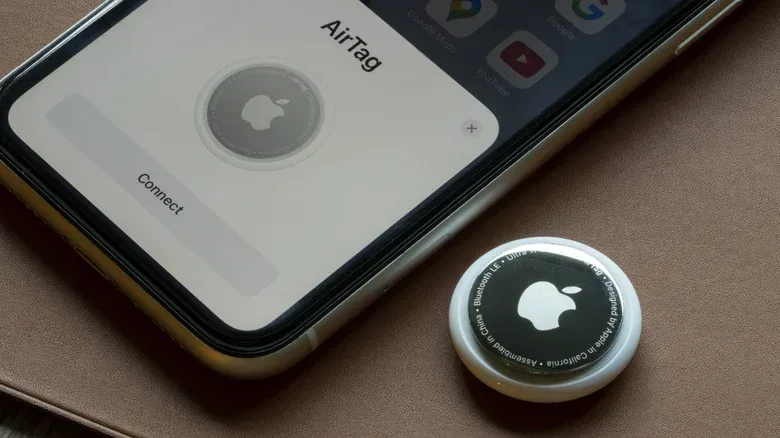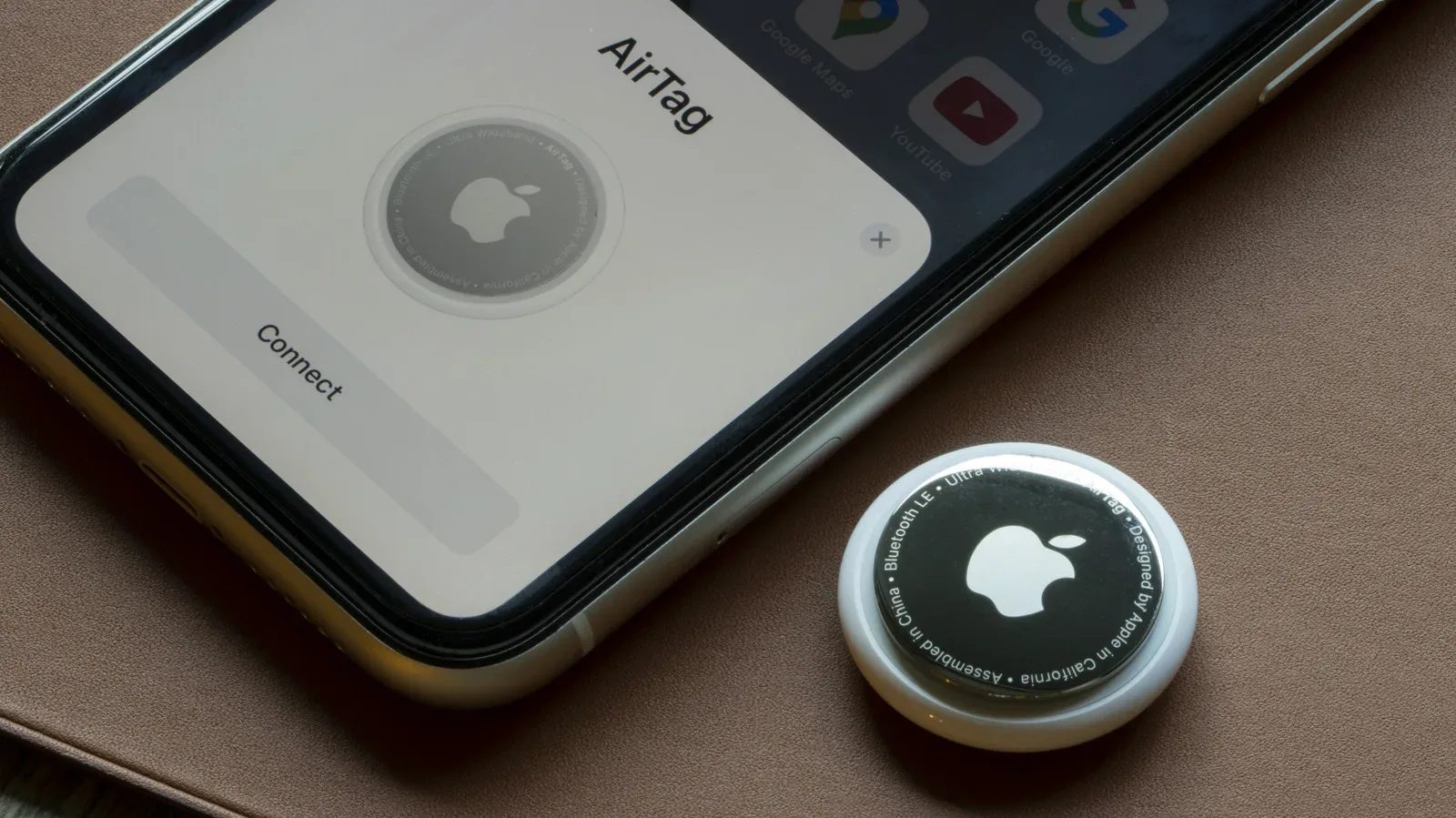
Lost luggage is one of travel’s most persistent mini-bosses: a bag disappears from the carousel, a connection becomes a long wait, and suddenly every update matters. An Apple AirTag can give a traveler an extra clue about where a suitcase has gone, but it also raises an understandable question. Airlines and security authorities have strict rules around lithium batteries, so can the tracker stay in checked baggage?
The practical answer is yes: an AirTag’s battery is exceptionally small relative to the thresholds described by U.S. and international aviation rules. It runs on a non-rechargeable CR2032 coin-cell battery containing less than 0.1 grams of lithium. The relevant limit for non-rechargeable lithium-metal batteries is 2 grams of lithium content, leaving an AirTag far below that ceiling.
That distinction matters. A travel rule that sounds like a broad prohibition on “lithium batteries” is often actually a set of different restrictions based on battery chemistry, capacity, device type and where the item is packed. AirTags fall into a far less demanding category than the rechargeable battery packs that have become a particular focus of airline policies.
Why an AirTag is treated differently from a power bank
An AirTag uses a lithium-metal coin cell. It is not rechargeable. By contrast, devices such as phones, laptops and portable chargers generally use rechargeable lithium-ion batteries. The latter category is commonly discussed in watt-hours, abbreviated Wh, a measurement of energy capacity.
For more context, explore Windows Virtual Desktops Can Give Your Gaming PC a Cleaner, More Focused Workspace.
For rechargeable lithium-ion batteries, the standard threshold cited in U.S. rules is 100 Wh. Devices above that amount may require airline permission. Since an AirTag is not rechargeable, that watt-hour rule does not technically govern its battery. Even considered through that lens, though, its power level works out to less than 0.7 Wh.
The more directly relevant number is its lithium content: less than 0.1 grams, versus the 2-gram limit for a non-rechargeable lithium-metal battery. This is why the tracker is a relatively simple case amid what can otherwise be a complicated set of packing rules.
- AirTag battery: A small, non-rechargeable CR2032 lithium-metal coin cell.
- Lithium content: Less than 0.1 grams for the AirTag battery.
- Non-rechargeable lithium-metal limit: 2 grams of lithium content.
- Rechargeable lithium-ion benchmark: 100 Wh, with higher-capacity devices potentially requiring airline approval.
It is important not to turn the AirTag answer into a blanket rule for every electronic item in a suitcase. A bag tracker and a chunky portable charger may both be battery-powered, but they are not comparable in capacity or risk profile. The smart packing move is to assess each device individually rather than treating “has a battery” as a single category.
International rules also accommodate tiny luggage trackers
The broad international picture is similarly favorable to small trackers. In 2023, the International Civil Aviation Organization, a United Nations aviation body, adopted an amendment intended to address airline bans that had affected AirTags and similar devices.
Under the revised approach, lithium-battery devices in checked baggage may remain switched on during a flight when their lithium content is below 0.3 grams, or when a lithium-ion battery has an output under 2.7 Wh. An AirTag’s less-than-0.1-gram battery is below the 0.3-gram figure.
That does not remove the need to pay attention to an individual itinerary. Airlines and countries can maintain their own policies, and a trip with connections may involve more than one airline and jurisdiction. But the battery size of the AirTag itself is not the obstacle that a larger rechargeable accessory can be. For a deeper rundown focused on checked bags, see this explanation of AirTags and luggage battery rules.
What the rules are designed to prevent: thermal runaway
Battery restrictions exist because lithium-ion batteries can, in rare cases, experience thermal runaway. This is a chain reaction in which a battery overheats uncontrollably. The consequences can include smoke, fire and, in severe cases, ejection of material from the battery. In an aircraft, especially in a location that is not easily accessible, that is a serious safety problem.
Damage, poor packing and manufacturing defects can contribute to such events. The possibility is not exclusive to one kind of gadget; laptops and phones also use lithium-ion batteries. But portable chargers have attracted special attention. Since the Federal Aviation Administration began tracking lithium-ion incidents in 2006, it has recorded more than 700, and nearly four in 10 involved portable battery packs.
The underlying safety logic is straightforward: if a battery problem begins in the passenger cabin, people can identify it and respond quickly. A problem in the cargo hold can be harder to spot before it worsens. That is why travel advice for many battery-powered items emphasizes the carry-on rather than checked luggage.
AirTags are unusual only in the sense that their extremely small coin-cell battery fits beneath the applicable limits. Their permissibility should not be read as a reason to place every rechargeable gadget in a checked bag.
Practical packing guidance for travelers using an AirTag
For travelers who want the reassurance of a location signal, an AirTag can be placed in the suitcase while remaining well within the small-battery thresholds outlined above. The tracker can remain on. But the tracker should be only one part of a sensible luggage plan, not a magical recovery button.
AirTags rely on nearby Apple devices to relay their location. That means their usefulness can vary by place. In areas where fewer people carry compatible Apple hardware, updates may be less frequent or less useful. Seeing a bag’s last known position can still be valuable, but it is not the same as continuous, guaranteed live tracking.
Apple’s Share Item Location feature may also help in a missing-bag situation because some airlines accept it to help locate luggage. Acceptance is not universal, however. Travelers should not assume that every carrier can or will use that feature during a baggage claim.
- Use the AirTag as a locator, not a replacement for baggage reporting. If a checked bag fails to arrive, the airline’s missing-bag process remains essential.
- Do not generalize from the AirTag to larger batteries. Its sub-0.1-gram coin cell is dramatically different from a rechargeable power bank.
- Keep portable chargers in carry-on baggage. They are among the battery devices that attract the strictest rules and the most airline-specific variation.
- Check each airline on the itinerary. Rules can differ by carrier, including rules for onboard use of battery packs.
- Check destination and transit-country requirements too. International travel can add restrictions beyond the departing airport’s rules.
Portable chargers are the item to scrutinize most closely
Power banks are the opposite of the AirTag’s easy case. They are rechargeable lithium-ion batteries, are commonly higher capacity, and have featured in a substantial share of recorded battery incidents. As a result, their rules can be stricter than a traveler expects.
Some airlines require portable chargers to stay in sight during a flight so that a problem can be noticed promptly. Southwest Airlines has limited travelers to one charger per person. Elsewhere, policies can become more restrictive: the UK Civil Aviation Authority has said portable chargers should not be used to charge other devices onboard, while Hong Kong’s Civil Aviation Department announced a usage ban after a power-bank fire. Virgin Australia, Qantas and Jetstar have also barred the use of portable chargers during flights.
Those examples are not AirTag rules; they demonstrate why battery guidance needs to be device-specific. The small tracker tucked into a suitcase is within the stated limits. The rechargeable power bank used to keep a gaming handheld, phone or other device alive through a long day of travel is the item that deserves a careful policy check before departure.
Bottom line for a tracked suitcase
An AirTag can go in checked luggage because its non-rechargeable CR2032 battery contains less than 0.1 grams of lithium, well under the 2-gram threshold for non-rechargeable lithium-metal batteries. It also fits below the 0.3-gram level in the international rule amendment covering powered devices left on in checked baggage.
The useful caveat is operational rather than battery-related: an AirTag’s location reports depend on nearby Apple devices, and airline support for shared location information is not universal. It can help a traveler understand where a delayed bag may be, but it cannot guarantee rapid recovery. Pack the tracker if it offers peace of mind, keep larger rechargeable batteries in carry-on luggage, and verify the rules for every airline and country involved in the trip.