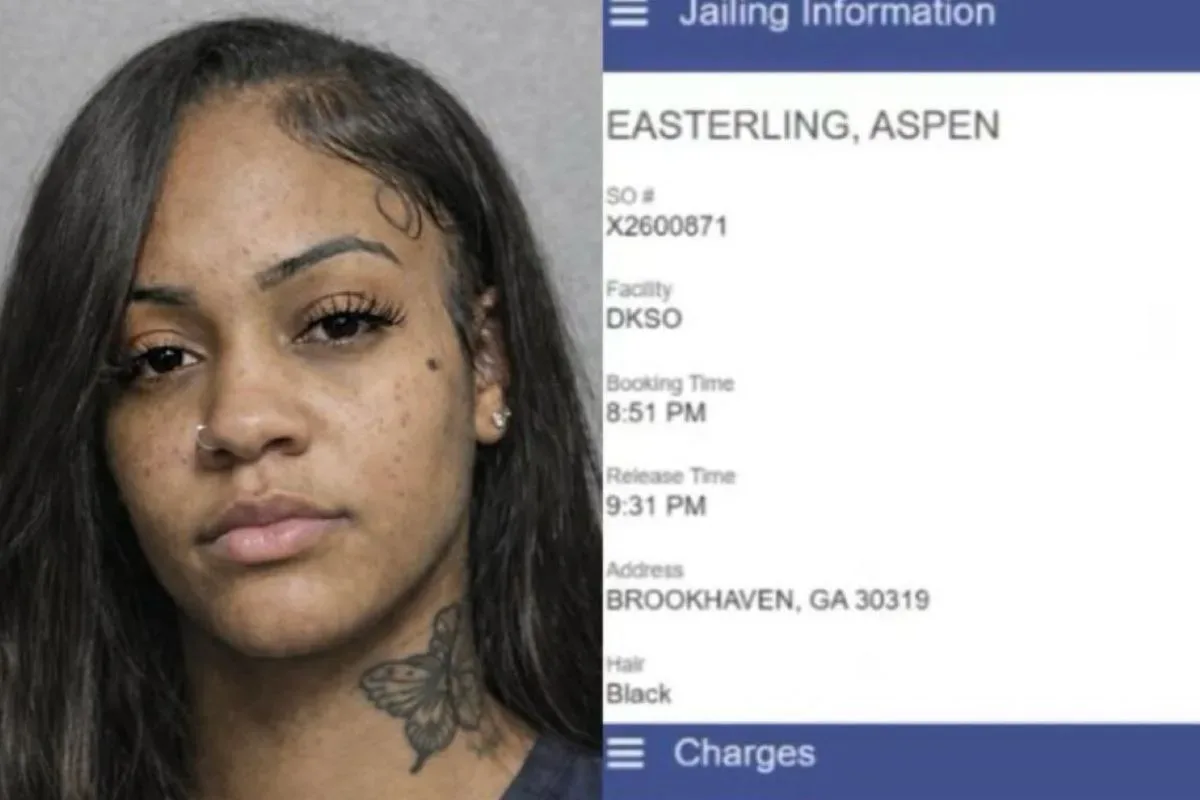
Rapper Aspen Kartier, whose legal name is Aspen Easterling, has received a one-year sentence in a puppy cruelty case that began after a January Twitch stream. The sentence includes 10 days in jail, with the balance to be served on probation. She received credit for two days already served.
The probation terms are unusually explicit about contact with dogs. Easterling is prohibited from owning or caring for a dog, and from being in a room with one. The conditions may be enforced through random checks. The court also denied her request for first-offender status, meaning the conviction will remain on her record. A second cruelty charge was dropped.
The case has become a stark example of the consequences that can follow conduct captured during a livestream: a criminal conviction and sentencing requirements, the removal of an animal from the home, and a platform suspension. It is also a reminder that online footage can prompt viewers to contact organizations and law enforcement quickly when they believe an animal is in danger.
The sentence and its conditions
Beyond jail and probation, Easterling must complete 24 anger-management classes, an animal-abuse prevention program and 100 hours of community service. She was ordered to pay LifeLine Animal Project $3,048 for the puppy’s care, along with $39 in monthly probation fees.
In this context, probation means the court has imposed continuing conditions rather than ending its involvement after the jail portion of the sentence. The dog-related restrictions, educational requirements, service hours and fees are all part of that court-ordered framework. A random check is a compliance measure: it gives authorities a way to verify whether the no-dogs condition is being followed rather than relying only on a scheduled visit.
The prohibition covers more than ownership. By barring care for a dog and even sharing a room with one, the condition is written to prevent close access or responsibility during the probation period. The supplied case information does not specify the length of probation beyond the overall one-year sentence, or provide further detail on how random checks will be conducted.
What led to the criminal case
The matter stemmed from a Twitch stream on January 29. PETA said the stream showed a three-month-old puppy being struck and lifted by the skin on its back. Footage later posted online contains disturbing animal-abuse imagery.
Viewers alerted PETA, and the organization said dozens of people reached out about the stream. Its emergency response director, Kristin Rickman, said the organization identified the suspect’s legal name and address within hours and shared that information with Brookhaven Police.
Brookhaven officers arrested Easterling on January 30 and removed a Maltipoo from her home. Police said at the time that the puppy appeared healthy when officers found it. DeKalb County Animal Control took custody of the dog.
Those points are worth keeping distinct. The criminal case and resulting sentence establish the court outcome described here. The observation that the puppy appeared healthy when recovered was an initial police assessment; it does not erase the allegations shown in the footage or change the subsequent conviction. Likewise, the dropped second charge does not undo the conviction on the charge that proceeded to sentencing.
The puppy’s custody and the online response
Animal services was holding the puppy as evidence in February. Easterling and another person who said they owned the dog later relinquished their rights to it. That development removed their ownership claims over the Maltipoo, while the supplied information does not state the dog’s later placement or disposition.
PETA recognized Brookhaven Police with a Compassionate Police Department Award after the rescue, crediting officers for acting on information provided by the organization. The sequence described in the case is straightforward: livestream viewers reported what they saw, the organization passed along identifying information, police made an arrest and removed the animal, and animal control assumed custody.
That process is significant without turning online viewers into investigators. Members of the public can preserve relevant information and alert an appropriate organization or law-enforcement agency, but the identification, evidence handling, welfare assessment and criminal charging decisions belong to the relevant authorities. In this case, the rapid reporting was followed by a police response the next day.
Twitch suspension adds a platform consequence
The stream also led to a Twitch suspension for violating the platform’s rules. The information available does not establish how long the suspension would last.
A platform suspension is separate from a criminal sentence. Twitch can take action under its own rules governing material broadcast through an account, while the criminal court addresses alleged violations of law and can impose jail, probation and other conditions. One does not substitute for the other, and the two processes can move on different timelines.
For streamers, the episode illustrates why a broadcast should not be thought of as private simply because it is live, informal or aimed at a small audience. Viewers may record, report and share material, and a platform can act on its policies even as law enforcement evaluates its own response. A stream can therefore have consequences across several systems at once: audience reporting, moderation and legal scrutiny.
Questions about rules, accountability and the responsibilities attached to digital platforms also extend beyond livestreaming. For another angle on how people debate obligations within the game business, see this discussion of what game studios owe their communities.
What is known, and what remains unstated
The established outcome in the supplied information is that Easterling was sentenced to 10 days in jail and probation as part of a one-year sentence; she received two days of jail credit; her request for first-offender status was denied; and the court imposed the stated no-dogs, education, service and payment requirements.
Several details are not established here and should not be inferred. There is no stated end date for the Twitch suspension, no later update on the puppy’s placement after ownership rights were surrendered, and no additional account of the court’s reasoning beyond the conditions and sentencing result. The case record described also does not support treating the puppy’s initial appearance of health as a broader finding about the alleged conduct.
What is clear is the breadth of the outcome: criminal consequences for Easterling, a continuing ban on contact with dogs during probation, required programs and community service, reimbursement for the puppy’s care, and an account-level penalty from Twitch. The case began with conduct shown to a live online audience, but its effects now extend well beyond the stream itself.