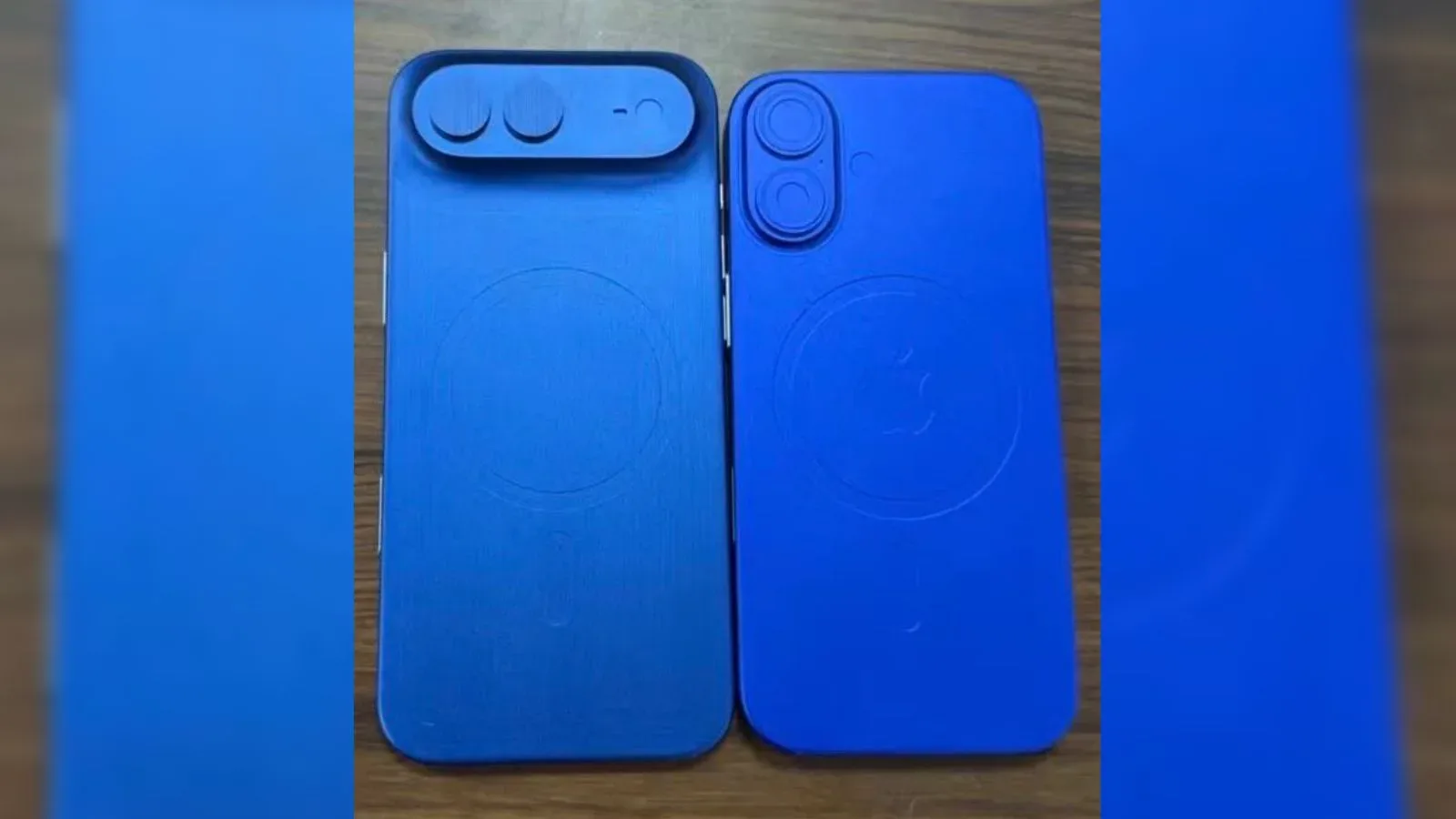

Apple is reportedly preparing a broad device refresh for early 2027, with an initial group of iPhones, iPads and Macs potentially arriving around February or March. A second group, said to include the iPhone Air 2 alongside new iPad Air and iPad Pro models, may follow a little later in the first half of the year.
The important word is reportedly. None of these products, dates or specifications has been confirmed. Still, the outline points to a notably busy start to 2027: an iPhone 18e and iPhone 18 at the phone end, an updated entry-level iPad, a MacBook Neo, and a MacBook Air. The later wave would concentrate on slimmer mobile hardware and Apple’s more advanced tablet tiers.
The reported first wave: iPhone, iPad and Mac updates
The iPhone 18e and standard iPhone 18 are both expected to use an A20 chip, include 9GB of RAM, and offer longer battery life. That overlap suggests the two phones could share a core performance platform, at least in the reported specifications, rather than reserving the new chip solely for one version.
RAM, or random-access memory, is the fast working memory a device uses while apps and system tasks are active. More RAM does not automatically tell buyers how a phone will perform in every scenario, but it can matter for multitasking and for keeping applications available in memory. The report gives no further details on how the two iPhone models might otherwise differ, so it would be premature to treat them as identical devices.
Longer battery life is also a stated goal for both handsets, but there is no claimed battery capacity or measured endurance figure. That distinction matters: a promise of improved battery life can result from a more efficient chip, display or software behavior, not necessarily a larger battery. Until Apple provides official estimates, the practical improvement remains unknown.
The entry-level iPad is rumored to receive an A19 chip, support for Apple Intelligence, an N1 chip with Wi-Fi 7 support, and Apple’s C1X modem in cellular configurations. If accurate, that would place several current-generation connectivity and AI-related components into Apple’s least expensive tablet class, though neither pricing nor regional configurations are included in the report.
Apple Intelligence is Apple’s name for its AI features and related system capabilities. Support does not, by itself, identify which features will be available, in which languages or markets, or how they will function on this specific iPad. That is particularly worth keeping in mind as AI tools become a larger part of the consumer-tech conversation; the unresolved questions around creative AI and permission remain visible in areas such as AI remix tools and artist consent.
Wi-Fi 7 is the next-generation Wi-Fi standard named in the rumor. The meaningful caveat is that support on a device is only one part of the picture: real-world benefits also depend on compatible network equipment and the connection in use. For buyers, the notable claim is future-facing connectivity in an entry iPad, not a guarantee of a particular speed result.
Cellular versions are said to use Apple’s C1X modem. A modem handles a device’s connection to mobile networks. The report characterizes the C1X as power-efficient, but supplies no comparative battery measurements, carrier information or supported-band list. Wi-Fi-only iPads would not need a cellular modem, which is why the specification is limited to cellular models.
MacBook Neo and MacBook Air: separate chip stories
Two Mac notebook families are also reportedly part of the earlier launch. The MacBook Neo is said to carry an A19 Pro chip, 12GB of RAM and possibly new color options. The MacBook Air, meanwhile, is reportedly moving to Apple’s M6 chip.
Those names imply two distinct hardware approaches in the report. The MacBook Neo’s A19 Pro designation places it alongside the A-series naming used in the reported iPhones and iPad, while the MacBook Air is attached to the M-series M6. The report does not explain the intended positioning, software differences, port selection, display configuration, storage options or price of either machine. Those are all buying-critical details that remain unreported.
The 12GB RAM claim is specific enough to flag as a potentially meaningful part of the Neo story, but it should not be confused with a complete specification sheet. Memory capacity is only one aspect of a laptop’s capabilities; the report gives no detail on GPU configuration, battery life or how many versions could be offered.
Color is another point where the wording matters. New finishes for the MacBook Neo are presented only as a possibility, not a firm expectation. That makes it one of the least settled claims in an already unconfirmed product roadmap.
A possible second launch led by the iPhone Air 2
The second reported launch wave could happen later in March or in April, with the iPhone Air 2, iPad Air and iPad Pro identified as the likely centerpieces. The timing is an estimate rather than a fixed schedule, and the description only places this group a little after the initial February-or-March products.
The iPhone Air 2 is said to feature an A20 Pro chip, an Ultra Wide camera, a smaller Dynamic Island, improved battery life and an Apple C2 modem. In the United States, that modem is reportedly expected to support mmWave, while uploads are described as meaningfully faster than those of the current model’s C1X modem.
An Ultra Wide camera generally provides a wider field of view than a main camera, useful when a scene contains more than a conventional shot can fit. The report does not identify the camera’s resolution, sensor size, aperture or video functions, so it cannot establish the quality of the rumored camera addition.
Dynamic Island is Apple’s display-area interface around the front camera and sensor cutout. A smaller version would primarily be a physical and visual design change, though the report does not say whether its software behavior would change at all.
mmWave, short for millimeter wave, refers to a form of 5G spectrum. The report specifically confines the expected U.S. mmWave support to that market. It should not be read as a claim that every iPhone Air 2 region would receive the same cellular capabilities. Likewise, “meaningfully faster” uploads is a directional characterization, not a supplied benchmark. Network performance varies with coverage, carrier implementation, signal conditions and plan limitations.
iPad Air could shift its display ambitions
The reported iPad Air update pairs an M5 chip with an OLED display, a thinner and lighter design, and a possible Acoustic Display feature that previously debuted on the iPad mini.
OLED is a display technology in which individual pixels emit their own light. In the context of this report, its presence would represent a display-specification change for the iPad Air, but no claims are provided about brightness, refresh rate, size, color performance or battery effect. Nor is there a reported explanation of how much thinner or lighter the tablet might be.
Acoustic Display is described only by its previous iPad mini debut. The report does not lay out its operation, so the safest reading is simply that the feature may expand to iPad Air. As with the Neo’s possible colors, “potentially” is significant: it is not a confirmed part of the purported configuration.
iPad Pro’s cooling rumor may be the most performance-focused detail
The rumored iPad Pro could use either an M6 or M7 chip and may add a vapor chamber cooling system. The uncertainty between two chip generations is substantial, and it means the report does not settle the tablet’s eventual processing platform.
A vapor chamber is a cooling component intended to move heat away from demanding parts of a device. In practical terms, better heat management can be relevant when hardware sustains intensive workloads. But the report does not specify the iPad Pro’s performance targets, thermal limits, dimensions or software use cases, so there is no basis for claiming a particular gain from the rumored cooling change.
Taken together, the roadmap sketches two potential Apple moments rather than one all-encompassing launch. The earlier window would reportedly handle foundational products: mainstream iPhones, the entry iPad and two laptops. The follow-up would shift toward the iPhone Air and iPad upgrades, with display, modem, camera and cooling changes forming the most distinctive reported hooks.
For anyone considering a purchase, the practical implication is patience rather than prediction. There are no prices, firm launch dates, storage tiers, display sizes or official technical sheets here. The alleged schedule may change, individual specifications may not survive to release, and some of the most interesting details are explicitly tentative. The clearest takeaway is simply that early 2027 could be unusually active across Apple’s phone, tablet and notebook ranges if this reported plan holds.