Apple’s late-year hardware push has grown into a notably broad run of releases: more than 25 new devices and accessories since late August, spanning phones, Macs, tablets, watches, audio products, smart-home equipment and even the humble polishing cloth. The listed releases mix products available now with others still open for pre-order, while additional Apple Watch bands, iPhone cases and certain accessories are not included in the tally.
For people who build gaming desks, living-room setups or travel kits around Apple hardware, the practical story is less about one single flagship and more about overlap. There are new computers for desktop and portable work, new media and smart-home products for shared rooms, new mobile hardware, and a cluster of power and carry accessories that can affect how all of that equipment fits together.
It is also a rollout with a few clearly separate tracks: the M6 generation is appearing across several Macs; the iPad mini is moving to an OLED display; Apple’s home lineup is gaining both a new streaming box and a product called HomeView; and Beats has a Pokémon special edition in the mix. That does not mean every item is aimed at the same buyer. It means prospective customers have more reason than usual to slow down, identify the device category they actually need, and check whether the model they want is shipping now or remains a pre-order.
The new Apple products named in the rollout
The following is the disclosed list of notable releases, rather than a complete inventory of every case, band or other small accessory released during the period:
- Mac mini with M6 and M5 Pro chips
- Mac Studio with M5 Max and M5 Ultra chips
- A new Apple Polishing Cloth
- iPhone 18 Pro and iPhone 18 Pro Max
- iPhone Duo
- Apple Watch Series 12
- Apple Watch Ultra 4
- AirPods 5
- Beats 360
- A wrist strap for iPhone 18 Pro and AirPods Pro 3
- A new Apple Watch charging puck
- A new Apple TV 4K and Siri Remote
- HomePod mini 2
- Apple HomeView
- A new iPad mini with an OLED display
- An iPad mini Smart Folio with TechWoven
- A new 14-inch MacBook Pro with an M6 chip
- A new iMac with an M6 chip
- MacBook Pro models with PROLED XDR display and Touch
- New 70W and 140W power adapters, an extension cable and a World Travel Adapter Kit
- Beats Pill Pokémon Special Edition
The names alone leave important questions unanswered. No specifications, pricing, regional availability, finish options or compatibility details are established by this release roundup. That distinction matters particularly for accessory purchases: a charging puck, wrist strap, power adapter or folio is only a straightforward buy after its fit and device support are confirmed on the applicable product page.
M6 arrives across Apple’s desktop and notebook lineup
The Mac portion of the release wave is substantial. Apple has introduced a Mac mini with M6 and M5 Pro chip options, a 14-inch MacBook Pro with M6, and an iMac with M6. Separately, the Mac Studio is listed with M5 Max and M5 Ultra chips, while other MacBook Pro models are identified by a PROLED XDR display and Touch.
“Chip” in this context refers to the main processing component inside a computer. It is a central shorthand for a Mac configuration, but it should not be treated as a complete specification. A buyer evaluating a Mac for games, capture work, editing, coding or general desktop use still needs the fuller configuration information that is not provided here: memory capacity, storage, port selection, graphics behavior, display characteristics and the software requirements of their own workload.
The naming itself highlights a split in the Mac range. The Mac mini offers an M6 route and an M5 Pro route, while the Mac Studio is associated with M5 Max and M5 Ultra options. The source material does not assign workloads or performance claims to those labels, so it would be premature to declare a universal winner. The useful takeaway is organizational: shoppers should compare the exact Mac, exact chip option and intended setup rather than assuming that a newer numeral in one product family settles every purchasing question.
The MacBook Pro situation especially calls for care. One newly named 14-inch model is tied to M6, while a further MacBook Pro release is described through its PROLED XDR display and Touch. Those are different identifiers: one points to processor branding, while the other emphasizes screen and input terminology. Without further details, it is not possible to determine the full relationship between those configurations, their sizes, or their release timing.
For a game-room desk, a Mac mini or iMac can make sense only as part of the whole space: monitor or built-in display, storage, keyboard and mouse, audio routing, controllers, network access and power delivery all affect the final experience. The release list confirms the presence of new Mac options, not that any one configuration replaces a PC, console or older Mac for every person.
iPhone, Watch and audio releases broaden the personal-device side
On the mobile side, the list includes iPhone 18 Pro, iPhone 18 Pro Max and iPhone Duo. Two new watches are also named: Apple Watch Series 12 and Apple Watch Ultra 4. AirPods 5 and Beats 360 extend the audio slate, while the new Apple Watch charging puck, the wrist strap for iPhone 18 Pro and AirPods Pro 3, and the new power accessories fill out the surrounding ecosystem.
These accessory releases are easy to overlook amid phones and computers, but they can be the most immediately relevant part of a household upgrade. A charging puck is a dedicated charging accessory; a power adapter is the component that connects a device to electrical power; and a travel adapter kit is intended to address differing plug situations while away from a usual setup. The source identifies new 70W and 140W adapters, an extension cable and a World Travel Adapter Kit, but it does not provide device-by-device compatibility or charging-performance claims. Those should be checked before assuming an adapter is appropriate for a particular Mac, phone or multi-device setup.
Similarly, the wrist strap is specifically identified for iPhone 18 Pro and AirPods Pro 3. That product pairing should not be read as confirmation of support for other models. Accessory naming can be deceptively simple, but physical dimensions, attachment methods and supported generations matter.
The Beats Pill Pokémon Special Edition is the most overtly pop-culture-facing entry in the rollout. It is a special-edition Beats Pill rather than a newly described Pokémon game product, and no design, release date, price or distribution detail is provided here. Still, it gives Pokémon fans and audio collectors a reason to watch the official details closely if the edition’s look or availability matters to them.
A new living-room and smart-home cluster is still on the way
Apple’s home-oriented releases include a new Apple TV 4K and Siri Remote, HomePod mini 2, and Apple HomeView. Of those, HomeView, the Apple TV 4K and the iPad mini are among the products expected to begin arriving to customers by at least mid-November, alongside MacBook Pro models with OLED displays and other releases.
Apple TV 4K is the company’s streaming-box line, and a Siri Remote is its associated remote-control product. Their inclusion in the same rollout naturally puts the living room in focus, especially for users who place consoles, a TV, speakers and streaming hardware in one shared entertainment space. Yet the names alone do not confirm changes to video formats, controller support, gaming features, app availability or smart-home functions. It is best understood as a refreshed Apple TV 4K and remote awaiting its fuller product details and customer availability.
HomeView is also listed without a supplied specification sheet or detailed description. The practical implication is straightforward: avoid filling in the blanks. Its arrival is anticipated, but its precise role, functions and compatibility cannot be responsibly inferred from its name alone.
HomePod mini 2 is the other home-focused hardware item named. It sits alongside these releases rather than being described as a bundle or required companion to HomeView or Apple TV 4K. Anyone considering a wider home setup should therefore separate confirmed facts from assumptions: all three products appear in this release period, but the information provided does not establish exactly how they work together.
For readers planning a broader game-room refresh, it may also be useful to compare this incoming Apple hardware with current deals and setup needs rather than treating a new release as an automatic must-buy. Our look at gaming gear, Apple hardware and accessory discounts offers that wider buying context.
OLED iPad mini and the importance of display terminology
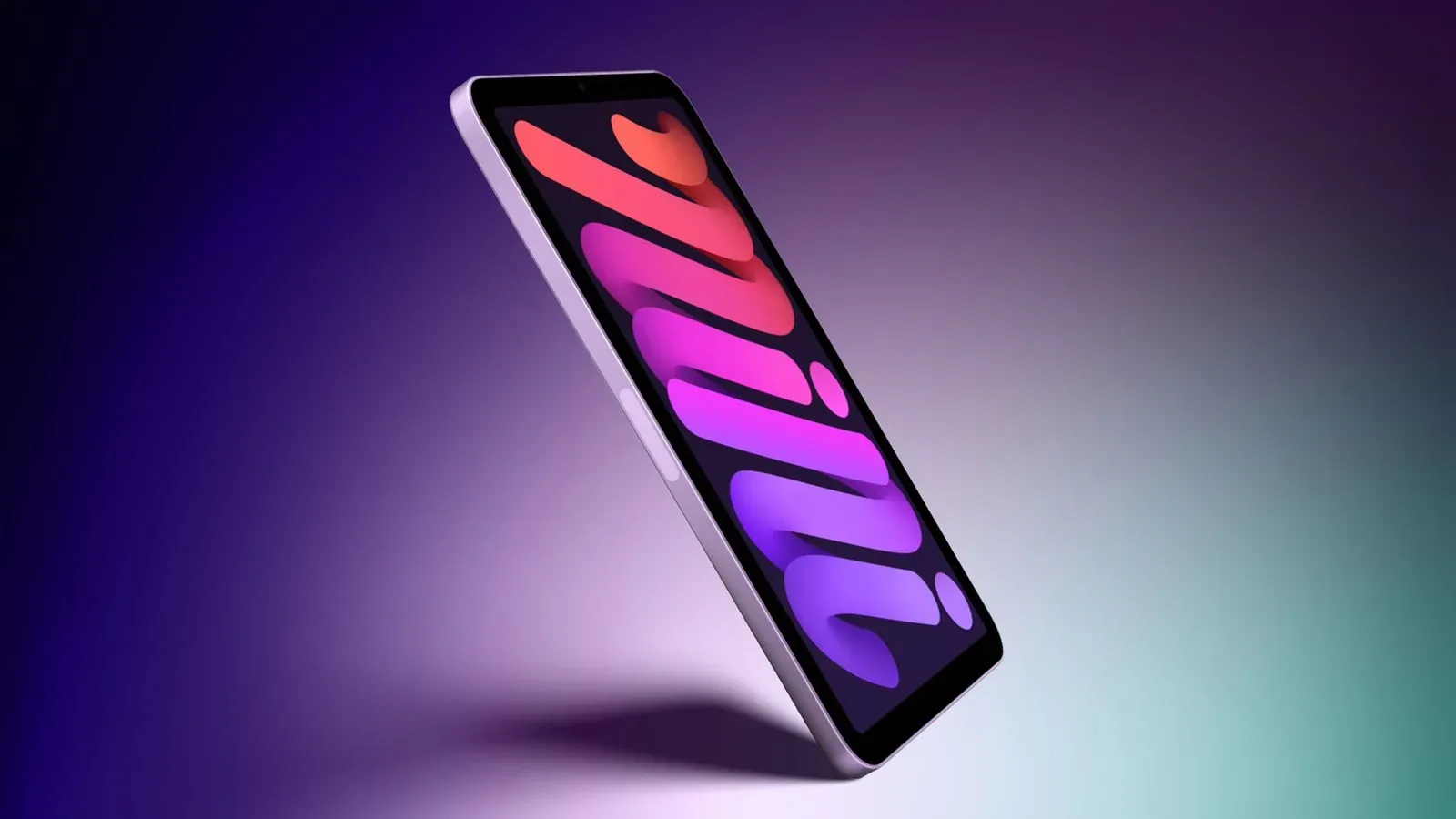
A new iPad mini with an OLED display is part of the slate, accompanied by a new Smart Folio made with TechWoven. OLED is a display technology term; the key confirmed detail is simply that this iPad mini is identified as using an OLED display. The material does not establish resolution, brightness, refresh rate, size changes, battery behavior or any gaming-specific display claims.
That caution is worth stressing because display labels tend to invite instant assumptions. A screen technology identifies one aspect of a device, not the entire day-to-day experience. For portable play, reading, media consumption or remote-play use, buyers also need to consider app support, controls, storage, network conditions and whether their preferred services work on the platform. None of those variables can be settled by “OLED” alone.
TechWoven appears in the name of the accompanying Smart Folio, but no material composition, protective rating, colors or compatibility beyond its association with the new iPad mini is supplied. It is another example of why buyers should match exact model names before purchasing an accessory.
What buyers should do while products move from pre-order to delivery
With some products available and others still in pre-order, the sensible approach is to separate a confirmed product name from a confirmed purchase decision. A short checklist can prevent the most common confusion during a dense release period:
- Identify the actual category you need. A desktop Mac, portable notebook, phone, tablet, watch, streamer and speaker solve different problems. Do not let the sheer size of the release slate turn separate wants into a single upgrade.
- Match exact generations and accessory names. The wrist strap is named for iPhone 18 Pro and AirPods Pro 3; the folio is tied to the new iPad mini. Confirm fit before ordering.
- Check shipping status. Some items are available now, while others are up for pre-order or expected to arrive to customers by at least mid-November.
- Do not infer specifications from branding. M6, OLED, PROLED XDR, Touch and TechWoven are labels in the disclosed lineup, not a substitute for complete specifications.
- Plan shared-space hardware as a system. A living-room upgrade can involve power, remotes, audio, television connections and network setup as well as the streaming device itself.
Absent an unexpected additional announcement, Apple appears to have worked through its remaining major product announcements for the year. That does not mean the release activity is over for customers. The next phase is fulfillment: HomeView, the new Apple TV 4K, the OLED iPad mini, MacBook Pro models with OLED displays and other products are still expected to reach buyers through at least mid-November. In a rollout this crowded, waiting for the exact configuration, compatibility information and delivery status may be more valuable than rushing to buy on a product name alone.