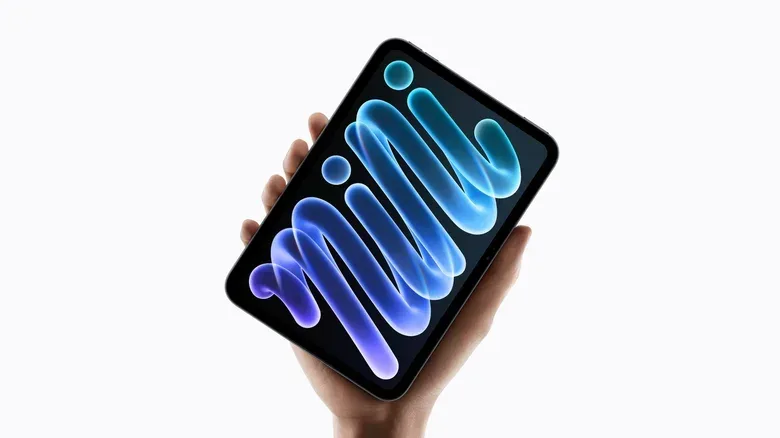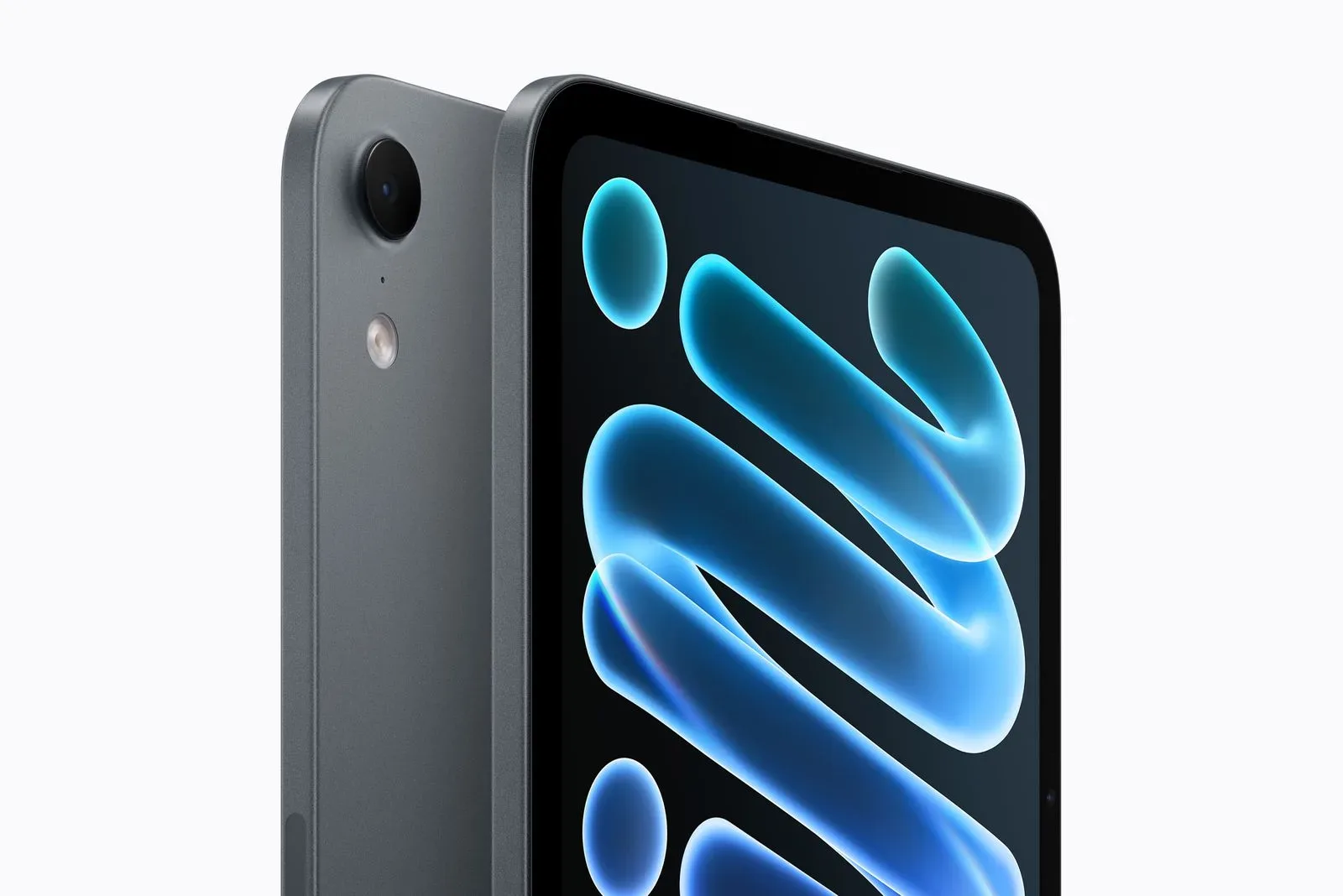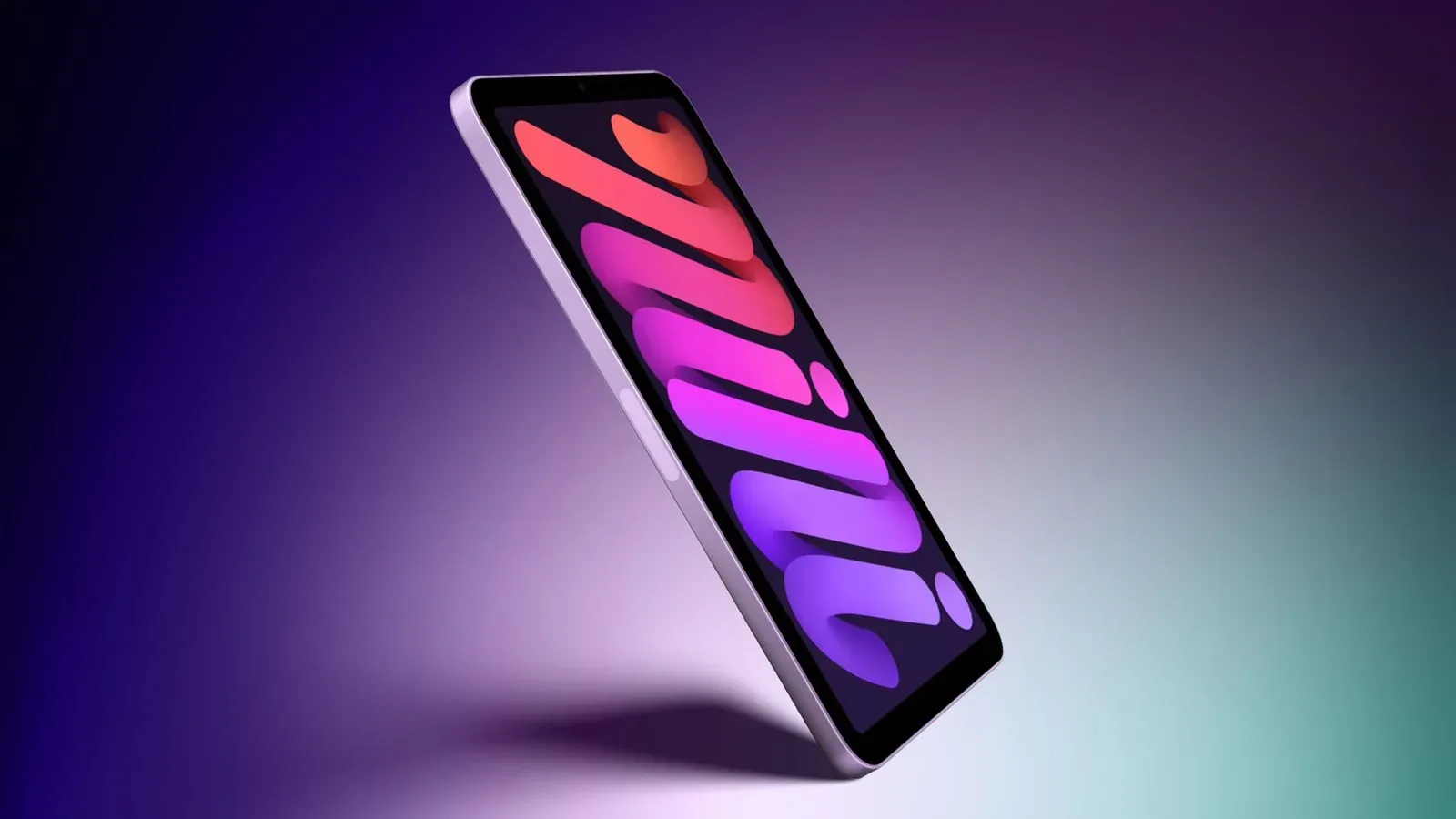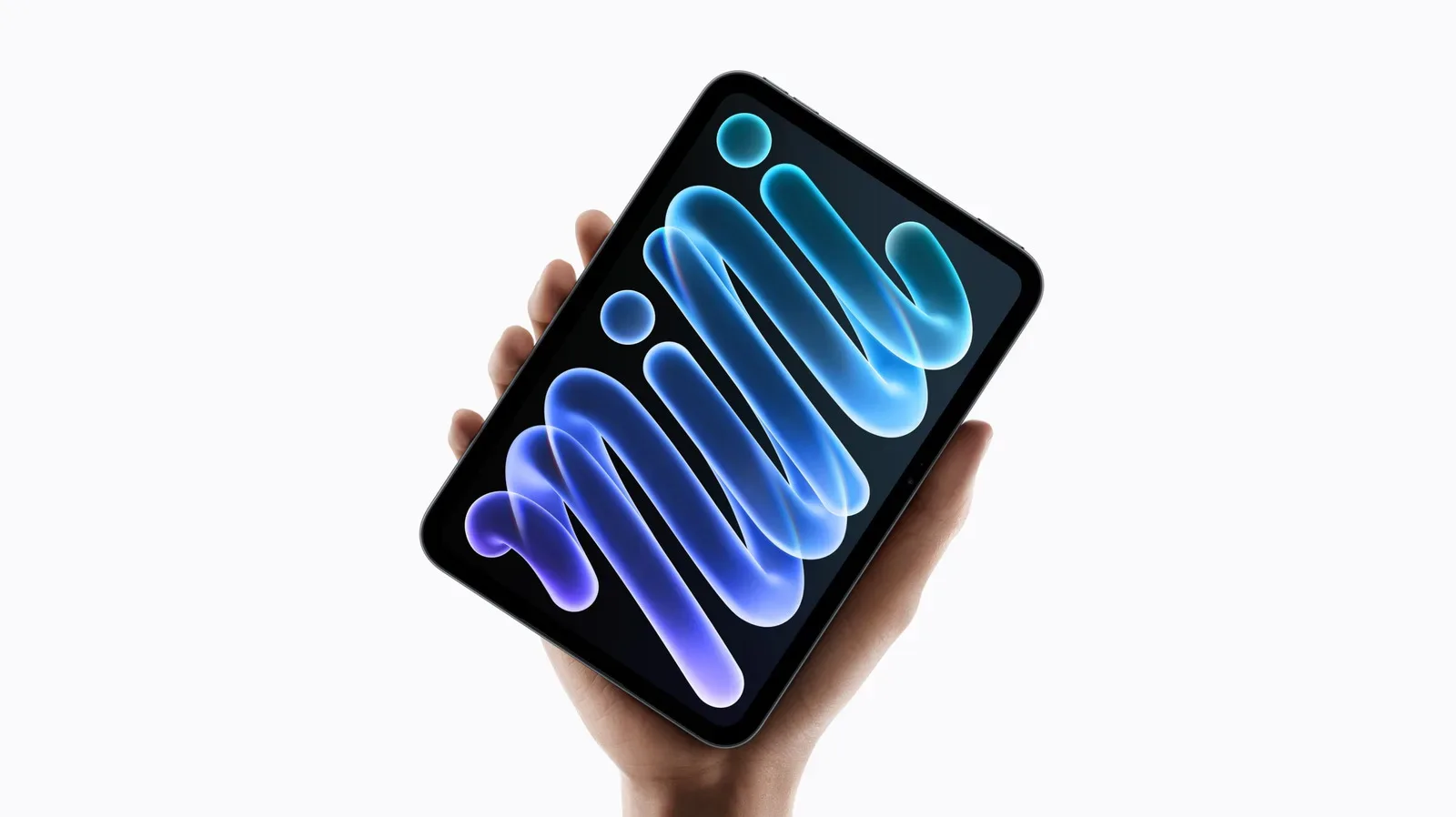
Apple has introduced its 2026 iPad mini, bringing an OLED screen, the A20 Pro processor, redesigned audio hardware and IP67-rated water and dust protection to its smallest tablet. The Wi-Fi model starts at $699, while cellular configurations start at $849. Pre-orders open October 28, and general availability is scheduled for November 6.
The headline change is an 8.5-inch OLED display, up from the previous iPad mini’s 8.3-inch panel. Apple says the increase comes in part from bezels that are 24 percent thinner. The company will also offer a nano-texture coating option, a surface treatment intended to reduce reflections. That option is worth separating from the OLED upgrade itself: OLED describes the display technology, while nano-texture concerns the outer finish of the screen.
An OLED upgrade with bigger brightness claims
OLED, short for organic light-emitting diode, is a screen technology in which pixels emit their own light. Unlike a conventional LCD panel that relies on a separate backlight, an OLED display can turn individual pixels off. In practical terms, that is why OLED is associated with very deep blacks and high contrast.
Apple lists a 2,000,000:1 contrast ratio for the new iPad mini. It also says the panel can reach 1,200 nits of peak brightness, twice the peak figure of the 2024 iPad mini, and sustain 600 nits across the full screen for both SDR and HDR material. A nit is a measure of luminance, or visible screen brightness. Peak brightness refers to the highest level the display can reach in suitable content and conditions; full-screen sustained brightness is a different and often more demanding measure because it applies across the entire panel rather than a small bright area.
SDR, or standard dynamic range, is the conventional format for video and images. HDR, high dynamic range, is designed to preserve a broader range between dark and bright portions of an image. Apple’s stated 600-nit full-screen figure across both formats is therefore a notable part of the specification sheet, alongside the higher peak measurement.
For people using a small tablet as a portable video screen, document reader or second display around the home, the combination of higher claimed brightness, a larger panel footprint and OLED contrast is the clearest hardware shift. The 8.5-inch size remains firmly compact by tablet standards, however. This is still a mini-class device rather than an attempt to turn the iPad mini into a large-screen workstation.
The optional nano-texture finish presents a straightforward choice. Reflections can make a glossy screen harder to view in bright environments, and reducing them can be helpful. At the same time, the supplied details do not establish how that option affects the image, its price, or which storage models can be configured with it. Buyers who consider the finish essential should check the final configuration choices rather than assume every model includes it.
Audio moves into the display assembly
Apple is also introducing what it calls an Acoustic Display on the iPad mini. The design places custom woofers through the display, while the tweeters sit between the touchscreen glass and the aluminum enclosure. Apple says that approach produces more volume and punchier bass from the woofers, along with clearer high-frequency sound from the tweeters.
Related coverage includes Apple’s 2026 iPad mini Brings OLED, A20 Pro and IP67 Protection.
The terms matter here. Woofers handle lower frequencies, where bass lives, while tweeters reproduce higher frequencies such as the upper detail in music, effects and voices. The practical promise is not merely that the tablet gets louder, but that the sound has more separation between lower and higher ranges. Those are Apple’s performance claims, not an independent assessment, but the physical redesign explains why audio is being positioned as more than a routine speaker refresh.
There is another important change to the enclosure: it is now IP67-rated against water and dust. An IP rating is a standardized ingress-protection label. The first digit concerns solid-particle protection and the second concerns water protection; IP67 indicates the device has a specified level of dust protection and water resistance under the rating’s test conditions. It should not be read as permission to be careless with a tablet around liquids. It does, however, mark a meaningful durability addition to the mini’s listed feature set.
A20 Pro puts local AI at the center of Apple’s pitch
Inside the new model is Apple’s A20 Pro system-on-a-chip, the same chip family that debuted with the iPhone 18 Pro earlier this year. A system-on-a-chip, often shortened to SoC, gathers major computing components into a single package. Apple says the A20 Pro brings a faster, more powerful CPU than the A17 Pro used in the 2024 iPad mini, with improved everyday-task performance as the expected result.
Apple is particularly emphasizing the processor’s AI capabilities and its suitability for local LLMs. An LLM, or large language model, is an AI model that works with language. Running one locally means computation occurs on the device rather than being sent to a remote server. That can be technically interesting for users who want an on-device model, but it should not be confused with a description of a specific bundled application or a guarantee about the performance of any particular model. The available information establishes Apple’s hardware positioning, not a list of supported models, software requirements or practical use cases.
The connectivity hardware is new, too. Apple has included its N1 chip for Wi-Fi 7, Bluetooth 6 and Thread. Wi-Fi and Bluetooth are familiar wireless standards. Thread is a low-power networking protocol commonly associated with connected-device ecosystems. The presence of all three gives the mini updated radio capabilities, although their everyday benefit will depend on the routers, accessories and smart-home equipment a buyer actually uses.
Cellular models use Apple’s C2 modem. Apple says it delivers data speeds 50 percent faster than the modem in the preceding iPad mini. That comparison applies to cellular connectivity, not Wi-Fi performance, and it is an Apple-provided claim. It nonetheless gives buyers choosing between Wi-Fi-only and cellular versions a clearer hardware distinction than simply the ability to connect away from a wireless network.
Apple’s interest in putting more AI work directly on personal devices also fits a broader consumer-tech question: which tasks need a constant network connection, and which can be handled on the device in someone’s hands? For a lighter-hearted way of looking at how digital clutter can become its own interface problem, see our look at phone contacts as an inventory screen. The iPad mini announcement does not answer that larger question on its own, but its focus on local LLM capability makes the device part of that conversation.
Cameras shift video calls to landscape
The front camera is now a landscape-oriented 12-megapixel Center Stage camera. Its placement is intended to make video calls look more natural when the tablet is used horizontally. Center Stage is Apple’s framing feature for video calls; the supplied details identify the camera and orientation, but do not provide a deeper breakdown of its behavior on this model.
At the rear is a single 12MP camera supporting Smart HDR 4 and 4K video capture at 60 frames per second. Smart HDR 4 is Apple’s image-processing label for its HDR capture system. Meanwhile, 4K refers to high-resolution video, and 60 frames per second means the camera can record 60 individual images each second at that resolution. The announcement does not claim a second rear camera, a new zoom system or additional camera hardware, so the story here is a capable single-camera setup rather than a wholesale photography redesign.
Storage doubles at entry, but the price also rises
Apple will sell the 2026 iPad mini in midnight and starlight, with 128GB, 256GB and 512GB storage options. The 128GB starting capacity is double the base storage of the prior iPad mini. More included storage is especially relevant for a compact device that may be used for downloaded video, large apps, locally stored files and photos, though the announcement does not specify how much usable capacity remains after the operating system and preinstalled software.
The base Wi-Fi model’s $699 price is $200 above the launch price of the 2024 iPad mini. That makes the buying decision less simple than “OLED is better.” The new screen, updated chip, entry-storage increase, new connectivity hardware, reworked sound design and IP67 rating are substantial additions on paper. But the higher starting price means existing iPad mini owners and first-time buyers will have to decide whether those upgrades matter to their own use.
- Wi-Fi iPad mini: starts at $699.
- Cellular iPad mini: starts at $849.
- Colors: midnight and starlight.
- Storage: 128GB, 256GB or 512GB.
- Pre-orders: October 28.
- General availability: November 6.
The 2026 iPad mini is therefore a compact-tablet refresh driven primarily by screen technology and internal hardware rather than a change in the product’s identity. The OLED display is the visual centerpiece; the A20 Pro and newer wireless hardware target performance and connectivity; the Acoustic Display and IP67-rated enclosure broaden the design changes beyond the screen. Whether that collection of upgrades justifies the $699 entry point will depend heavily on whether a buyer values the mini’s small format enough to accept a price that now sits $200 above its predecessor’s launch level.